Seasonal & Holiday Content
Winter birdhouse preparation: shelter now, nesting later
Plan seasonal bird-box care around actual activity, condition and design. Distinguish winter shelter from spring nesting without assuming retail housing performance.
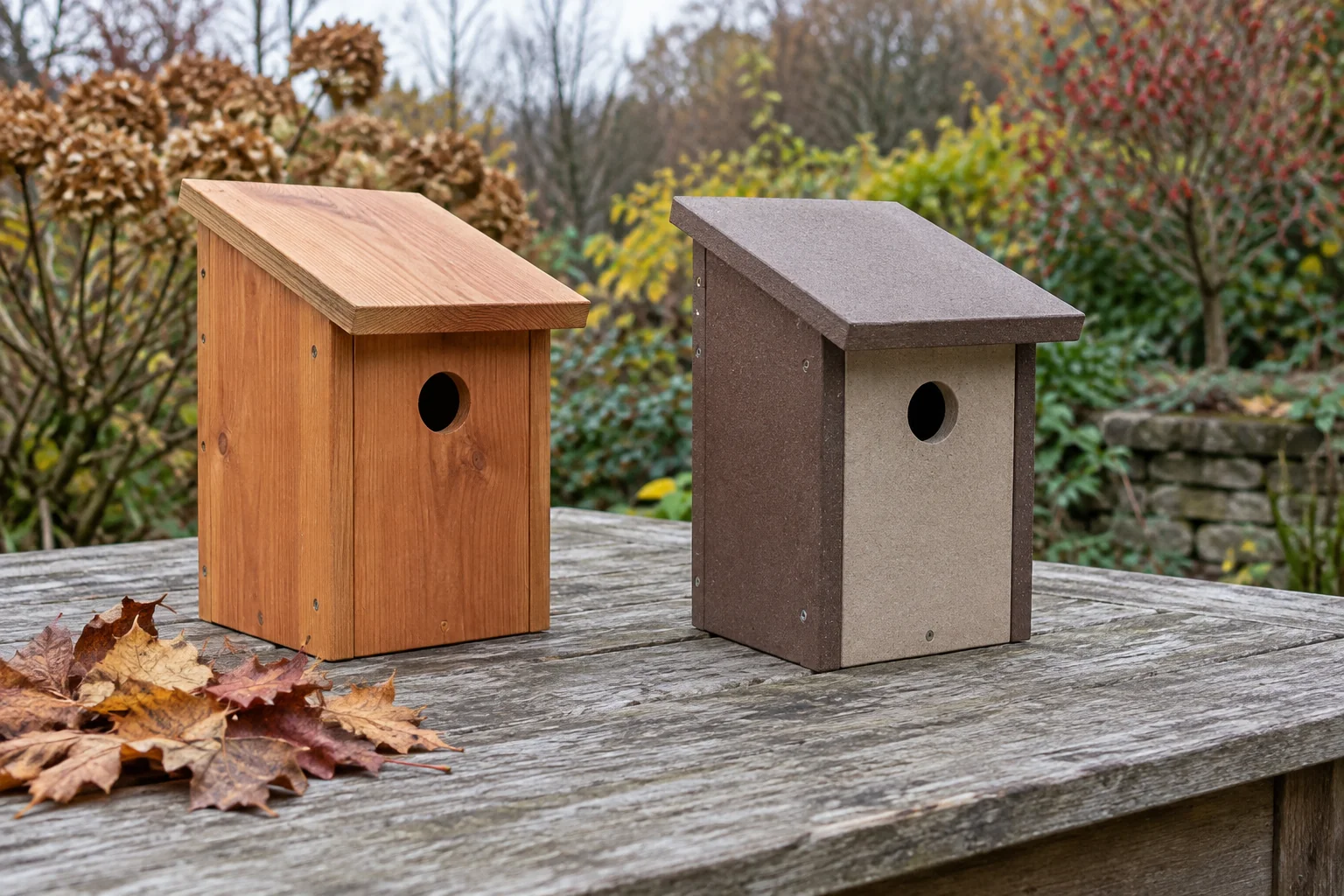
Winter birdhouse preparation starts with the housing already in your garden. Decide whether you are preparing an empty box for seasonal care, considering overnight shelter or looking ahead to nesting. Identify the seasonal job before choosing a box or changing the one you have. Examine the actual design and the birds' activity before changing anything.
The two offers below describe different housing: a Woodlink winter roosting and shelter box in a two-pack, and a Panacea Audubon bluebird house. This is a seasonal yard guide, without a trial of either product or a prediction that birds will occupy them. The garden examples are hypothetical. Use applicable local bird guidance and the actual housing instructions when deciding what you can safely maintain.
Separate winter roosting from nesting
Cornell Lab explains that cavity-nesting birds may use boxes for overnight shelter outside breeding, while dedicated roost boxes differ from nest boxes. General roost features can include a low entrance, fewer ventilation openings and interior perching surfaces. Those descriptions explain the distinction; they do not establish the hidden interior or thermal performance of either retail box here. Do not alter openings or add perches from that comparison alone.
Ask which task you are trying to serve this season. A person hoping to maintain an existing nesting box has a different starting point from someone choosing a dedicated winter shelter. If your current housing is sound and its care requirements are known, begin there. The decision to replace it should follow the actual condition or design question you need to resolve.
Keep winter roosting separate from a promise about nesting next spring. A box may be described for more than one seasonal role, but the applicable arrangement can still need clarification. An entrance size, a roof shape and a material name each describe part of the housing. None alone establishes who will use it, how many birds it can hold or what temperature it will maintain.
Check the Woodlink seasonal claim without inventing a conversion
The Woodlink Brown winter roosting and shelter box two-pack describes kiln-dried red cedar construction held together with screws. Its listed entrance is 1.56 inches, and mounting screws are included. The quantity is two boxes. These are the stated contents and construction details, without an observed shelter or mounting result.
The description says the housing can become a bluebird house outside winter. It supplies no conversion sequence here. Obtain the actual model's instructions before treating that statement as a job to carry out. This guide gives no directions for reversing a panel, blocking a vent or moving an entrance. A general explanation of roost design cannot provide the missing procedure for this particular product.
Use the two-pack count to think about actual locations independently. If you are considering two placements, assess each one through relevant bird and product guidance. Having two supplied boxes does not demonstrate that both proposed sites are suitable. Nor does a pair establish a nesting pair, an occupied roost or a particular number of birds served.
Read the bluebird house as its own housing
The Panacea Audubon 053348 recycled-plastic bluebird house has a Multicolor title, while the description identifies brown and tan. It lists a 1.5-inch entry, a guard around the opening and predrilled back holes for wall or post mounting. The actual product reference is SKU 5010672298, with UPC 093432244685.
The retailer describes its opening for bluebirds and attributes protection of nestlings to the guard. This article has not tested that protection or established suitability for a particular bird at your site. A guard being present is a design detail to investigate with the complete housing and placement. It is not proof against every predator or a reason to disregard local advice.
Keep its 1.5-inch opening distinct from Woodlink's 1.56-inch figure. Do not round one into the other and call the entrances identical. The difference in stated values also provides no ranking of winter shelter. Neither short description gives a common interior-volume measurement, an observed occupancy count or a comparative test in cold weather.
The plastic construction is described as intended for many seasons. That is a durability statement from the listing, without a measured service life here. It does not remove the need to examine the actual box's condition or establish a cleaning method suitable for it. A material description should remain attached to the particular housing you are assessing.
Plan empty birdhouse cleaning around actual activity
NestWatch advises leaving nesting material during breeding because another brood may follow. At the end of the season, an inactive box can have old material removed and its interior scrubbed with mild detergent and water. Clean only with no sign of breeding activity; when uncertain, wait. Apply suitable product care instructions too. This guide supplies no chemical mixture or procedure for handling birds, eggs or young.
For empty birdhouse cleaning, establish that the job is appropriate before opening or removing anything. A quiet moment outside the entrance is not, by itself, an explanation of everything inside. If you cannot establish the box's status through appropriate guidance, leave it undisturbed while you seek advice. Wait for the activity question to be settled before scheduling the cleaning.
Use the access method intended for the actual housing once care is appropriate. A predrilled mounting hole does not describe the clean-out opening. The product summaries above do not show how a panel or roof is released. Find the applicable instructions before undoing screws at random, and keep any repair question separate from the routine removal of old material.
If the accessible housing has a damaged panel or a door that will not close as intended, investigate that actual condition before putting it back into service. This is a condition check, without diagnosing a cause or prescribing a repair. Use repair advice appropriate to the construction and intended bird use before selecting a replacement part or coating.
Give fall care and spring preparation separate places
Audubon's seasonal yard guidance calls for clearing nest boxes in fall because some birds use them as winter night roosts, followed by another cleaning in early spring for nesting. Treat that as a seasonal care sequence, alongside NestWatch's activity boundary. It gives no fixed date for every location and does not establish that your box is empty on the day you choose.
Choose a workable daylight opportunity for the care that is actually appropriate. Consider how you can reach the housing through its intended access arrangement. This guide provides no ladder, pole or mounting procedure. If access requires work beyond your safe arrangement, resolve that before planning to open the box. An approaching cold night should not force an improvised maintenance task.
The spring seed-starting plan connects a garden task to the conditions and later transition it needs. For bird housing, retain a separate early-spring care decision even after autumn work is finished. The seed guide's sowing periods and transplant dates belong to plants. They do not set a breeding calendar or inspection date for birds.
As spring approaches, return to the actual housing and relevant local guidance. A box that was suitable for its documented winter arrangement may need a different documented seasonal configuration, or simply another condition check. The Woodlink conversion claim remains a model-specific instruction question. Do not assume that an unverified change becomes appropriate because the weather feels warmer.
When you can examine an inactive box through its intended access, compare the features you can actually see with the drawing for that housing. Locate the clean-out opening and establish how it closes. Identify which openings are part of the documented design before deciding that a gap needs attention. Leave an unexplained feature unchanged while finding out what it is.
Inspect the exterior and accessible interior as separate parts of that same task. A tidy roof does not tell you whether the access panel works, and an attractive front says little about a hidden interior. If a comparison photograph would help with a repair enquiry, take it only through the appropriate access and without disturbing an occupied box. The purpose is to identify the actual condition, without reconstructing an unseen design from an online picture.
An imagined garden check before winter
Imagine that Nia has two existing generic bird boxes in different parts of a garden. Neither is either linked retail product. This is an original example, not a report of wildlife activity or a cleaning trial. Nia initially plans to finish both boxes in one afternoon. During preparation, she realizes that the status of one box remains uncertain.
She leaves that box undisturbed and seeks appropriate advice about establishing its activity. The second has been established as inactive through relevant guidance and is accessible by its intended care method. Nia consults its instructions before the suitable end-of-season cleaning. The two boxes now have different immediate decisions, despite standing in the same garden under the same autumn weather.
Suppose the accessible box has a visibly damaged clean-out panel. Nia keeps that condition unresolved while finding the applicable repair advice. Cleaning the interior would not demonstrate that the panel closes correctly afterward. Conversely, finding a sound panel would not prove that any particular bird will choose the housing. Each observed condition answers its own question.
The example ends before a winter occupancy result. Nia can complete appropriate care on an identified inactive box, leave an uncertain box alone and investigate actual damage without claiming that the whole garden is ready for every bird. Her spring check remains a separate future task. The change in season has prompted concrete work, while the birds' eventual choices remain unpredicted.
Consider the surrounding yard as well as the box
Audubon also recommends raking fallen leaves beneath shrubs to protect natural ground-feeding areas. That is a separate yard task from maintaining housing. If applicable to your garden, it offers something concrete to consider while deciding what to tidy in autumn. It supplies no cleaning material or bedding instruction for either birdhouse, and this guide does not tell you to fill a box with garden leaves.
The seasonal plant cover planning guide concerns protecting identified plants around a cold forecast. Keep those plant decisions separate from the housing. A fabric bag chosen for a shrub has no established role as a bird-box cover, insulation or entrance barrier. The fact that both jobs happen in autumn does not make their equipment interchangeable.
Finish winter birdhouse preparation with the care and condition actually established for each box. Distinguish a nest house from documented roost features, preserve any unresolved activity or damage, and return to the housing before the next nesting season. A box can be maintained thoughtfully without claiming a temperature benefit, a successful nest or a winter visitor you have not observed.