Home & Living
windowsill herb corner ideas for a manageable kitchen routine
Arrange one or two reachable herb planters on a stable windowsill while leaving room for the window and a realistic care routine.
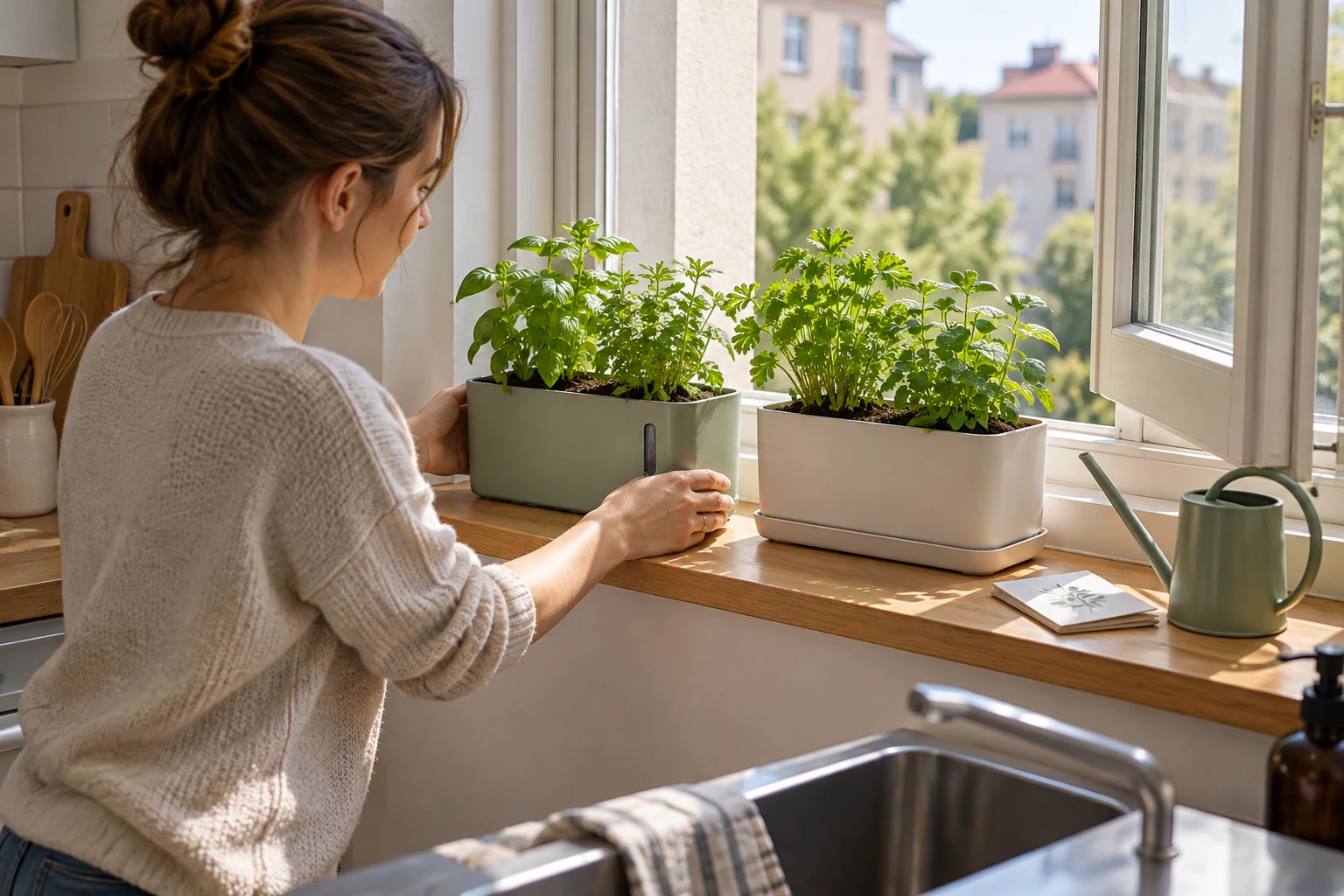
A small herb corner works best when it fits the room and the way you actually use the kitchen. A wide planter that blocks the window or a ten-pack that has nowhere to go can turn a pleasant idea into clutter. This windowsill herb corner ideas guide builds a modest arrangement around usable sill space, water handling and a routine you can keep. Choose herbs using the care directions for the exact plants you bring home; the planters discussed here do not establish a universal light or watering schedule.
The ornament storage fit guide measures the object and the place it will occupy before relying on a printed capacity. A planter needs that same footprint check, but this article owns a living, everyday windowsill arrangement rather than holiday storage. The tension curtain rod guide shows how a window recess can carry another feature. If curtains share the window, keep their travel path and the sill access clear instead of crowding the rod with pots.
Start with the window you use every day
Measure the sill's flat, usable width and depth, not just the opening from wall to wall. Note a raised lip, window handle, screen, blind cord, curtain drop and any part that swings inward. Open the window through its ordinary travel while the sill is empty. Sketch the space that must remain clear. A planter that fits the sill in a photo may interfere with ventilation, cleaning or required egress in your room. Keep the safe path for people and window hardware first.
Check that the surface can support filled planters and that water will not damage it. Soil, plant and water add weight to an empty container; the product listing's outside size alone does not tell you the filled load. Use a stable surface with a suitable protective tray where the plant and planter instructions allow it. Do not put a pot on a narrow edge, an unsecured shelf or a spot where an opened sash could knock it over. Consider children and pets that can reach the sill.
Observe the light in the actual location over several ordinary days, but use each chosen plant's own guidance to judge whether that exposure suits it. A sunny-looking photograph is not a care instruction. A window can have shade from nearby buildings, seasonal changes and blinds used during the day. If the plant's stated needs do not match the real spot, choose a different plant or a different location. Do not buy a planter and then assume it will make an unsuitable light setting work.
Choose an arrangement you can reach
Decide whether you want one container for a single herb or two containers for separate care needs. Start with a number you can water, inspect and harvest without moving other objects each time. Leave a hand-width working path if your sill permits, but measure the actual reach you need rather than adopting a standard clearance. A charming row of pots has little value if the back leaves cannot be checked or if every watering session requires shifting the whole collection.
The two-pack rectangular self-watering planter listing describes 16.5-inch containers with a water-level window and a cotton-wick system. Its seller copy claims a long interval between attention. Treat that as a product claim under unspecified plant and room conditions, not a promise that any herb can be left alone for two weeks. Check how the reservoir, inner pot and wick are assembled, how the selected plant should be watered and when the level needs attention.
The ten-pack 17-inch window-box planter listing describes drainage holes and movable trays. It offers many separate boxes, but ten may far exceed one windowsill's safe and usable space. Confirm each assembled footprint and tray dimensions before planning a row. Drainage holes and trays require a place for excess water to go; they do not remove the need to check the plant's soil or protect the sill. Buy for the number of locations you truly have, not the package count.
These are two different watering arrangements. One uses a reservoir and wick; the other describes drainage holes with a movable tray. Neither design dictates an herb species or a fixed frequency. A plant that needs the medium to dry between waterings may behave differently from one that tolerates more moisture. Follow its verified care instructions and observe its condition. If two plants need clearly different treatment, separate containers can make the routine easier to understand than a shared box.
Give each container a simple job
Choose one plant you already use in cooking rather than collecting several because the package has room. Place it where you will remember to inspect it. A second container can hold another herb with a compatible location but a separately managed watering routine. Write the plant name and date on a label that can stay legible near moisture. Keep plant tags until you have recorded the care directions. Avoid edible-plant claims from a container seller; the plant source determines what you are growing and how to handle it safely.
Set up a small care station close to the window: a watering vessel, a cloth or tray for drips, and the plant instructions in a place you can find. It need not be decorative. The point is to remove friction from the routine. If the only watering can is stored in another room, you may postpone checking the pots. If a reservoir is hidden, a clear note about how to read and refill it can help another household member avoid guessing.
Use the water-level window on a self-watering planter only as its instructions define it. A visible low level does not by itself tell you the plant needs water immediately, and a full reservoir does not prove the roots are healthy. Inspect the growing medium and plant according to the plant's care directions. For a drainage planter, empty a tray when the product and plant instructions call for it rather than letting water damage the sill. Keep electrical outlets and cords away from drips.
Keep the plants far enough from the glass and curtains that leaves are not crushed when the window or fabric moves. A curtain hem that falls into soil can wick moisture or pick up debris. The tension rod guide covers installing that hardware; this layout should simply leave it room to work. Check a blind's pull cord and the path of an inward-opening window too. The safest useful herb corner is one that does not interfere with ordinary room functions.
Make the visual effect feel intentional
Repeated containers can give a quiet, organized look, but they need not be identical. A pair of rectangular boxes may align neatly along one broad sill; two smaller containers may fit better if the handle or sash divides the space. Choose a finish that lets you notice water and soil condition without hiding leaks. Put the taller plant where it will not shade a shorter one against the chosen plant guidance, and keep all foliage clear of the window mechanism.
Leave negative space. An empty section of sill gives you a place to set down the watering vessel and wipe spills. It also makes the herbs easier to see and reach. The ten-pack listing should not tempt you to fill every inch. If you truly have several windows, measure each separately and note which plant would suit each location. A container can be moved, but a plan for one bright sill should not be copied blindly to a shaded one.
Use a tray or mat only if it suits the surface and does not trap moisture underneath. Check the surface periodically and dry it according to its finish. A clear tray can make a drainage planter feel visually light, while a reservoir planter may need room for a level indicator. Think about maintenance access when choosing decorative covers. A cover that conceals the water path or blocks a drain can make the routine harder, however polished it looks.
Keep a routine that survives busy days
Choose a regular moment to inspect the plants: while making breakfast, after washing dishes or before preparing dinner. Inspect rather than watering automatically. Look at the growing medium, plant condition, water-level indicator or tray as applicable, then use the plant's instructions to decide the next action. This habit is more reliable than the seller's broad no-maintenance phrase. It also catches a blocked drain, empty reservoir or tilted pot before the windowsill is damaged.
Record one or two observations when you begin: when you checked water, what the plant looked like and whether the window location changed. A short note can show whether the routine is manageable. It is not a scientific growth trial. If the plant is struggling, consult the plant source or a reliable local horticultural resource for that species rather than assuming the planter is the cause. A different plant may simply suit the room better.
Plan for travel or an unusually busy week before it happens. Check the plant and planter instructions, and ask a trusted person to follow the actual routine if needed. Do not rely on a two-week seller claim as a substitute for the plant's needs. If you use a reservoir planter, make sure a helper knows how its level window and fill point work. If you use drainage boxes, show where the tray can be emptied without spilling onto the sill.
When harvesting, follow the plant's care guidance for how much and where to cut. Keep tools clean and avoid using leaves that have been treated with products not intended for edible plants. The planter listings do not establish food-safety or growing-medium suitability. Keep the project modest enough that you can maintain it correctly. A well-used single herb is a better everyday kitchen feature than a crowded set of neglected containers.
Let the corner evolve with the household
After several weeks, note which spot you actually reach, whether the window still opens comfortably and whether the water routine fits daily life. If the arrangement works, you can add a second plant or move to a larger container after checking its footprint and care needs. If not, reduce the number of pots or change location. The goal is an inviting working corner, not a permanent display that cannot be adjusted.
Keep a simple record of the dimensions and container style that worked. The two-pack reservoir boxes and the ten-pack drainage boxes illustrate different scale and water-handling choices; neither is automatically right for your sill. Confirm the exact selected product variant and current dimensions before ordering. If a container does not fit the sill, changing its position cannot create more safe depth or weight support.
Good windowsill herb corner ideas begin with one reachable plant, enough stable space for its container and a care routine tied to that plant's instructions. Add beauty through a clear layout and materials you can maintain. Leave room for the window, curtains and your hand, and let observed use determine whether the corner should grow beyond its first two pots.