Computers & Gaming
Read a Windows metered connection setting in context
Keep the Windows flag, actual app results and service terms distinct. No data limit, charge or saving is established.
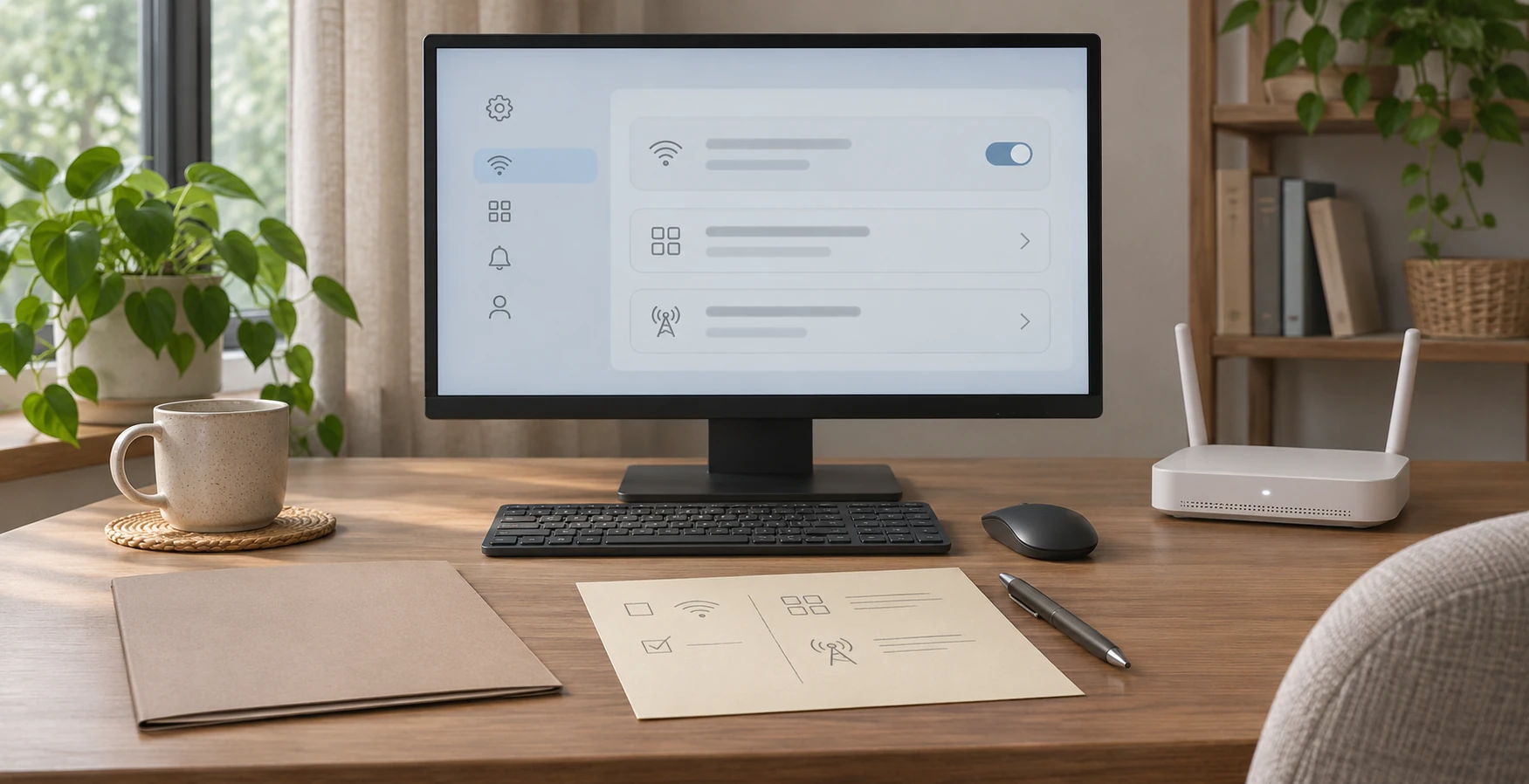
A connection marked metered can change what you expect from a Windows computer, but the label does not answer every question about an application or a bill. Read a Windows metered connection in the context of the connection you mean and the task you are trying to finish. The useful distinction is between a preference Windows can use, what an application actually did and the terms attached to the service.
This explainer does not inspect your computer, measure data use or identify a current allowance. It supplies no setting-change procedure or promise of a saving. You can understand the label without treating it as a diagnosis for a delayed download. If an actual task is unfinished, keep that observation available while you decide which question still needs an answer.
The two router offers later in the article provide bounded equipment context. Neither tells you how a particular Windows connection is marked or what service plan you have. A different router is not a substitute for establishing those facts. Start with the meaning of the label, then consider the application and service evidence that the real decision needs.
Start with the question behind the label
Someone asking about a slow update may mean several things by “metered.” They might be asking what the Windows preference does, whether the application completed its job, or whether a service allowance is running low. Those questions need different evidence. Do not answer the last one merely by pointing at the Windows label, and do not answer the first one by assuming that an unfinished task proves a fault.
Choose the immediate task before deciding what to investigate. Perhaps you need a document available for an appointment, or you want to understand why an expected update has not appeared. The urgency of that task can shape a practical next step, but it does not establish the cause of its status. Keep “what I need next” separate from “what has been demonstrated about the connection.”
A useful explanation can leave something unanswered. You may understand the preference while still lacking an actual application notice or the service terms. That is a clearer position than replacing all three with a general statement that the internet is restricted. State the specific question you have resolved and the one that remains, without pretending that a single label describes the entire situation.
Read the Windows feature within its documented scope
Microsoft says a metered network connection will try to control and reduce data use; some apps might work differently and some Windows updates will not install automatically. The relevant Windows 11 options concern a chosen Wi-Fi or Ethernet network. Microsoft also notes that an organization may manage a greyed-out control. An unmetered Windows label alongside a limited service plan can still leave you over the plan's limit and facing charges. These are bounded effects and conditions, rather than a universal cap.
That description gives the network setting a purpose without supplying a measured result for your task. You would need an actual observation to say what happened in a particular application, and appropriate evidence to say how much data was used. This article has neither. A statement about what Windows tries to do should not quietly become a statement that a specific reduction has occurred.
The setting's name is also not a recommendation to change it immediately. An explanation can help you ask a better question while leaving the existing arrangement alone. This is particularly useful when the computer belongs to someone else or the connection is managed for a particular purpose. No administrative workaround, removal of a limit or method for overriding an organization's choice is part of this article.
Keep the connection you mean in view
Identify the actual connection relevant to the task instead of using “my internet” as an undifferentiated name. A remembered preference from another sitting may not describe the situation you are looking at now. Do not silently carry an observation between different connection contexts. Establish the context you actually know before interpreting the label; if you cannot establish it, leave that match open.
Imagine a fictional reader who looked at one connection earlier in the day and later asks about an unfinished job in a different setting. The earlier observation does not, by itself, settle the later question. The reader should first establish which connection the current question concerns. No real network, label state or completed change is supplied by this example. It illustrates why context belongs beside an observation.
A router name cannot fill that gap. The same product account may be relevant to many different installations, while your question concerns the arrangement in front of you. Hardware descriptions can help with a separate equipment enquiry; they do not reveal the state of a Windows preference on a computer that has not been examined. Do not infer an account entitlement or an application result from a product photograph either.
Let the application supply its own result
The next question concerns actual app behavior. Did the task finish, remain pending, display a notice or stop before it began? Record what was observed in the application that matters to you. Avoid replacing that observation with an explanation selected in advance. Knowing a possible influence is not the same as establishing why this particular task has its present status.
For a concrete comparison, consider an intended document that is still unavailable and an update that has not appeared when expected. Those are different tasks, even if someone uses the same connection label when describing both. The document question needs evidence about that document and its application. The update question needs evidence about the actual update state. This article does not give either one a cause or a corrective command.
Retain the sequence if it matters. A task that was already pending before someone inspected the preference should not be described as newly delayed by that inspection. Likewise, an observation made later should retain its own context. This does not require a detailed technical log. It requires avoiding a causal story that was never established by the events you actually observed.
Take allowance and management questions to their own evidence
A service allowance belongs with the actual terms and account information for that service. Do not invent an amount, a billing period or an overage rule from a label on a computer. If you need one of those facts to make a decision, establish it separately. This guide neither accesses an account nor selects a provider, and it offers no numerical estimate of a charge or a saving.
The same discipline applies to a control whose ownership is unclear. You can preserve what the actual screen shows and ask the appropriate support owner about the intended arrangement. Do not assume that inability to alter a control establishes a broken router. An explanation of a possible managed condition is not permission to bypass it, and this article provides no bypass or elevation procedure.
Keep the immediate practical need visible while the question is open. You may need to defer a task, use a familiar permitted arrangement or obtain an answer from the person responsible for the computer. Those are decisions about how to proceed under uncertainty. They should not be recorded as a demonstrated fix, a completed reduction in data use or a successful change to a service plan.
Keep the router offers in their catalog role
The TP-Link ER8411 offer has a displayed 10G VPN Router variant and pictures one wired router enclosure with front ports. Its wordmark does not independently authenticate the exact factory model. No separate host, switch or access point is established as supplied by that picture, and no current Windows preference follows from it.
The TP-Link Archer AX4400 offer has one dash-labeled variant and shows one router with six attached antennas. Those components are not extra complete router units. This guide does not authenticate a networking performance, security-service or management-app result from the image or transfer one into an explanation of your computer's current state.
Two related guides address other evidence. The Windows default gateway check concerns reading displayed adapter fields. The cloud-storage quota guide concerns the particular storage limit behind a proposed expense. Neither makes a network-data preference proof of an application result or a service allowance.
Use the meaning without overstating the conclusion
Before acting, ask which question your evidence actually answers. You may have identified the relevant connection, obtained a useful application notice, or found the service terms you needed. Do not combine an answer from one of those sources with an assumption from another and call the whole situation settled. A remaining uncertainty can stay specific enough for the next enquiry.
A Windows metered connection is easier to discuss when the explanation stays attached to the task and the actual evidence. Keep the documented purpose within its limits, let the application supply its observed status and use real service information for an allowance question. That leaves a clearer basis for deciding what to ask next without inventing a fix or a financial result.
Assess any later purchase against a real requirement
Understanding a Windows preference does not create a need to buy a router. If an equipment enquiry later becomes relevant on republeq.com, begin with the actual requirement that remains unanswered. A preference for crypto or USDT cannot establish the state of a computer, authenticate a catalog model or tell you the allowance attached to a service. Those questions need evidence appropriate to them before payment becomes relevant. Review the exact offer you intend to consider. Confirm its item, variant and supplied quantity rather than turning an image into an inventory it does not establish. A set of attached antennas is not a set of additional complete routers. A row of integrated ports does not establish a separate supplied switch or access point. If a material product or connection question remains unresolved, keep it open and seek a reliable answer instead of treating a familiar name as confirmation. You can continue a permitted familiar task or defer it without ordering either featured offer. When a genuine purchase reaches checkout, examine the transaction actually presented for that order. Confirm its requested method, amount and recipient from the transaction itself. This article does not establish that crypto checkout is available, promise USDT acceptance, quote a transaction cost or compare the expense of different payment routes. It provides no wallet address, transfer instruction or statement that a payment has succeeded. Those details require their own actual evidence. Keep the equipment requirement separate from a guess about why an application has not finished its work. Paying for a different device would not make an unproved causal explanation true. Establish what the next decision needs, resolve the exact product questions where possible, and assess any eventual payment request on the information actually available then.
Conceptual network-data preparation; no exact Windows interface, measured data use, provider allowance or successful saving is shown.