Tools & DIY
Window screen mesh sags after replacement: inspect tension and frame
A symptom-led inspection of a newly sagging fiberglass screen panel, its frame, channel and spline.
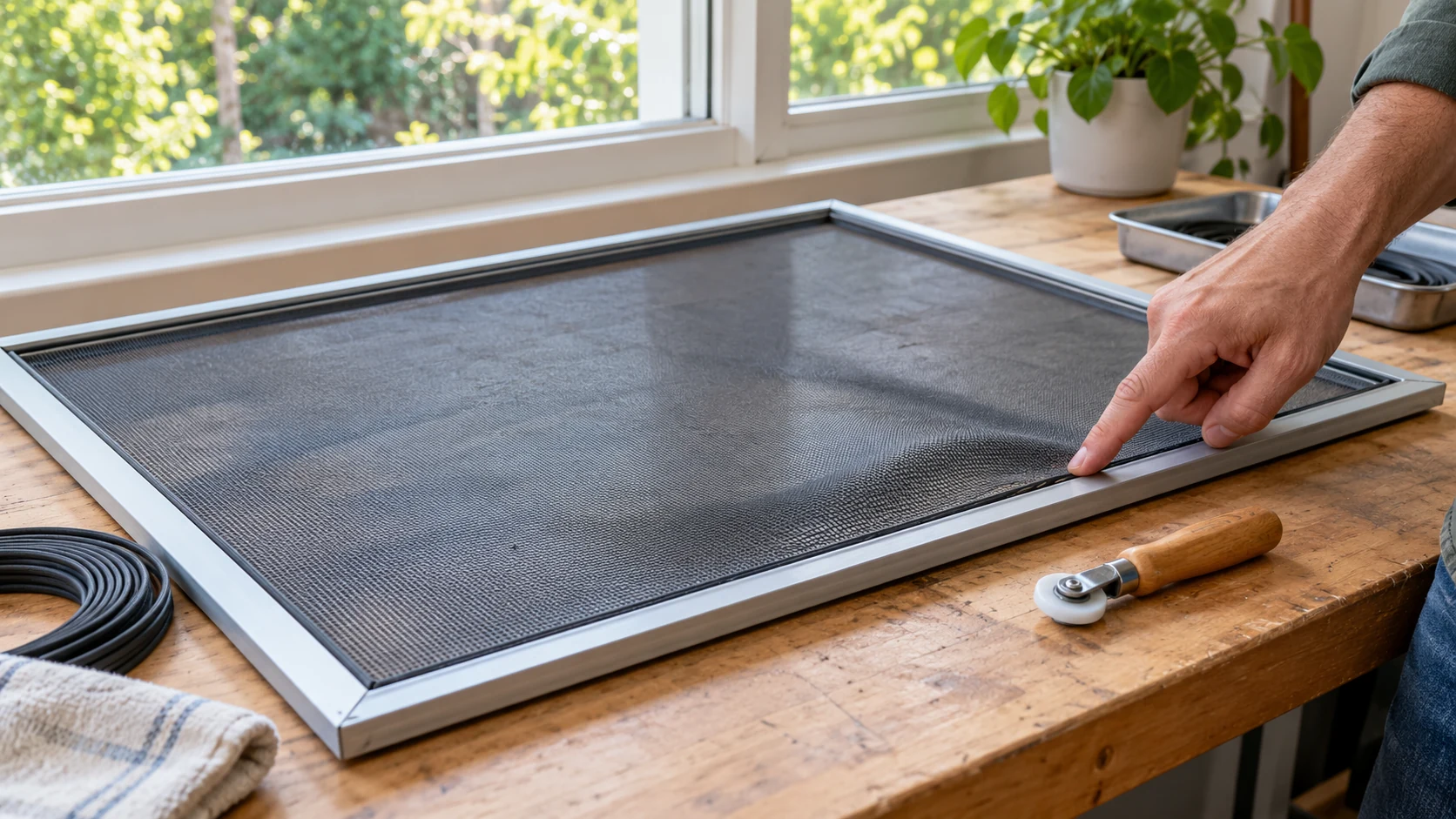
A screen panel that looked smooth on the workbench can show a wave after it goes back into the window. The cause may be uneven mesh tension, a spline that has not held its channel, or a frame that has moved out of square. Do not immediately cut another piece of mesh. First determine where the slack starts and whether the frame itself remains sound. A focused inspection can separate a small seating issue from a replacement job that needs to be redone.
Identify the shape of the sag
Remove the screen only if it can be done safely under the window and screen maker's directions. Work on a flat, supported surface. A screen over an upper floor or a difficult opening is not a good place for an improvised repair. Look across the mesh in even light. Is there one loose corner, a long wave beside an edge, or broad slack through the center? Mark the location with a removable note on the frame rather than poking the mesh. A localized wave suggests a different next check from a panel that is loose everywhere.
Check the timing of the symptom. Did the wave appear as soon as the spline was seated, only when the frame was lifted, or after the screen was installed? If the panel became loose when lifted, the frame may have flexed or an edge may have released. If the sag only appears in the opening, check whether the frame is being twisted by an ill-fitting window track or retaining hardware. Do not stretch the screen tighter to compensate for a frame forced into a crooked opening. The opening and removable panel need to be assessed separately.
Lay the frame on a known flat work surface and inspect its corners. A corner that has separated, a bent rail, or a diagonal that visibly differs from the other side can change the apparent mesh tension. Pressing more spline into a distorted frame will not make the frame square. If a rail is bent or a corner joint is loose, repair or replace the frame according to its construction before deciding whether the existing mesh can be reused. Do not force a metal or plastic joint back into place if it cracks or no longer holds.
Inspect the mesh itself for a stretched patch, tear, cut strand, or uneven trimming near the channel. A small wave can be harmless in appearance, but a tear at the edge may spread when the panel is handled. Keep pets and people away from a damaged screen that no longer provides the expected barrier. If the material has been overpulled or nicked, simply rolling the same edge again may not restore it. Plan for fresh material if the mesh is no longer intact or cannot span the frame with a sound margin.
Trace the edge and the spline channel
Follow the entire spline line with your eyes before using a tool. Does the cord sit at an even depth? Is a short length riding above the channel near the sag? Does it look pinched at a corner? Do not assume a loose panel needs a thicker spline without checking the frame's intended size. A spline that is too small may not hold, while an oversized one can stress the channel or frame. Use the frame maker's specification or measure the removed material and channel using an appropriate guide when the size is uncertain.
Check for old fragments and debris in the groove. A partially blocked channel can prevent an even seat. If the screen is safely off the window, clean the channel with a method appropriate to the frame, keeping sharp tools away from the mesh and finish. Let it dry if cleaning introduced moisture. A clean channel lets you see whether the problem is a raised section of spline, damaged frame lip, or material folded beneath it. Do not dig into a brittle frame to force a cord down.
At the sagging edge, check whether the mesh was captured at all. If it slipped from under the spline, note how much usable margin remains beyond the groove. A narrow or frayed margin can release again even after pressing the same piece back. If the original cut left too little material, a new panel cut to the correct allowance may be necessary. Do not pull on one side until the opposite side becomes bowed; that shifts the symptom rather than solving it. Work from the screen maker's installation sequence when reseating or replacing the panel.
Take care with the roller. A wheel can help press the spline into a compatible groove, but too much force can stretch mesh, nick strands, or bow a lightweight rail. Support the frame under the edge being worked. Stop if a corner starts to open or the channel deforms. The right force and order depend on the frame, spline, and mesh. When those details are not known, obtain the exact instructions instead of adopting a generic “pull it as tight as possible” rule.
Use the mesh listings for material fit, not a diagnosis
The HGUDesign cuttable fiberglass screen roll is a replacement mesh material, not a complete answer to a sagging installed panel. Its listed roll dimensions can help determine whether a fresh piece is large enough for a particular frame after accounting for the manufacturer's cutting allowance. The listing cannot tell you whether the old frame is square or whether the existing spline is seated. Measure the actual frame and check the exact selected variant before buying material.
The separate Docazoo fiberglass screen roll offers another cuttable material size. A different roll width may suit a different opening, but neither product listing establishes the spline diameter or the repair method for a particular frame. Compare the actual usable roll width with the frame dimensions and required allowance. Do not infer that the wider roll will create better tension. Tension comes from a sound frame and correct installation, not from the package's width alone.
Inspect the delivery material before cutting it. Creases, damaged edges, or an incorrect selected variant can waste a repair attempt. Keep the mesh supported while measuring; a hanging roll can curve and make a measurement look longer than the flat material really is. If the old panel is intact but the spline was merely lifted, new mesh may be unnecessary. If the mesh is damaged, replacing the material can be sensible, but still correct the frame or channel problem so the fresh panel does not sag in the same way.
Check what changed during installation
If the screen was flat before the old mesh was removed, compare the saved frame measurements and the new cut piece. A roll that is wide enough on paper can still leave too little margin after a crooked cut. Lay a straightedge along the frame rails and compare opposite sides without forcing the frame square. If there are no measurements from before the work, take them now and mark the side where the slack begins. A written diagram can prevent the next attempt from repeating a cut or side-order mistake. Keep the diagram with the frame so the person doing the next repair can compare the same edge, corner, and groove rather than starting from memory.
Ask whether the same spline was reused. A cord with a flattened section, split surface, or stretched corner may no longer hold consistently even if most of it looks seated. Do not substitute a random larger cord. Check the frame maker's specification and the groove condition first. If a replacement is needed, match the approved material and size; then test that it sits uniformly without bending the rail. A loose corner connector or chipped groove is a frame issue, not an invitation to pack extra material beneath the spline.
Check the repair area for handling damage. A sharp tool can nick the mesh close to the channel where the damage is hard to see. A heavy item placed on a loose roll can leave a persistent crease. Compare the affected strip with unused material from the same roll under good light. If the unused piece lies flat but the installed panel has a wave, concentrate on frame and installation conditions. If the unused material itself has a defect, document it and use an intact portion or the seller's remedy instead of pulling harder on a flawed sheet.
Make a controlled correction and reassess
For a short raised spline segment on an otherwise sound, square frame, follow the frame's directions for reseating the edge and inspect the mesh after each small section. Do not pull a long length free without first deciding whether the panel can be reused. If the entire side is uneven, the installation may need to be redone rather than patched at one spot. Preserve enough mesh margin, follow the correct side order, and support the frame. If the maker's instructions are unavailable or the channel is damaged, stop before forcing a second attempt.
After a correction, place the screen on a flat surface and look at the mesh from the same angle used to see the original wave. Photograph it, then lift the frame carefully and check again. A panel that only looks flat while pressed to a table is not finished. Reinstall it as directed and check that retaining hardware holds the frame without bending it. If the wave returns only in the window, investigate the panel fit and track before repeating mesh work. Do not use tape or adhesive as an undocumented substitute for a loose spline.
Separate this screen symptom from nearby air-gap issues. The weather-stripping frame-fit guide concerns adhesive strip contact on a frame, not mesh tension. A draft beside a door belongs to the door-gap guide. Neither fixes a bowed screen panel. Mentioning them matters because an opening can have more than one problem: an air leak is not proof that the screen mesh was installed incorrectly, and a smooth screen will not close a separate weather gap.
If the screen still sags after a sound frame, correct spline fit, and careful installation have been confirmed, seek the exact frame or screen maker's support or a repair professional. Record the frame dimensions, the mesh and spline actually used, the location of the wave, and when it appears. Those facts make the next step more specific. The repair is complete only when the screen is retained correctly in its opening and the mesh remains even after normal handling, not merely when a loose section has been pressed down once.