Tools & DIY
Window screen mesh roll labels: what each number means
Identify what a mesh roll includes, read its dimensions and material, then keep frame and retainer questions separate.
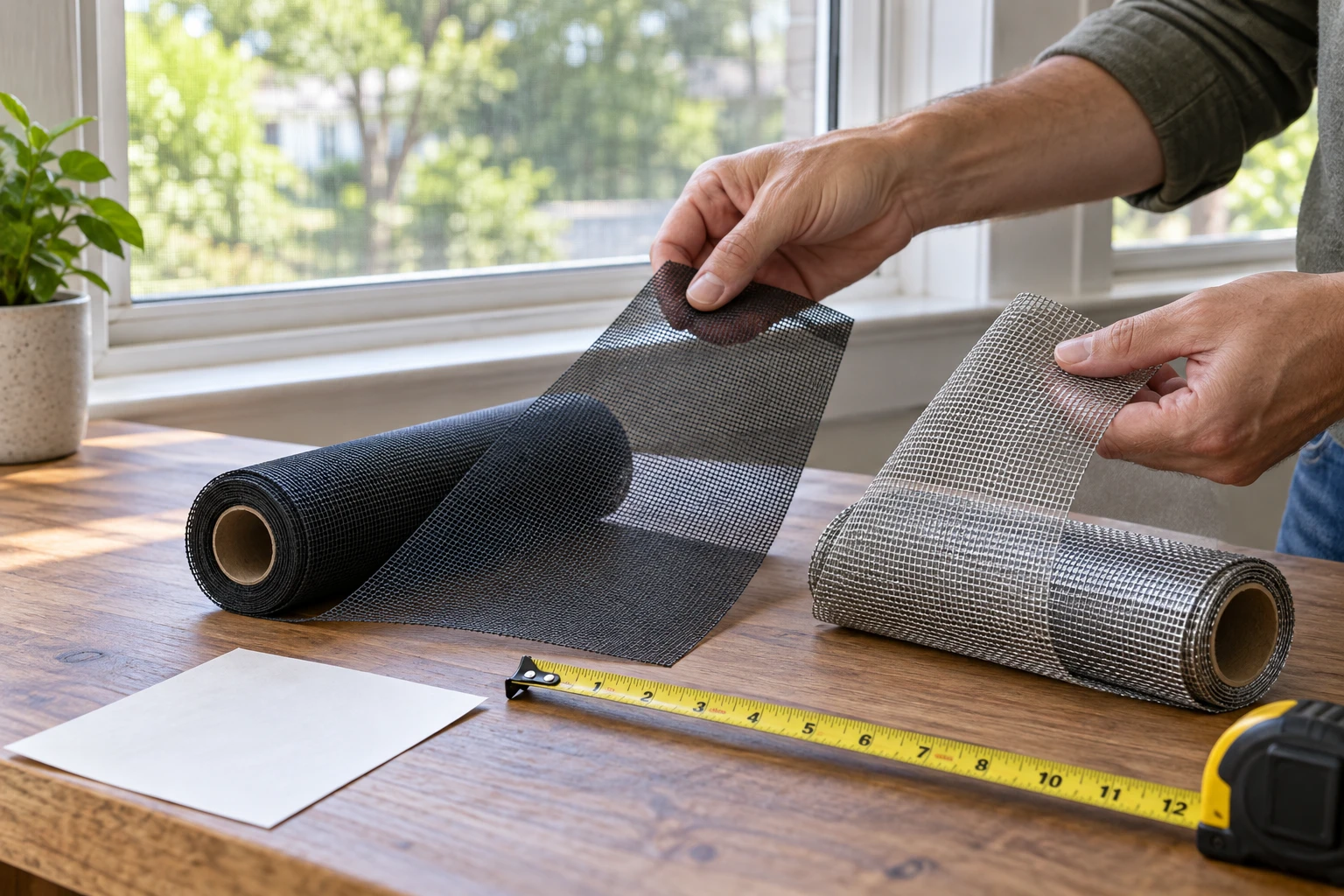
Window screen mesh roll labels can look like a string of unrelated numbers: material, width, length, mesh count and sometimes wire or strand thickness. Each describes a different part of the material. None proves by itself that a roll fits an existing screen frame. A useful reading order is to identify what the roll is made of, which dimension is the fixed roll width, how much material is in the roll, and what other fit questions remain with the frame and retainer. This makes product pages easier to compare without turning one attractive label into a universal replacement choice.
Separate a mesh roll from a complete screen
A roll is the screening material. A complete window screen also has a frame, a channel or other retention method and a way to sit in the window opening. A product page for mesh alone does not include those other parts unless it says so. Before shopping, look at the existing screen. Is its frame sound? Is only the mesh damaged? If the frame is bent or missing, a roll may not be the complete answer.
The public torn-window-screen replacement guide owns the practical replacement sequence and the decision about frame fit. This article explains the vocabulary on mesh rolls before that work begins. Reading a material label is useful preparation, but it does not replace measuring the real frame or following its installation method.
A pre-framed screen is a different product form. Its listed outer dimensions and frame profile matter in a way a loose roll's width and length do not. Do not compare a 48-inch roll with a 48-inch finished screen as though the numbers name the same measurement. First identify whether a page sells fabric or metal mesh by the roll, a kit with other parts, or a complete framed assembly.
Read material names as identities, not promises
Fiberglass, aluminum and stainless steel are common material labels in screen listings. They identify the broad substance, but two rolls with the same material name can still differ in strand size, weave, finish, stiffness and intended use. A product title such as “heavy duty” is not a substitute for an exact specification. Keep material identity separate from seller claims about durability, pet resistance, visibility or airflow until those claims have evidence applicable to the use you have.
One current Republeq FGYRYK fiberglass screen-mesh listing describes a 60-inch-wide, 100-foot roll for window or door screening. The page describes the material as fiberglass and discusses cutting it to size. These details make it an example of a wide roll sold for later fitting. Its broad statements about performance do not prove how it will look, last or retain in your particular frame.
A separate 304 stainless-steel mesh listing names a 48-inch by 25-foot option and includes an 18-mesh and .009-inch description in its title. This is a different material and set of stated dimensions. The title's “pet proof” phrase is a seller claim, not a guarantee against an animal or an indication that the existing frame and spline can hold it. The page also offers size choices, so confirm the selected variant before treating one title dimension as the item in your cart.
These two examples show why a material comparison is not a simple winner chart. The listed widths, lengths and material identities differ. The right question is which exact roll can be cut and retained in the actual screen assembly for your intended use. Do not transfer a performance description from fiberglass to stainless steel or infer that a stronger-sounding material automatically suits every retention channel.
Understand width and length
Roll width is the fixed span across the material. Roll length is how much material is wound along the roll. If you need a panel wider than the available roll width after allowing for the frame's retention margin, more roll length will not solve the width problem. Measure the frame opening and the material that must reach the channel under the chosen installation method. Keep a written sketch of the cut orientation before ordering.
A roll stated as 60 inches by 100 feet uses different units for its two directions. Convert them to a common unit only after deciding which direction must cross the screen opening. For several screens, lay out a cut plan that allows each piece to be oriented correctly and leaves reasonable handling margin. Do not divide total roll area by window area and assume every leftover strip is usable. Offcuts can be too narrow for another opening.
Listed dimensions may describe a nominal product option. Confirm the current page and package details for the exact variant. If the existing screen uses a particular weave direction or visible finish, consider that while planning cuts. A page photograph can help identify color but is not a ruler. The measured roll and the measured screen frame decide whether a proposed cut is possible.
Understand mesh count and strand thickness
“Mesh” in a number such as 18-mesh generally describes a weave count under a manufacturer's convention. The number is a specification to investigate, not a complete account of the openings. Strand or wire thickness also affects the open spaces between strands. A title that gives both mesh count and .009-inch wire information provides more detail than one that simply says “fine screen,” but it still needs the manufacturer's definition and intended application before making an airflow or insect-control claim.
Do not use mesh count alone as a universal ranking for visibility, airflow or strength. Material, coating, strand shape and installation tension all affect the result. If an exact performance requirement matters, obtain the manufacturer's specification for that product and compare it with the window's purpose. A seller's broad phrase can identify a question to ask, but it cannot settle that question for every household.
Look at a physical sample when color, view or texture matters. Hold it against the same kind of daylight and background as the window if possible. A tiny online image may be enlarged, backlit or color adjusted. A sample does not test long-term durability, but it can reveal whether the weave and finish are acceptable to the people using the room.
Keep the retainer question separate
The screen frame's groove and retainer determine how mesh is held. The public spline-size and channel-fit guide owns the exact matching decision for that retainer. A mesh roll's width, length and material do not prove that a particular spline diameter or frame channel will accept it. Measure and identify those parts under the frame's instructions before ordering a bundle of materials.
Thicker or stiffer material can make a familiar installation feel different, but this article does not certify a required spline size or frame strength for a new mesh. Do not force an unfamiliar material into a weak or damaged frame. If a frame has a broken corner, warped rail or missing channel, resolve that condition as its own problem. A roll will not repair the retaining structure.
Keep mesh, spline and frame dimensions in separate rows on your note. Write “mesh roll 48 inches wide” in one row and “screen frame outside width” in another. Add channel and retainer measurements only when taken from the real assembly. This prevents a common category error: treating any two numbers on a screen product page as interchangeable just because they are both in inches.
Compare exact product pages before choosing
For each candidate roll, record the exact material, selected width, selected length, color or finish and any stated mesh or strand specification. Then record unresolved questions: compatibility with the frame, retention method, necessary cut margin, manufacturer care and any performance requirement important to the room. A blank field is not an automatic rejection, but it is not evidence of a match.
Be especially careful with variant selectors. A title, thumbnail and currently selected option can refer to different sizes on one storefront page. Save the option name or SKU you intend to order. If the page shows a range of options, compare the one that will actually be delivered. The two current examples are source evidence for their stated page content, not a recommendation to substitute one variant for another.
Package quantity matters too. A long roll may provide material for several frames, while a shorter roll may be enough for one. Estimate from a cut layout instead of buying the largest length solely because it seems flexible. Do not make a price or waste claim without current quotes and the exact cuts. The educational point is that width and length have different jobs; a large total area is not the same as the right shape.
Use the labels to ask better questions
After reading the label, you should be able to say, “This is a loose roll of a named material, with this selected width and length, and these stated weave details.” You should also know what the label has not answered: whether the existing frame is sound, how much margin is needed to retain the mesh and which retainer fits the channel. Those are distinct decisions, not missing magic words on the roll.
Keep the source page, selected option and your frame sketch together while planning the work. If a seller or manufacturer needs to answer a fit question, send the exact model and measurement rather than “will this screen fit my window?” A precise question is easier to verify and less likely to produce a broad promise that does not apply to the assembly in front of you.
Once the roll's role and dimensions are clear, move to the actual replacement and retainer instructions for the screen. The result of this article is not an installed screen; it is a better product comparison. A clear material label and a measured frame let the next step begin with fewer guesses.
A short example of the reading order
Suppose two pages show a fiberglass roll and a stainless-steel roll. First identify that both are mesh rolls rather than complete frames. Next write their selected widths and lengths in separate columns. Then note any stated weave count, strand thickness and color. Finally list what the pages do not establish about the particular frame and its retainer. That order avoids deciding from “heavy duty” or “easy install” before the actual dimensions are understood.
If a replacement project spans several windows, repeat the frame measurements for each one. Similar-looking windows can have different screen frames, channel conditions or outside dimensions. A roll can provide common material while the cut and retainer plan remain specific to each assembly. Keep those facts separate so one successful screen does not become an unsupported fit claim for every other opening in the house.