Home & Living
Wind chime silhouette sketch: let the gaps shape the page
An original personal drawing exercise notices spaces between hanging forms, comparing a plain outline with a dark silhouette while keeping sound, mounting and product performance separate.
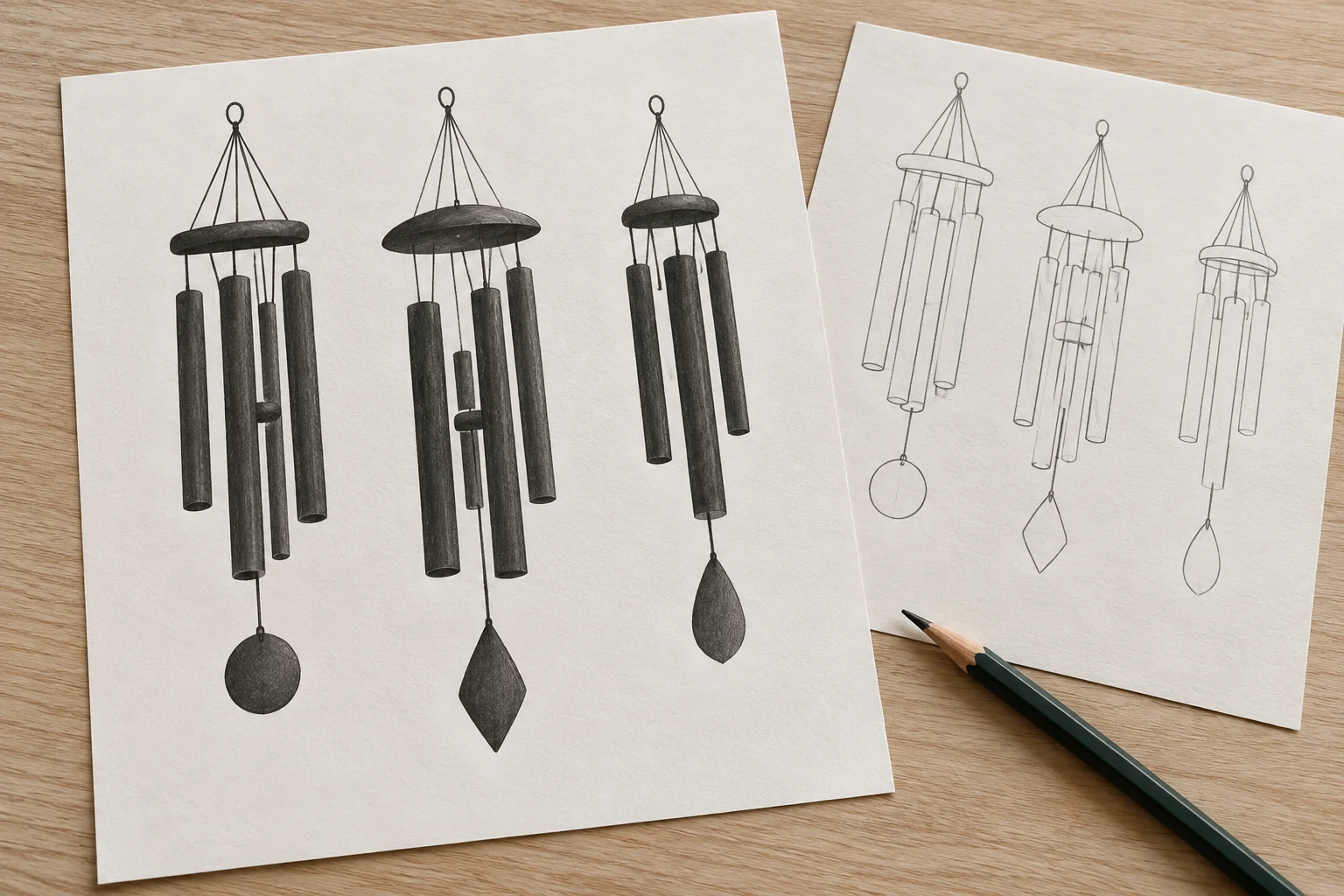
A wind chime silhouette sketch can begin with the spaces between the hanging forms. Look at one narrow gap, the open area below a shorter tube or the larger space around a lower pendant. Let those unshaded areas remain part of the page rather than treating them as places that need more detail. The result can be a personal drawing, without recording a sound or making a measured pattern for an actual chime.
This is an original visual exercise using ordinary drawing materials. It promises no improvement in skill, mood or concentration. You can choose a still view already available to you or imagine a simple hanging arrangement. No mounting, reaching, striking, tuning or moving a suspended object is needed for the paper idea, and neither selected retail chime has been handled or heard for this article.
Choose a still view that interests you
Start with a manageable part of the hanging form. You might notice several long tubes, a central shape and an open area around them. Choose the part you want to draw today, rather than trying to include every cord, attachment and surface mark. A small subject can leave room for the spaces that caught your attention in the first place.
Keep the view still for this exercise. If you are looking at a suitable image or an ordinary accessible view, retain that same reference while considering the page. This is a drawing choice, without an instruction to move equipment or create a hanging arrangement. If the object is not conveniently viewable, an imagined group of simple hanging shapes can supply a separate subject.
Decide whether you want the whole hanging outline or a closer study of one area. Write a small note for yourself if it helps distinguish the choice. A cropped study can remain a cropped study; it need not pretend to show every part of an actual assembly. The drawing's boundary belongs to the personal page, without becoming a specification for the product.
Notice one gap before adding detail
Look at a space between two forms and describe it in ordinary words. It might appear narrow, long, tapered or open at one end in your chosen view. Those are observations about the appearance you are considering. They supply no measurement of the real object, no clearance requirement and no finding about which components can move.
On the page, leave an unshaded area for that space while indicating the forms around it. You can use a light outline at first. Keep enough of the neighbouring shapes to make the gap understandable to you, without requiring a complete rendering. The open part can become a deliberate feature rather than an accidental patch left after the objects are drawn.
Choose whether the rest of the page should remain spare. One clearly noticed opening might be the whole reason for the study. You do not need to fill the background, invent a garden setting or add a decorative border. Leaving paper visible can be your own compositional choice, without asserting that the real scene contained nothing else.
Read two actual forms as visual examples
The Woodstock Celtic Chime WCCS offer describes five silver aluminium tubes, a wood support and an agate windcatcher. The selected-model gallery images show the hanging tubes, a central wood-look part and a green pendant. These are source statements and visible forms, without independent material authentication. General brand graphics, a founder portrait and other illustrated chimes are separate marketing context, rather than this model's supplied inventory.
The antique bamboo wind-chime offer describes bamboo and coconut wood. Its single gallery shows bamboo-look tubes beneath a crossbar, with a visible central component and cord extending beyond the crop. That supplies another visual form to consider, without a complete installed-length measurement, origin verification or sound test. Do not supply an unseen lower part from imagination and then label it an observed feature of the offer.
One image may interest you for its long straight forms; another for the outlines of its tube ends. You can choose either kind of detail for a personal page without ranking the products. Their material descriptions and tuning language do not establish what your drawing should look like, which sound you would enjoy or how either chime performs in an actual place.
Compare an outline with a dark-form study
Try a plain outline version of the chosen view on one part of the sheet. Use simple shapes for the hanging elements and leave out details that do not help you recognize the gaps. This version can remain light and unfinished. Its purpose is to give your own visual idea a place, rather than to test accurate reproduction of a retail design.
On a separate area or sheet, make a dark-form version of the same intended view. Let the hanging shapes carry the darker marks while the gaps remain unshaded. You can simplify the tube shapes rather than trying to imitate a material's texture. Keep the two studies distinct so that you can tell which visual treatment you were considering.
Look at the open areas in both versions. Which gaps remain noticeable to you, and which merge into the surrounding page? You might choose to keep one opening broader in the personal drawing or omit a small detail that obscures it. Record that as an artistic choice. It is not a corrected physical dimension or evidence that the real tubes have changed position.
Keep the view steady while judging spaces
Compare the studies from the same intended orientation. If you turn one sheet or introduce a different view halfway through, identify that as another choice. This exercise concentrates on the relationship between dark forms and unshaded openings, without testing rotations or selecting a canvas orientation. A new viewpoint can be interesting while remaining a different study.
Use a few words to retain what you prefer. You might write that you want the long opening near the centre to remain clear, or that the lower pendant should have more open paper around it. These are possible personal notes, without an instruction to alter a real chime. Choose the wording that describes your page rather than adopting a fixed drawing rule.
A study can also tell you that the plain outline is the version you want to keep. There is no requirement for the darker page to become the final one. The comparison makes two treatments available; it does not establish a hierarchy of skill or guarantee that another person will read the spaces as you do.
Follow an imagined drawing choice
Imagine that Neri is making a wholly fictional page from a simple invented hanging form. The first outline includes every cord Neri thought of adding. A narrow opening between two tube shapes becomes difficult for Neri to distinguish among those lines. This invented example reports no actual product, finished artwork or observed response from another viewer.
Neri keeps that first outline and makes a separate dark-form study. In this version, a few small lines are omitted and the chosen opening remains unshaded. Neri writes a short note identifying the gap they wanted to keep. The change concerns the invented drawing, without a claim that a real suspension has fewer cords or that removing parts would be appropriate.
Suppose Neri prefers the second page but keeps the first as an alternative. Both can remain in the sketchbook with their own labels. The fictional outcome is a personal choice about what stays readable on paper. It promises no improved perception, technical drawing accuracy or agreement from someone else looking at the result.
Keep the drawing separate from listening and repair
The wind chime porch-corner guide owns listening preference, shared quiet and a familiar decorative subject in an actual place. Those choices do not follow from a silhouette. A page containing long dark tubes records an artistic form, without establishing a sound level, tone, musical scale or anyone's preference about hearing the actual object.
The sketchbook soundtrack afternoon guide gives optional background listening a role beside one familiar object. This gap study needs no soundtrack or listening arrangement. Its narrower question is which unshaded openings you want to retain between the drawn forms. Keep speaker features and music choices with that separate activity if they become relevant to another occasion.
A quiet or damaged actual chime needs its own identified instructions and support enquiry. The drawing supplies no diagnosis, suspension method, knot, tuning adjustment or repair. Similarly, a study of gaps gives no structural clearance or mounting specification. Leave practical product questions with the applicable equipment information rather than treating a pleasing page as a physical plan.
Keep a page you can recognize later
Retain the chosen study with the few words that explain what caught your attention. You may want to keep both versions, leave one unfinished or stop with a single gap drawn. This personal activity requires no public display or complete record of the object. The page can remain meaningful to you without a title explaining its entire history.
If you return later, let the new page identify its own view and choices. A different gap or a different arrangement can belong to another drawing. Keep the earlier one as the earlier study instead of silently relabelling it as the new version. The exercise offers a modest way to notice spaces on paper, without requiring a series or an eventual purchase.
Keep payment with the identified chime order
Both captured product offers list cryptocurrency among accepted payment methods in structured data. That supports checking current payment choices if you decide to order a chime. It does not establish which assets, networks or wallet services a later checkout will support. A payment preference cannot confirm a sound, establish a mounting arrangement or decide which unshaded gap belongs in your drawing.
Retain the exact selected offer and any applicable contents clarification with the order note. General brand-range pictures and packaging examples should remain separate from the actual model being purchased. If the product or variant changes, review its own supplied information rather than carrying forward another chime's details. Someone ordering on another person's behalf needs the current identified goods and unresolved questions.
If cryptocurrency is selected, read the current transaction's amount, asset, network and receiving details. This guide supplies no wallet address, network recommendation, transfer sequence, exchange rate or fee estimate. Ask the merchant or payment provider when an essential instruction remains unclear. Details remembered from another purchase cannot establish the requirements of a different order or complete an unanswered product question.
Check the merchant order status alongside any payment confirmation. Reconcile an uncertain existing attempt before sending another payment. Read the applicable delivery, cancellation, return and refund conditions, including any cryptocurrency terms. Keep the order and payment references with the product clarification so a later enquiry identifies the actual transaction. Those records do not inspect a delivered chime, verify its materials or establish a sound result. If another person places the order, agree who will resolve a pending status question before either person begins another checkout.
Let the gaps remain part of the drawing
A wind chime silhouette sketch can finish with a few dark hanging forms and the spaces you chose to leave unshaded. Keep the outline and dark-form alternatives distinct, retain the detail that interested you and leave the page personal. The drawing can stand on its own, without becoming a sound record, a construction pattern or a reason to change an actual chime.