Tools & DIY
weighted door stopper slides: check floor contact and door force
A practical diagnosis for rope-wrapped weighted door stops that creep across a floor instead of holding a door in place.
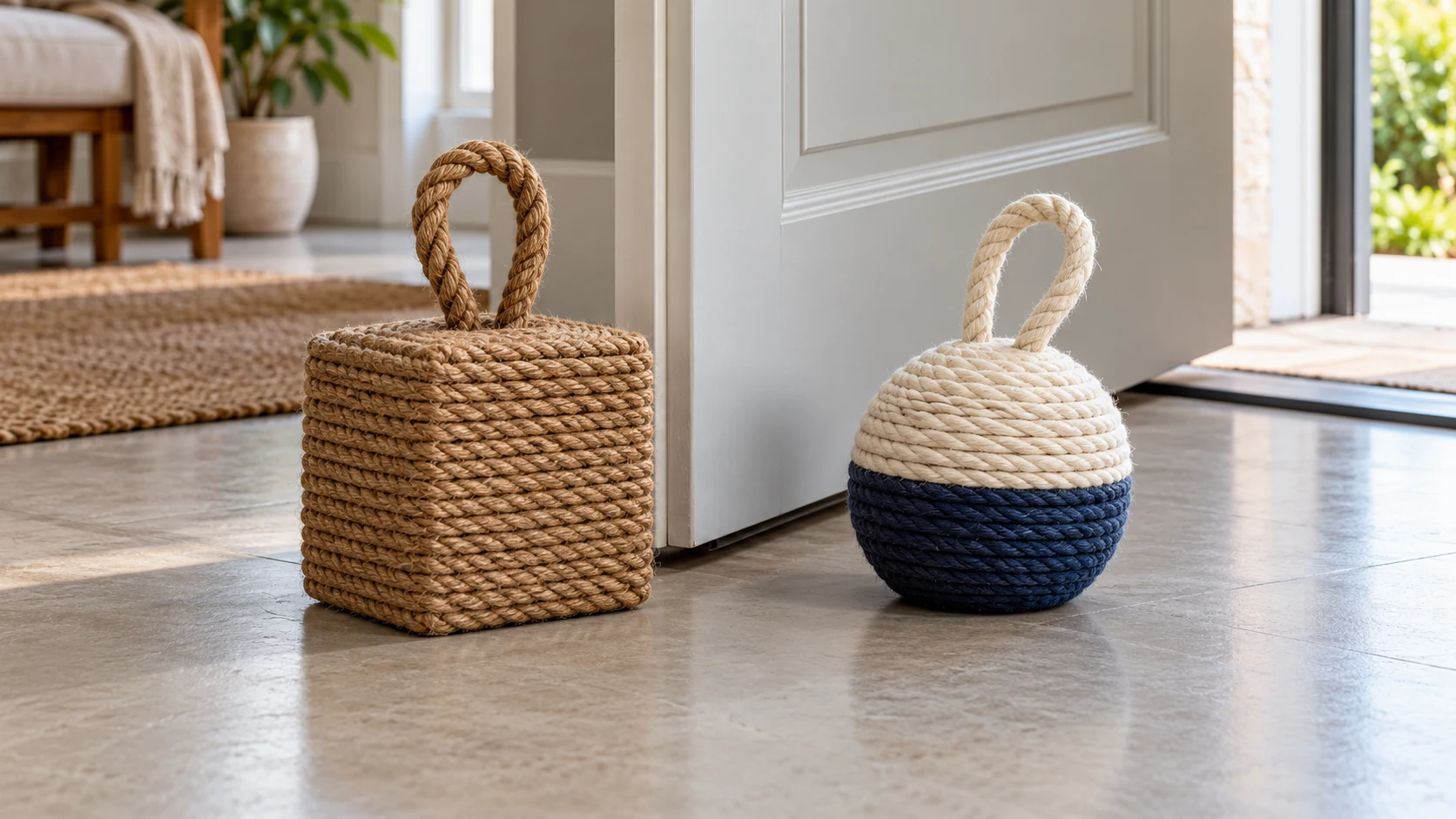
A weighted door stop that creeps across the floor is giving you useful information. It may have too little contact with that particular floor, be placed where the door pushes it along, or face a door that moves harder than expected. Before replacing it, watch one ordinary opening and closing cycle. Note whether the stop slides as a unit, rolls, tips, or stays put while the door passes around it. Those are different problems, and the distinction matters more than a vague promise that a heavier stop will hold every door.
Watch the movement before changing the stop
Set the door where you normally want it held, then place the stop at the point where the door meets it. Release the door gently and look at both objects from the side. If the stop moves in a straight line, its floor contact is failing to resist the door’s push. If it rotates or tips, the shape and contact point matter. If the stop stays put but the door does not touch it consistently, placement or the door’s path is the first issue. Make this observation with the door moving normally; an exaggerated shove tells you little about the everyday failure.
Check whether the door is drifting under its own motion or being driven by a draft, a closer, or the way it hangs. A weighted stop has no mechanical latch. It relies on its position and contact with the floor. The same stop may behave differently when the door approaches slowly, swings freely, or is released from a different angle. You do not need to diagnose the entire door assembly to see that variation. Record the moment the stop starts moving and whether it happens on each use or only under one condition.
Separate sliding from rolling and tipping
Two rope-covered examples show why “weighted” is not a complete description of how a stop meets the floor. The Eosunjian brown weighted door stop is presented as a rope-wrapped square form with a carry loop. Its listing describes sand filling and gives dimensions of 14 centimeters in each direction. The square outline suggests a face can rest against a flat floor, but the listing gives no measured holding force. The visible rope texture and that floor together determine the actual contact, which cannot be proven from the photograph alone.
The Leadrop weighted door stopper is a round, two-tone rope ball with a carry handle in its single gallery image. The name describes it as sand filled. Its rounded form can present a different contact patch as the door pushes it. That is a reason to watch for rolling or rotation, not a claim that the item will roll on every floor. The listing does not supply a tested grip rating that would let you rank it against the square stop. The shapes help frame the diagnosis; your door and floor settle the practical result.
When a stop rolls, moving it a few centimeters may change where the door contacts the curve. When it tips, the door may be pressing high on one side rather than into a broad, settled face. If it slides without rotation, moving it may still help by changing the force direction, but the floor interface deserves attention too. These observations tell you which adjustment to try first. They do not require inventing a universal rule that square always wins or round always fails. A soft rope surface, a floor finish and the direction of pressure all interact.
Look at the actual floor contact
Lift the stop and inspect the area that sat on the floor. Dust, crumbs or a fold in a fabric covering can change the contact it makes. Clear loose debris from both the floor and the stop’s underside using care appropriate for those materials. Then set it down without twisting it into place. If the stop has a flat face, let that face rest fully on the floor. If it is round, see whether it settles in one position or keeps seeking another. Repeating the ordinary door movement after this simple reset can reveal whether the problem was a temporary contact issue.
Floor surface matters as well. A smooth sealed floor may let a rope-covered stop slide where a textured surface does not; a deep rug may let the stop sink or tilt. Neither observation proves a defect in the stop. It describes the interaction between the two surfaces under the door’s push. Do not put an unverified adhesive or rough pad under a decorative stop just to force a quick result. Such an addition changes the contact and may affect the floor. Choose any accessory only after checking that it is appropriate for the floor finish and the intended use.
A gap under the door can change the contact point. If the door passes above the stop or catches only its handle, the body may never receive the push in the way you expected. Look at the door bottom, the stop height and the exact edge that touches. A rope handle is for lifting the object in these listings; it is not a mounting bracket. Position the body where it can intercept the door at a stable point. If the gap is too large for that stop’s body, placement cannot create height that the product lacks.
Adjust placement one variable at a time
Mark the place where the stop failed, then move it slightly along the door’s path and try the same gentle release. Keep the door angle similar so you can tell what the change accomplished. If the first position sent the stop straight away from the door, a location closer to the hinge side or farther into the swing may alter the push direction. The best place depends on the room and the doorway; there is no reliable distance that works for every door. A small controlled change gives you more information than repeatedly dropping the stop somewhere nearby.
Consider where people walk. A stop that holds the door but sits in a busy footpath creates a new nuisance. The chosen position should let the door open as intended while leaving a sensible route through the room. If the doorway has a threshold, uneven tile, or rug edge, test the stop on the surface where it will actually live. A demonstration on a different patch of floor may give a misleading answer. The goal is a repeatable ordinary placement, rather than a position that works only when someone nudges the stop after every use.
Once you find a position that seems promising, try several normal door cycles. Watch whether the stop migrates a little each time. A stop can appear to hold on one release yet slowly move until the door escapes it. Record the starting location and the final location, even with a small piece of removable paper near the floor if appropriate. Do not mark or tape a sensitive finish without checking it first. The important observation is whether the same setup remains usable when repeated, because a one-time hold is a weak basis for a replacement decision.
When the stop is not the whole problem
If the door’s swing has changed, a door stop may be asked to compensate for a separate hardware or alignment issue. A door that rubs, closes by itself more than it used to, or meets the floor at a new point deserves its own assessment. The related floor doorstop compatibility guide discusses swing path, contact height and mounting surfaces for fixed hardware. Those are useful questions when considering a different kind of stop. Its mounting advice does not turn a rope-weighted object into a floor-mounted fitting.
A different guide, floor doorstop comes loose, helps diagnose fasteners and fixed hardware that move. A freestanding weighted stop has no screw that can loosen in the floor. If the object itself creeps, stay with contact, shape and door motion first. If the door or a separate mounted fitting has begun to move, that guide addresses a different repair question. Keeping these failures apart prevents an unnecessary hardware fix when the only observed failure is a sliding soft stop.
Sometimes the room conditions are simply beyond what a freestanding stop can reliably handle. A door with a closer or frequent strong air movement may push a decorative weight out of place, especially on a low-friction floor. The listing descriptions for the Eosunjian and Leadrop examples do not quantify holding force under those conditions. If ordinary placement and clean contact still fail, look for a product whose stated installation method and door use suit the situation. That may mean a different freestanding design or properly selected fixed hardware, depending on the doorway. Do not turn the absence of a rating into an invented guarantee.
One useful comparison is to put the stop back in the same starting place after every trial. Change only the door angle or only the stop position, then repeat the normal release. If both change at once, a successful hold does not tell you which change helped. Watch the whole base during contact: a square stop may shift while remaining upright, and a round one may rotate before it travels. That sequence is more informative than where the object ends up. Stop the trial if the door or floor would be damaged; the point is to observe ordinary use, not to test the maximum push the stop can withstand.
Make the next choice from the observed failure
If the stop slid straight across a clean, flat floor, prioritize a contact design that the seller actually describes for that surface, and verify any floor-care limitation. If it rolled, compare shape and how much of its body rests at the door’s contact point. If it tipped, check the door’s contact height and the stop’s stable resting position. If the door missed it, solve the placement or height mismatch before shopping by weight. These are diagnostic categories, not product rankings. Both rope-covered examples are sold as weighted door stops, yet their shapes give different questions to test.
Keep expectations tied to the exact offer. The Eosunjian listing supplies a square rope-wrapped form, handle, sand-filled description and stated dimensions. The Leadrop listing supplies a rounded rope-ball form and handle; its name describes sand filling. Neither captured listing proves a numerical holding force on your floor. A photograph can confirm the broad object and visible shape, while a brief placement test at your doorway shows what the object actually does there. If that test shows persistent movement, choose the next stop for the specific failure you observed rather than buying another weight on the strength of its label.