Educational & Explainer Articles
Wax paper and parchment: match the paper to the task
Distinguish unheated wrapping from a later cooking task with two kitchen-paper offers and ordinary examples of a meal plan changing.
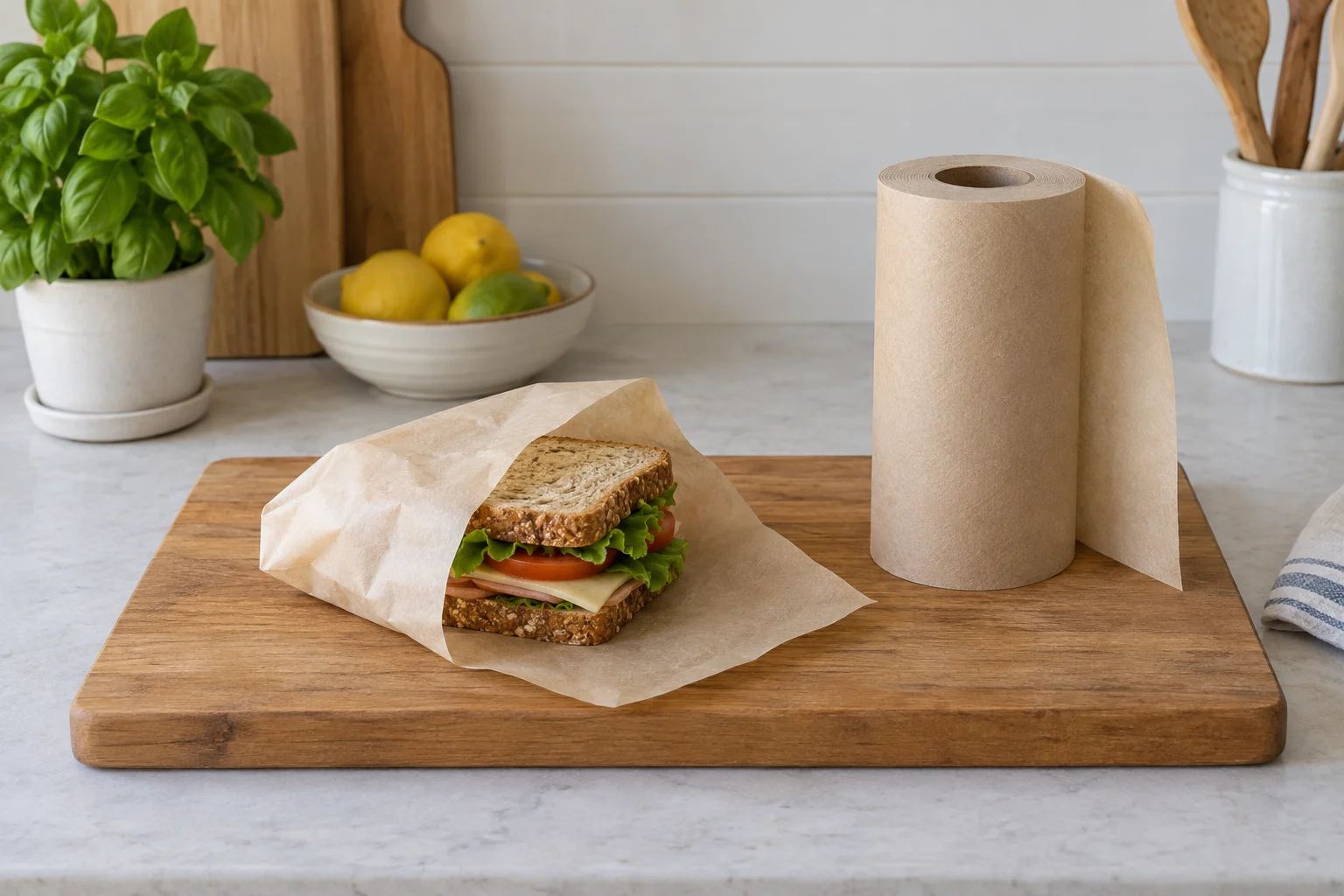
Wax paper and parchment can look like neighbouring answers to the same kitchen question. Begin with what the paper will do. Will it hold an unheated sandwich, stay on the preparation counter or go into a heated cooking task? That change of setting matters more than finding the word “baking” somewhere in a shopping description.
For the If You Care papers discussed here, the maker gives different uses. Its current Waxed Paper page names food preparation, storage and wrapping and says the paper cannot be heated. Its Parchment Baking Paper page names baking, roasting, reheating and wrapping. Keep those permissions with their respective products and applicable package instructions.
Wax paper without heat has a useful kitchen role
Think about wax paper without heat as a particular task choice. An unheated wrapping job does not become a baking job because both happen in the kitchen. You can choose a paper for the activity in front of you while leaving a later cooking stage to a separately appropriate arrangement.
Imagine an adult named Rae making a sandwich to take away. In this invented example, the paper's proposed job is to wrap the prepared sandwich. Rae is choosing around the food and the wrapping task, without planning to put that wrapper into an appliance. The example supplies no food-storage duration or temperature advice.
Later, Rae decides that she would like the sandwich warmed. The plan now contains a heated stage that was absent from the first decision. She takes the wax-paper wrapper out of that proposed heating arrangement and follows the actual food and appliance instructions for a suitable alternative. The original wrapping choice has not supplied a cooking permission.
This distinction can help when several people prepare food together. One person may mean “wrap this for carrying,” while another hears “have it ready to warm.” Say which job you mean before choosing the paper. A brief explanation of the intended next step gives the other person something concrete to follow.
The selected wax-paper offer leaves a misleading impression
The If You Care 75-square-foot wax-paper offer names a pack of twelve. Its description includes “Perfect for baking and crafting.” That broad wording does not override the maker's current instruction against heating its waxed paper.
Read an attractive use phrase beside the exact task you intend. “Baking” can appear in a description without explaining which part of a kitchen project it means. If your intended step heats the paper, keep the maker's explicit restriction in that decision. Do not turn the more general phrase into permission for the prohibited use.
A preparation surface and an oven liner can appear in the same project without being the same selected item. You can plan the stages separately. Choosing something for an earlier part of the work does not require carrying it along into every later stage.
Use the actual instructions supplied with the paper. These current maker pages explain product uses; they do not identify every carton sold elsewhere. If a shopping phrase conflicts with applicable instructions, settle the intended use before proceeding. Keep the wax paper's clear heat restriction in the decision.
Parchment for oven baking needs its own instructions
For parchment for oven baking, select the actual paper and the instructions that apply to it. The fact that a different paper is unsuitable does not approve every parchment product for every appliance, placement or setting. Keep the chosen paper in the recipe and equipment arrangement you actually intend to use.
The If You Care parchment offer identifies model 57935, a seventy-square-foot size and a pack of twelve. Its paper identity differs from the wax-paper offer, even though both carry the same brand.
Imagine another adult, Mina, planning an oven-baking project. She begins with a recipe she already intends to follow and the actual pan and appliance. Paper is one part of that existing setup. She chooses its role using the applicable package and equipment instructions instead of using whatever roll was most convenient to reach.
Mina can keep the preparation counter and the baking setup distinct. A sheet used in one place need not travel into another place with the food. Her plan can specify which paper belongs at each stage without changing the recipe or inventing an operating setting.
Notice when the job changes during preparation
Try describing a kitchen task with a verb. Wrapping, separating and reheating point to different intended actions. A general shopping note saying “paper for food” leaves those actions bundled together. Naming the action helps you see when you have reached a new use that needs its own permission.
For Rae, the change occurs when the sandwich moves from something to carry to something she wants warmed. For Mina, it occurs between preparing the food and arranging the heated cooking stage. Neither change is answered by the amount of paper left on a roll.
In a shared kitchen, make the change visible to the person taking over. Rae can say that the present paper was chosen for an unheated wrapper. Mina can identify the paper she has selected for the actual baking arrangement. That explanation concerns the intended use, without requiring either person to guess from appearance.
You can also change the meal plan. If Rae decides to eat the sandwich without warming it, that different choice removes the proposed heating stage from her example. It does not change the paper's stated permissions. The plan changes around the restriction, while the material keeps its own instructions.
The overlap between uses can be limited. Two products may both serve one job without sharing every permission. When the next task changes, compare the permission needed for that task. Treating the names as complete substitutes would lose the distinction you used to choose the first sheet. A shared wrapping purpose, for example, answers a wrapping question; it does not settle what belongs in a later heated stage.
A familiar colour does not identify the loose sheet
Suppose two unlabelled rolls sit beside each other on Mina's counter. In this fictional scene, their visible colour looks similar to her. She cannot settle their identity from that impression. She returns to the actual packaging and the information that belongs to each roll before assigning one to the baking setup.
Keep a roll with its package if that is how you can recognise it. If you have already moved it elsewhere, use the actual information available to identify it. A remembered place in the drawer should not become the entire reason for deciding that an unidentified sheet has a particular permitted use.
This is a recognition problem, without a need for a home experiment. Mina's question is which paper she has, not how to demonstrate a difference between unknown samples. Knowing the product lets her consult the relevant instructions directly.
A person helping with preparation can ask which roll is intended for the job instead of choosing by colour. Give them the product identity and the task. That small handoff is particularly useful when the packaging is elsewhere or several supplies have been set out together.
Keep the liner choice separate from the supporting equipment
The paper-roll and silicone-mat guide explains those different liner formats and their supporting equipment. The dehydrator accessory guide distinguishes a machine's trays from optional sheets and screens. Neither supplies permission for an unidentified paper.
Mina still needs the pan her chosen recipe and equipment require. A sheet of paper does not become that pan when placed beside it. Keep each item in the arrangement for its actual role rather than asking a flexible sheet to supply the shape or support of another object.
Likewise, a familiar kitchen sheet is not automatically an accessory for every machine on the counter. If you move to a different appliance task, use the information for that equipment and its actual permitted accessory. The distinction between wrapping and heating remains useful without becoming a universal liner recommendation.
Choose the paper before deciding how much to order
The offered package quantity comes after the use decision. A household wanting paper for an unheated wrapper has a different first question from Mina preparing a baking arrangement. Choosing the correct task first prevents a large supply from becoming the reason to use a paper somewhere its instructions do not allow.
Rae can leave an order undecided if she already has suitable identified material for the wrapping job. Mina can do the same while establishing the paper and equipment arrangement she needs. Neither example requires purchasing both products merely because both were discussed.
If another person places the order, describe the actual item rather than asking only for brown kitchen paper. The two offers have separate product names and quantities. A complete shopping request gives that person something to compare with the item they are about to select.
Keep a paper purchase attached to its actual checkout
Choosing between wax paper and parchment for a kitchen task comes before choosing a payment method. If you are considering an order through republeq.com and prefer crypto such as USDT, keep the exact paper and offered package beside that decision. A payment preference cannot change whether a paper belongs in a heated stage. Resolve the intended use with the actual product and equipment instructions first. Then inspect the methods presented for the resulting order. Cryptocurrency appears among accepted payment categories on the captured product pages. That description does not identify which assets or networks are offered for every later basket, and it supplies no transfer destination. If USDT is not offered, leave that payment choice unresolved rather than treating its mention here as an available checkout option. Follow the actual transaction information and obtain clarification before authorizing a payment when a necessary detail is missing. This paragraph supplies no wallet setup or token-transfer procedure. Keep the chosen product reference with any seller answer about the package so a later change of item does not inherit an answer given for another order. Review the current delivery and return information for what you actually intend to receive. A proposed baking day gives no guaranteed arrival date, and an order confirmation supplies no operating permission for the paper. Retain the purchase confirmation together with the information supplied by the payment route you choose. You can postpone the purchase while resolving the remaining product or checkout question. Rae's wrapping plan and Mina's baking plan remain separate choices, even if a shared household eventually orders supplies together. Each person still needs the paper intended for their particular task.
Choose wax paper and parchment by the work each will actually do. In these If You Care examples, keep the waxed paper out of the proposed heated stage and use the parchment's own instructions for its stated baking uses. A change from carrying food to heating it is the point to reconsider the paper, even when the food itself stays the same.