Sewing & Crafts
watercolor brush pen set: understand colors, water tools, and paper
Separate colored pens from water and blending tools, check paper needs, and leave contradictory set counts unresolved until the seller confirms the exact variant.
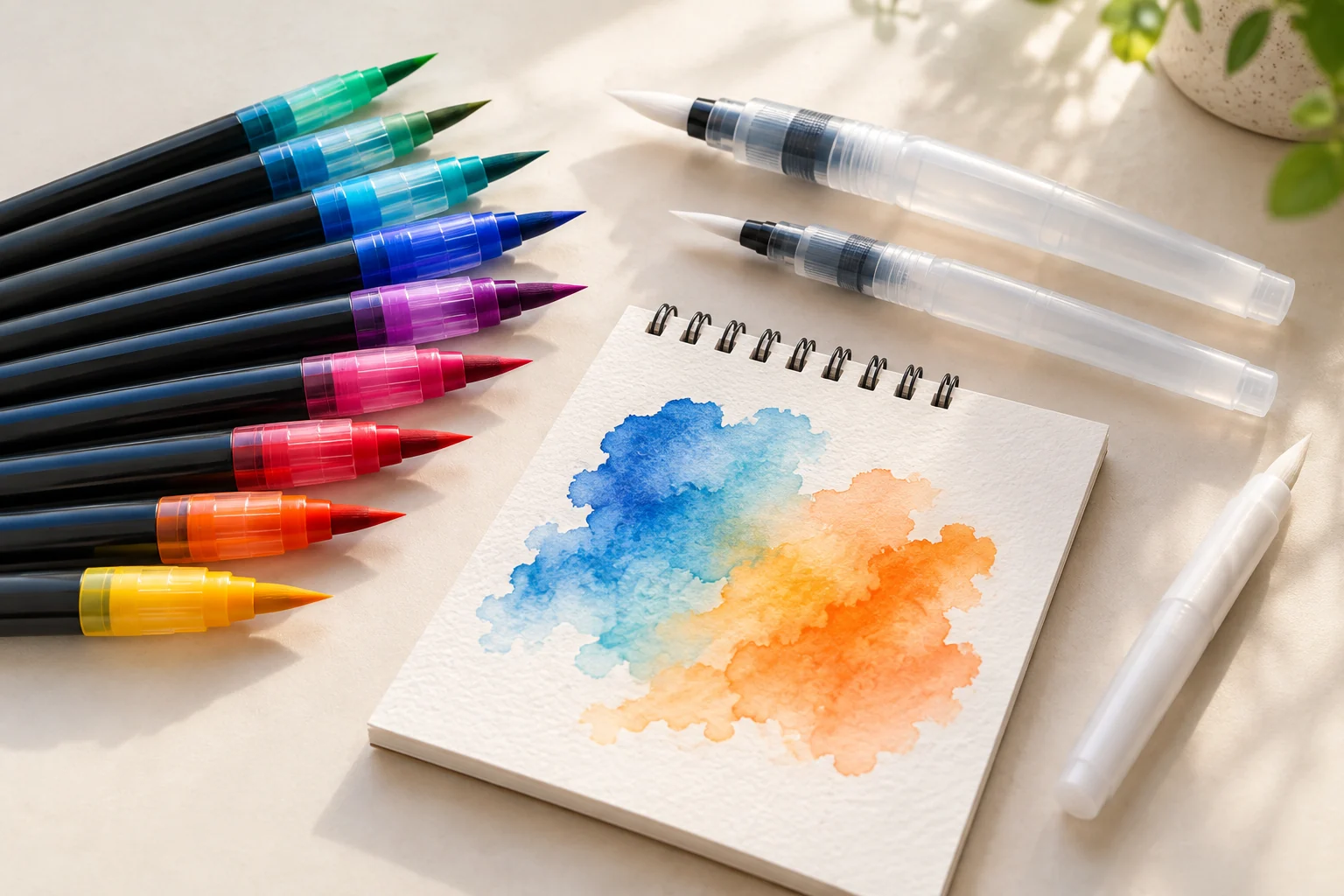
A watercolor brush pen set can contain several different kinds of tools under one number on the front of a package. Colored ink pens, empty or refillable water brushes, a blending pen, and practice paper serve different roles. If you treat every listed item as another color, you may misunderstand what you are buying and what you need for a first exercise. This article explains how to read those roles and make a small test plan. It compares two live brush-pen listings without claiming that their counts or materials are interchangeable. One listing includes a tutorial pad and separate water brushes. The other describes water-based brush pens and a blending pen, but its title and description disagree about the number of colors. That disagreement stays open until the actual package or seller confirms the variant. The practical starting point is to identify which piece carries pigment, which piece carries water, and which surface you plan to use.
Separate ink color from a water tool
A colored brush pen deposits its own ink or pigment through a flexible tip. A separate water brush has a reservoir and is used to move or dilute color already on the surface, following the maker's directions. Those two tools may look alike because both can have brush-shaped tips, but they do different work. A set count that adds them together tells you the number of pieces, not the number of distinct colors. Read the component description before choosing a palette. If you want to practise one color with a lighter wash, you may need a water tool and a suitable paper surface more than another row of colors. If you want several independent hues, count the actual colored pens. Keep a simple inventory with columns for colored pens, clear water tools, blending accessories, and paper. Do not place an unconfirmed item in any column merely because the seller's title contains a large number.
The live Chromatek brush-pen tutorial set listing advertises a 30-piece pen set and a 15-page tutorial pad. Its description distinguishes 27 colors from additional aqua or water-brush tools, and describes a cold-pressed watercolor-paper pad with blank and printed practice pages. Another sentence in the same description gives a different count of portable aqua pens, so the exact water-tool count should be checked against the package before a purchase depends on it. The first gallery image shows colored pens, separate clear water tools, and the pad. That image supports the broad distinction between colored pens and water tools; it is not a complete inventory proof for a particular variant. If an online lesson is included, verify its access instructions on the actual product rather than assuming a link will always remain available.
Read the second listing's count as unresolved
The live Yanlibao brush-pen listing describes water-based ink and flexible nylon brush tips. It says the tips can make thin or broad marks depending on how they are used, and it describes blending and layering. Its title says 48 colors, while its product description says 24 colors and one blending pen. The first gallery image depicts a case and an arrangement of colored pens, but it does not reconcile those two written counts. A reader should not silently choose the larger number, the smaller number, or the pictured arrangement as the definitive inventory. Record the conflict and ask the seller which exact variant will ship if the count matters. This is a source limitation, not a reason to infer that every listing for brush pens is unreliable. The component roles remain understandable even while the precise quantity is unconfirmed.
A blending pen is also not automatically the same as an empty water brush. The second listing names a blending pen but does not establish that it has a fillable water reservoir like the clear tools shown with the first set. A person planning to move color across a page should read the instructions for the accessory in the exact box. Do not fill a pen with water merely because its tip resembles another product's water brush. Likewise, “water-based ink” describes the colored pens' medium; it does not say the set includes a separate refillable water tool. Put the unknowns in your inventory as unknowns. If you already own a suitable brush or water tool, mark that separately from the seller's included parts. A careful list prevents a purchase decision from depending on a guessed accessory and gives you a clear question to ask before checkout.
Check whether a listing's headline count includes accessories before comparing it with another package. A 30-piece headline can be consistent with fewer than 30 color choices if some pieces have different functions. A color count conflict within the same listing is a different problem: the contents cannot be resolved by arithmetic alone. Save the title, description, selected variant, and date together so you can show the seller the exact inconsistency. If you receive an answer, keep it with the order details rather than editing the original listing text in your notes. This simple evidence trail is useful when a purchase is for a workshop with a fixed number of participants. It also prevents an attractive photograph from being mistaken for a binding count. The product image can show shape and broad components, while the written inventory and the actual box must establish what ships.
Match the paper to the exercise
Paper changes how a wet mark behaves, so a practice result on one surface should not be promised on every notebook page. The Chromatek listing specifically describes cold-pressed watercolor paper in its tutorial pad. That is useful for the included practice sequence, but it does not certify the performance of any other paper you own. The separate watercolor paper texture guide explains the hot-press and cold-press distinction and owns the paper-surface choice. Here, the relevant point is simpler: record the paper you used when comparing a colored pen mark, a water-brush pass, or a blending tool. A wash on the included pad and a line in a thin journal may spread or dry differently. If a journal or greeting card is the intended final surface, try a small unobtrusive sample on a comparable sheet before making the finished piece. Follow any paper or pen instructions supplied with the product.
Make a two-part sample rather than filling a whole page at once. On the first small area, draw a line with one colored brush pen and label the pen and paper in your notes. On the second area, use only the accessory whose role you have confirmed, following its instructions, and observe whether the edge softens or moves. Leave the marks to dry according to the product directions before judging them. This is a proposed reader exercise, not a claim that either set produced a particular observed effect in our hands. If your result is different from the seller's promotional example, record the difference before changing several variables at once. Paper surface, water amount, pressure, and drying time can all matter. Your note only needs to identify what you changed, so you can make a sensible second trial. Avoid treating a pretty test mark as proof that every color behaves identically.
Choose a first project by the role you need
If the aim is line work or lettering, the flexible colored tip is the central tool. If the aim is a light wash, the instructions for a water tool and the chosen paper become central. If the aim is to follow a guided practice sheet, the tutorial pad and its lesson sequence may matter more than the advertised color total. Write one short project statement before comparing sets: “I want to practise a thin-to-broad line,” “I want to make a simple one-color wash,” or “I want a guided page to follow.” The separate one-color still-life guide offers a distinct creative session built around one chosen color. It is an inspiration for a subject and pace, not evidence that either pen set contains a particular tool or guarantees a particular painting result. Your first exercise should fit the parts you can actually identify.
Keep the purchase comparison grounded in those parts. The first set's listing pairs colored pens with a tutorial pad and separate water tools. The second describes colored water-based brush pens and a blending accessory, but the exact color count conflicts across its own fields. Neither description proves that the ink formulas, refill systems, tips, or paper results are equivalent. If the detail you need is absent, leave it unresolved. If you already own suitable paper, an included pad may be less important to you; if you need printed prompts, it may be helpful. That is a project preference rather than a claim of universal value. Compare the exact contents at checkout and keep the product variant or seller response with your notes. A count on a title card is a poor substitute for knowing which item will do each step of your planned exercise.
Use a clear inventory after opening the box
When the set arrives, compare the actual parts with the listing you saved. Count colored pens separately from clear water tools and blending accessories. Check the pad or paper, if one was promised, and locate any lesson instructions without assuming an online component works before you have accessed it. If the actual contents differ materially from the order description, use the seller's ordinary resolution channel before incorporating the set into a time-sensitive class or gift. Do not mark a promised piece as present because a similar-looking pen is in the case. A simple photo or written list can preserve what was in the package when you opened it. Then start with one color and one confirmed accessory rather than testing every pen at once. This makes it easier to understand the first result and to notice a component question while there is still time to resolve it.
The main distinction is functional: the colored pen supplies the mark, a confirmed water or blending tool changes it according to its design, and the paper receives it. The number in the listing is useful only after you know which roles it counts. A tutorial pad can help structure practice, while a large assortment can support color choices, but neither substitutes for the role you lack. Preserve the second listing's 48-versus-24 color disagreement and the first description's water-tool count variation as open questions until the exact package is confirmed. An educational brush-pen comparison should leave you with a small test you can run and a precise question you can ask a seller, not an invented inventory or a promised painting outcome.