Sewing & Crafts
Watercolor paper texture explained: hot press and cold press
Separate paper finish from weight, fiber, sheet size and pack count when comparing hot- and cold-press watercolor listings.
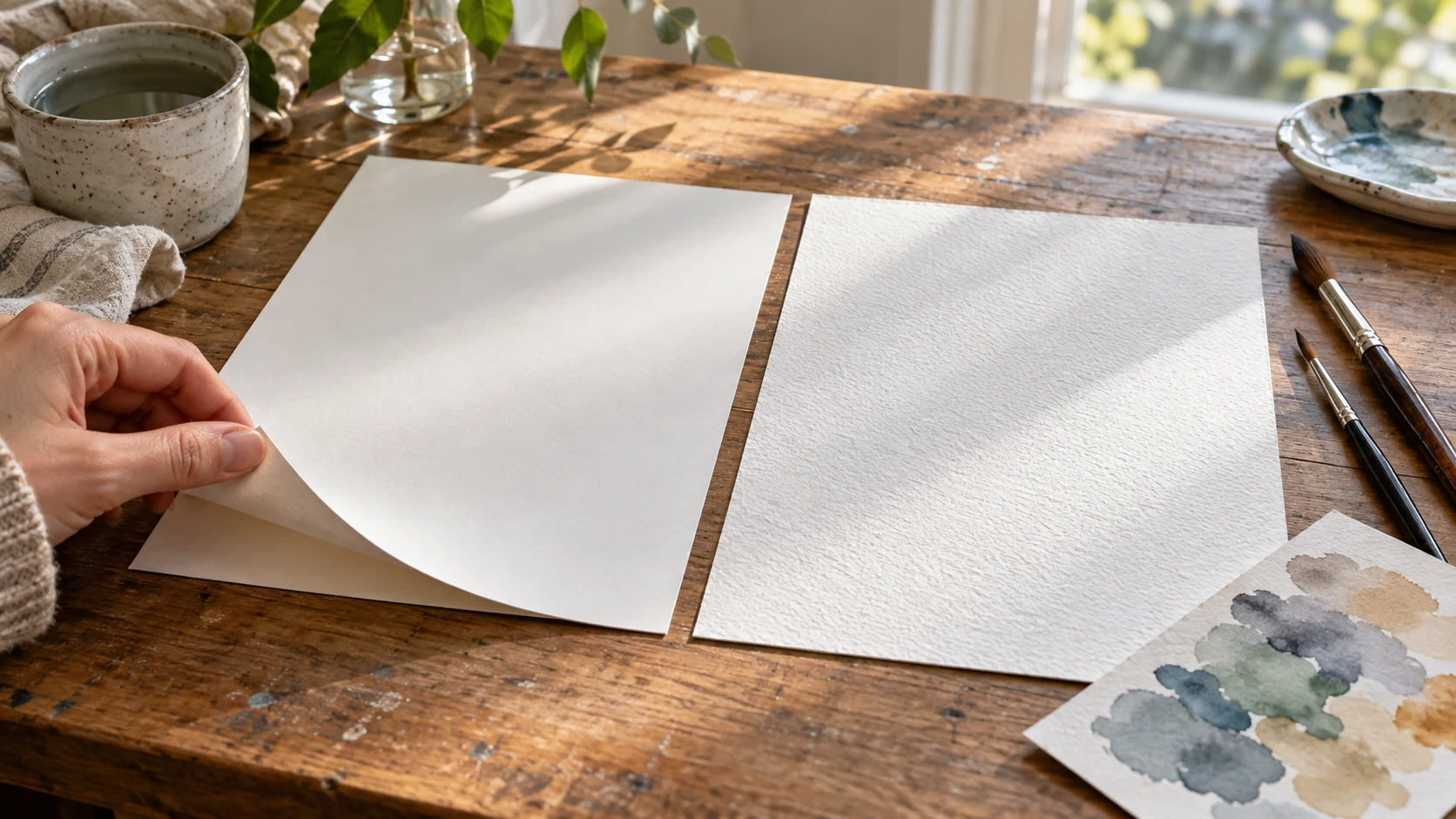
Watercolor paper texture is easy to overlook when a product page leads with a sheet count or a photograph of finished art. Yet the finish label tells you what surface you are considering, while weight, fiber, size and packaging answer different questions. Read those fields separately. A hot-press label does not guarantee that a particular painting will look smooth, and a cold-press label does not tell you exactly how much surface character a sheet will show under your own brushwork.
Two Republeq listings make a useful comparison. The two-pack hot-press cotton paper listing describes 140 lb white paper and gives conflicting sheet dimensions: its title says 12 by 16 inches, while a separate specification says 4 by 10 inches. The 200-sheet cold-press assortment lists three sizes: 5 by 7, 6 by 9 and 9 by 12 inches. These are seller-page facts, not independent performance tests. The size conflict in the first listing needs resolution before anyone plans a composition around it.
Watercolor paper texture is one specification among several
Hot press and cold press are surface-finish terms. Hot-press paper is commonly described as smoother; cold-press paper commonly has more visible texture. That distinction is a starting point for reading a label, not a prediction of a finished painting. A photograph can conceal or exaggerate the surface depending on light and image processing. The actual feel may also vary between brands and products. If the texture matters to a specific technique, seek a sample or a clear close-up of the exact sheet instead of relying only on the category name.
Separate the finish from the paper's weight. A listing that says 140 lb gives a weight designation; it does not tell you whether the sheet is hot or cold press. A sheet-count statement, such as 200 sheets, tells you about package quantity, not texture or performance. Fiber content answers yet another question. The hot-press listing describes its paper as 100% cotton, while the cold-press assortment's short description does not establish the same fiber composition. Do not carry the cotton claim from one product to the other.
Format matters as much as finish. A block, a loose-sheet pack and a pad can arrive and behave differently during setup, but the current product page must establish which format you are buying. The hot-press product photo shows labeled blocks, while the title and description refer to a two-pack of paper. The cold-press image shows stacks of differently sized sheets. These images help identify the offers; they do not replace a precise package inventory. Check the exact current listing and received package before planning a project that depends on a bound edge, a specific sheet count or a particular size.
Read the hot-press page without smoothing over its conflict
The hot-press listing names white, 100% cotton paper, 140 lb weight and a hot-press finish. Its title includes 12 by 16 inches. A separate supplied size field says 4 by 10 inches. Both cannot be treated as the one confirmed sheet size for a planned project. This is not a minor formatting question if you need to make a border, frame a piece or divide a sheet into smaller studies. Ask the seller or check the actual package for the dimensions before ordering for an exact-size assignment.
The product image appears to show packaging labeled 12 by 16 inches, but a photo alone does not prove that every unit shipped under the page matches that package. It may be an image for one variation or a record that has not been fully reconciled. Note the contradiction rather than choosing the most convenient number. If you need paper today, a different listing with consistent measurements may be a better fit than a promise you cannot verify. If you can wait, request the exact SKU and package measurements.
The acid-free claim on that listing is another separate product statement. It should not be turned into a claim about the permanence of a finished painting without knowing the paints, storage and handling. Likewise, 100% cotton is a material description, not a guarantee that every wash will behave in a particular way. These fields can help you narrow a choice, but a small sample with your own materials is a better way to judge a technique-specific result.
Read the cold-press assortment as a size assortment
The cold-press listing describes one pack of 200 sheets in three sizes. Its description names 5 by 7, 6 by 9 and 9 by 12 inches and calls the product suitable for sketching and painting. It does not say in the short text how many sheets of each size are included. Do not divide 200 equally across the three sizes or promise a class that each participant will get a particular format. Confirm the mix if your plan depends on an exact count per size.
The visible product image stacks sheets in three groups. That supports the idea of an assortment, but not a count for each group or a measured surface finish. Ask whether the sheets are loose, how they are packaged and whether the exact size distribution is stated elsewhere. If you need only one format for a repeating study, an assortment could create a logistics problem even if the total sheet count looks generous. If you want to try several composition sizes, the mix may be useful once its contents are clear.
Neither page provides an independent test of how a particular paint, amount of water or brush will behave. Avoid translating “cold press” into a guaranteed look for every artist. The page is enough to identify an advertised finish and listed sizes. It is not enough to certify the texture depth, wet strength or final color for your materials. Keep the product-page facts and your own trial observations in separate notes.
Match watercolor paper texture to a real task
Start with the work you intend to make. A line-heavy study, a small color test and a broad wash each place attention on different aspects of a sheet. Write down the technique, intended size and whether you need to repeat the same result. Then choose which information must be confirmed before purchase. For a precise border, verified dimensions matter first. For a surface-sensitive technique, an exact finish and sample matter first. For a classroom stack, the quantity of each size may matter more than the package total.
If you can compare physical samples, hold them at the same angle in similar light and look across the surface rather than only straight down. Feel them gently with clean hands. Make a small mark or wash only when the sample is yours to use. Notice what happens with your own brush and paint, then label the result with the paper identity. A demonstration on another brand may teach a general idea, but it cannot certify the product you will receive from these listings.
Plan a first trial that does not consume your entire package. Try a small patch of a light wash, a sharper edge and perhaps a layered passage if those are part of your work. Let each dry as your normal process requires. Record observations such as visible tooth, how the mark sits on the surface and whether the sheet remains convenient to handle. Those are observations from your trial, not promised characteristics of hot or cold press. If the trial disappoints, you can change paint, water, technique or paper rather than assuming one label must always perform the same way.
A paper label should not become a verdict on whether the art is good. Texture is one tool in the process. Some artists use a smoother surface for detail, while others like more visible paper character; many switch between them. The meaningful choice is whether a particular sheet supports the effect and workflow you want, within the size and format you can obtain. Product names help you select candidates for that decision, not decide the result for you.
Keep dimensions and placement in the same plan
Before deciding between the two products, draw the intended composition as a rectangle on ordinary scrap paper. Mark any border, taped edge or area that will be hidden by a mat. Then compare the needed sheet size with a verified product dimension. The paper layout and fit guide discusses seeing the entire placement instead of judging a partial corner. That is a separate layout problem; it becomes relevant here once the sheet's actual dimensions are known.
For the hot-press offer, do not use the larger title dimension in a cutting or framing plan while the smaller specification remains unresolved. For the cold-press assortment, pick the listed size that would fit the composition, then verify how many sheets of that size the pack contains. If neither answer is available, leave the paper choice open. A rough sketch based on a known size is more useful than a polished plan based on an uncertain one.
Thickness and sheet count should not be conflated either. A stack of many thin sheets can occupy space differently from a smaller number of heavier sheets, and a product page's paper-weight designation does not tell you the dimensions of the packed stack. The paper packet thickness guide addresses a different fit question: how to keep a range from becoming a false guarantee. Use the same caution if you are planning storage for a large assortment. Measure the actual package when it arrives.
Use a four-field comparison before purchasing
Write four headings: finish, size, material and package. Under finish, copy the stated hot- or cold-press label. Under size, copy each dimension and mark conflicts clearly. Under material, record a fiber claim only when it belongs to that exact listing. Under package, write the total count, format and any stated split across sizes. For the hot-press offer, the size row should show both conflicting values, not a single guessed answer. For the cold-press offer, the package row should show 200 total with an unknown distribution unless the seller supplies a verified breakdown.
Add a fifth line only for a question that would actually change your decision. If you will frame a finished piece, ask for exact size. If you need many 5-by-7 studies, ask for the count in that size. If you want to know how your fine pen behaves over a wash, arrange a sample or look for a test with the exact materials. This keeps research proportionate to the project. A long list of specifications is less useful than a few answered questions tied to the work.
When the paper arrives, compare the package with the page you used. Keep the SKU or listing URL beside your notes. Verify the size and number of sheets before dividing them for a class or trimming one for a frame. If the received product differs from the order information, resolve that identity question before treating it as the paper you studied online. One accurate package observation can prevent an entire project from starting with the wrong measurements.
What the labels can and cannot teach
Hot press and cold press tell you which surface category the seller is describing. Weight, cotton content and acid-free language describe other aspects of one product when the page actually states them. Sheet dimensions and pack count tell you what quantity and format may arrive, but only when the listing is consistent. None of these labels alone proves the appearance or longevity of a finished watercolor. The interaction between your tools, technique and the actual sheet still has to be observed.
For this comparison, the central issue is simple. The hot-press page has useful material and finish information but an unresolved size conflict. The cold-press page gives three sizes and a total count but leaves the distribution unclear. Choose the offer that can answer the question your project depends on. If that answer is still missing, request it or select another clearly described paper. A confident painting session starts with knowing what sheet is on the table.