Office Supplies & Stationery
Wall file organizer won't hold folders neatly: check the physical fit
Diagnose folders that catch, bulge or hide their tabs in wall file pockets using actual paper and pocket measurements.
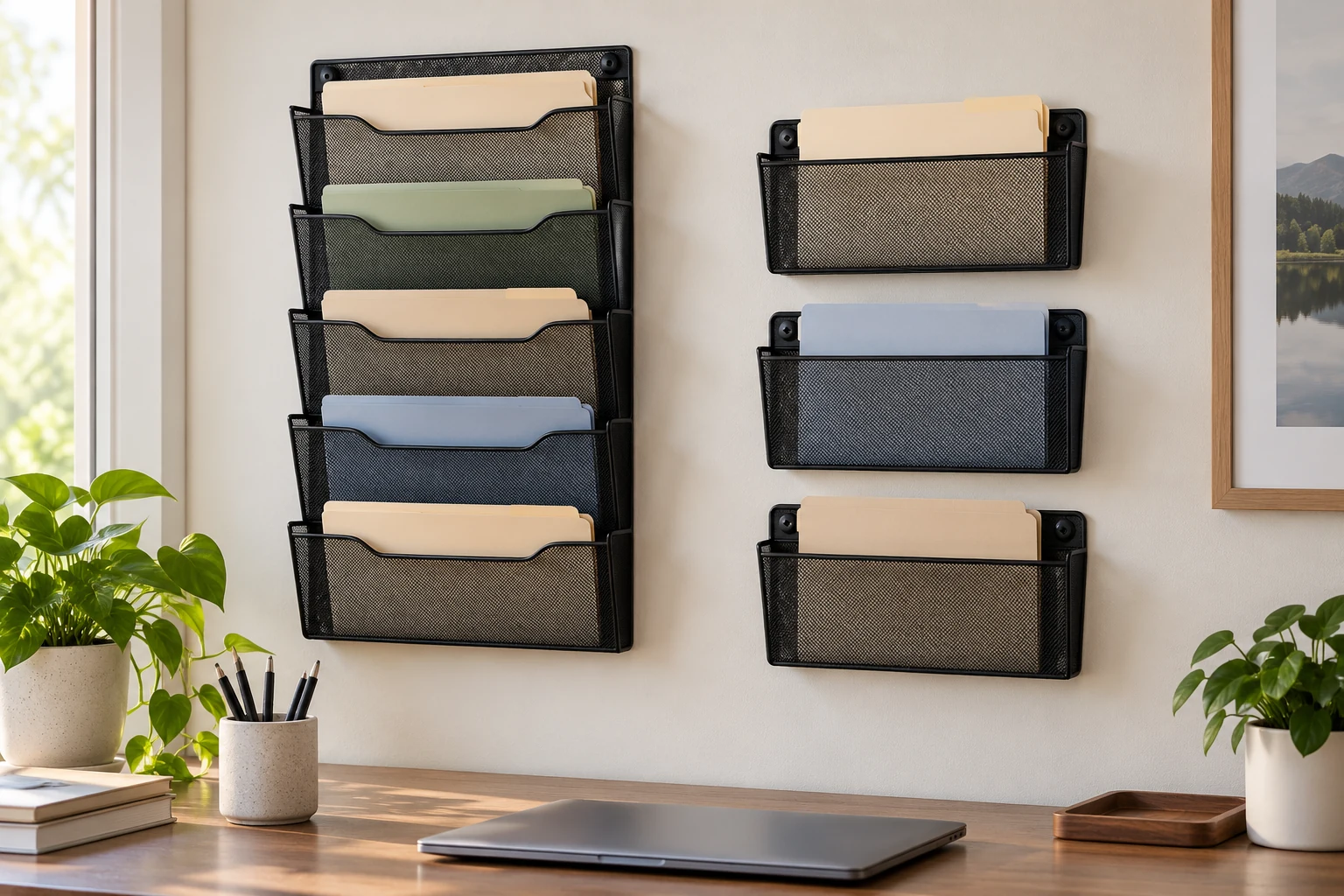
A wall file holder can make a desk look clear while the papers inside remain hard to retrieve. A letter-size folder may be wider than the usable opening, a thick packet may lean forward, or a tab may disappear behind the pocket above it. When a wall file organizer won't hold folders neatly, begin with the folder and the pocket that actually meet. This guide uses a five-pocket rack and a set of three separate pockets to show how to diagnose physical fit before moving papers or drilling new holes.
Identify what is going wrong
Pull one troublesome folder out and put it on the desk. Note whether the problem is width, thickness, height, or the way the top edge is hidden. These are different faults. A folder that cannot slide into a pocket needs a width check. A packet that bulges forward needs a thickness and load check. A tab you cannot see may need a different arrangement or a label position. Do not buy another organizer until you can name the contact point that fails.
Use a few actual examples rather than an empty folder. Include the heaviest ordinary packet, a folder with a projecting tab, and any magazine or notebook people keep trying to store there. Measure the full object, including tabs, fasteners, and contents. A product page may say “letter-sized,” but that phrase alone does not tell you the usable width after a thick folder bends or a tab catches a side. Testing the real item gives a more useful answer than measuring a sheet of paper alone.
Watch how people retrieve papers. If the organizer is above shoulder height, a folder may look properly stored while its tab is difficult to see or reach. If it is too close to a cabinet door, the door may brush the folders. Remove an item slowly, note where it catches, and replace it without forcing the mesh. A catch at the top lip is different from a folder leaning because its contents are too heavy. The cause determines the next adjustment.
Read the two physical layouts
The Hidove five-pocket wall file organizer listing describes a two-pack of metal racks. Each has five vertical pockets for letter-sized files, a flat bottom tray, and label slots with blank labels. It gives an overall size of 12.76 by 4.1 by 16.06 inches and presents desk or wall placement. The gallery shows two tiered mesh racks with papers rising above successive pockets. That is a stepped arrangement, so the top edge of a folder can sit close to the next pocket. The listing is not a measurement of your thickest filled folder.
The Hidove three single-pocket wall file holder listing describes three pockets for mail, paper, documents, and folders. Its gallery shows three physically separate mesh pockets arranged vertically on a wall. The native description gives dimensions, but the text is incomplete about which measurement belongs to each axis, so this guide does not treat those numbers as a verified usable opening. Check the current listing and the actual pocket before relying on a size. Separate pockets may give more freedom in spacing, but they still need suitable mounting and a real folder-fit test.
Both are whole file organizers, not loose folder inserts or labels sold alone. Their main physical difference is a stepped multi-pocket rack versus three separate pockets. That difference changes how much vertical clearance you can leave above each opening. It does not prove that one holds more paper or that either will fit every folder. The useful comparison starts with the problem you observed: a blocked tab, a thick packet, a narrow entry, or a wall position that makes retrieval awkward.
Test the opening with a real folder
Measure the outer width of the folder at its widest point. Include a side tab if it projects beyond the body. Then measure the usable pocket opening on the physical unit if you have it, or obtain that exact measurement before ordering. Do not substitute overall rack width for inside clearance. Side rails, mesh folds, and mounting flanges can occupy part of a listed dimension. Hold the folder level and see whether it enters without bowing or rubbing hard against both sides.
Next, add the normal contents. A folder that fits empty may no longer slide easily once it holds a report, envelope, or bound packet. Try the full stack you would ordinarily store there. If it pushes the front mesh outward or makes the rack move, stop rather than forcing it in. Move some papers to a larger storage place or divide the packet. This check is about the actual contents and the actual installed holder; a gallery image with thin sample papers cannot certify a heavy file.
Check vertical visibility. Put a temporary label on the folder top and stand where you usually approach the organizer. Can you read it without lifting the folder? On a stepped rack, another pocket may visually overlap a short tab. On three separate pockets, spacing can potentially be planned around the folders, subject to the product's mounting directions and wall space. A low label can also help if the organizer has its own label slot. Choose the position that works with the actual papers, not a decorative photo of nearly empty pockets.
Decide whether the problem is storage or sorting
If the folder fits and can be retrieved, the remaining problem may be that nobody knows which pocket to use. The separate desk organizer paper plan owns that next-action sorting question. This article stays with physical fit: whether the pocket accepts the object, keeps it accessible, and leaves its label visible. Do not add more wall pockets to solve an unclear workflow. A larger rack can preserve the same confusion if every pocket is filled with unrelated papers.
Conversely, a clear paper plan cannot make a thick folder fit a shallow pocket. Put each test object in the pocket intended for it and watch whether the holder changes shape or the paper edge catches. If a paper pile is too tall for the selected pocket, move the completed archive elsewhere and keep the wall holder for active, light items. That is a placement decision, not a claim about a product's certified capacity. Consult the current installation and load guidance for the exact unit.
Use a temporary paper label before filling all pockets. Choose words that the people using the room already use. If “to file” and “to review” sound identical to them, the labels will not help. Keep the labels short and visible from the normal approach. The five-pocket rack listing describes blank labels and label slots; the three separate pockets can be assessed for whatever label placement the current product permits. Do not assume accessories are included unless the exact current offer says so.
Check placement and wall support
Before making holes, mark the proposed organizer footprint with removable paper. Open nearby doors and drawers, sit at the desk, and walk past the wall. A holder can fit the wall yet put folders in the path of a chair or cabinet door. Leave hand space above each pocket to lift a folder out. If the problem was hidden tabs, test the proposed mounting height with a sample folder before committing. A low organizer may also conflict with furniture or be reachable by a child who should not have access to its contents.
Read the supplied mounting directions for the exact holder and check the wall material. The gallery for the three-pocket set includes a magnetic-looking illustration, but the saved native description does not establish magnetic mounting as a safe option for every surface. This guide does not infer a mounting method from a drawing. Use the hardware and method approved for the product and the actual wall. Ask qualified help if wall construction or load support is uncertain, especially before storing heavy books or thick binders.
The five-pocket listing presents desk and wall placement, which can be useful for a test before mounting. Place an assembled unit on a stable surface only if its instructions allow that configuration and check the folder fit there. A desk trial can reveal a narrow pocket or hidden label without making a wall hole. It cannot prove that the unit will be secure after wall installation. Treat fit and mounting as separate decisions, each needing its own evidence.
Look for the exact point where paper escapes
A different desk organizer problem is covered in the guide to papers slipping behind shelves. Its shelf-gap diagnosis is not the same as a wall pocket that cannot accept a folder. Here, check whether a paper edge slips through an opening in the mesh, rises above the lip, or catches during removal. Use a copy of an important document for the trial, and do not bend an original just to make it fit. The visible path of the paper tells you whether this holder suits that item.
Try one packet at a time. If single sheets behave but a folder bulges, the issue is probably the folder's filled shape. If a thin sheet curls or drops through a mesh opening, use a suitable folder or another storage form rather than forcing loose pages into the pocket. If only the top tab disappears, adjust where the folder sits or consider a pocket arrangement with more vertical separation. Make only the adjustment supported by what you observed; do not treat all three symptoms as a reason to replace the entire wall system.
Check again after a normal week. A holder that was fine on installation day may become crowded as new mail arrives. Empty completed items according to the household's paper plan and repeat the fit test with the actual remaining load. If the organizer leans, loosens, or looks damaged, stop using it and inspect the installation and product instructions. Adding more papers to a moving rack is not a useful experiment. The wall and fasteners need their own appropriate assessment.
Choose the layout that solves the observed failure
A stepped five-pocket rack can be suitable when the folders fit its openings, labels stay visible, and the combined footprint works on the desk or wall. Three separate pockets can suit a wall where the user wants to choose spacing for a small number of distinct groups. Neither product makes an oversized folder smaller or turns a crowded wall into more space. Test the actual folder, full contents, reach, and mounting location before choosing by pocket count.
Keep a short note of the measurement that mattered: folder outer width, full packet thickness, or clearance above the opening. If a different organizer is needed later, that observation will guide the next search better than the phrase “five tier” or “three pockets” alone. A wall file organizer holds folders neatly when the objects and the openings match, the labels can be read, and the installed unit remains stable under the real load.