Problem-Solving Articles
Waffle batter overflowing: check the amount per waffle
Check per-waffle loading, the lid and overflow tray using the linked All-Clad WD824D51 guide. Keep recipe scaling and Cuisinart instructions separate.
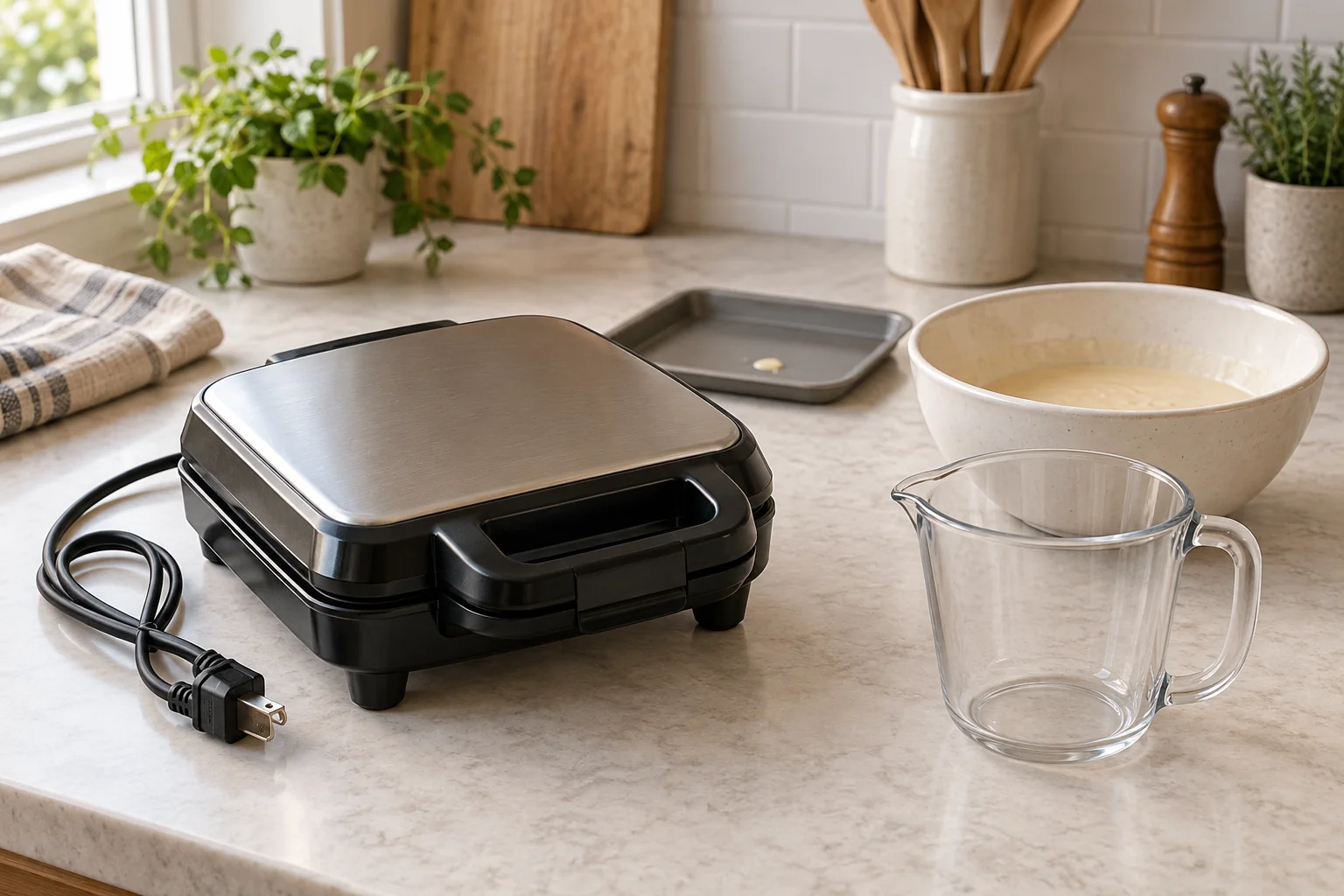
With waffle batter overflowing, check the amount intended for one waffle before adding more to the next batch. A bowl of prepared batter and a machine's advertised serving count describe different quantities. Keep the rest of the batter aside while you consult the actual appliance instructions. For the All-Clad WD824D51 discussed here, the manufacturer's linked guide gives a per-waffle limit and a visible filling boundary. Its lid movement and overflow tray also have specific roles. Trying to contain an excessive fill by fastening the lid would conflict with those instructions.
Waffle maker batter amount starts with the actual model
The All-Clad Gourmet Digital four-slice offer identifies UPC 010942227021. All-Clad's own product page matches that UPC to model WD824D51 and links its owner's guide. There is one important discrepancy to retain: the offer and product page advertise six browning levels, while the linked manual describes seven. This article does not resolve that difference or give a shade-setting sequence. Match the actual supplied unit and its applicable instructions before operating it; the filling and care discussion below stays with that linked model guide.
For waffle maker batter amount, the WD824D51 guide says not to exceed half a cup for one waffle and to keep batter below the separation line between the cooking plates. Add batter after the preheating READY indication. These are the linked model's instructions, not a universal portion for every waffle maker or a recommendation to use the maximum with every batter.
Put the recipe's whole-batch quantity beside the amount needed for an individual fill. Increasing the recipe to serve more people produces more batter to work through; it does not enlarge the appliance's cooking space. If a recipe yields several portions, keep that yield separate from the manufacturer's loading instruction. You may need several operations to prepare the intended breakfast. Dividing a bowl by the number of people at the table cannot establish how much the plate should receive at once.
The recipe quantity worksheet guide makes the same boundary clear: scaling ingredient arithmetic does not validate an equipment-capacity change. Use it when checking a larger batter recipe, while leaving the appliance's permitted loading and cooking method attached to the actual waffle maker. A doubled ingredient column is not a doubled fill instruction.
Separate the measure from the tool holding it
Choose a measuring tool whose actual quantity markings you can read. An ordinary serving ladle may be convenient, but its name does not establish that a full ladle equals the amount in the instructions. Before cooking, decide how the stated quantity will be measured with the tools you have. Keep the same meaning of cup throughout the comparison. If a recipe and an appliance document use different or unclear measurement conventions, resolve that question rather than assigning a precise-looking conversion you cannot establish.
For a fictional example, imagine someone preparing a larger recipe in a mixing bowl while another person fills the appliance. The first person says there is enough batter for the family; the second assumes that means the next pour should be larger. No change to the manufacturer's fill instruction has actually occurred. Agree which amount is for one fill and leave the remaining mixture in the bowl. This prevents a serving-plan decision from quietly changing the amount placed on the cooking surface.
The distinction also matters when changing a measuring tool midway through breakfast. A different utensil may hold a different amount even when both are casually called a scoop. Keep the original stated quantity available and check the replacement tool before using it. You do not need to calculate a complete bowl's volume to preserve the amount for each operation. The aim is a controlled fill under the exact instructions, with additional batter available for later operations if the recipe and appliance permit them.
Keep the recipe version identifiable while addressing the loading question. If you change the mixture and the quantity together, a later difference cannot establish which change mattered. That is a limit on the comparison, not a recommendation to keep cooking an unsuitable mixture. Resolve any recipe question through its own applicable guidance. This article adds no water, flour or other ingredient to correct overflow, and it supplies no revised cooking schedule for a changed recipe.
Allow the lid's intended movement
The WD824D51 guide says its top rises during cooking so batter can expand into the plate cavities; do not obstruct that movement or use the storage locks while cooking. The rear tray catches excess batter. All-Clad recommends emptying it when cold; if it must be emptied during hot operation, use oven mitts. Those directions do not turn the tray into additional cooking capacity.
Understand the distinction between keeping the appliance closed for its cooking process and locking it for storage. A feature can be useful when the appliance is put away without belonging in the cooking sequence. Locate the actual instructions and illustrations before assuming a catch should be fastened merely because it is present. If the controls or hardware on the supplied unit differ from the linked guide, obtain the matching document. Do not force unfamiliar hardware to make an uncertain loading arrangement appear contained.
Leave enough working room to use the handle and follow the actual lid-opening instructions. Keep the batter bowl and unused utensils out of that movement path before beginning. A crowded station makes it harder to carry out a known sequence without improvising around obstacles. This is a planning check for your own workspace, not an invented clearance dimension for either selected appliance. Use the manufacturer's installation requirements for the actual location.
Before starting the session, put the chosen quantity measure where the person filling the appliance can reach it. Keep a separate place for the remaining mixture and another for the food already prepared. Agree who is filling and who is serving if the work is shared. This avoids a hurried handover in which someone takes an unfamiliar utensil or assumes the rest of the bowl should go into the next operation because people are waiting.
A waffle maker overflow tray has a limited job
When looking at the waffle maker overflow tray, distinguish batter caught there from batter that remained in the cooking area. The tray's presence explains where some excess can collect; it does not establish that a particular fill was appropriate. If batter is escaping, return to the amount and loading directions rather than treating the catch tray as a reason to keep adding mixture. Keep the proposed next fill undecided until you can follow the applicable instructions comfortably.
For another fictional comparison, one person notices a small amount in the tray after a session. Another notices mixture outside the intended cooking area before the lid has been closed. These accounts describe different moments. Neither description supplies the missing fill quantity. Look at what was added and which instructions were followed before assigning a cause. This article reports no cooking trial, and the two examples are not measured performance results for the All-Clad appliance.
Follow the applicable shutdown and care instructions when the session needs attention. Do not let the wish to complete the remaining batter override a condition the manufacturer says requires stopping or support. Keep unfinished work separate from food already prepared. If another person takes over, tell them what remains unresolved instead of passing along only the suggestion to use less batter. They need the actual loading instruction and the appliance's relevant handling directions.
The Cuisinart double-flip offer has its own loading routine
The Cuisinart double-flip Belgian waffle maker description names two waffles at a time, a rotary design, ceramic nonstick plates, ready-to-bake and ready-to-eat lights, and an included batter measuring cup and stainless-steel drip tray. Those features belong to that offer. Its short description does not identify the exact manufacturer model code or supply the cup's quantity. Obtain the instructions for the supplied unit before choosing its loading or rotating sequence.
The included cup is worth identifying because it is part of the advertised package, but its presence cannot supply a missing volume. Check the actual markings and the matching manual. Do not transfer the All-Clad half-cup instruction, plate boundary or storage-lock guidance to this Cuisinart merely because both make Belgian-style waffles. A shared food description leaves the equipment-specific instructions to be established for each actual machine.
Clean the cooled appliance through its permitted method
For the WD824D51, unplug and allow complete cooling before handling or removing plates. Its guide permits washing the cooled removable plates in warm soapy water or a dishwasher, and prohibits abrasive cleansers or harsh pads on the coating. Do not immerse the appliance. Follow the complete care instructions for the actual unit.
If you are considering another appliance because of the overflow problem, first identify what the replacement would change. A different batch arrangement or removable plate system may matter to you, but buying another maker does not explain an unknown fill on the present one. The waffle maker replacement payback guide keeps a proposed purchase separate from an unsupported saving claim. Here, keep the purchase decision separate from identifying the practical loading problem.
Review the selected waffle maker order before USDT payment
If you intend to pay with USDT at republeq.com, identify the selected waffle maker and its package before authorizing the transaction. Keep the All-Clad UPC reference distinct from the Cuisinart double-flip description, including any accessory question you still need answered. Ask the merchant through its published support route for clarification while the order is under consideration, and retain the answer with the product reference. Review the final basket and the payment choices actually offered for that order. A broad cryptocurrency category in a product description does not establish every supported token, network or receiving detail. Verify the transaction's actual USDT instructions before approving a wallet transfer. Keep the payment reference with the order confirmation so the hardware purchase remains identifiable if an enquiry is needed. Read the merchant's current delivery information for the intended destination and its cryptocurrency purchase conditions. Those conditions exclude refund returns for cryptocurrency purchases; exchange requests remain subject to the published eligibility requirements and available products. A manufacturer's separate warranty does not replace the merchant's terms. On delivery, compare the appliance and included components with the retained order before beginning setup. Use the relevant reporting process if the supplied goods differ, and read the instructions for the actual unit. A payment method cannot resolve the All-Clad shade-count discrepancy or establish an unidentified Cuisinart measuring cup's volume. It also cannot validate a fill quantity or demonstrate a cooking result. Keep those equipment questions attached to the manufacturer's applicable instructions rather than treating a completed purchase as an answer to the original overflow problem.