Outdoor Recreation & Camping
An unsold object budget in an original patio story
Ada keeps her spare table available for sale while leaving a separate patio purchase undecided; one interested stranger has not become received proceeds.
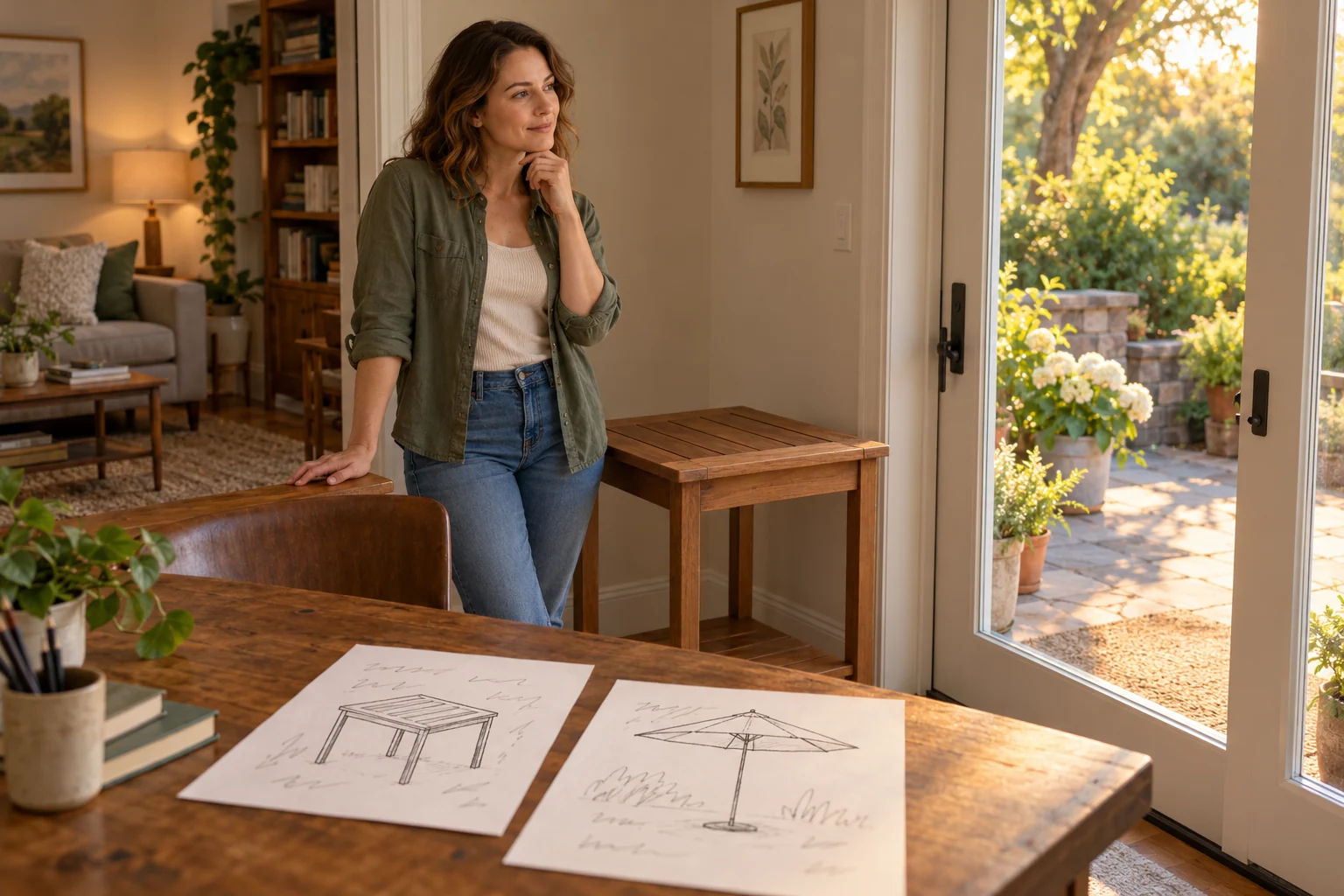
An unsold object budget is the question inside this original scene. Ada wants to sell a spare table and is considering a patio umbrella. Someone asks whether the table is still available. She initially lets that small inquiry carry more weight in her plan than its words support, then separates the two unfinished transactions. Ada, Len, the stranger and every exchange below are invented. No actual table is offered, valued or sold here. Neither native umbrella discussed later is an identified object in Ada’s home.
The table beside the doorway
Ada had moved the little table out of the sitting room three days earlier. It stood near the patio door, where she had to turn sideways to reach the handle. She had already decided she no longer wanted it. There was another table beside the chair, and this one had spent the winter holding things that ought to have gone elsewhere. Its departure would leave a space she wanted empty.
Len came over carrying the book Ada had lent him. He set it on the larger desk, then looked at the table by the door. “Still here?” he asked. Ada said yes, although someone had written that morning. She opened the message and passed him the screen. There was one question: “Is this still available?” Below it, her answer said that it was. Nothing followed her reply.
“That’s promising,” Ada said. She took a sheet from beneath the book. On it she had drawn a broad umbrella above the patio chairs. The drawing was mostly canopy, with two very small chairs underneath. Beside the sketch she had written the table’s name. A line joined that name to the umbrella. Len looked from the paper to the table, then back to the unanswered message.
Read the words that arrived
“Did they say they wanted it?” he asked. Ada read the question again. She had seen an interested person and begun imagining the next part: another message, an arrangement, the table leaving. Those events fitted easily after the first question. None had arrived with it. She put the phone down without adding a name to the person or inventing a reason for the silence.
The stranger might write again. Ada wanted that to happen, and she did not need to pretend otherwise. But the words on the screen did not mention buying, paying or collecting. Her own reply had answered the question she received. It had not completed the conversation. She had no later message to read and no agreed arrangement to tell Len about.
“I was already putting the umbrella there,” she said. She pointed through the glass toward the patio rather than at the drawing. Len could see the two chairs, their backs facing the door. Ada had moved them several times that spring. The umbrella existed only on the page. She had not selected an actual one, checked the space or placed an order. The sketch showed something she was considering.
Two intentions on one page
Ada still wanted the table gone. She said so before Len asked, as though separating it from the umbrella might require changing her mind about selling. It did not. She had not discovered a forgotten attachment to the table or decided to rescue it from a stranger. She preferred the room without it. Its place near the door was inconvenient, and the empty patch beside the chair looked better to her.
She fetched another sheet and wrote the table’s name at the top. Underneath she copied the question and her answer. That was the whole exchange. She left space below it instead of filling the blank with the conversation she hoped would follow. The second page kept the umbrella drawing. There was no line between the sheets. She could look at either without making the other appear finished.
Len picked up the book again because Ada had covered part of its jacket. He asked whether she had liked the ending. She started to answer, stopped and checked the phone. No new message had arrived. She turned it face down. Then she told him about the final chapter, which she thought had ended one conversation too early. He had read it differently and wanted to show her a passage.
The inquiry stays an inquiry
They sat at the desk with the book between them. Ada listened while Len found the paragraph. From her chair she could still see the spare table. She had taken its photograph against the sitting-room wall, where it looked less in the way. Now it stood in a temporary place. Moving it for a photograph had not moved it into someone else’s possession.
When the phone lit up, Ada reached for it before seeing the sender. The message was from her sister, asking about a different matter. Ada answered and left the screen open for a moment. Len waited. She returned to the book without describing the interruption as a disappointment. She could want a sale and still have an ordinary afternoon while it remained unresolved.
“Would you still sell it if you decided against the umbrella?” Len asked later. Ada said she would. That answer made the two pages useful to her. The table was available because she did not want to keep it. The umbrella was a separate idea she had not settled. She did not have to keep them joined merely because she had drawn the first line between them.
No price appears to finish the scene
Ada did not work out a figure while Len watched. There was no sale amount in their conversation and no actual umbrella total to set against one. She could not make those missing details appear by measuring the distance between the words on her paper. She slid the umbrella sketch under the book, leaving one corner visible, and kept the table page beside the phone.
She thought about writing to the stranger again, then left the conversation as it stood. The story does not turn that choice into a rule about how sellers should respond. Ada had answered the question, and for this afternoon she chose to wait. A different message or another decision would belong to a later scene. It was not something the narrator could add merely to make this one feel resolved.
Len stood to leave before they agreed about the book. He said he would reread the last chapter. Ada said she might do the same, although she still preferred her first reading. She moved the spare table a little farther from the door so he could pass. It remained in her home, still something she intended to sell, with no agreed buyer or received proceeds.
What remains open at the end
After Len left, Ada put the two sheets inside the same folder without fastening them together. Keeping them apart did not mean she had abandoned the patio idea. She could still imagine sitting outside beneath an umbrella. She simply had not reached a purchase decision. The table inquiry had given her something to answer, rather than something she could describe as a completed source of money.
She opened the patio door and carried her tea outside. The chairs were where she had left them. She sat in the one nearest the wall, then moved to the other because she preferred its view of the garden. Nothing new had arrived to make that choice possible. The afternoon continued with the same chairs, the spare table indoors and the phone quiet on the desk.
The scene ends there. Ada still wants to sell the table. The stranger has made no commitment beyond asking the question already shown. The umbrella remains an idea on a separate page. There is no hidden completed sale, no cancelled purchase counted as money and no sentimental reversal. Those open facts belong to this particular invented afternoon; they supply no valuation or promised financial result for a reader’s possessions.
Keep the native umbrella accounts separate
The California Umbrella sku-46322295 account identifies a yellow square patio umbrella. Its five images include open and closed views, details and a waterfront scene containing several umbrellas, chairs and tables. That setting does not establish supplied furniture or multiple delivered units. The account names push-open and pulley-lift wording. No installation, measured fit, authenticated material, weather resistance or protection result is established here. This is not an umbrella Ada owns or has chosen.
The Island Umbrella Freeport account names an octagonal cantilever umbrella in Terra Cotta. Five images show an orange canopy with support base, fabric and structural graphics, a colour collage and a tilt diagram. Other depicted colours do not establish multiple supplied umbrellas. The prose gives a nine-foot height while a graphic labels eleven feet; this article does not resolve that difference or recommend a fit. Seller protection, fading, coverage and durability claims are not adopted.
Read the neighbouring stories at their own scope
The keepsake story follows Nell deciding against offering a sentimental bird to fund a room change. She withdraws the sale draft and removes the lamp from her plan. Ada makes neither of those decisions. She continues to want her unwanted table sold, while the particular inquiry shown has not become an agreed transaction. The difference rests in the decisions enacted across the scenes, rather than in whether the object is a bird or a table.
The picture frame return costs guide concerns actual payment-dependent return and exchange terms, including the stages before an ordinary refund. Ada has not purchased or returned either object, and her scene establishes no merchant policy. Its unanswered question remains a prospective buyer conversation. Keep the guide’s policy context with that guide rather than importing refund conditions into this invented sale.
A quiet closing image
Ada went back inside when her tea was finished. She put the cup in the kitchen and checked the phone once. The conversation was unchanged. She did not erase her reply or mark the table sold. Before returning to the sitting room, she moved the folder off the desk so she could reopen Len’s book at the last chapter. The umbrella sketch stayed inside, with room for a later decision.
Before she found the chapter, Ada noticed the old photograph of the table still open on her desk. She had printed it to see whether the picture made the legs easy to distinguish from the wall. One corner of the image had curled under the folder. She flattened it and put it with the page about the sale. The photograph could remain useful if someone asked another question. It did not need to become an illustration of money she had received. She left its plain background alone, without adding the umbrella drawing or making a picture of the two objects together.
On the patio page, she had also drawn a little shape that was supposed to be the back door. It was in the wrong place. She turned the page and smiled at how little the sketch resembled the view she had just seen outside. There would be other things to investigate if she returned to the idea. For now, she did not redraw the whole garden. She placed the page inside the folder facing the table photograph, then closed it. Both pieces of paper could wait without either one standing in for an agreement.
Ada still intends to sell the table; the patio purchase remains undecided.
Consider a separate purchase on its own terms
If you plan to purchase an item on republeq.com, check the particular offer and current checkout before ordering. This guide does not establish that any cryptocurrency payment option is available. If USDT is offered for the intended order, verify the requested asset, network, amount, receiving destination and order reference with the responsible service before authorizing a transfer. Review the actual product identity, selected variant, quantity, delivery details, total charge and applicable terms. Use the confirmed order details when checking the payment instructions. Confirm any fee, conversion term or exchange rate from the current transaction information. Determine the applicable cancellation, return and refund process, including how a refund would be handled for the selected payment method. Keep the relevant instructions and transaction records, with dates and confirmed references. If essential instructions change, ask the responsible service to confirm the change against the exact order. An acknowledgement should identify the order and the agreed details; it does not replace checking whether the selected product is the one you intended to buy. If payment or order status remains uncertain, reconcile that status before considering another transfer. Do not treat an unresolved transaction as evidence that nothing happened. This article supplies no wallet address, transfer guarantee, recovery procedure or assessment of a counterparty. A product enquiry does not authorize a payment or resolve an uncertain order. If support provides an answer, retain the exact question and response so a later reviewer can understand what was confirmed. Decide whether to proceed only when the conditions of the particular transaction are clear, and retain the confirmed transaction information with the exact order.