Audio Production
Check TRS plug stereo compatibility before choosing a cable
Read a TRS port as a documented signal connection before choosing a passive adapter or breakout, with clear limits on two catalog offers.
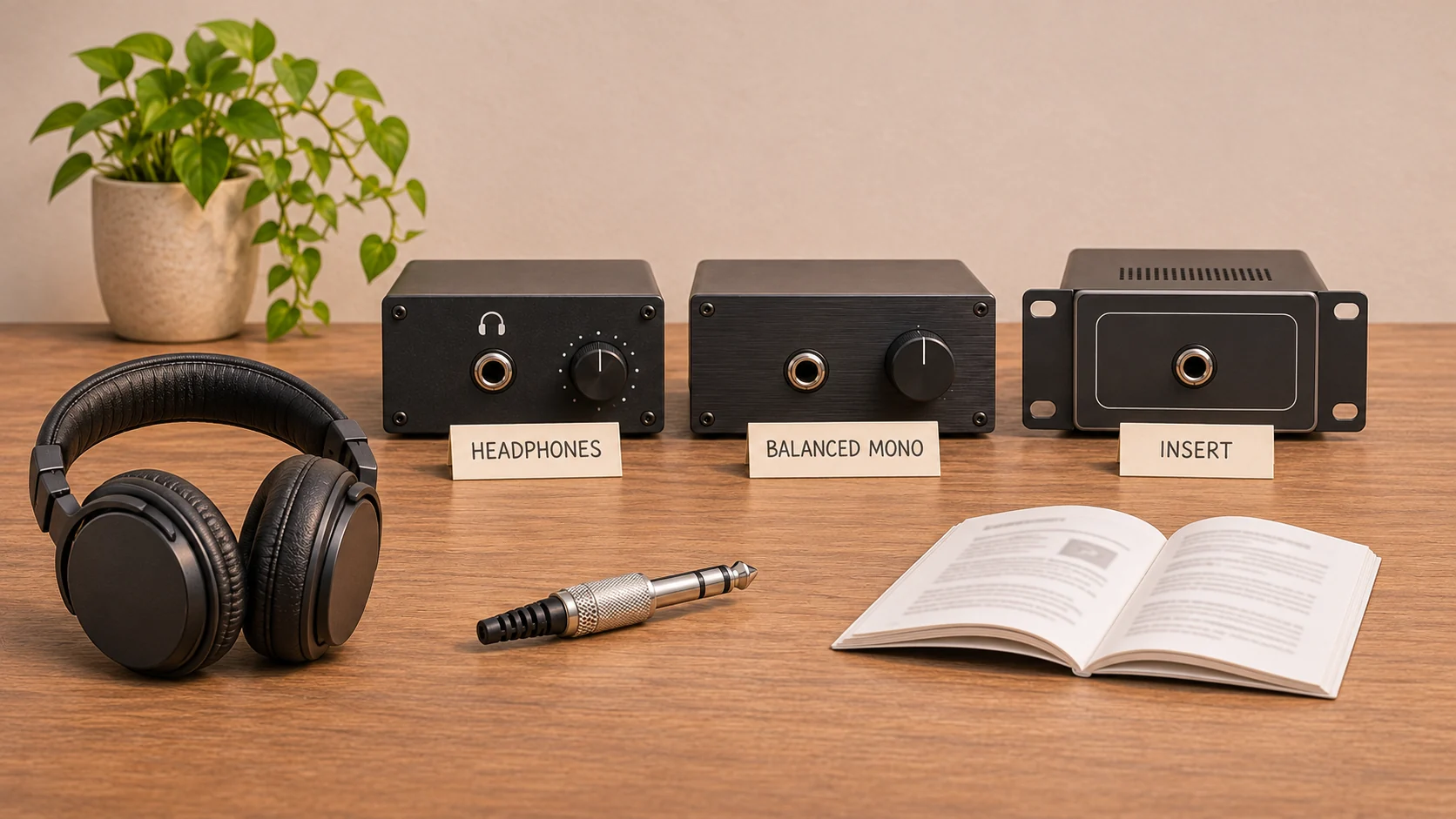
Use this TRS plug stereo compatibility guide to prepare a specific accessory enquiry. Before choosing an adapter, write down what you want to connect and what the receiving connection is supposed to do. This guide uses two passive accessory listings as examples of questions to resolve, rather than as tested solutions for an unnamed device. The practical task is to turn a vague request for a stereo cable into a specific enquiry about an exact port and an exact accessory. Keep the purchase pending when either side of that enquiry is missing.
Read the documented port role
Yamaha’s Interconnections 101 explains why TRS plug stereo compatibility needs more than a connector name: the connector can serve unbalanced stereo headphone audio, balanced mono TRS audio, or an insert send and return. A matching connector shape does not establish the signal role or level. This does not establish either offer’s wiring. Read the actual equipment documentation before assigning a job to the connection.
Focusrite’s specifications for the 2i2 3rd Gen provide a concrete example of different port functions. The table identifies rear quarter-inch TRS balanced outputs and a front quarter-inch TRS stereo headphone output. These are different documented functions on that specific generation. Keep each specification attached to the named output and the device generation to which it belongs. The specifications cited here do not establish either retail adapter’s wiring or authorize a connection between arbitrary devices. Check the actual model and port before applying the example.
Separate the port question from the accessory question
For an accessory enquiry, start a short connection note with the equipment maker, exact model and the wording beside the intended socket. Add the page or section where you found its function. Leave a blank when the documentation does not answer your question. That blank is useful: it tells a supplier what information you still need. Avoid completing the note from an unrelated product photo or from a name used by a different device. A clear unanswered question is a better basis for a purchase enquiry than an assumed answer.
Describe the intended task in ordinary language as well. In the connection note, “I want to listen through these headphones” tells the next person more than “I need stereo.” If the equipment instructions call the connection an insert, quote that name in the enquiry and ask about the required accessory. Keep the quoted wording with the question you are investigating. This article supplies no instruction to connect or combine particular contacts. If a reply only repeats the plug diameter, ask again about the named port and task.
Read the two passive accessory offers carefully
The first native offer describes a 38cm Y cable with a 6.35mm stereo female connection and two 6.35mm mono TS male connections, advertised as 10 pieces. Here, that is a catalog description to clarify, not an authenticated branch map. Its sole image presents three views of a black Y assembly. The male plug forms have one dark insulating band, while a female housing and opening are visible in one view. No branch channel labels or continuity results are shown. Three illustrated views do not verify three separate supplied leads, and the image does not authenticate delivery of ten. Ask for the exact wiring and packing list before treating this offer as a solution.
The second native offer describes a gold-colored 6.35mm stereo male to 3.5mm female audio adapter, advertised as a 100-piece pack. Its suitability for the intended port remains unconfirmed. The sole image shows two rigid adapter presentations with two dark insulating bands on the male plug forms and a knurled rear housing. The female bore is not visible. Neither that image nor the word converter establishes active electronics, a wiring map, material, dimensions or host compatibility. The native Headphones category does not mean headphones are supplied. Two illustrated adapters do not authenticate a delivered pack of one hundred. Confirm the exact item and contents without treating the category or illustration as a box inventory.
Neither offer supplies a measured connection result for your equipment. Here, the pictured forms and catalog labels remain limited evidence. A supplier answer should identify the same offer being considered; do not transfer a reply about one cable or pack to the other.
Check insert send and return in the enquiry
A useful accessory enquiry names both ends of the proposed purchase. Give the supplier the exact device and socket, then the exact accessory URL or item reference. Ask whether the documented accessory wiring serves the documented port function for your intended task. Request the relevant specification rather than an assurance that the plug fits. If the supplier needs information from the equipment maker, keep that dependency in your note. You can postpone ordering without deciding that the accessory is defective or that the device needs replacement.
Keep the reply with the specific question it answered. A statement about included quantity answers a packing question; it does not answer the wiring question. A statement about one host model should retain that model name. When another person takes over the enquiry, they should be able to see the original request, the exact offer and the remaining gap. This is a proposed way to organize a purchase decision, not a laboratory test or a guarantee that a supplier’s description is correct. Ask for clarification when a reply changes the item reference or avoids the named port.
Keep recording-kit decisions in their own scope
The field-recorder interview guide compares Zoom H4essential and F3 around microphones, track plans, power and monitoring. It is relevant when the wider task is building an interview kit, rather than clarifying the wiring of a passive accessory. Its recorder comparison does not provide a wiring certificate for either standalone offer here. Keep that separate purchasing decision with its own equipment requirements.
The wireless-microphone guide compares TONOR TW720 and MUSYSIC U4LL around simultaneous voices, microphone handling and the route to a sound system. It asks readers to check receiver outputs and the destination equipment. That broader event-planning context can accompany a question about a proposed connection, but it does not identify the branch wiring of this Y cable or certify this size adapter.
A worked purchase enquiry with an open answer
Consider a fictional example. Jo is helping a community group prepare an equipment order and has been sent two accessory screenshots. One volunteer calls both items stereo adapters; another remembers needing a splitter at a different event. Jo starts the enquiry by asking which exact device and socket the group intends to use. Nobody has provided that information yet. The order remains a proposal. Jo does not choose the larger pack, declare either item unsuitable or guess what the other event used. The missing equipment reference becomes the next question.
Later, someone sends Jo a model name and a photograph of the panel. In this fictional exercise, the photograph is a pointer to the right documentation, rather than the final answer. Jo asks the equipment owner for the relevant manual section and keeps the socket wording alongside it. The group can now prepare a focused supplier enquiry about the exact accessory. This example deliberately leaves the technical answer open. No actual device, documented port result, supplier response or successful connection is invented to complete the story.
Suppose a further message offers a different cable from a local cupboard. Jo keeps that suggestion separate from the pending retail enquiry about the two retail offers. The group would need the identity and documented wiring of the proposed substitute before using its description as an answer. Jo records the suggestion as a new enquiry and asks who can identify the proposed substitute. The useful outcome of the example is a question attached to a specific proposed connection, with an owner who can seek the answer. It is not a verdict on an unidentified cable or a reason to buy more accessories.
Jo drafts a message for the supplier: “We are considering the offer at the attached product link. The equipment owner is confirming the exact model and socket reference. Please tell us what specification you need to assess the proposed connection, and identify the wiring information for this exact accessory. We also need the current packing list for the offer. If you recommend another item, please provide its own reference and explain which part of our request it addresses.” This is an original example of an enquiry, with the equipment details deliberately left for the actual owner to supply. It is not a real supplier exchange or a recommendation to use either listing.
The group can review that message before sending it. One volunteer checks that the attached link is the intended offer; another obtains the equipment reference. Jo keeps those outstanding tasks in the same note, so a reply can be read against the request. If nobody can supply the model information, the group leaves the order open instead of turning the example into an assumed approval. The example ends with that unanswered question.
balanced mono TRS and the decision to leave an order pending
Before completing your enquiry, check whether the answer covers the exact port, the intended task and the exact item being ordered. Keep any stated restriction with that answer. If you have only a pack count, a connector size or a general statement about audio equipment, the original question remains open. It is reasonable to leave the order pending and ask the named supplier or equipment maker for the missing specification. This guide does not supply a substitute pinout, a continuity test or permission to improvise an electrical connection.
For the next equipment enquiry, keep the unresolved question short enough to pass on accurately. Name who will obtain the missing specification and which proposed item it concerns. Retain the answer with that item when it arrives, so another volunteer can understand the purchase decision.
Keep the payment decision attached to the confirmed item
If the accessory enquiry eventually leads to an order at republeq.com, keep the selected offer and the answer about its intended use with the purchase request. An interest in buying with crypto does not establish which payment methods are available for that actual basket. Review the options presented for the order and make the payment decision on those terms. A preference for USDT cannot identify the correct cable, authenticate its wiring or confirm the contents of a multipack. Someone paying on the group’s behalf should receive the same item reference and remaining limitations that informed the equipment decision. If the supplier proposes a different accessory, return to the compatibility question before transferring approval to the replacement. Read the actual delivery and return information associated with the order; this article promises no dispatch date, refund outcome or permission to trial and return an electrical accessory. Keep the transaction confirmation with the product reference once an order is made. Those records identify what was purchased, without proving that it works with the equipment. If a payment or order state is uncertain, clarify it through the merchant’s available process before considering another payment. Nothing here provides wallet setup instructions, a destination address, a token network or a transfer procedure. Cryptocurrency is only a possible purchasing consideration if offered for the actual order. The group can also leave the purchase pending while a product question remains unanswered, whatever payment method it would prefer. Once the item and ordering terms are settled, pass that decision to the person responsible for the purchase without changing the original equipment question or inventing a successful connection.