Cost & Savings Articles
A tower fan purchase budget that starts with the features you need
Plan a tower fan purchase around actual CuYeHt features, keeping the 01 tank-and-curtain account, timer claims and 65W rating separate from measured savings.
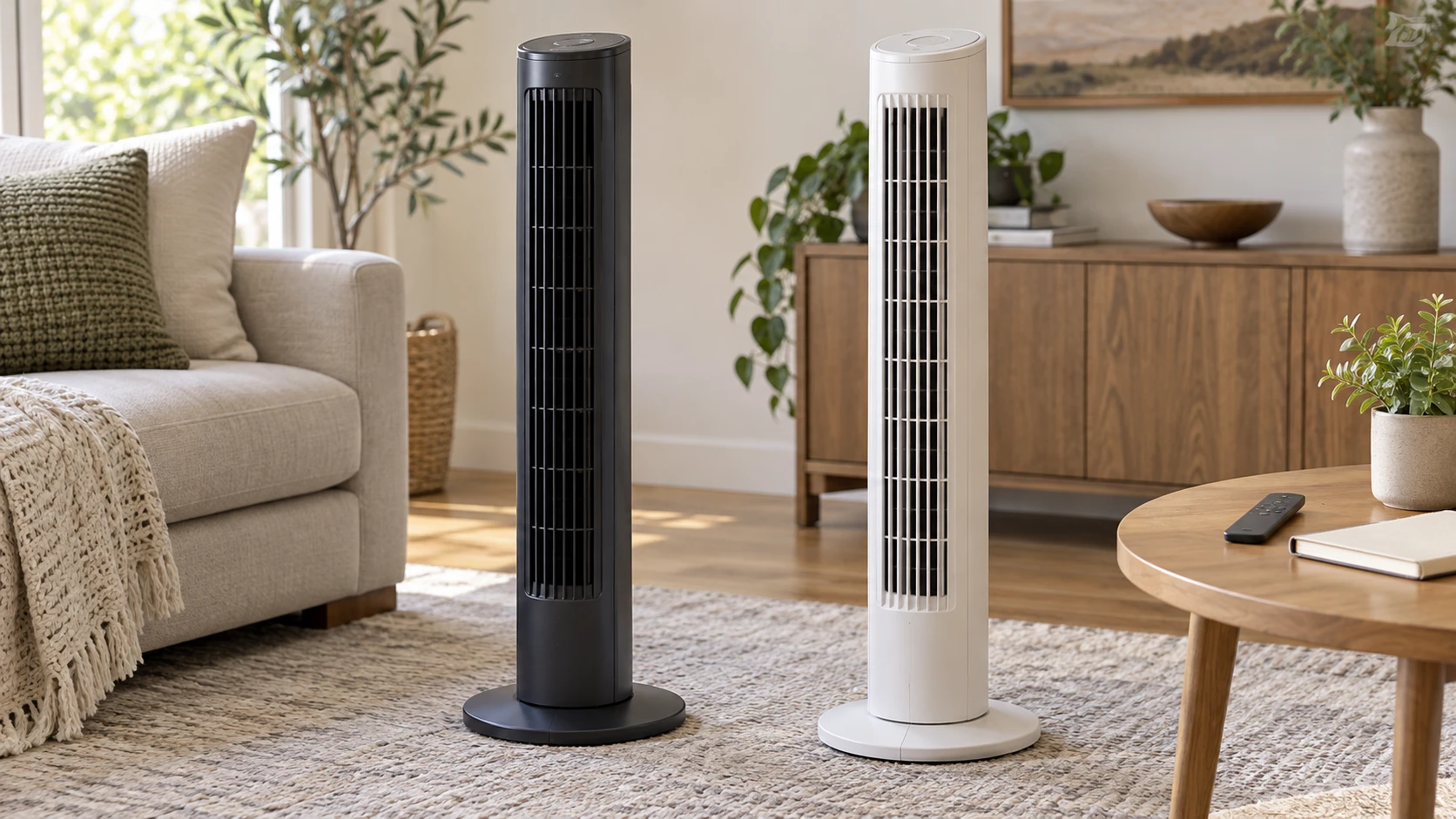
A tower fan purchase budget begins with the job you want the equipment to do. Perhaps you want a documented remote and a timer for an occupied room. Perhaps a tower-fan offer's water-tank features interest you. Those are different reasons to investigate a purchase, even when two listings share a forty-inch label and similar mode names.
The CuYeHt offers below illustrate that difference. One describes speed choices, oscillation, a supplied remote and a nine-hour timer. The CuYeHt 01 also names humidifying curtains, a water tank and ice-crystal holders. Keep those additional components in the purchase discussion rather than treating both descriptions as an identical package. Leave features you do not want out of the purchase brief.
Start with one room and the feature you actually need
Name the room and the activity before choosing equipment. A person working at a desk may care about reaching the controls. Someone sharing a living room may want to discuss sound and visible displays with the other people there. Use those preferences to decide which controls to investigate.
Record what already serves that activity. You might already own equipment with a documented fan setting, but its actual operation and performance need their own information. Choose a new fan to address the need your existing equipment leaves open. Keeping an existing item on the list can prevent a duplicate purchase without assuming that every device containing a fan performs the same job.
The actual space-heater modes and thermostat guide distinguishes the LuckyBliss offer's explicit Fan Only label from ZDWALZD's Fan mode and separately listed output figures. It finds no matched airflow or energy test for those choices. That is relevant if existing equipment prompted the shopping question: establish what its fan choice actually does rather than presuming either heater replaces a shortlisted tower fan.
What the twenty-two-feet-per-second offer supplies
The CuYeHt forty-inch tower-fan offer describes a maximum airflow velocity of 22 feet per second and three adjustable speed settings. It names a remote control, a nine-hour automatic shut-off timer with adjustable increments, seventy-degree oscillation and four modes called Baby, Comfort, Strong and Smart.
For a purchase centered on control access, the explicitly included remote is concrete package information. Ask which required functions its actual controls support before buying a separate accessory. The description does not enumerate a remote-battery package or every button action, so the remote's presence should not become an assumed ready-to-use battery inventory.
The stated overall dimensions are 14.5 inches deep, 11.8 inches wide and 40.9 inches high. These give the space question more detail than the title's forty-inch label. Compare them with the room you intend to investigate and the applicable product requirements. A body dimension does not supply operating clearance or prove that the chosen position leaves normal household access available.
Budgeting for tower fan components starts with water features
The CuYeHt 01 tower fan offer is identified as Multicolor, SKU sku-18637561560. Its description names a forty-inch body, an extra-large fan wheel, dual humidifying curtains, a four-litre water tank and ice-crystal holders. Those features deserve a deliberate decision in budgeting for tower fan components.
Ask whether that additional equipment serves the household purpose you identified. A water-tank feature can introduce a separate care and supply question that a person seeking only a particular control arrangement had not considered. The description does not supply the complete maintenance materials, compatible replacement-curtain identity or service schedule. Obtain the applicable instructions and actual package before planning purchases around those components.
The first offer does not describe an equivalent tank-and-curtain arrangement. That leaves those features unestablished in its account rather than proving every version lacks them. Keep your question with the exact offer. Do not add the CuYeHt 01's tank, holders or curtain account to the first order because the brand and several mode names match.
This article gives no filling, ice preparation, cleaning or operating procedure. It also supplies no humidity target, measured temperature reduction or therapeutic benefit. The immediate purchase decision is whether you want to investigate that added feature set and its actual requirements, not a promise about how it will change the room.
Check which components belong to one fan
The actual winter multi-room checklist separates the Vicks pack of two humidifiers from the Vornado EVAP40's two tanks and two filters. That distinction helps here: dual curtains and a tank describe components of the CuYeHt 01, not several separately supplied tower fans. Its humidifier examples do not establish either fan's care method, room coverage or replacement parts.
Keep the selected appliance and any genuinely required separate item in the proposed order. Confirm what the actual package contains before adding duplicates. A named holder does not enumerate every item that might be put into it, and an accessory seen in a decorated-room photograph does not establish that it is supplied. This is where a specific contents answer can prevent an unnecessary second purchase.
Checking tower fan timer and power claims
For checking tower fan timer and power claims, keep the two timer accounts distinct. The first offer gives nine hours with adjustable increments; the CuYeHt 01 names a twenty-four-hour timer. The longer stated timer does not establish the schedule your household needs, a delayed-start function or lower energy consumption. Obtain the actual selections for the routine you want.
The CuYeHt 01 description also gives a 65-watt power rating and a six-foot cord. The first description supplies no comparable power rating in the account used here. You therefore cannot calculate a matched running-cost difference from these two descriptions. Its energy-saving language around the timer is an attributed feature claim, without a measured household bill.
An energy calculation needs power over time. As a hypothetical arithmetic example, a load that actually remained at 65 watts for three hours would use 195 watt-hours, or 0.195 kilowatt-hours. That is not a measured CuYeHt 01 session. Its rating does not establish that exact draw across every setting or that the timer holds it at a constant power.
To estimate an expense, you would also need the applicable electricity tariff and a justified account of the time and energy used. Keep an estimate based on those inputs separate from money actually spent. A larger timer number, a DC-motor description or a Smart mode label cannot supply the missing consumption record.
Leave airflow and quiet claims with their stated scope
The CuYeHt 01 describes a velocity of 23.3 feet per second, seventy-degree oscillation and the same four named modes. It also names touch controls, a wireless remote and an LED display. Those are useful features to compare with a control requirement. The description does not give a common test showing which fan produces the preferred result in your room.
The first offer states at most 58 decibels even in sleep mode; the CuYeHt 01 states at most 60 decibels even in sleep mode. Their descriptions do not supply a matched measurement distance or complete test conditions. Keep these as each source's claims. They establish no guaranteed sleep, concentration or noise outcome for a particular person.
The shared Baby mode name is likewise a control label. It does not establish suitability for an infant's room or a specific operating procedure. Choose from documented information relevant to the actual user and location. Neither the label nor the Storm & Flood Prep catalog category gives either fan a battery-backup function or permission to operate during a particular emergency.
A household that already has an appropriate humidity solution may have no reason to choose a tank-equipped fan for that feature. Write that preference before requesting quotes. Another household may specifically want to investigate the described water features. Neither preference establishes a cooling advantage or a price difference between the offers; it identifies which feature set deserves a complete purchase enquiry.
Compare a complete proposed order
Once the essential feature set is clear, obtain the current quote for the exact selected package and any separately confirmed item it requires. Keep applicable delivery charges visible. These descriptions provide no confirmed recurring-part quote, measured replacement frequency or complete annual ownership total. A larger-looking appliance or a longer timer cannot substitute for those inputs.
Before adding another unit for a second room, revisit who uses that room and when. The winter checklist's distinction between a regular need and an occasional visit is useful for this conversation. It supplies no instruction to move or share either fan. A second purchase should have its own purpose rather than appear automatically because the household has another room.
Keep the payment choice attached to the actual order
If you decide to order a tower fan from republeq.com and prefer USDT, first check whether that option is actually offered in the selected checkout. A general cryptocurrency reference does not establish the payment choices for every transaction. Keep the equipment decision clear while reviewing those choices. The first CuYeHt offer names its remote, nine-hour timer and overall dimensions. The CuYeHt 01 gives a different component account with curtains, a tank, holders and a stated cord. A payment preference cannot make the packages interchangeable or establish an unlisted accessory. Confirm the current selected contents and the information that matters to your room before committing to an order. Read the actual delivery and return terms rather than assuming arrival before a guest visit or a particular remedy for an unsuitable purchase. This article promises no discount for crypto, refund outcome or measured saving from either fan. An unresolved equipment question stays unresolved even if a preferred payment method is available. If another household member is helping choose the appliance, share the exact offer and the reason for the purchase. Similar tower shapes and mode names do not establish the same power or care requirements. Retain the order confirmation if a purchase is made, and keep the applicable product instructions with the equipment information. Paying in USDT does not measure airflow, establish energy consumption or complete the water-feature enquiry. This discussion supplies no transfer method, wallet instructions or network choice. Consider an available checkout option on the conditions actually presented for that order, after the equipment questions relevant to the household have been answered.
Finish the budget around the feature set you chose
A useful tower fan purchase budget identifies the selected appliance, its confirmed package and any actual separate requirement. The first offer provides a remote-and-timer account with stated overall dimensions. CuYeHt 01 adds a documented tank-and-curtain feature set, a power rating and a cord statement. Decide which account answers the household's need before adding equipment or imagined savings.
Keep the current order expense separate from any future energy or maintenance estimate. You can choose a more focused purchase by declining features you do not want, resolving an essential component question or deciding that the equipment already owned is enough. Start with the household’s request and stop adding items once the proposed purchase answers it.