Crypto Commerce
Topteng BS-18E soundbar for a TV with several inputs
The Topteng BS-18E soundbar gives you several listed ways to receive audio: HDMI-ARC, optical, USB, AUX and Bluetooth. Those choices can help you find a connection for an existing TV, but the useful option depends on what that TV can send out. Before choosing the package, identify the television’s supported audio output and how you want to switch between the devices you already watch.
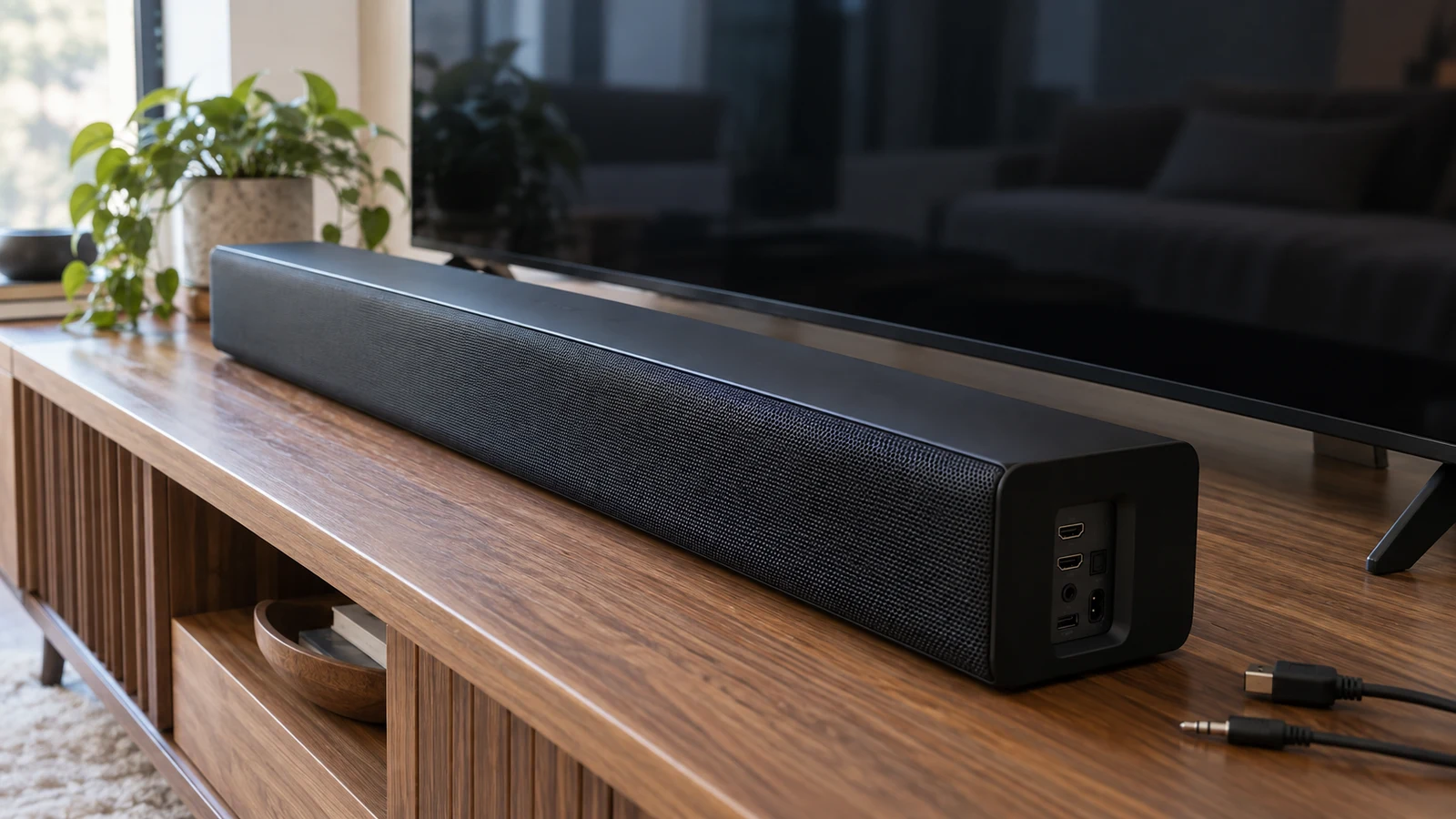
The Topteng BS-18E soundbar gives you several listed ways to receive audio: HDMI-ARC, optical, USB, AUX and Bluetooth. Those choices can help you find a connection for an existing TV, but the useful option depends on what that TV can send out. Before choosing the package, identify the television’s supported audio output and how you want to switch between the devices you already watch.
A TV with several connected sources presents two different questions. Where will you select the picture, and how will the accompanying sound reach the bar? Start by investigating whether your TV can send audio from your intended sources through one supported output. The Topteng description establishes its input options; it does not establish that it can replace a video switcher or accept every signal your television produces.
This distinction keeps the purchase focused. You might need only one connection between the TV and soundbar, even when several devices remain connected to the television. Alternatively, a particular source may need a separate audio arrangement. Establish which situation applies before treating the soundbar’s longer input list as a reason to buy.
The linked Topteng BS-18E soundbar is the black model identified by SKU sku-5304916488 and UPC 697130138798. Its description specifies a 2.1-channel package with a wireless subwoofer and an included remote control. Match those identifiers when discussing the product with the seller, particularly if a search brings up similar-looking bars or differently bundled packages.
Condition needs its own confirmation. The supplied description does not identify the unit as new, used or refurbished, and it does not provide a complete accessory inventory. Ask which condition applies to the selected offer and which connection cables and power accessories accompany it. A remote is explicitly included; other package details should not be filled in from photographs or expectations about similar products.
Understand Bluetooth Audio Direction Before Pairing Devices: Start With The TV Output
Write down the TV’s full model number and inspect its connection labels. For each possible audio route, consult the television’s instructions to establish its purpose and supported settings. A socket that resembles one on the soundbar is a starting point for investigation, not enough information to settle compatibility. Keep the distinction between the TV’s incoming connections and its audio outputs visible in your notes.
For a proposed HDMI-ARC connection, identify the television’s port designated for ARC and check the setup instructions for that specific model. The Topteng description explicitly lists HDMI-ARC. It does not specify eARC, supported audio formats or TV-remote integration. If those details matter to your setup, ask about them directly instead of extending the HDMI-ARC claim to cover them.
Consider a television used with a streaming device and a games console. Your proposed arrangement might leave both connected to the TV, with the selected source’s sound sent to the bar. Before buying, check whether the television supports that arrangement for both sources and which audio settings it requires. Include any built-in TV apps you use in the question, because those are part of your intended listening routine too.
The practical advantage of that arrangement would be fewer separate source changes at the soundbar. Whether it works as expected remains a question for the actual equipment. Ask what happens when you change the TV input, return to an app or turn the system on again. The Topteng description does not establish automatic input switching, remembered settings or coordinated power control.
Optical is another expressly listed Topteng input. If your television documents an optical audio output, investigate that pairing and the format settings required at each end. Also check how you would adjust listening volume in that arrangement. Having a documented connection option and having the remote-control routine you want are separate purchase considerations.
AUX deserves the same specific treatment. The description lists an AUX input but does not explain its connector details or the cable needed for your television. Ask the seller to identify the input and compare that answer with the TV’s documented output. If an adapter is proposed, have the seller explain the complete connection and any limitations before adding it to your shopping list.
USB is listed as an audio input, but its supported uses are not described. Do not assume that connecting the television’s USB socket will carry TV sound into the bar. Ask what the soundbar’s USB function accepts, including any supported media or file requirements relevant to you. Leave it out of your planned TV connection until its intended use has been established.
Bluetooth can be considered separately if a wireless TV audio connection is your preference. The Topteng description confirms Bluetooth audio playback without specifying the version, codecs, latency or compatibility with particular televisions. The related guide, Understand Bluetooth audio direction before pairing devices, addresses the connection-direction question. For this purchase, establish whether your particular TV supports sending its audio to a compatible speaker.
For watching programmes, include speech timing in any demonstration you can arrange. Use familiar footage with visible conversation and judge whether the sound follows the picture comfortably. This is a suggested listening check, not a claim about the Topteng’s measured performance. No latency result or model-specific adjustment capability is established by its description.
The Topteng BS-18E soundbar therefore offers several candidate inputs, with different unanswered questions attached to each. Choose a preferred TV connection and, if useful, a documented fallback. There is little reason to plan around every input when your household will use only one, but a confirmed second route could matter if the preferred connection proves unsuitable.
The package’s wireless subwoofer is also distinct from the TV connection. Its inclusion does not establish that the television can send sound wirelessly to the bar, nor does it specify the subwoofer’s power requirements. Ask about power and placement separately. Keep enough space in your plan for both the bar and the separate subwoofer, including access to whatever connections their instructions require.
ZVOX Speaker Alternative: Compare The Same TV Connection
The ZVOX AV835 provides a useful comparison when your TV connection is settled and your remaining concern is dialogue. Its description lists HDMI-ARC connection with one wire and operation with a TV remote. The ZVOX speaker alternative should be assessed against the same television and viewing routine you used to evaluate Topteng, so the comparison stays relevant to your equipment.
Topteng’s description names HDMI-ARC, optical, USB and AUX alongside Bluetooth. The supplied ZVOX description establishes HDMI-ARC but does not provide the same input list. That supports a comparison of documented options. It does not prove that ZVOX lacks every connection omitted from its description. If you require optical or another route, obtain the AV835’s connection details before deciding whether it belongs on your shortlist.
The strongest documented difference concerns sound adjustment. ZVOX lists 20 selectable dialogue-boost settings, comprising 10 AccuVoice levels and 10 SuperVoice levels. Its Output Leveling feature is described as smoothing sudden commercial volume spikes and raising quiet dialogue. Those functions are directly relevant if following speech or handling changes in programme loudness is your reason for replacing TV speakers.
Topteng’s description characterizes its sound as having clear highs, rich mids and strong bass for television, movies and music. Those are descriptive claims, not a listening comparison against ZVOX. They do not establish equivalent dialogue controls or volume leveling. Conversely, ZVOX’s named adjustments do not establish that every listener will prefer its sound. A demonstration with familiar material would help you evaluate that preference.
The packages also allocate their bass hardware differently. Topteng includes a separate wireless subwoofer, while ZVOX lists two built-in woofers. This gives you a concrete placement question: are you willing to accommodate the separate Topteng unit? Neither description supplies comparative bass measurements, so cabinet arrangement alone should not become a claim that one will sound deeper, louder or better in your room.
Remote use is another difference worth keeping precise. Topteng includes a remote control. ZVOX explicitly describes operation with a TV remote and includes its own remote with batteries. If your aim is to use the television’s remote for everyday sound adjustment, the ZVOX description addresses that aim directly. Ask whether the Topteng supports your intended control arrangement before assuming the included remote can remain unused.
ZVOX Speaker Alternative: Fit And Unanswered Purchase Details
Topteng’s supplied dimensions are 37.8 inches by 2.4 inches by 2.2 inches. The description does not label those dimensions by axis, so confirm the orientation before relying on them for a tight opening. ZVOX specifies 17.6 inches wide, 5 inches deep and 1.9 inches high. Use the confirmed measurements to examine the available space beneath or beside your television.
Measure the usable surface with the TV stand already in place. Check whether the proposed bar position would obstruct the bottom of the screen or access to the television’s controls and connections. Allow for the actual cable exits and any clearance required by the product instructions. The dimensions alone do not settle installation, and neither supplied description establishes mounting hardware or a particular wall-mount arrangement.
For Topteng, ask for the subwoofer dimensions as well. Its separate enclosure is part of the purchase even though its measurements are missing from the description. Decide where you could accommodate it without blocking everyday access around the furniture, then compare that location with the manufacturer’s placement guidance. Avoid committing to an enclosed shelf or an awkward corner before those details are known.
Keep the final seller enquiry short enough to answer clearly. Provide your TV model, the proposed audio output and the source devices you intend to leave connected. Ask which soundbar settings and cable are needed for that arrangement, whether your preferred volume-control method works, and what comes in the selected package. These questions turn a broad compatibility enquiry into a discussion of the setup you actually want.
Separate those equipment answers from the terms of purchase. Confirm the current total, stock status and item condition for the selected offer, then read the delivery, warranty and return terms that apply. The product descriptions do not establish those conditions. If choosing a cryptocurrency payment option, use the instructions and amounts displayed for that transaction; no payment detail follows from the soundbar’s specifications.
Choose Topteng for further consideration when its documented input choices match a confirmed TV output and you have room for the bar and subwoofer. Give ZVOX closer attention if its documented dialogue adjustments address your listening needs and its connection suits the same television. Before ordering either package, resolve the remaining question that could change your choice, whether that is the TV’s output behavior, remote operation or physical fit.