Faucets & Plumbing Fixtures
Why your toilet keeps running: checks before buying parts
Check the observed water path before deciding which toilet tank part needs model-specific help or replacement.
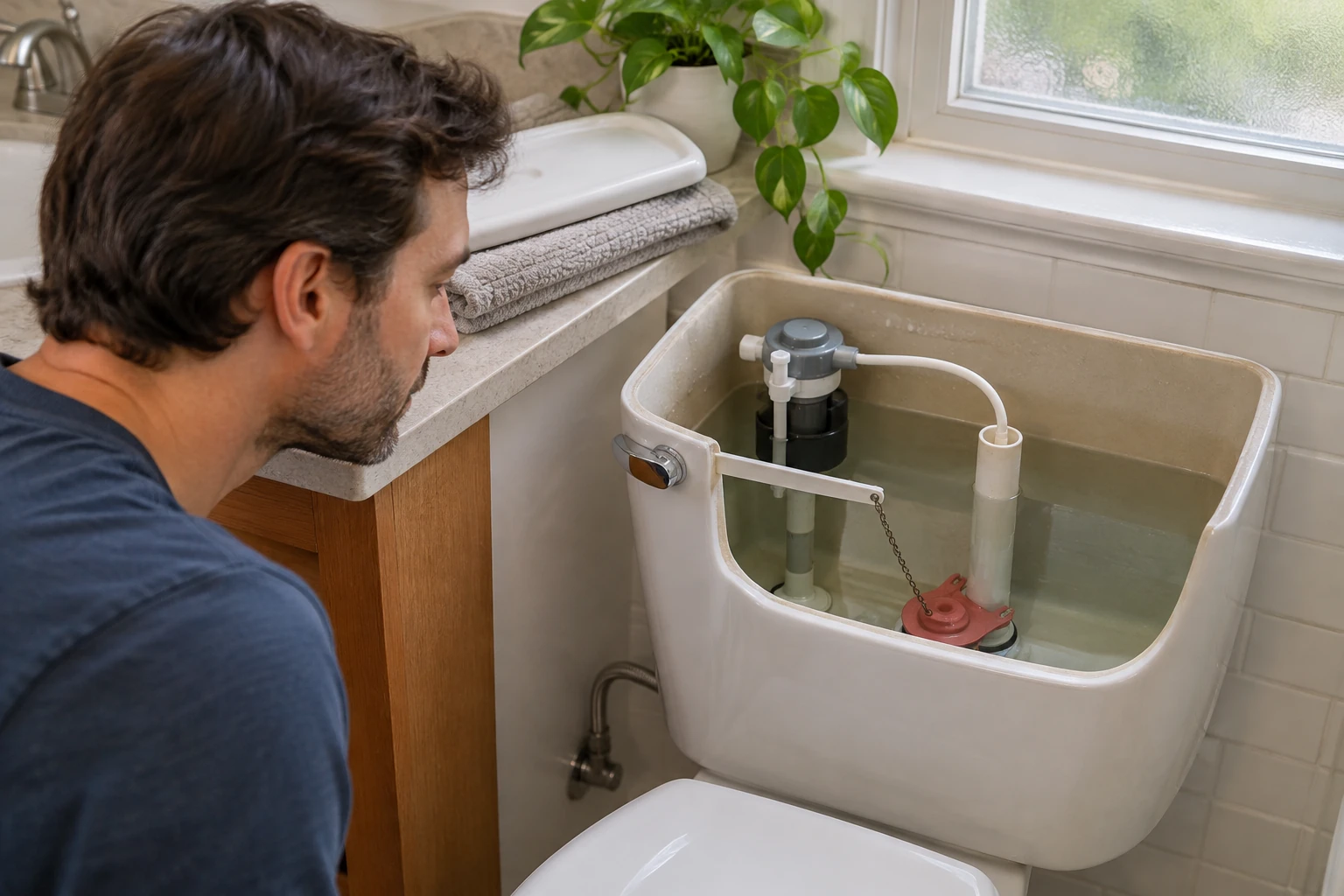
If your toilet keeps running, the sound tells you that water is moving; it does not identify the part you should buy. Korky's running-toilet guidance explains that a fill valve can be doing its job while replacing water lost through a different part of the tank. Begin by observing when the sound starts, whether it stops and where water appears to go. This guide helps you choose the next check for an accessible household toilet tank. It does not provide a universal diagnosis, installation sequence or permission to dismantle an unidentified valve.
Record when the refill starts
An intermittent toilet refill is a different observation from water that never seems to stop. Note whether the tank becomes quiet after a flush, then starts filling again without anyone operating the handle. Kohler's occasional-running guidance describes a falling tank level causing the fill valve to start refilling. That sequence gives you something useful to report: the valve becomes active after water has been lost. It does not, by itself, establish where that water escaped. Keep the sequence intact when asking for help rather than reporting that the fill valve has failed because you heard it operate.
For continuous running, observe what happens after the usual refill period. Kohler's constant-running guidance describes an ongoing filling noise and water overflowing into the flush valve's overflow. Record whether you actually see that overflow, rather than treating every ripple in the bowl as the same finding. Its troubleshooting also distinguishes water spilling into the overflow and eventually stopping from flow that continues. These observations belong beside the timing you recorded. They help someone select the appropriate model-specific check without turning a sound alone into a confirmed float, seal or valve failure.
Distinguish active refill from continuing flow
Water moving inside a tank is not automatically abnormal. For its QuietFILL Platinum valve, Korky describes water emerging around parts of the valve while refilling, as well as water travelling through the refill tube to replenish the bowl. That explanation concerns a confirmed applicable Korky assembly; it does not identify an unmarked valve in your tank. Its useful distinction here is between water seen during active refill and water continuing after filling should have ended. Describe both the location and the stage of operation. A photograph of water near a valve, without that context, leaves an important part of the observation unanswered.
Use a leak observation within its limits
For a toilet tank leak check, EPA WaterSense recommends putting a couple of drops of food colouring or a dye tablet into the tank and waiting ten minutes. Colour appearing in the bowl indicates a leak. Flush afterwards to avoid staining. If someone flushes during the waiting period, include that fact in your notes; do not report the disturbed observation as though the tank had simply stood for ten minutes. Follow the applicable fixture and test-product instructions, and keep this observation separate from cleaning or adding other products. A positive result supports a tank-to-bowl leak observation; it does not identify the exact replacement part or establish which flapper fits. Record the result and the waiting period when seeking help. If you see no colour, retain that actual result rather than claiming the entire toilet has been proved leak-free. EPA also directs further investigation or professional help for continuing overflow and other toilet problems. An inaccessible tank, an unfamiliar assembly or a result you cannot interpret is a reason to obtain the appropriate instructions or help before extending the test into adjustments or disassembly.
Identify the closure before choosing a replacement
Look at the mechanism that holds water in the tank before searching for a replacement flapper. Korky's seal-identification guidance distinguishes a tower-style flush valve from a traditional flapper. A tower or canister uses a seal suited to its assembly, so a hinged rubber part is not a substitute merely because both products are described as toilet repairs. Identify the actual valve and use the relevant model information when selecting its seal. The manufacturer's guidance also notes that a worn seal does not necessarily require replacing the complete flush valve. Keep that distinction open until the assembly has been identified. Buying a whole mechanism first would commit you to a larger replacement decision before establishing what the existing one needs. This guide does not certify a seal from a photograph or supply instructions for opening an unfamiliar canister.
A closure can also be prevented from returning properly. Kohler's occasional-running guidance includes a binding trip-lever arrangement and chain slack among its checks. Observe whether the handle returns and whether a chain appears to hold the closure away from its seat. Describe what you can see without translating a general observation into an adjustment for every toilet. The correct arrangement belongs to the actual assembly and its instructions. A handle that remains caught after use deserves to be reported separately from a tank that becomes quiet, then begins refilling again later.
If the toilet still runs after a flapper has been replaced, record that history rather than immediately ordering another one. Korky's troubleshooting calls attention to the correct flapper or seal, chain interference and the flush valve's sealing surface. Visible debris, mineral deposits or damage create different questions from a part chosen in the wrong size. Note what is visible and obtain the relevant care or repair instructions. This is not a recommendation for a cleaning chemical, a way to mix products or a procedure for repairing a damaged valve surface.
Check the opening and the actual assembly
Korky's flapper-size guidance directs attention to the flush valve's drain opening and distinguishes standard two-inch from large three-inch replacements. Measure the opening identified in the applicable guidance, rather than the widest outside edge of an old rubber part. Korky also offers approximate baseball/orange and softball/grapefruit comparisons as an identification aid. Those comparisons help describe the two size groups; they are not a measurement you have taken from the actual opening. Keep a rough visual estimate labelled as an estimate when asking which part is suitable. If you arrange a measurement, specify which opening was measured and retain the result with the part enquiry. A label saying three-inch replacement is not evidence that your toilet has a three-inch flush-valve opening. The size check should answer that particular question before you rely on a size category in a product offer.
Continuing overflow leads to a different enquiry from a confirmed closure leak. Kohler's constant-running guidance includes fill-valve maintenance and replacement, with the replacement reference varying by toilet model. Take the observed timing and water path to the applicable instructions or support service. Do not transfer another valve's cap-removal or cleaning method to an unidentified assembly. If the next action requires disconnecting a supply, opening a valve or replacing parts, this observation guide has reached its boundary. Obtain the matching procedure and appropriate help for that actual work.
Read the part offer after identifying the need
The offer titled Korky 528MP QuietFILL Platinum fill valve, Black Four Pack illustrates the inlet-side purchase question. Its title says Four Pack, and the captured image depicts four fill-valve assemblies. That agreement does not certify what a delivered order contains. No readable maker or model label is visible in the image, so the picture does not independently authenticate the catalogued model. The description gives an adjustment range and replacement claims, but those statements do not confirm suitability for your particular toilet. Ask about the exact offered item and supplied components after establishing why a fill-valve replacement is being considered. A valve listing cannot establish the cause of the running you observed.
The Korky 2022BP Power Gravity flapper offer presents a different component. Its sparse account repeats the model and TOTO wording; the image shows one blue flapper without a readable model mark or visible chain. That does not establish an explicit supplied-pack count, genuine model identity or compatibility with every TOTO toilet. Obtain an applicable answer for the actual fixture before choosing it. The toilet seat compatibility guide covers a separate component, but shows why a toilet reference and an offered replacement reference need to remain distinct. Its seat measurements and drawings supply no specification for either tank part here.
Take the observation to the next enquiry
When asking for help, keep the timing, visible water path and any leak-test result together. Korky's ghost-flushing guidance explains why hearing the fill valve can lead someone to blame it while it is replacing water lost elsewhere. Report what occurred, then ask which check or replacement the actual evidence supports. If a service visit is proposed, the faucet aerator quotation guide addresses the separate question of defining work before authorizing it. That guide concerns another fixture, not a toilet diagnosis. Here, the useful next step is an appropriate check or fit answer attached to the toilet that is running.
Keep the order separate from the diagnosis
If the checks eventually lead to a confirmed part purchase through republeq.com, keep the product decision attached to the exact order you intend to place. Record the offered model, any supplied-quantity answer and the fixture information used for the compatibility enquiry. Review the basket after a substitution rather than assuming that an earlier answer covers the new item. Payment is a later decision for that actual purchase. If checkout offers cryptocurrency, including USDT, read the asset, network, destination and amount shown in the current order instructions. Compare those details with the transaction your wallet is preparing before authorizing it. A familiar token name does not answer every question about the instructions for a particular transfer. Ask the merchant through its current support route about a point you cannot interpret. Keep the order reference and any wallet transaction reference as separate records so a later enquiry can identify both. If another household member will pay, give them the confirmed basket and its current instructions, including any change to the part or quantity. Avoid passing along an earlier payment message after the purchase has changed. If the outcome of a transfer is uncertain, ask the merchant to reconcile its actual status before considering another transfer. Retain the acknowledgement actually supplied and use the order reference when asking about fulfilment. Keep compatibility replies alongside those records when checking delivery. The fact that payment was accepted does not establish that the part fits the toilet or that it addresses the observed leak. Equally, a useful observation does not establish that an unconfirmed replacement should be ordered. Finish the purchase decision with the exact item and the relevant fit answer, then follow the appropriate instructions for any later installation or service work.