Product Compatibility & Accessories
Check toilet seat compatibility against the right model drawing
A replacement-seat buying guide that ties the actual model, its applicable drawing and an identified toilet together while retaining conflicting retail descriptions and historical-document limits.
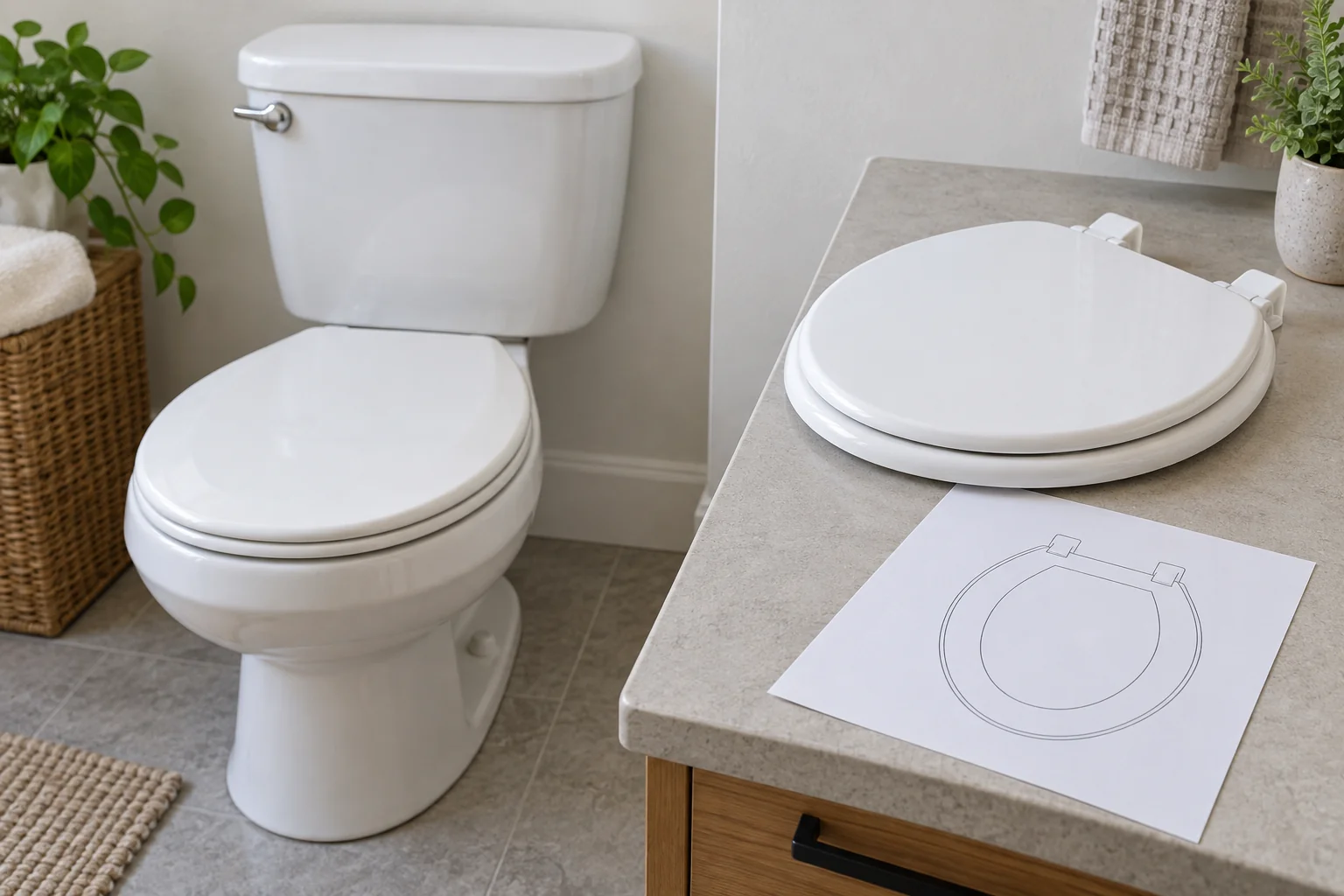
Checking toilet seat compatibility starts with the seat you are actually considering and the toilet already in the room. A familiar collection name can lead you to useful documents, but it does not settle the offered model, its finish or its fit. Keep those questions attached to the particular order before choosing a replacement.
Two product accounts illustrate why the model reference deserves attention. One Kohler offer has an older elongated-seat model in its page address while the current title identifies a round-front version. A separate Cadet 3 offer gives a model in its title but little fit information in its description. Neither account justifies choosing from a photograph alone.
This is a purchase-planning guide for an ordinary replacement seat. It does not provide a removal or installation procedure, approve a seat for a particular toilet, or establish suitability for a public bathroom. Its purpose is to help you determine which product document answers your actual question and what still needs confirmation.
Identify the toilet before choosing a round-front toilet seat
When considering a round-front toilet seat, begin with whatever reliable toilet model information you already have. It might be in the documentation supplied with the fixture or an existing purchase record. If the toilet remains unidentified, keep that uncertainty visible when asking its maker or the seat supplier about a replacement.
Record the seat you are replacing separately from the toilet itself. A name remembered from the old lid is not automatically the toilet's model. Likewise, a general collection name on an old receipt may cover more than one product. Pass on the actual reference and the question you need answered rather than converting incomplete information into a specific model number.
If someone else is handling the purchase, agree which toilet the enquiry concerns. A household may have more than one bathroom and different fixtures within them. A photograph and a confirmed location can help keep the request attached to the correct item, while the model information supplies the reference needed for an appropriate fit answer.
Read the current Kohler offer instead of its older address
The Kohler Cachet ReadyLatch seat offer currently identifies 4639-RL-0 in its title, calling it round-front and White. Its page address contains 4636-RL-96 and elongated wording instead. Use the current offered identity for your enquiry; the older address is not evidence that an elongated version will be supplied.
The description introduces another question by saying Biscuit. Keep that discrepancy with the order reference. It is separate from the shape question, and it matters if you intend to coordinate the finish with an existing fixture. Do not resolve it by assuming that the colour shown on your screen establishes the delivered finish.
Kohler's current K-4639-RL specification identifies a closed-front, round-front seat and lists finish suffix 0 as White and 96 as Biscuit. That maker information distinguishes the variants; it does not establish which conflicting account on the retail page will control your order. Obtain confirmation of the offered model and finish together.
Use the toilet seat mounting holes shown in the relevant document
The toilet seat mounting holes need their own reference. Kohler's K-4639-RL specification states five and a half inches, or 140 millimetres, for the seat-mounting holes. It also says all product dimensions are nominal. Those are statements for that model, without a guarantee that the unidentified fixture in your bathroom accepts it.
The same specification includes a dimensioned drawing. Its arrows start and finish at particular places on the illustrated seat. Keep the labels with those reference points when discussing the drawing. A length across one part of the object should not acquire the meaning of a differently labelled length simply because both numbers appear on the same page.
Use the actual model drawing when asking how a required measurement relates to your toilet. This guide does not turn the drawing into an installation template or a universal measuring procedure. If the supplier needs a particular fixture measurement, have them identify the points they mean before treating a loosely described bowl length as a complete fit answer.
Keep an overall product dimension separate from a stated mounting dimension. One describes the size or extent of the illustrated product, while another identifies an attachment reference. A matching number without its label may be an answer to a different question. Retain the document and its model reference with any measurements requested for the enquiry.
Keep the Cadet 3 model separate from another shape
The Cadet 3 5345110.021 seat offer names American Standard and Bone in its title. Its description identifies a solid plastic seat with a cover, a telescoping lid and a slow-close hinge. The listing also labels the brand nonbranded, so ask about product identity if confirming its maker matters to your purchase.
The brief description does not supply a mounting-hole measurement or a complete statement of which toilets it fits. Do not borrow Kohler's figure for this different offer. The existence of a model number in the title is useful for locating the relevant manufacturer material, but it does not add measurements missing from the selected product description.
An original American Standard installation document, dated 2009 and supplied in Spanish, identifies round-front model 5345.110 and elongated model 5350.110 separately. That distinction helps prevent a search for Cadet 3 material from silently substituting the other shape. It remains a historical document; confirm the current offered version and the instructions applicable to it.
The same document describes its own mounting assembly and adjustment washers. Those details are not permission to fit that hardware to a Kohler seat or to assume the exact older assembly is supplied with today's order. This guide gives no installation sequence from it. Ask which current parts and instructions belong to the product you would actually buy.
Check what a family fit statement establishes
A manufacturer may describe a model as fitting most toilets of a named shape. Keep the scope of that statement intact. Most is not every, and it is not a confirmation for an unidentified fixture. Ask whether the applicable information establishes a match for the toilet you have, rather than treating a general family description as a personal approval.
Similarly, a listed hinge feature answers a feature question. It does not establish that a different maker's hinge parts can be exchanged, that an existing fitting can stay in place, or that another product's installation method applies. Those are separate questions for the actual assemblies and their matching instructions.
If you are buying for a setting outside ordinary household use, obtain the relevant requirements for that setting before choosing from these offers. Kohler's specification explicitly notes that plumbing codes may require different seat forms in public bathrooms. This guide supplies no code assessment or approval for a commercial or shared public facility.
A model reference can change a sensible enquiry
Imagine a buyer replacing the seat on one household toilet. They have saved the Kohler page because its older address contains the word elongated. This is a hypothetical shopping example, without an assumed toilet measurement, an installation trial or a claim that either selected product fits the buyer's fixture.
On reading the current title, the buyer finds a different model reference and shape. They now have an identity question to resolve before a fit question can be answered. Measuring the existing toilet more carefully would not, by itself, tell them whether the retail order supplies the item described in the title or the older address.
The useful enquiry names the exact retail offer, points out the current model and the conflicting wording, and asks what will be supplied. Once that identity is established, the buyer can request the appropriate fit information for their confirmed toilet. An answer about finish should remain an answer about finish; it does not silently settle shape or attachment.
If the reply identifies another variant, treat it as a new proposed purchase. Check whether it is the one you actually want and obtain its own applicable information. Do not continue using the earlier drawing simply because the collection name remained familiar. A changed model reference deserves a corresponding change in the document you rely on.
Keep other bathroom hardware decisions separate
When refreshing more than one fixture, the guide to curtain ring and rod compatibility considers a ring's opening, a stated rod limit and the curtain attachment. Those are its own hardware questions. Its ring measurements, clearance sketch and clip descriptions provide no specification for a toilet seat or its hinge.
A working accessory may also deserve its own care decision before replacement. The soap dispenser not pumping guide distinguishes an actual dry spout from an unconfirmed fault and confines its cleaning and priming steps to matching Moen assemblies. Those pump instructions do not apply to either seat in this article.
Use each guide for the product and reader question it covers. A bathroom shopping list can contain several different decisions, and finishing one does not settle the others. Keep the actual references beside each proposed purchase so a useful supplier reply about one fixture is not accidentally assigned to another item.
Read the scope of a supplier reply
A short reply can settle less than you hoped. If it confirms only the colour, keep the model and fit questions open. If it names the seat but says nothing about your toilet, ask whether the stated answer concerns that fixture. Retain what the supplier actually confirmed instead of rewriting a narrow answer as approval of the whole purchase.
You can make the next question specific without prescribing the answer. Send the exact product reference and identify which part remains unresolved: the offered variant, the document applicable to it, or the fit for the existing toilet. That gives the supplier a focused enquiry and gives you an answer whose meaning you can check before ordering.
Choose against an answer you can identify
Before placing the seat order, review the confirmed model, the relevant fit information and any remaining finish or supplied-part question. Save the maker document that actually belongs to the proposed version. If a supplier reply relies on another drawing, ask which model that drawing describes before accepting it as the answer for your order.
If a required point remains unanswered, leave the purchase open rather than interpreting silence as compatibility. You may decide to seek another documented offer or obtain help identifying the existing fixture. Either action addresses the missing information. Ordering the familiar-looking seat does not establish the fact that the enquiry was intended to confirm.
The useful end to the shopping task is a particular seat chosen for a particular toilet on identifiable information. Keep its product reference with the confirmation you received and use the applicable instructions for any later installation. The collection name, the colour preference and the model drawing each contribute different information to that purchase decision.