Kitchen & Appliances
Check toaster lift behavior before assuming a failed latch
Separate expected starting behavior from an assumed latch failure. Use model-specific guidance and a clear stop boundary without claiming a successful repair.
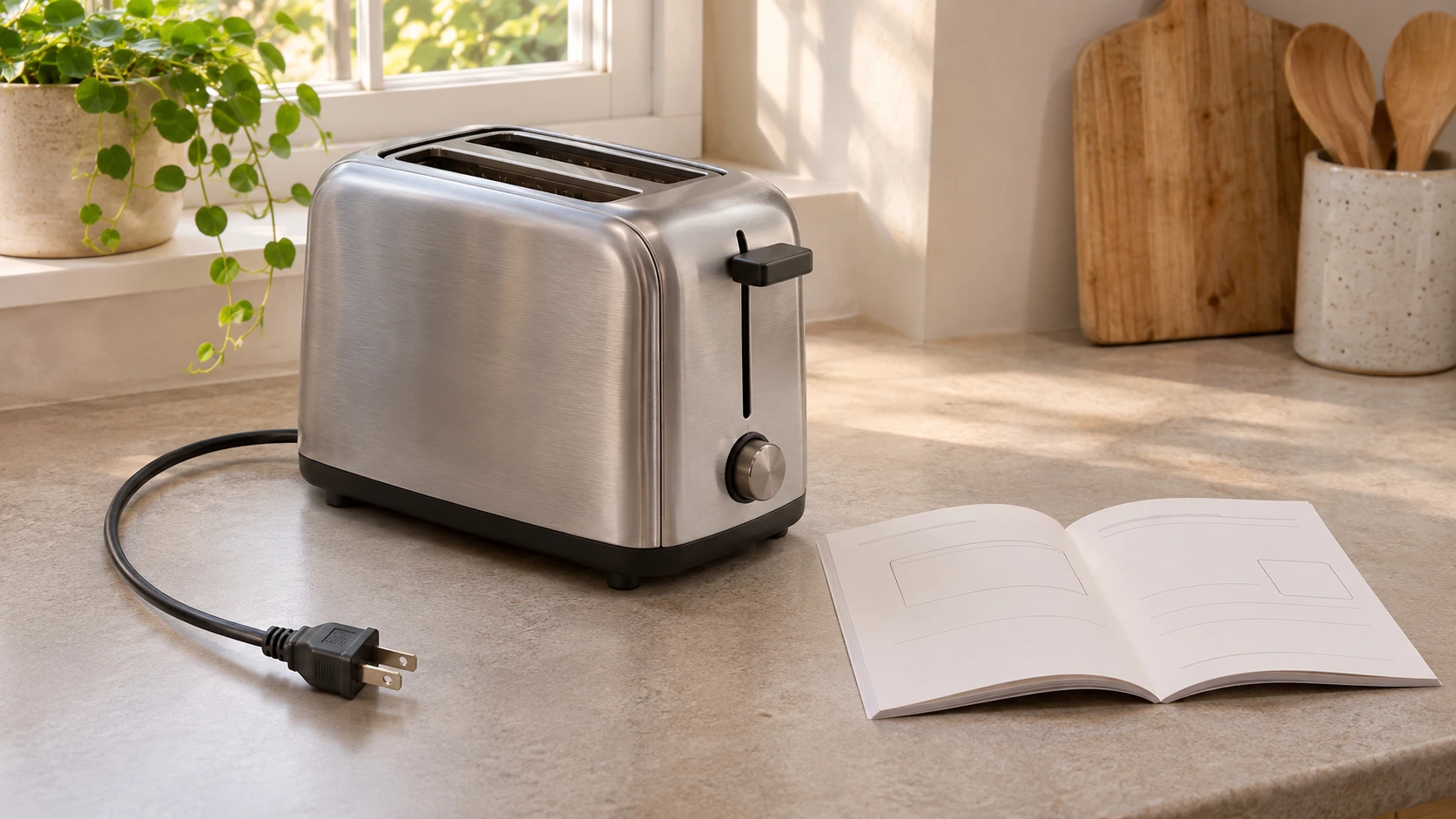
toaster lift behavior can look wrong before you have identified what was supposed to happen. A carriage that never lowers, a lever that does not remain down and toast that has already risen describe different events. Calling all of them a broken latch makes the shopping decision sound settled too early. Start with the appliance model and the point at which the expected sequence stopped. This guide uses fictional situations to interpret manufacturer guidance; it reports no powered test, opened casing, measured fault or successful repair.
Keep the first question small. Are you asking how to begin the cycle, why an attempted start did not remain engaged, or why food is still inside after an earlier cycle? Answering one does not answer the others. The two current toaster offers below provide equipment context, while the specific operating examples come from KitchenAid’s own guidance. Those examples do not supply operating instructions for another manufacturer’s appliance.
First distinguish the controls you actually have
KitchenAid’s manual lift lever needs a live outlet to stay down.
In Jo’s fictional manual KitchenAid example, the toaster is unplugged. Jo had noticed the lever returning upward while preparing to rearrange the counter and was about to describe that as a failed part. The planned counter rearrangement had quietly become a supposed fault test in the retelling. It does not identify a damaged component or prove that the appliance will work later. Jo can stop short of ordering a replacement on that basis, while leaving any separate question about the appliance unresolved.
This matters when the account has been passed between people. “It would not stay down” might be someone’s brief recollection rather than a description of a complete attempted start. Ask what they meant before turning that phrase into a fault diagnosis. If the person does not remember the circumstances, preserve the uncertainty. There is no need to invent a missing step simply to make the account sound complete. A replacement purchase based on that invention would answer an imagined problem.
An automatic example has a different starting question
For KitchenAid’s automatic toaster, food may be too light to trigger lowering; after three seconds without movement, Toast/Cancel starts a cycle manually.
In Sam’s fictional KitchenAid automatic-toaster example, the food has not begun lowering after three seconds. Sam expected the appliance to react as soon as the food was placed and assumed the lack of movement settled the diagnosis. The specific manufacturer instruction gives Sam an applicable starting question instead. This article does not report Sam pressing a button, completing a cycle or obtaining a particular result. A documented instruction and an observed outcome remain separate.
Sam should also avoid importing the control sequence remembered from a different toaster. Familiarity with an older appliance can explain an expectation without making it the correct expectation here. The useful comparison is between this model’s instructions and the event being described. If the model has not been identified, leave the choice of start control open. An attractive product photograph, a friend’s recollection or a label on another appliance cannot settle which instructions apply to this one.
Suppose Sam’s actual concern was finding a replacement that would feel familiar to a visiting parent. That is a usability preference, separate from diagnosing the existing appliance. Sam can consider it when shopping without presenting it as proof that the current toaster failed. Keeping the two decisions distinct prevents a preference from becoming an invented technical finding. No comparative ease-of-use test or accessibility outcome is claimed for either offer here.
A manual example needs its own account
KitchenAid’s manual instructions require pushing the lift lever fully down.
Dev’s fictional manual KitchenAid example begins with an incomplete lever press. Dev then says the toaster “would not start,” but that wording already leaves out the action that was attempted. The useful next question is which documented step the account actually covers. It is not a reason to assume that a stronger movement, an internal adjustment or a new appliance is required. No intervention is carried out in this example, and no latch fault is established.
Another person may use the same phrase after changing their mind during breakfast preparation. Their account could concern a cancelled attempt rather than an unexplained failure. Ask about the order of events before comparing stories. These examples give no permission to continue an unclear sequence by guessing what someone pressed. They show why a description of an attempted start should include the action being discussed, without turning every difference between two accounts into a hardware defect.
Once the question has been narrowed, keep it there. A complaint about the chosen shade, a preference for a different breakfast food and an observation about the starting action deserve their own explanations. Bringing them together under “the toaster is bad” makes a replacement feel inevitable without showing what it would address. Dev may still choose to buy something else, but that choice should not be reported as the result of a diagnosis that never took place.
Keep a cleaning question within its actual boundary
KitchenAid notes debris can affect lever engagement. Unplug and cool before cleaning; do not probe inside with metal.
The word “possible” matters. A suggested cause is not a finding about the appliance on your counter, and this guide supplies no inspection result. If the applicable instructions do not resolve your question, use the maker’s support route with the actual appliance model. Describe the attempted action and observed response without selecting an internal fault on someone else’s behalf. This is a reasonable point to leave the problem open rather than treat another purchase as an experiment.
Keep a help request focused enough to answer. Someone dealing with a starting question does not need a long account of every breakfast prepared on the appliance. They do need to know which equipment and which event you mean. A concise description can distinguish what was seen from what was expected and from what is still unknown. It should not promise that a cleaning step, a button press or a different purchase will restore operation.
Read the two current offers as their own appliances
The Cuisinart CPT-620P1 toaster offer describes a two-slot Custom Select model with a high-lift carriage, food options, a shade selector and a slide-out crumb tray. Its gallery shows integral controls on a silver toaster; the coffee maker, tableware and food in lifestyle pictures are staging context, not a stated supplied bundle.
The Hamilton Beach 24798 toaster offer describes a four-slice appliance with extra-wide slots and a toast-boost feature. Its whole gallery shows two integral lever tracks and separate banks of Cancel, Bagel and One Slice controls. The sparse native title is retained as catalogue context; the pictures do not authenticate a complete factory model label.
On the Cuisinart gallery’s front panel, the food selector and horizontal shade slider are separate controls. On the Hamilton gallery, each lever has its own nearby button bank and shade dial. A reader looking for a button remembered from a different toaster should not infer that a missing counterpart proves damage. First establish which pictured control belongs to the actual appliance being discussed. This comparison helps describe a model accurately; it does not provide a shared button sequence, explain an internal mechanism or report the response of either unit. The surrounding kitchen scene cannot resolve that control question.
These are different control layouts to identify when considering equipment. Neither listing demonstrates a fault in your existing toaster, and neither receives KitchenAid’s model-specific operating instructions merely by appearing in this guide. Use the actual start control information for the appliance under consideration. The current offers are not tested replacements for a diagnosed defect, and this article makes no browning, reliability or repair-success comparison.
Also separate the stated offer from everything visible around it. A kitchen scene can help show scale and placement without promising the other appliances or breakfast items. If you are considering an order, identify the actual selected item rather than building a bundle from the photograph. That purchasing question is separate from whether the original symptom has been explained. There is no need to finish a purchase before the remaining technical question is resolved.
Use neighboring guides for the questions they actually address
The guide to bread stuck in a toaster addresses an already-stranded piece and cooled removal guidance. It does not turn an initial starting question into a bread-clearing task. The Ninja and Aeitto countertop-oven guide concerns a different appliance and cooking-space decision; it supplies no slot-toaster latch diagnosis.
Keep the actual question in view if the discussion turns toward buying features you had not originally needed. Finish the toaster lift question with a conclusion no larger than the evidence supports. You may identify an applicable starting instruction, discover that the account was incomplete, or retain a problem that needs the maker’s help. None of those outcomes requires declaring a defective component without evidence. If you later consider replacement equipment, keep that remaining question visible instead of presenting the new purchase as proof of what was wrong.
Keep a potential payment separate from the appliance question
If you later consider crypto payment on republeq.com, finish identifying the actual offer before treating a transfer as the next step. A payment choice does not diagnose the existing toaster or establish that a replacement will address the described problem. This paragraph reports no order, reservation or transfer and confirms no current checkout method, recipient, network, amount or fee. USDT is mentioned only as possible transaction context, not as an instruction to send it. For an actual purchase, use the current order instructions and check the relationship between the named item and the payment details. Resolve a recipient, asset, network or order-association question before committing funds; this troubleshooting guide does not provide those live answers. An old checkout page or a message about another order should not replace the instructions for the transaction you are considering. Keep wallet credentials and other sensitive account information out of public appliance-support discussions. If an earlier order or payment attempt has an uncertain outcome, preserve what was actually attempted and the confirmation evidence available to you. Reconcile that status before considering another payment. A changed page appearance alone does not establish that nothing happened. This guide performs no reconciliation and promises no refund, reversal or recovery. A confirmed purchase would also not prove that the original appliance had a broken latch, that a suggested step restored it, or that the selected replacement was tested for your circumstances. Each conclusion needs its own evidence. You can defer a purchase while the starting question remains unresolved, without using another order or transfer as a way to investigate the appliance.
Conceptual model-instruction check; no powered test, fault diagnosis, opened casing or successful repair is shown.