Tools & DIY
Thread checker hole mismatch: identify the opening
Multifunction identification tools need an opening-specific question. Keep a hole's stated purpose separate from an unproved thread diagnosis.
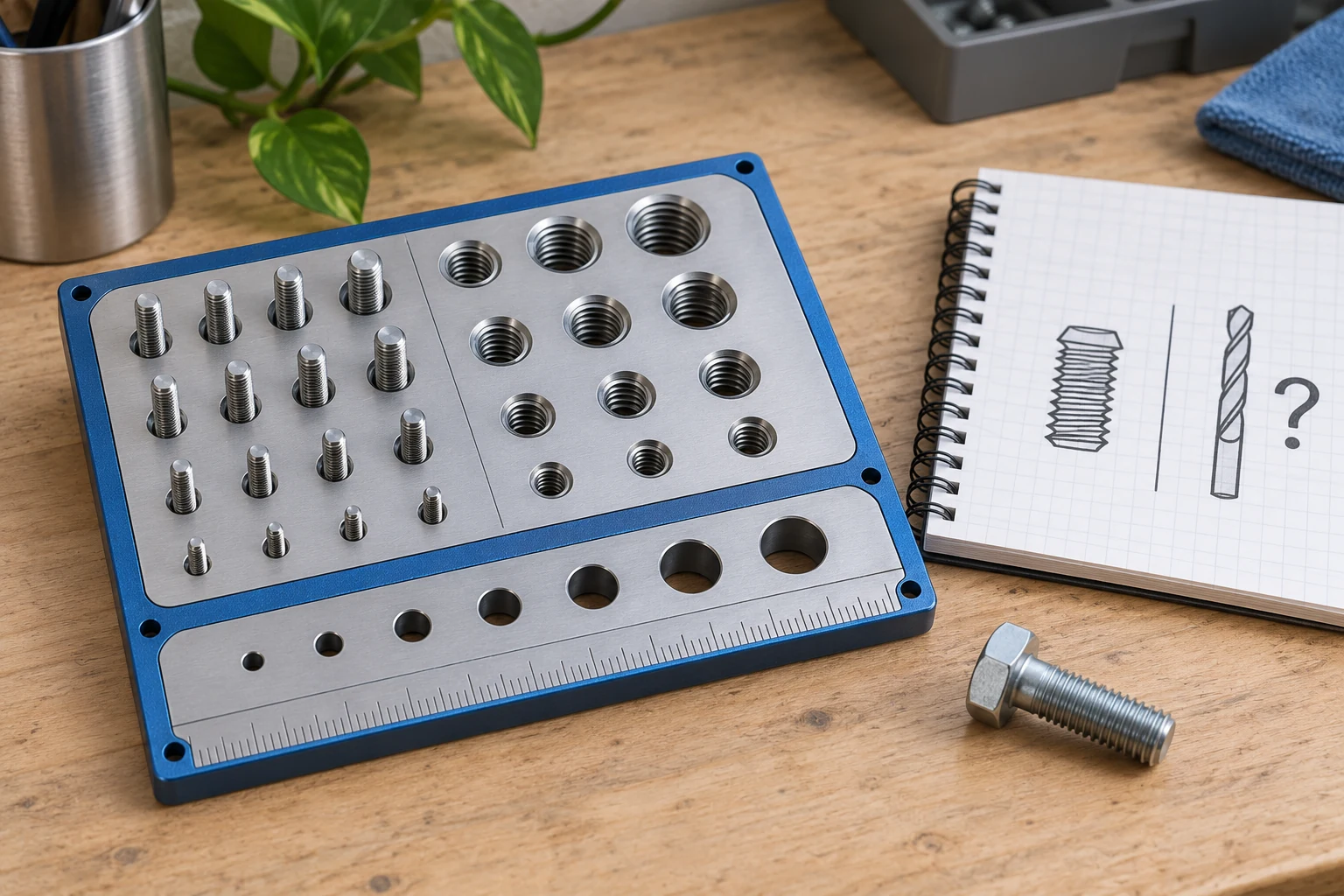
Thread checker hole mismatch reports need the opening's purpose identified before they become conclusions about a fastener. A multifunction identification tool may describe more than one kind of gauging feature. Keep the actual opening and the question it is intended to answer together, rather than treating every opening on the same board as the same test.
This guide helps frame an unresolved report. It supplies no procedure for inserting a fastener, selecting an opening by trial, checking a thread or making a repair. No actual part has been accepted, rejected or diagnosed here. Applicable equipment and part information must establish what a particular feature is for and how any real handling should proceed.
Describe the opening before interpreting the outcome
Begin with the actual tool and the opening being discussed. A message saying the checker feels loose can leave both unidentified. Ask which unit the person means and what information identifies that particular feature. Keep a reported observation as a report, including any uncertainty about what happened, instead of supplying a technical explanation from a familiar-looking photograph.
If someone else made the observation, preserve that distinction. You may have their description without having seen the tool, the part or the circumstances. A photograph can help show the location they are discussing, but its presence does not establish that the selected feature was appropriate to their question. Leave that relationship open until applicable information addresses it.
Use the complete offered or actual unit identity in the enquiry. Similar-looking identification tools can have different descriptions and layouts. Another product's account should not quietly supply the missing function for an opening on the unit in front of you. The objective is to identify the task associated with the feature, not to choose a convenient explanation for an unexplained outcome.
Read the board's separately named functions
The 56-labelled thread-checker board offer describes 44 thread sizes with male and female features, plus 12 drill-size holes and integrated edge rulers. Those are different stated functions within the offered identification tool. The description is not a verified delivered-parts inventory, calibrated opening map or operating procedure supplied by this article.
A drill-size-hole function and a thread-checking function are named separately in that account. Retain that distinction when asking about the exact opening. A reported outcome should not be relabelled as a thread result merely because the object carrying the opening is sold as a thread checker. The feature's stated task still needs to be identified.
Keep the removable-sample case at its stated scope
The 46-labelled thread-checker case offer describes removable thread-identification samples held in a foam storage rack for identifying nut and bolt sizes. That is its own supplied arrangement. The selected account does not name the board offer's integrated drill-size-hole function. This omission establishes neither that an unlisted feature is absent nor that the first tool's layout applies to the case.
Separate the stated task from the reported behaviour
An observation and a measurement question have different jobs in the account. The observation describes what someone reports seeing or feeling. The question identifies what they wanted to establish. Before drawing a conclusion, the applicable information must connect that question to the feature used. A general product name cannot supply that connection for every part of a multifunction tool.
Imagine an expressly hypothetical workbench message from Lee: an opening on a checker seemed loose around an unidentified fastener. The message supplies no exact opening designation or documented function. Lee's account can remain useful as an unresolved observation. It does not yet establish a thread mismatch, damaged part, inaccurate gauge or need for a cutting tool.
Suppose a reply identifies the feature's stated purpose as drill sizing. Keep that explanation with the exact opening and model it addresses. The reply clarifies the task described for that feature; it does not authenticate a real instrument, measure the hypothetical fastener or establish its thread condition. No physical trial is reported or recommended by this example.
Now suppose the reply discusses a different opening or a different product version. That leaves Lee's original question open. Ask which feature the response concerns before merging the explanation into the original account. An answer can be clear about its own subject while still failing to identify the opening that prompted the enquiry.
Ask for information about the particular feature
A focused request can name the actual tool, identify the opening as precisely as the available information allows and state the intended question. Ask where the applicable description or instructions explain that feature's function. If a reference image accompanies the request, make clear which location is being discussed without treating the image itself as proof of dimensional accuracy or suitability.
If a response only repeats the product category, the feature question may remain unanswered. Keep the missing detail visible. A category name is useful vocabulary, while the feature-specific question can remain unanswered. Request the information needed for the actual feature rather than assuming that the category resolves it.
A short label also needs context. A fictional response saying use the gauge does not identify which feature or which task the responder means. This is an invented example of an incomplete reply, not an instruction adopted for either retail offer. Keep the equipment and opening question explicit before relying on advice intended for another arrangement.
Keep inspection acceptance outside an unidentified-opening report
The published thread-gauge disagreement guide addresses a Go/No-Go inspection disagreement and keeps rejection, geometry and calibration evidence in their own scope. It does not turn an unidentified opening on another tool into an acceptance test. The opening-purpose question here must be resolved without importing a plug-gauge verdict or operating method.
The Mitutoyo caliper INC-display guide explains the reference state of an applicable caliper display and its documented controls. That context does not identify a thread-checker opening or supply a method for examining a fastener. Keep the measuring question and the applicable instrument information together rather than borrowing a control action from another tool.
Even after a feature's purpose has been identified, other questions may remain. The actual part identity, the appropriate assessment and the condition of the equipment can require their own information. Resolving the opening description does not answer all of them. Keep the outcome as narrow as the evidence that established it.
Do not turn an unclear report into a repair decision
The hypothetical workbench note gives no basis for modifying the fastener or the tool. A report about an unidentified opening should not be presented as a reason to cut, tap or rethread a part. This article provides no such remedy. Appropriate technical information must address the actual equipment, part and intended task before a real service decision is made.
If another person needs to continue the enquiry, send the actual tool identity, the opening question and the observation together. Retain any uncertainty about which feature was involved. A handoff that says damaged thread can discard the unanswered question that made the original report difficult to interpret. Describe the unresolved issue without announcing a diagnosis nobody established.
Keep a changed component identifiable too. A removable sample taken from a case and a feature on a board are different actual objects to name in a request. A response about one should not silently become information about the other. This distinction organizes the conversation; it supplies no instruction for removing, selecting, installing or trying a sample.
Buying through Republeq with a crypto preference
If the opening-purpose enquiry leads you to investigate an identification tool through republeq.com and you prefer crypto such as USDT, retain the exact proposed tool and the task you need clarified. A payment preference does not establish what an opening measures, identify an unknown fastener or validate a thread result. Before authorizing a transaction, obtain current instructions for the actual basket and resolve any uncertainty about the required asset, network, destination and order reference. This passage confirms no available payment method or current transaction route for a particular order. A helper arranging the purchase should receive the feature question along with the selected offer. A general request for a thread checker can leave that person without the distinction that prompted the enquiry. If the selection changes from a board to a case or another configuration, seek applicable information for that actual item instead of carrying an earlier explanation across the substitution. Keep the seller's response attached to the feature and product it names. If an order or payment attempt has an uncertain outcome, reconcile that exact attempt before authorizing another one. An unanswered confirmation remains an open order question until the destination establishes what occurred. An order receipt also provides no dimensional calibration, part acceptance or proof of a supplied tool's authenticity. Preserve the relevant equipment information separately from the transaction record so that neither is asked to answer the other's question. If the offered function remains unclear, leave the purchase decision open while requesting the missing information. The purpose is to keep the actual identification task involved throughout the enquiry without representing an unexplained opening report as a resolved fault or a justified repair.
Keep a revised question explicit
Return to Lee's fictional message. Suppose the first reply successfully identifies the opening's described task, and Lee then asks what caused the earlier loose feeling. That is a further question. Keep the clarification already obtained, but do not extend it into a cause finding. A description of intended purpose can help define the next enquiry while leaving the particular observation unresolved.
Someone reading the exchange later should be able to tell which question each answer addresses. A response about a feature's intended use is different from a report that an appropriate assessment was actually performed. No such assessment takes place in this invented example. Retain that distinction when forwarding the conversation, especially if a shortened note would otherwise make the clarification sound like a completed technical examination.
A cropped reference image can also lose context when it is forwarded. Keep the actual tool identity and the location question with it so that the recipient knows what the image is meant to identify. This is a communication aid, not a requirement to create a measuring record or a claim that a photograph authenticates a feature. If the available image leaves the location unclear, preserve that remaining uncertainty.
Finish with a defined opening question
Before closing the enquiry, read the tool identity, the particular opening and its stated task together. Check that the explanation addresses the feature originally reported. If the response concerns another location, version or supplied component, retain that difference and ask for the remaining information. A familiar product name or a reassuring answer cannot identify a feature that the account still leaves unclear.
Thread checker hole mismatch reports can support a precise next question without becoming verdicts about fasteners. Keep the reported observation beside the opening's documented purpose and the limits of what has been established. If the connection remains unresolved, seek the applicable information rather than inventing a thread diagnosis or repair outcome.