Home Decor & Table Settings
tabletop fountain light: what the product pages show
Separate visible blue lighting from moving water and unverified claims in two tabletop fountain listings.
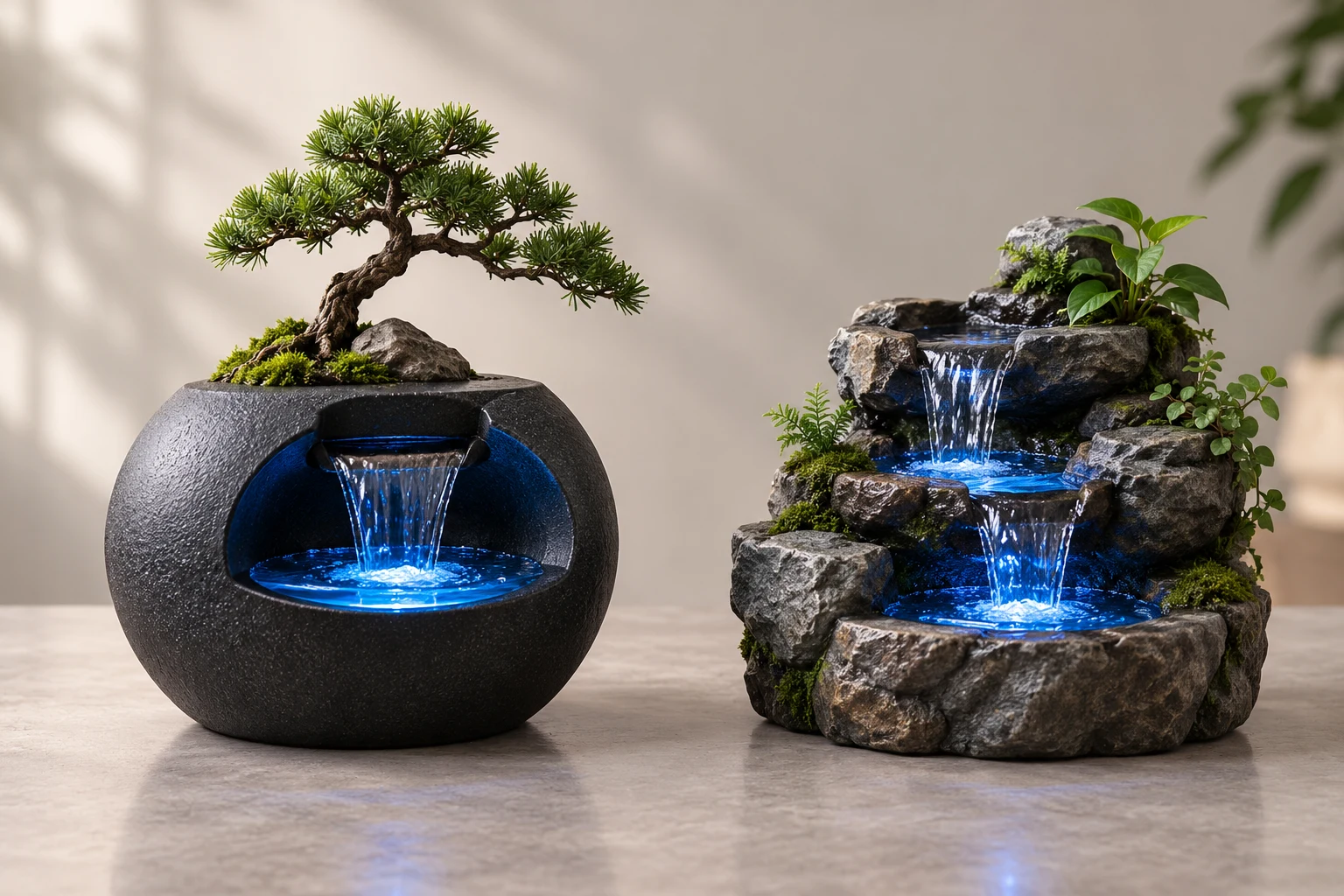
A product photograph can show a blue glow beneath moving water without telling you much about the lamp that makes it. That distinction matters when you search for a tabletop fountain light. The two complete SKYSONIC fountains here both present illuminated water, yet the native pages leave several hardware questions unanswered. Read the visible form first, then use the listing text for the few details it actually supplies.
Separate the light from the water feature
In a tabletop fountain, the light and the moving water contribute different things to the picture. The water opening, basin and surrounding forms determine what you can see while the fountain is still. Illumination makes part of that water path stand out in the listing images. A photograph can help you locate the blue area, though it cannot tell you how bright it will look in your room. Exposure, surrounding light and screen settings all affect the photograph you are judging.
The native pages call these decorative tabletop water fountains and describe lights with flowing water. One shows a compact vessel below an artificial bonsai shape; the other shows a tiered rockery and an artificial tree. Neither native Product description names the lighting technology. If your shopping phrase includes “LED,” treat that as a question for the seller or instructions. The saved pages support a built-in light, not an assertion about the kind of lamp inside either fountain.
The light is easiest to evaluate when you divide the image into three regions: the upper decoration, the place where water becomes visible and the basin that receives it. This is a reading aid, not a claim that the manufacturer assembled either model in three independent parts. In the first image, blue is concentrated within an opening in a rounded vessel. In the second, blue appears among rockery tiers and near the lower water area. That visual difference may be more useful than an unmeasured promise of “ambience.”
Keep the listing open while you look at each region. A cropped search thumbnail might omit the lower basin or make the artificial tree look like a live plant. The complete SKYSONIC vessel fountain page is the source for the rounded form, artificial scenery and illuminated water opening described here. The page is a seller presentation. It does not establish a measured light output, electrical use or replacement lamp specification.
Read the bonsai vessel as a whole object
Start with the outline rather than the color. The first native image shows a dark rounded vessel, an artificial bonsai form rising above it and a blue-lit opening on its front. The tree silhouette draws the eye upward; the light and visible water draw it back into the vessel. Those features belong to one complete decorative item in the native offer. They are not evidence that the artificial foliage is detachable or that the light can be moved to another position.
Look at the opening in relation to the rest of the vessel. If you expect to see water across a broad surface, this picture suggests a narrower framed view. The opening is prominent in the supplied photograph, but the page gives no viewing-angle diagram. You cannot know from one image whether the blue area will look equally clear from a chair off to the side. The useful takeaway is to notice what the native image actually frames before assuming the glow spreads around the entire object.
The dark exterior and bright inner opening create a strong contrast in the seller image. That observation is about the saved pixels, not a verified nighttime brightness level. A camera can preserve detail in the bright water while leaving the surrounding room comparatively dark. Compare images on your screen with that limitation in mind. If a particular room effect depends on the light being dimmable, ask for a control specification; the native description does not establish one.
The bonsai shape can invite language about a living plant, but the source describes artificial scenery. It should be read as a decorative silhouette. No watering or plant-care instruction follows from the image. The water in the fountain is a separate part of the product scene. The page also uses relaxation and symbolic language; those are seller claims and interpretations, not measured effects that this guide can promise to a reader.
A simple way to check the image is to cover the blue opening with your hand on the screen. The tree and rounded vessel still read as a complete form. Uncover the opening and notice how the water becomes the visual center. This small exercise helps you decide whether you are drawn primarily to the bonsai outline or to the illuminated water. It does not predict a real-room result; it clarifies which part of the seller presentation is doing the work for you.
Read the tiered rockery without borrowing details from the vessel
The second native page presents a different whole form. Its image shows artificial foliage above an irregular rockery, a small visible cascade and blue light around the lower water path. The layout is layered rather than enclosed by a round front opening. The complete SKYSONIC rockery fountain page calls it a tabletop waterfall fountain with lights and artificial scenery. That listing supports the scene description; it does not document the internal lamp, pump output or service access.
The rockery photograph asks your eye to follow a route: foliage, upper stone-like tiers, falling water and basin. You can describe that visual route without claiming a measured flow pattern. The native image is a staged product photograph. A single still picture cannot show whether the falling water will look continuous from every position or how much it will splash during actual use. The caption and body should therefore stay with the visible path and the seller’s stated water feature.
Notice how much of the blue is behind or beneath the visible water in this image. The source page describes built-in lighting, and the photograph locates the blue region within the miniature landscape. It does not tell you whether the light is a replaceable module, whether its color can change or whether it has a separate switch. If any of those are deciding features, the listing has left an open question. Avoid turning the apparent blue color into a claim about controls that the page never supplies.
The artificial foliage deserves the same care as the vessel’s bonsai. It is part of the pictured decorative scene, not a living plant. The rock shapes and tree make a miniature landscape, but the exact material, finish and durability cannot be inferred from an image alone. The seller’s prose contains broad statements about construction and calm; some material wording is incomplete. That is a reason to describe the observed silhouette plainly rather than repeat an uncertain material claim.
From a distance, the rockery’s repeated ledges may make the water path easier to identify than the first fountain’s single framed opening. That is a tentative visual judgment from the native images, not a universal ranking. A reader who prefers a single compact focal point may favor the vessel’s front opening. A reader who wants the eye to move through several miniature levels may prefer the rockery image. Neither preference proves that one fountain operates more quietly or reliably.
Know what these source pages leave open
Both listings use words associated with atmosphere and relaxation. Those descriptions can tell you the seller’s intended use, but they are poor substitutes for operating facts. The saved Product descriptions do not provide a measured sound level, flow rate or room-light reading. They also do not establish sleep effects. The article can explain the look of the blue-lit water in the images while leaving those claims in the seller’s voice.
“Lighted” also leaves a practical question unanswered: what happens if the light stops working? The pages do not identify a replaceable bulb or module, an expected lamp life or a repair process. No amount of zooming into a product image will answer that. If replacement access matters to you, seek the actual manual or ask the seller before treating the picture as a maintenance promise. The same caution applies to controls, color choices and independent light or pump operation.
The two native pages should not be combined into an imaginary third model. A detail pictured on the rockery cannot be transferred to the rounded vessel. Even when two offers share a brand and a category, each has its own title, image and descriptive text. Keep notes by URL if you compare them. A short note such as “front water window” or “tiered water path” is less likely to mix the visible parts than a generic label like “blue fountain.”
The saved pages do not make either item a room humidifier. One earlier candidate for this same article actually advertised an atomizer and humidifier function; it was excluded from this source pair because that is a different role requiring its own evidence. The two accepted native offers are complete decorative fountains with visible lights and water features. This distinction keeps the article from implying an indoor-air result simply because water appears in the scene.
Price, stock and delivery can change, and none is needed to read these source images. A product photograph is useful for recognizing shape and visible color; current purchase conditions belong to the live offer at the moment you shop. This article deliberately avoids turning a snapshot of the page into a promise about availability. It also avoids guessing about the amount of water either model holds, since the accepted native descriptions do not establish a reliable comparison for that question.
Use the comparison for the decision it can support
Imagine the fountain as one object in a small evening scene. If the tree silhouette is what you want to notice first, the rounded vessel gives it a clear upper outline and a concentrated blue opening below. If your eye follows rock ledges and falling water, the tiered image offers more visible stages. This is a comparison of two supplied presentations. It is not a recommendation about which product will fit a particular surface or reach an outlet.
That physical fit question already has a separate treatment in the indoor tabletop fountain placement guide. It checks usable table area, cord routing, water access and cleaning. Read it after you have identified the visual form that interests you. Keeping the two decisions separate prevents a pleasing product image from doing the work of a measurement or an operating instruction.
A visual backdrop matters too, although a fountain and a window panel use different supports. The scenic window suncatcher guide shows how a decorative object’s backdrop changes what the viewer notices. Here the native fountain images have their own dark or quiet backgrounds. Think about whether other objects around your intended tabletop scene would compete with the water and light, then check physical safety and clearances using the fountain placement guide.
For a fair source comparison, view both complete Product pages at a similar screen size. First name the shape of each whole object. Next locate the water opening and blue region. Finally write down the information you still need, such as dimensions, controls or service instructions. That sequence separates what you can see from what you must verify. It also keeps a decorative preference from becoming an unsupported statement about mechanical performance.
If you show the two images to someone else, ask what they notice without suggesting an answer. One person may point to the artificial tree; another may point to the illuminated cascade. That difference is useful because the article’s decision is visual. Neither reaction proves a measured feature. A purchase decision still depends on the actual product instructions and the place where it would be used.
The most reliable conclusion from these saved native sources is modest: one complete fountain frames blue-lit water inside a rounded bonsai vessel, and the other shows blue-lit water among rockery tiers. Both pages describe lights and moving water. Their photographs can help you choose which visible scene to investigate further. They cannot establish lamp type, brightness, operating sound, durability or indoor-air effects, so leave those questions open until a source that actually answers them is available.