Home Decor & Table Settings
Tablecloth and table runner ideas for a shared seasonal meal
Plan a seasonal dining table around either a full blue floral cloth or a narrow lemon-and-blue runner, checking print, space and exact item details.
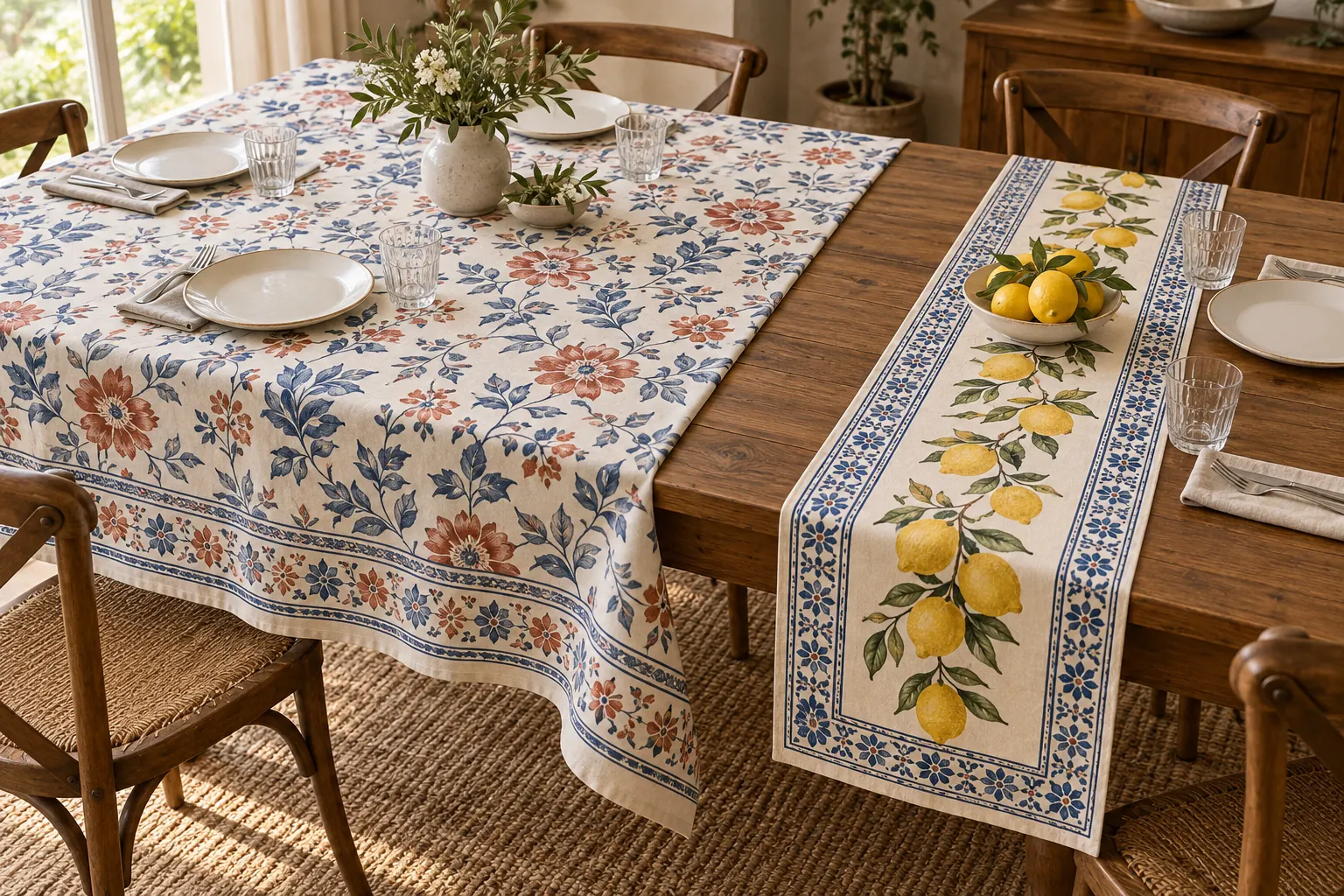
A tablecloth and a runner can give the same dining table two different starting points. One covers the eating surface and falls over its edges; the other marks a narrow line down the middle. If you are planning a small seasonal meal, decide which area you want the print to occupy before choosing plates or adding a centerpiece. The current blue floral tablecloth and lemon-and-blue runner are useful examples of those two forms. They are separate products, and their listings do not promise that the patterns were designed as a matching set.
Start with the table as it will be used
Put the chairs where guests will sit, then set out the plates, glasses, serving pieces and anything that must remain on the table. This first layout is more useful than an empty-table photograph. A printed cloth may be partly hidden by place settings, while a runner may have to share its central strip with serving dishes. Leave room for people to reach food and move a chair without catching hanging fabric.
Stand where guests enter and look at the tabletop. Do you want one continuous printed surface under every setting, or a narrower accent with the table itself visible? Either can work. The point is to choose a job for the textile. If the table already has a finish you want to show, a runner may preserve more of it. If you want one visual field under the whole meal, a full cloth may suit that idea. Neither choice replaces checking the dimensions and care instructions for the exact item.
Make a short list of what changes between an ordinary weeknight meal and the occasion you are planning. Perhaps a leaf extends the table, two extra chairs come in, or serving dishes stay on the table instead of a sideboard. Those changes affect the textile's visible area. Test the arrangement at its longest planned setup, then try the shorter everyday setup if you expect to use the same piece again. A print that looks spacious with two plates can feel crowded when the table holds six.
Use the full cloth as the main field
The blue floral rectangle tablecloth listing gives a 67 by 118 inch size and describes a 12 percent linen, 88 percent polyester blend. Its photographed arrangement shows a cream ground, floral motifs, decorative border and fabric falling over a rectangular table edge. The product name says “French Linen,” but the detailed material statement says it is a blend. Read the full description rather than treating the name as a 100 percent linen claim.
For a meal, let this cloth carry the pattern. Try plain plates and simple napkins on a mock layout before adding another printed object. The floral field has large motifs and a border near the drop; placing a second busy textile over the center could obscure the part you liked. If you own patterned dishes, hold one above the fabric in daylight and check whether its shape and color remain easy to read. This is a styling test, not a claim that a particular combination is universally tasteful.
Measure your table first. Compare its length and width with the listed cloth dimensions, then allow for the drop you want on each side. A photograph cannot tell you how that size will hang on a different table. If the cloth would trail into a seat, interfere with a drawer or sit too close to a flame, choose a different arrangement. Keep candles and heat sources within their own safety instructions; the listing does not certify this cloth for contact with heat.
Pay attention to the border when you work out the drop. The gallery places a broad decorative band along the hanging edge. On your table, that band might sit below sight level, cross the top near a plate, or fold at a corner. A quick measurement from tabletop to intended hem shows where it would land. If the border is why you like the piece, make sure your table shape lets it show. A round or unusually shaped table needs its own fit check; the listing identifies a rectangle cloth.
Use the runner to draw a center line
The lemon and blue tile runner listing gives a width of 13 inches and length of 70 inches, describes cotton in the item details, and calls the runner machine washable. Its first gallery image shows a narrow strip with yellow lemons and blue tile motifs. That image also contains promotional text saying “linen”; it cannot override the current product description's cotton material statement. Confirm the exact received label before choosing a wash method.
Set a strip of paper or a folded neutral cloth down the center at about the listed width. Then put the serving bowls where they will actually sit. If the motifs disappear beneath dishes, leave one clear section visible or use the runner as an edge-to-edge color cue rather than expecting every lemon to show. With a bare wood or plain covered table around it, the runner becomes the main printed area while plates can stay quiet.
Try two runner positions before you decide. Centering it along the table's full length gives both ends a similar visual weight. If the meal is served from one end, a slightly different arrangement may leave more clear surface near the serving area, provided the runner still lies safely and does not bunch. Mark where a hot dish or wet pitcher would normally go; use an appropriate mat or trivet under it according to that item's instructions. The textile listing is not a substitute for heat protection.
The runner's 70 inch length may end on the tabletop or hang past an edge depending on the table. For the specific task of choosing length, width and overhang for a shared meal, see the table runner length guide. Here the question is how much patterned surface you want around the settings. Do the size check before you commit to a styling plan.
Try the two ideas without forcing a match
These two listings both include blue, but a shared color does not make the floral border and lemon tile print a coordinated set. Lay swatches, a product image or the actual textiles beside the plates you will use. Look from seated height as well as standing height. If the prints compete, give one the leading role and leave the other off this table. A plain runner over a floral cloth, or a lemon runner over a plain base, may be easier to read than these two prints layered together. That is a practical option to test, not a reason to buy an additional item automatically.
If you already own both, make a temporary arrangement and photograph it with the dishes in place. Move the runner off the cloth and compare. The photo helps you see whether the center motif gives useful structure or merely adds another busy band. Ask whether the table still leaves clear landing space for a serving platter and whether guests can reach their glasses. The visual decision should survive normal use, not only a staged image with no one eating.
Color can shift between a listing image and your room's light. Check the textiles near the table during the time of day the meal will happen. If the blue on one item looks cooler than the other, you can still use one as a separate occasion piece. Do not treat screen color as a guaranteed dye match. Nor should a styled gallery be taken as proof of fabric thickness, stain resistance or performance after washing.
Choose the few objects that deserve attention. A large floral cloth already fills much of the view, so plain serving pieces can leave the border and field legible. A narrow runner exposes more table, giving a vase or platter a place in the middle while the surrounding wood remains visible. Set each object down in the proposed position rather than building a shopping list from a picture. If the arrangement needs a new vase, different plates and another textile to work, consider whether the first textile is serving your actual table.
Keep setup and cleanup in the plan
Before the meal, smooth the chosen textile and check that no corner or end is caught under a chair. Follow the exact product's care label. The tablecloth description permits hand or room-temperature machine washing, advises against bleach and prolonged direct sunlight, and mentions low-temperature ironing. The runner listing says machine washable. Those are item-specific statements; they do not give the two pieces identical care requirements.
Think about where the textile will go after plates are cleared. A full cloth may need a larger clean surface for folding and drying; a narrow runner may be easier to move away from dishes. For a step-by-step post-meal process, the runner care and storage guide covers that separate decision. This guide keeps its attention on which visual role the textile should play during the meal.
If children, pets or frequent reaching across the table are part of the occasion, check the fabric's position before guests sit. A long hanging edge may be easy to pull, while a loose runner can bunch under serving dishes. Adjust the layout or choose a simpler bare-table arrangement if the textile interferes with safe, comfortable use. An attractive print is only helpful if the table still works for the people around it.
For a buffet or a meal served elsewhere, the balance changes again. If people collect plates from a sideboard, more of the table print may stay visible. If everyone serves from dishes in the center, the runner's main motif may be covered for much of the meal. Decide which version of the table matters most: the moment guests arrive, or the hour they spend eating. Move the serving pieces into place before judging the final effect. That simple rehearsal can keep you from choosing a textile based solely on a clear, unused tabletop.
Choose one clear role
Choose the full floral cloth when you want the print to extend beneath every place setting and your measured table allows a suitable drop. Choose the lemon runner when you want the table surface to remain visible around a narrow center accent. If you want to combine textiles, try the exact pairing with dishes and serving pieces before treating the shared blue as evidence of a match. The strongest choice is the arrangement that leaves enough room for the meal and gives the print a clear place to be seen.