Home & Living
storage basket shelf snag: check shape and handle clearance
A simple fit test for a basket that catches on a shelf edge or nearby furniture.
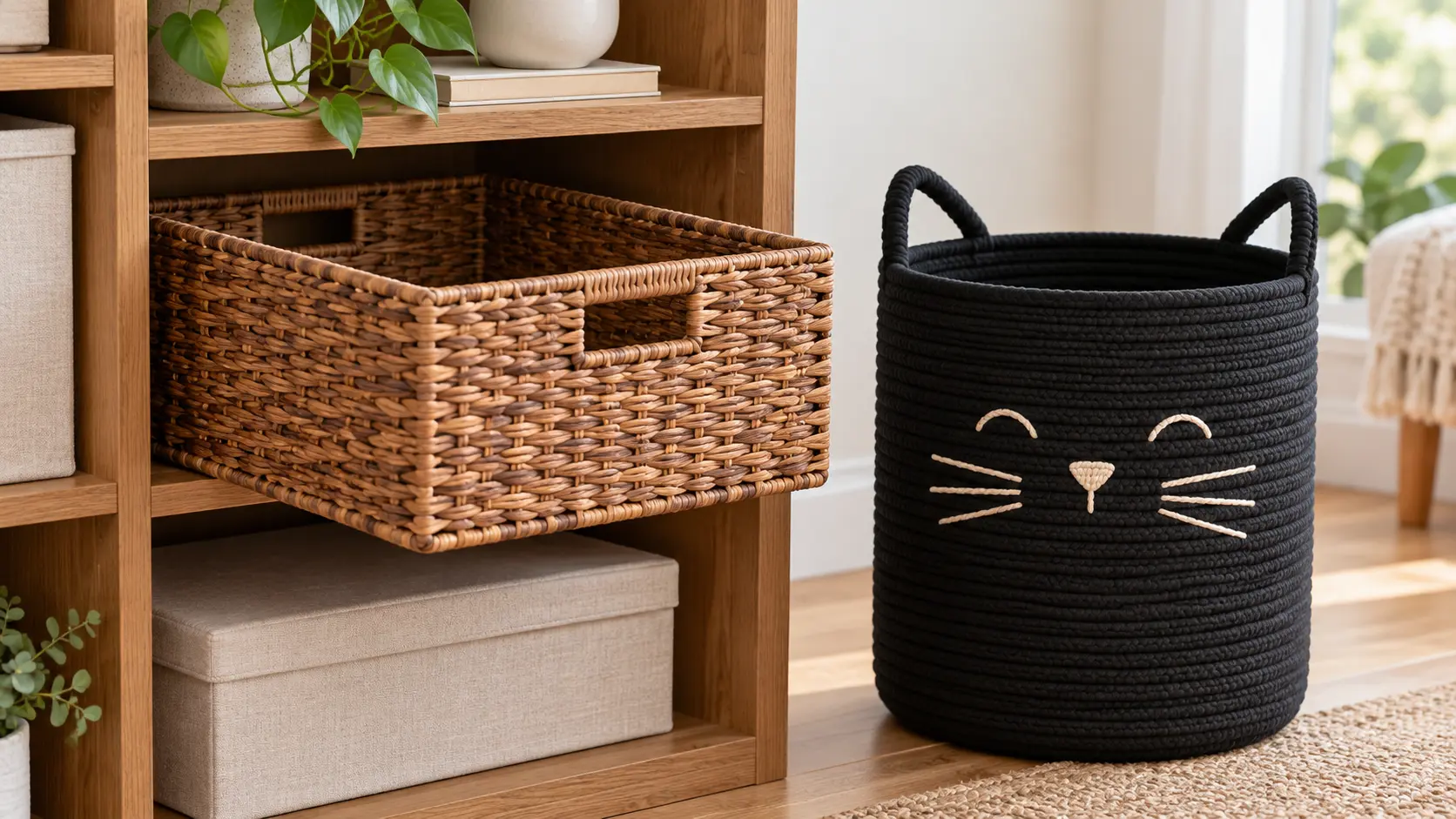
A basket that fits on a shelf while empty may catch once it is filled and lifted by its handles. The problem can be the opening, the basket's widest point, the items rising above its rim, or the path your hands take to pull it forward. A storage basket shelf snag is easier to diagnose when you test those points one at a time. Do not force a woven basket through a tight gap or treat a product picture on a shelf as proof it will clear yours.
Find the exact place where movement stops
Empty the basket before the first check. Slide it in and out slowly without pulling up on the handles. Watch which edge touches first: the front lip, a shelf side, a vertical divider, or the underside of the shelf above. If it moves freely while empty, add a few of the intended items and repeat. You are looking for the change that creates the snag, not trying to establish a maximum safe load from a retail listing. Stop if the shelf or basket shifts unexpectedly.
Measure the shelf's clear opening, not only the outside width of the furniture. Include trim, door hinges, brackets or a back panel that narrows the usable route. Check depth from the front edge to the back obstruction. Then note the height at the point where the basket must pass through, especially if a shelf above overhangs. A basket can sit comfortably in the middle of a shelf and still catch during the turn needed to remove it.
Use an ordinary cardboard template if you are shopping before the basket arrives. Mark the listed width and depth, then add a separate mark for any raised rim or handle that appears in the gallery. Move the template along the intended route, including the lift at the shelf edge. This does not recreate the basket's exact curve or woven give, but it reveals obvious conflicts. Leave a little room for hands rather than planning a zero-clearance fit.
Read two actual basket shapes carefully
The Coolnut brown wicker-look basket set is a three-piece native offer described as trapezoid-shaped baskets with handles for carrying items from a shelf to a counter. Its whole six-image gallery shows the same brown woven-look rectangular baskets on shelves, in a bathroom and in other rooms; one diagram states dimensions and notes possible handmade variation. Those pictures establish the basic shape and use examples, but they do not prove the precise clear opening of your shelf or that a loaded basket will pass under a particular lip.
The ALK black cat-face rope basket is a separate native offer. Its eight-image gallery shows a round black woven basket with ear-shaped handles, including scenes beside furniture and a kitten. The native description names blanket, clothing and toy storage and gives a length and height, but the cat-ear shape and curved sides matter more than a single number when considering a narrow shelf. A promotional image with a steamer does not establish a safe cleaning method, and a kitten beside the basket does not certify it as a pet bed. Treat it as a basket whose actual outside shape you must check.
These are both storage baskets, yet they do not need the same home. The rectangular set is shown being used on shelves; the round cat basket is more naturally tested on an open floor spot or a wide, unobstructed shelf. Do not assume the second basket is a substitute for the first merely because both can hold soft items. If the problem is repeated catching at a shelf divider, choosing a different shape may be more useful than buying more capacity.
Separate width, depth and handle clearance
Test width with the basket held level. If a side scrapes, turn it only as far as the shelf layout allows and see whether the contact moves to a corner. A tapered front can make a basket easier to see into without making its widest rear edge narrower. Compare the widest actual point, not the narrowest face in an attractive photo. On a round basket, the side curve may contact both edges near the middle even if the opening looks generous at the front.
Next test depth. Put the basket where it would normally rest and check whether its back meets a panel before the front clears the shelf lip. If it protrudes, it may block a door or walkway. If it goes too far back, the user may need to reach awkwardly to find the handle. A shelf-fit check therefore includes the stored position and the pull-out route. The same two measurements can produce different experiences when the shelf has a front rail or a partial door.
Finally test the handles with your hand in the position you will actually use. Some handles rise above the rim when lifted; others are cut into the side. The Coolnut gallery shows side handles on a rectangular woven form. The ALK gallery shows ear-like openings high on its rounded form. Those visible differences suggest different pull paths, but neither photo provides a measured clearance while loaded. If you cannot grasp and lift without touching the shelf above, choose another location or a basket with a lower handling profile.
Check the contents that change the shape
Folded towels, blankets and soft toys can rise above a basket's rim and catch even when the empty basket clears. Put a representative load in the basket, then look from the side before sliding it onto the shelf. If an item protrudes, reduce the pile or choose a taller open space; do not compress the item under a shelf edge merely to claim it fits. The question is whether the basket can be moved in ordinary use without dislodging what it holds.
Small hard items create a different issue. A jar or box may press against the side and change where you grip. In the Coolnut gallery, pantry and bathroom scenes show examples of objects in the baskets, but those scenes do not establish a safe weight limit for your shelf or prove every item is suitable for storage there. Keep liquids and breakable containers in a location that suits them. If a shelf or basket deforms, remove the load and check the furniture's and product's own instructions.
When a basket works empty but fails with one particular item, remove that item and retest. If the motion is smooth again, the basket may not be the defective part of the system. You might need a lower fill line, a different orientation or an open spot for that item. Make a note of the actual cause. A vague conclusion such as “the basket is too small” can lead to buying a larger basket that snags even earlier.
Use an adjacent shelf-fit method without copying its purpose
The ornament storage box size guide discusses a different container and its internal cells, but it also treats shelf clearance as a real measured condition. Take the useful habit from that adjacent case: measure the place where a container must enter and leave, not just its catalog footprint. A woven basket adds flexible sides and visible handles, so its own pull path still needs a separate trial. Ornament-cell planning is not the answer to a basket snag.
If you are comparing a single basket with a multi-piece set, the magazine holder usable-location guide shows why package count alone is not the same as useful placements. Its product type and cost question differ from this basket problem. Apply the narrower idea here only after fit is known: three baskets are useful only where each can be stored and removed without catching. Do not let a set count persuade you to use a shelf that fails the movement test.
Retest after changing one thing
Choose one adjustment from the diagnosis. Move the basket to a wider opening, lower its fill line, turn it so the handle faces a clear route, or place the round basket in an open location. Then repeat the same slow in-and-out movement with the same representative contents. If the snag disappears, you have evidence about that specific location. If it persists, note the new contact point rather than making several more changes at once. A controlled retest is faster than rearranging an entire shelf blindly.
If the shelf has a door, test the complete motion with that door in its normal open position. A hinge or knob can narrow the path even when the basket fits between the two side panels. Ask the person who uses the shelf most often to take the basket out with one hand and then return it. If they have to hold a door, tilt the contents and pull around a corner at the same time, that location will probably be frustrating in daily use. A lower open shelf may be easier even when it offers no more interior volume. This is a usability observation, not a defect in the basket. Record the route that actually works.
After a few days, look for new evidence of contact. A displaced label, a bent paper item, scuffing on the shelf edge or a basket that slowly migrates forward can reveal a route that felt acceptable during one empty trial. Repeat the test with the normal contents at their usual fill level. If the basket now catches, identify what changed: a heavier item, a taller stack, or a handle that rests differently. Do not infer a rated load from the absence of visible damage. The owner of the shelf should follow its furniture limits, and the basket should remain easy to lift and place without strain.
Do not trim a handle, bend a frame or heat a woven surface to force a fit. Those alterations may damage the basket and do not address a shelf that is inherently too narrow. Likewise, a decorative use photo is not installation guidance or a load test. When the product arrives, inspect its actual dimensions, rim and handles against the shelf measurements. If the supplied size varies within the stated handmade tolerance, use the real item for the final decision.
A basket that must be twisted or crushed every time it moves is poorly matched to that shelf even if it can be pushed into place once. The practical result is a smooth route for the loaded basket, a reachable handle and a stored position that does not block other items. A storage basket shelf snag is a physical fit problem you can observe directly. Measure the opening, find the contact point, change one condition, and keep the basket in the location where it works without force.