Skills & Planning
Stapler starter-supply budget: separate tools from recurring staples
A fictional supply-budget example distinguishes desktop staplers, included starter staples and later replenishment, without inventing tool prices or guaranteed savings.
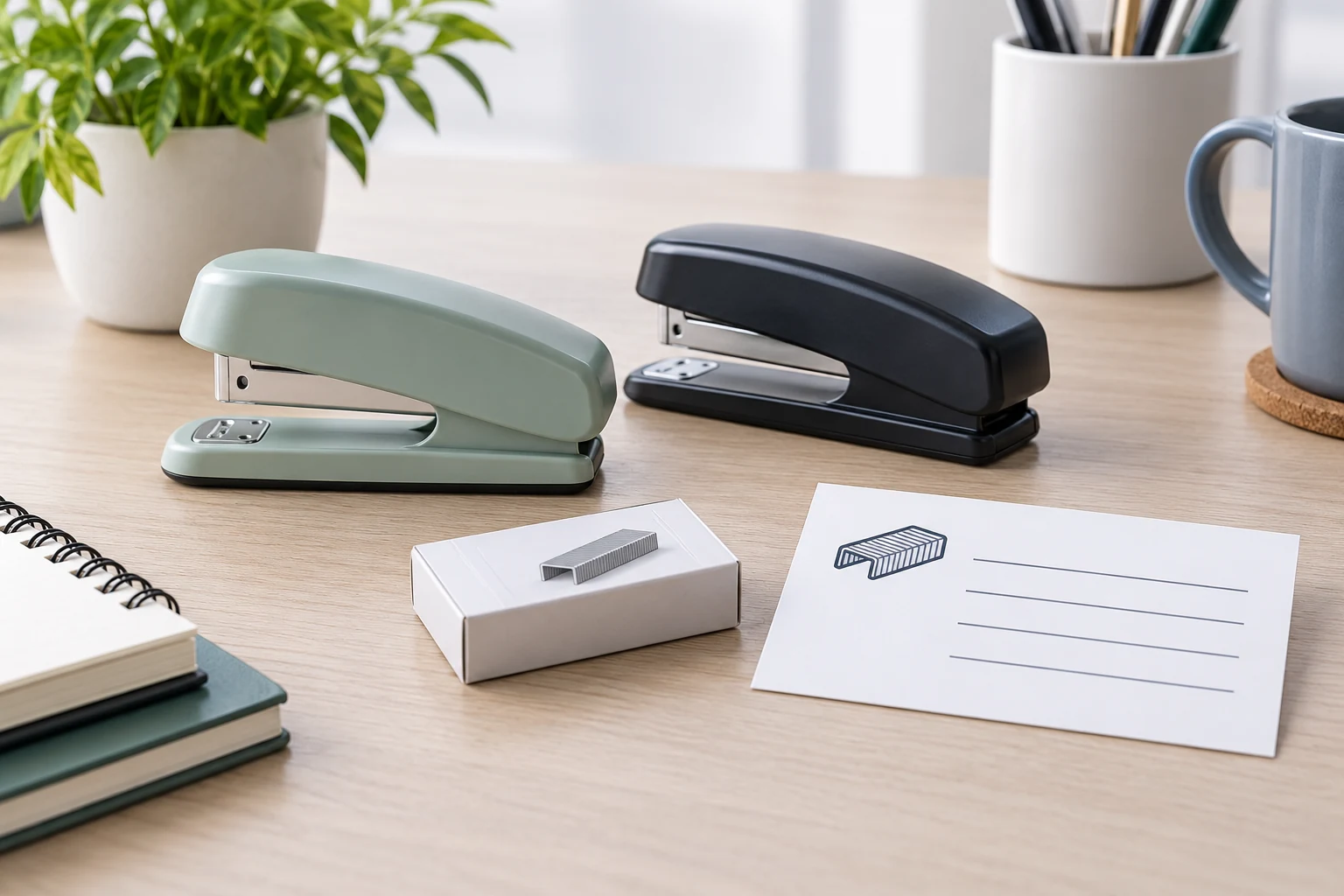
Stapler starter-supply budget planning begins by separating the tool you buy from the staples supplied with it. A desktop stapler may arrive with a small starter quantity while later documents still require replenishment. A carton containing more tools can also contain more starter staples, but that does not establish that additional staplers are an economical way to buy ongoing supplies. Keep those purchasing questions separate before comparing offers.
Give the tool and its supply separate budget fields
Make one entry for the proposed desktop tool and another for its stated included staples. Then leave a separate entry for future replenishment. That arrangement keeps a visible starter quantity from becoming an assumption that the office's continuing supply is covered. This guide supplies no product price, controlled stapling result or promised saving. Its numerical example uses explicitly fictional demand to explain the distinction.
Begin with the actual purchasing need. If the office needs a tool, record that need. If it already has a suitable identified tool and needs only staples, record the different requirement. Do not add new tools to a budget merely to make a starter-supply figure larger. Whether an existing stapler is suitable remains its own equipment question, with the applicable product information and instructions.
Keep responsibility for the budget clear. The person preparing the note may not be the person approving the order or maintaining the supply cupboard. Identify who will confirm the actual tool and replenishment requirements before a quote becomes a purchase. This article creates no procurement rule or authority to order. It gives the responsible person a way to see which information is still missing.
Read the pastel offer as a tool purchase
The BAZIC pastel desktop stapler offer names a 144-pack in its title. Its description says the stapler is preloaded with 50 staples, using 26/6 wording. The whole gallery shows individually packaged pastel staplers carrying BAZIC identification, with labels that include 50 staples. Those are source statements and illustrated individual packages, without an independently counted delivered carton.
The gallery's assortment does not establish the exact colour distribution of a future 144-pack. Confirm the actual contents and order unit if they matter to the purchase. Likewise, the included staple statement should remain attached to the identified tool. A quantity selector counting complete offers is different from a count of individual staplers or individual staples inside them. Obtain clarification before multiplying uncertain quantities into an apparently precise supply total.
The description also makes capacity, ergonomic and jam-prevention claims. This budget article does not adopt those as tested performance or rank them against another stapler. An included supply quantity cannot establish how many acceptable fastening results a real office will obtain. Keep document requirements and operating instructions outside a calculation that merely accounts for stated starting stock.
Keep the classic offer's account distinct
The BAZIC metal desktop stapler offer names a 24-pack. Its description identifies a 50-count staple supply in the staplers and uses 26/6 wording. The whole gallery shows individually packaged red, blue and black desktop staplers, each with a label identifying 50 included staples. It illustrates the product assortment without independently establishing a delivered 24-unit carton or a particular colour allocation.
Keep that offer separate from the pastel one. Their stated tool-pack quantities differ, while both accounts identify a starter staple quantity. Neither fact supplies a current checkout amount or proves which option better serves an office. A comparison would need the exact goods required, confirmed supplied quantities and current complete purchase amounts on a consistent basis.
Do not compare the offers by treating the larger starter total as an automatic financial advantage. The larger package also commits the buyer to a different quantity of tools. Extra tools are not consumed in the same way as staples. If they have no established job, their presence should remain visible as additional stock rather than disappearing into a favourable-looking consumable count.
Count starter stock without calling it continuing supply
Once the exact contents are confirmed, keep the number of tools separate from the number of included staples per tool. Multiplying those two quantities can describe the stated starting staple inventory. It does not establish where those staples are located after distribution, whether an opened tool still contains its original quantity or whether the stock is available to a particular desk when needed.
Use an explicit note for each quantity's status. A seller's stated new-product amount is different from an actual count of remaining supplies in an office cupboard. An order that has not arrived is different from usable stock already present. Preserve those distinctions in the budget instead of adding all entries into a total labelled available now.
Keep the meaning of a staple count narrow. Fifty included staples is a consumable inventory statement; it is not fifty days, fifty documents of every kind or fifty independently verified successful results. Some document plans may involve more than one fastening, while actual use needs its own observations. This article assigns no office a usage rate or operating outcome from the number printed on a package.
Use fictional demand to expose the remaining question
Imagine an entirely fictional purchasing note for one tool with a confirmed starting supply of fifty staples. The office in this example plans work that would consume eighty staples over a chosen planning period. These figures are invented to explain inventory arithmetic. They are not measured usage, recommended practice or a performance forecast for either BAZIC offer.
Under those assumptions, the planned requirement exceeds the starting supply by thirty staples. The arithmetic is eighty minus fifty. That identifies a provisional quantity gap; it does not identify the refill package to order or its price. A real replenishment purchase may have its own package quantity, so the quantity required for a period and the quantity actually purchased can differ.
Now suppose the fictional office discovers that only twenty of the original staples remain when the planning period begins. Keeping the eighty-staple assumption would leave a sixty-staple gap. The changed result comes from a different starting inventory, without any change to the tool's package description. A label describing a new item should not overwrite a later observation of an opened supply.
The example can also remain provisional. If the future requirement has not been established, write demand unknown rather than choosing a convenient number. If the starting inventory is uncertain, retain that uncertainty too. The budget then has a named next question instead of a numerical conclusion built on invented stock. A useful plan does not need every field filled before its gaps can be understood.
Keep the replenishment purchase identifiable
The desktop stapler refill compatibility guide owns the separate task of matching the actual tool to its applicable staple requirement. Its selected products and operating details do not approve a refill for these BAZIC offers. Resolve the actual replenishment identity before treating a quote as usable supply. This budget discussion gives no loading, testing or fastener-selection procedure.
When the correct supply has been established, record the actual package identity and its supplied quantity alongside the current complete quote. Keep a box's acquisition amount separate from an allocation to one planning period. Buying a package can leave remaining stock for later work. That remainder is still stock, without being cash recovered or proof that the original tool purchase was cheaper.
If several tools use supplies, keep their actual requirements identifiable. This article does not consolidate refills across models or turn shared wording into a purchasing standard. The budget should show where confirmation is pending before a common supply line is adopted. A convenient combined total cannot establish compatibility that the product information has not actually supported.
Keep tool sharing and fault repair outside the calculation
The shared broom pack savings guide owns a different purchasing decision: who takes each tool, which contributions are agreed and which exchanges have occurred. Its household allocation framework establishes no staple demand or replenishment price. Here, the issue is the difference between a durable tool and a recurring supply, without a proposed split among recipients.
A failed fastening also needs its own evidence. More starter staples do not diagnose a jam, explain an outward-pointing result or identify a release mechanism. This guide provides no internal intervention or physical trial. Keep the actual equipment condition with its applicable instructions and support process rather than buying additional tools as an assumed repair.
Close the provisional budget only at the level supported by the information obtained. You may know the tool order but still need a replenishment quote. You may have confirmed stock but not future demand. Preserve the open field with a responsible next action. Avoid calling the plan a saving until a supported alternative and actual comparable costs establish that conclusion.
Keep payment with the confirmed office order
Both captured product offers list cryptocurrency among accepted payment methods in structured data. That supports checking the current payment choices after the responsible buyer has identified the actual order. It does not establish which assets, networks or wallet services a later checkout will support. A payment option cannot confirm the carton contents, establish refill compatibility or provide an office's continuing supply budget.
Retain the selected offer, confirmed order unit and any seller clarification with the purchasing note. If a different package is substituted, review its contents rather than carrying forward the earlier starter-stock calculation. A change from one tool quantity to another changes the proposed purchase even when both titles mention included staples. Someone ordering on another person's behalf should know which exact goods have been authorised.
If cryptocurrency is selected, read the transaction's current amount, asset, network and receiving details. This guide supplies no wallet address, network recommendation, transfer sequence, exchange rate or fee estimate. Ask the merchant or payment provider when an essential instruction remains unclear. A payment detail remembered from a previous order cannot establish the requirements of a new transaction or complete an unresolved purchasing decision.
Check the merchant order status alongside any payment confirmation. Reconcile an uncertain existing attempt before sending another payment. Read the applicable delivery, cancellation, return and refund conditions, including any cryptocurrency terms. Retain the order confirmation and payment reference with the contents clarification. Those records identify a transaction without independently counting delivered tools or measuring future staple use. If another person submits the order, agree who will resolve a pending status question before either person begins another checkout.
Leave a budget another person can understand
Stapler starter-supply budget planning works when the tool, included staples, remaining stock and future replenishment remain separate. Confirm the actual order quantities, keep hypothetical demand visibly hypothetical and obtain the correct supply identity before a quote becomes a purchase. A larger starter quantity can remain one recorded feature while the continuing supply budget stays open to the facts still needed.