Crypto Commerce
Read stand mixer bowl capacity before choosing a batch
A bowl number cannot answer whether a mixer can process your next recipe. To make that decision, identify the intended mixture and quantity, then look for a limit that applies to the exact mixer model. A listing that gives only bowl volume leaves the batch question open. You can still use it to narrow your inquiry: the missing information is a recipe-matched processing allowance, not another comparison of quart figures.
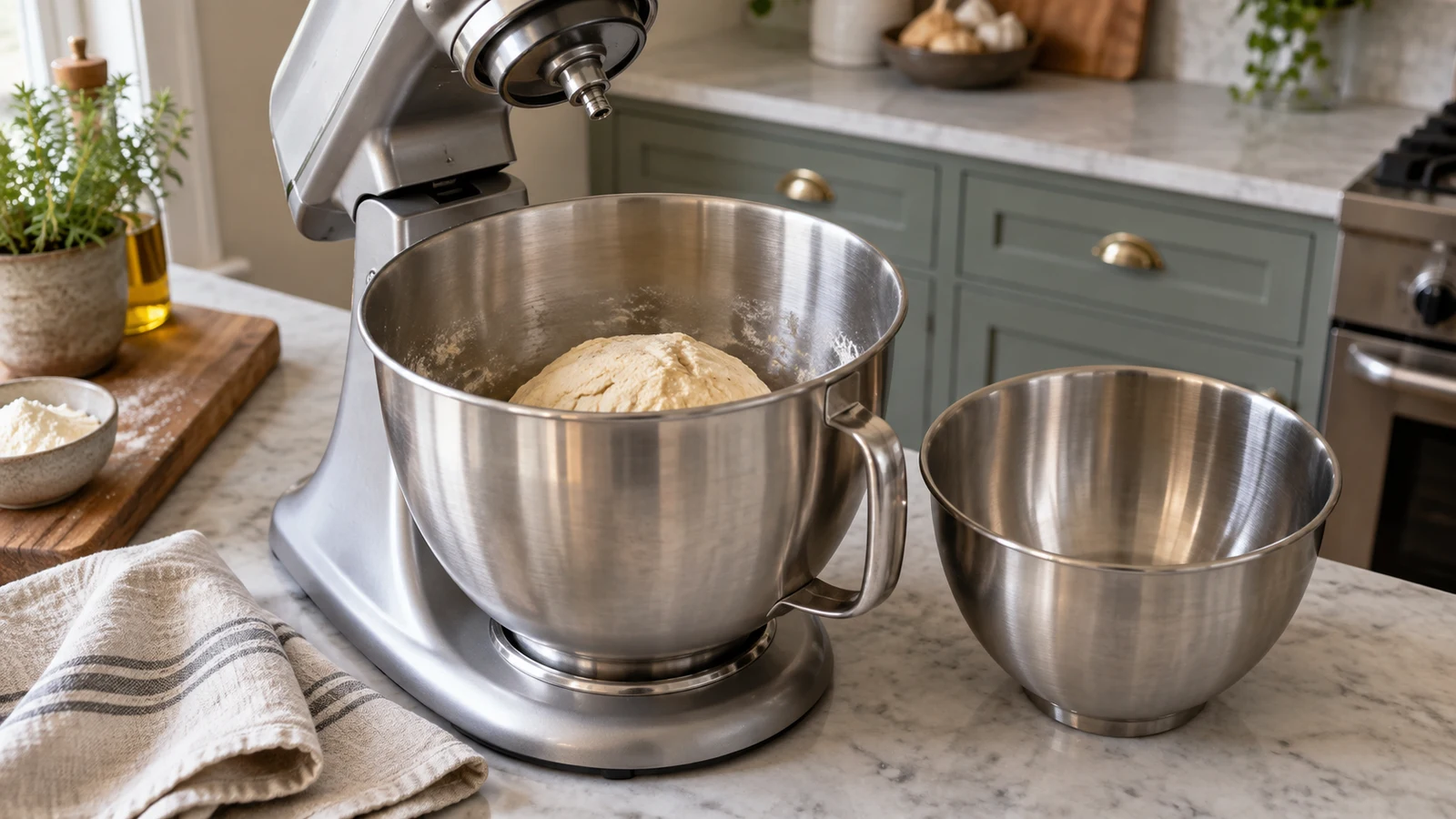
A bowl number cannot answer whether a mixer can process your next recipe. To make that decision, identify the intended mixture and quantity, then look for a limit that applies to the exact mixer model. A listing that gives only bowl volume leaves the batch question open. You can still use it to narrow your inquiry: the missing information is a recipe-matched processing allowance, not another comparison of quart figures.
Suppose a recipe yields one batch of rolls and you are considering making enough for a larger group. Before choosing a mixer, keep the original recipe yield, ingredient amounts and proposed new yield together. Those details give a manufacturer or seller a question they can answer. Without them, even a documented limit expressed in flour weight or finished dough weight may be difficult to compare with what you intend to make.
Geek Chef 4.8QT Stand Mixer: What The Capacity Label Establishes
The SKYSHALO product title advertises a 5.87 qt stand mixer. Its description also calls the bowl 5.8 quarts, so those two labels should not be silently treated as a precise, reconciled specification. The stand mixer bowl capacity shown in the title describes a bowl-volume claim. It does not specify how much of your particular dough or batter the model may process.
The listing for the Geek Chef 4.8QT stand mixer describes a 4.8-quart bowl. That provides a second labeled volume to examine, but no recipe-specific batch allowance follows from it. The bowls have different advertised numbers; comparing those numbers alone cannot establish which model is suitable for a chosen mixture. Neither listing supplies a usable limit for the recipe in your hands.
Volume is a measure of space. A recipe's ingredient list may use cups, grams, ounces, individual eggs or other units. Those quantities describe what goes into the recipe, while a mixer limit may be stated using only one ingredient or the total mixture. The relationship also depends on what the mixture is. Resist the urge to turn a quart label into a general weight allowance or a rule about how full the bowl may be; no such conversion is established here.
A marketing example is another kind of number to handle carefully. The SKYSHALO description makes claims about bread pieces and cream, but it does not define a permitted quantity for your recipe, its ingredient balance or any proposed enlargement. A piece count without a matching piece size or recipe is not a substitute for an applicable instruction. Keep the example in its stated context instead of translating it into permission for a different mixture.
Geek Chef 4.8QT Stand Mixer: Record The Exact Recipe Before Asking
Write down the recipe's name or source, what it makes and the quantities as written. If you plan to change its yield, add a separate proposed batch with its intended ingredient quantities. Keep both versions visible. That separation prevents a response about the original recipe from being mistaken for approval of the larger one, and it makes it easier to spot which amount still needs an answer.
Describe the mixture in ordinary recipe terms: for example, a cookie batter, a bread dough or whipped cream. If a recipe specifies flour by weight, preserve that weight. If it gives only a volume measurement, do not replace it with an assumed weight to make a limit seem comparable. State the units you actually have and ask what additional measurement the mixer documentation needs. An incomplete comparison is more honest than a tidy conversion with no supported basis.
Ingredient amounts may change during preparation if you alter the recipe. In your inquiry, distinguish the planned mixture from any last-minute additions or substitutions you have not quantified. You do not need to predict how a machine will behave; you need a clear description of the batch that an applicable limit could address. If your planned quantities are still undecided, settle them before treating any equipment answer as final.
Check Recipe Scaling Without Treating New Quantities As Mixer Approval
If your desired yield differs from the printed recipe, check recipe scaling to establish the proposed ingredient amounts. That related guide addresses the arithmetic of changing a yield. The result is a recipe plan, not evidence that either stand mixer permits the adjusted batch. Bring the resulting quantities back to the equipment question rather than relying on the fact that the arithmetic worked.
For instance, you might have a recipe for a small batch of rolls and a plan for more servings. After the ingredient amounts are settled, the relevant question is whether the exact mixer instructions cover that dough at those quantities. Merely splitting the mixture into portions is also a separate proposal: if you intend to process several smaller batches, ask about each proposed batch rather than declaring that the entire recipe fits because the bowl has room for some of it.
Keep yield and mixer quantity in separate lines of your notes. Yield tells you what you expect to produce. Mixer quantity tells you what goes into the bowl for a single processing batch. Those can differ if a recipe is divided. This distinction is especially useful when an instruction gives a maximum per batch; otherwise, a large final yield could be mistaken for an equally large single load, or several loads could be mistaken for one approved operation.
Geek Chef 4.8QT Stand Mixer: Separate Bowl Fit From Processing Limits
A mixture may appear to fit inside a bowl at rest, yet physical room is only one part of the decision. The other part is whether the exact model's instructions permit processing that kind of mixture at that amount. Those are different questions, and a photograph of ingredients sitting below the rim does not answer the second one. Likewise, a stated maximum for one kind of mixture would not automatically apply to another.
Ask for documentation tied to the precise model named on the product page. Model-specific guidance matters because a generic instruction for a brand, a different bowl or a similar-looking machine may describe a different configuration. Match the model identifier in any manual or response against the listing you are considering. If the documentation refers to an accessory or bowl variant that is not established for that listing, seek clarification rather than assuming the limit transfers.
Look for the kind of batch limit the documentation actually states. It might express a quantity as flour, total dough, liquid or another measure, or it might give guidance for a named preparation. This list describes possible forms of an answer, not limits for either linked mixer. When a number appears, note its unit and the mixture it covers. A flour amount cannot be compared directly with a total dough amount without knowing what each refers to.
Conditions matter too. If a manual attaches a limit to a recipe type, bowl or other named configuration, preserve that condition when you record the answer. Avoid filling in missing conditions from common cooking advice. The claim you need is narrow: that this exact model has documented guidance applicable to this particular mixture and intended per-batch quantity. If the only available text is a bowl-volume label, that claim remains unsupported.
Check Recipe Scaling Against The Unit In An Actual Limit
When you find a candidate limit, put its unit next to the proposed recipe quantity it could legitimately measure. If the manual states a flour-based limit and your recipe supplies flour weight, those are at least comparable kinds of quantities. You must still confirm that the instruction applies to the mixture and model in question. If your recipe records only spoon or cup measures and the limit uses weight, ask for an appropriate documented way to make the comparison instead of inventing a conversion.
When a response gives a number without saying whether it refers to dry flour, finished dough or total ingredients, ask what the number measures. A bare maximum is easy to misread. You can send the written recipe quantities with your follow-up so the person answering sees the same candidate batch you do. Do not infer that a broader bowl label resolves an ambiguous instruction; the problem is the meaning and applicability of the limit.
Check Recipe Scaling Then Make A Capacity Inquiry You Can Use
A short, focused question is more useful than asking whether a mixer is "large enough." Identify the exact product model, name the mixture and state the quantities you plan to process in one batch. Then ask what documented batch limit applies, what the stated unit measures and whether any conditions change the answer. You can also ask where the applicable instruction appears so you can read its wording for yourself.
One possible inquiry is: "For this exact mixer model, is there a documented per-batch limit for the dough described by these ingredient amounts? Please identify the unit used for that limit and any conditions in the instructions." This is a request for evidence, not a claim that a reply will establish every aspect of safe use. Attach or transcribe the relevant recipe quantities rather than asking the recipient to guess what a "large batch" means.
Suppose a response cites an exact-model manual and gives a limit for the same type of dough, in a unit you can compare with the planned single batch. You can then assess the recipe against that stated allowance, keeping any listed conditions attached. That is a hypothetical decision record; it is not an endorsement of either linked mixer. If the response lacks the recipe match or leaves its units undefined, the decision still needs clarification.
Now suppose the only material you can find is the SKYSHALO title's 5.87 qt label or the Geek Chef listing's 4.8-quart bowl description. Your record can say what the listings establish and what they do not: advertised bowl volume is available, but a documented allowance for the proposed mixture and quantity has not been established here. Leave suitability unresolved. A specific unanswered question is a useful result because it tells you exactly what to ask before choosing a batch.
Stand mixer bowl capacity can begin the comparison, but a recipe-specific limit must finish it. Keep your intended single-batch quantities beside the exact-model instruction, and note whether the instruction covers the same mixture in comparable units. If it does not, revise the inquiry or the proposed batch rather than turning the bowl label into an operating promise. Stand mixer bowl capacity is the label to read first; the documented batch allowance is the answer you still need.