Crypto Commerce
Check recipe scaling before changing a batch size
To calculate ingredient quantities for a different yield, divide the intended yield by the original yield, then multiply each ingredient quantity by that factor. Keep the yield definitions comparable and preserve each ingredient's unit. The resulting quantities answer an arithmetic question; they do not establish whether a larger mixture fits your equipment or how it should be cooked. For recipe scaling , verify each step.
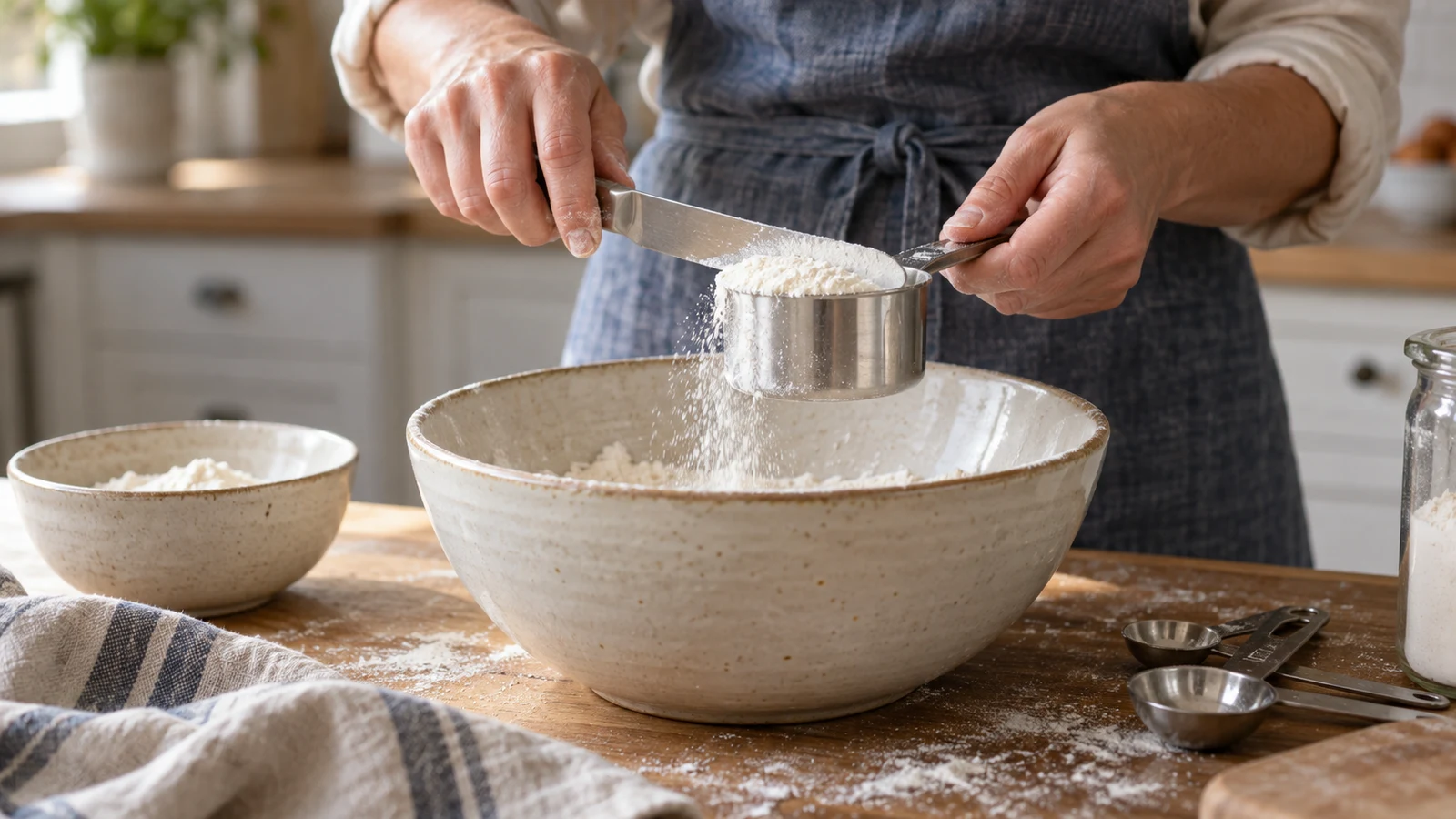
To calculate ingredient quantities for a different yield, divide the intended yield by the original yield, then multiply each ingredient quantity by that factor. Keep the yield definitions comparable and preserve each ingredient's unit. The resulting quantities answer an arithmetic question; they do not establish whether a larger mixture fits your equipment or how it should be cooked. For recipe scaling, verify each step.
This guide uses the Geek Chef stand mixer listing as an equipment example alongside recipe scaling. Its listed bowl and dough hook give us a concrete reason to separate calculated quantities from appliance limits. Neither this mixer nor any other appliance is needed to complete the calculation.
Start with an existing recipe that states its yield and ingredient quantities. The fictional numbers below demonstrate multiplication only. They are isolated quantity examples, not a complete formulation to prepare. Your finished worksheet should contain the original amounts, the calculated amounts and the practical questions that arithmetic leaves unanswered.
Define The Yield Before Appliance Installation Readiness
Write the original yield exactly as the recipe describes it. Then write the yield you want beside it. A change from four equal portions to six portions of the same size provides a comparable basis. A change from four portions to six larger portions leaves the size change undefined, so dividing six by four would not describe the whole request.
Portion count and portion size are separate choices. For this exercise, hold the stated portion size constant and change only the count. If your intention is to make larger portions, first establish what larger means in terms comparable with the original yield. Avoid assigning a multiplier to an adjective such as generous or small.
A yield range also needs attention. If the recipe says it serves four to six, choosing either endpoint changes the factor. Record the uncertainty rather than silently selecting whichever number makes the calculation convenient. You need a defined original yield that matches your intended portion size before a single proportional calculation has a clear meaning.
Once those definitions match, use this formula: scale factor = intended yield divided by original yield. In the fictional example, the original yield is four equal portions and the intended yield is six of those same portions. The calculation is six divided by four, giving a factor of 1.5.
The factor has no ingredient unit attached to it. Multiplying a quantity by 1.5 means taking the original quantity plus half of it. It does not mean adding 1.5 grams or 1.5 milliliters. Writing the factor separately at the top of the worksheet helps distinguish the multiplier from the quantities it will change.
Check the direction before proceeding. A factor greater than one increases the calculated quantities, a factor between zero and one decreases them, and a factor of one leaves them unchanged. Since six same-size portions exceed four, a result below one would signal that you divided in the wrong direction. This check catches a reversed calculation before it reaches every ingredient row.
Keep Units Visible Before Appliance Installation Readiness
Copy each original ingredient quantity together with its unit. Then multiply the number by the same factor and carry the unit into the result. Under the fictional factor of 1.5, an isolated quantity of 200 grams becomes 300 grams. A separate quantity of 80 milliliters becomes 120 milliliters.
Those results can sit beside each other on the worksheet, but they cannot be added into one meaningful ingredient total. Grams and milliliters describe different kinds of measurement. Nothing in this calculation establishes an ingredient's mass from its volume, so keep the recipe's stated measurement rather than introducing an unsupported conversion.
Use a consistent row format: original quantity, multiplication, calculated quantity. For example, write “200 grams × 1.5 = 300 grams.” Leaving all three parts visible makes it easier to spot a copied number, a missing unit or an ingredient that accidentally retained its original amount.
Read the original recipe again after filling the rows. Check that each stated ingredient quantity appears once and that every calculated quantity uses the same factor. If the recipe gives an amount without a numerical quantity, that entry has no number to multiply. Preserve its wording and mark the handling question for the applicable recipe guidance.
Fractions belong in the calculation too. A fictional quantity of one whole item becomes 1.5 items under the same multiplier. That result is mathematically clear even though its practical use remains unresolved. Record it as 1.5, or one and a half, without inventing a method for dividing or measuring the ingredient.
Rounding that item to two while leaving the other results unchanged would alter the proportions. Relative to the original one item, two represents a factor of two; the other rows still use 1.5. Rounding down to one would leave that ingredient at its original quantity. Neither change is equivalent to applying the same factor throughout.
Keep the calculated result visible even if later recipe guidance supports a practical adjustment. Add a separate note for any proposed amount and its basis. There is no universal rounding tolerance supplied here, and the worksheet cannot determine which adjustment a particular recipe can accept. An awkward result is a useful question to resolve, not a reason to hide the arithmetic.
Separate Mixer Limits From Appliance Installation Readiness
The supplied Geek Chef product description names a 4.8-quart bowl and a dough hook. Those details make mixture quantity relevant, but the advertised bowl volume does not establish usable working capacity for every mixture. It also does not provide a conversion from bowl volume to a supported dough mass.
Your calculated ingredient rows cannot supply that missing capacity information. Even a correctly scaled set of quantities leaves open whether the intended mixture and amount are supported by the equipment. Look for applicable appliance instructions and recipe guidance before treating the quantity calculation as a workable batch.
Write a specific unresolved question beside the worksheet: “Does the appliance guidance support this mixture at these calculated quantities?” This is more useful than noting that the bowl seems large enough. A bowl description identifies a container; it does not answer every question about what the appliance can process inside it.
Keep operating choices outside the multiplier as well. A factor of 1.5 supplies no basis for changing a mixing speed or duration. This worksheet gives no settings or preparation technique. It stops at the quantities and the information needed to evaluate them.
Placement and connections belong in the separate guide to appliance installation readiness. Use that handoff for installation responsibilities, while keeping recipe capacity unresolved until applicable guidance addresses it. Completing an installation check does not fill a missing batch-capacity answer.
Keep Countertop Pizza Oven Conditions Outside The Multiplier
The supplied description for the countertop pizza oven names baking uses, adjustable temperature and an independent countdown timer. These listed features illustrate another boundary: ingredient quantities and cooking conditions require different information. A quantity factor cannot select the appropriate temperature or timer setting.
For the fictional increase from four portions to six, the ingredient calculation says only that each numerical amount is multiplied by 1.5. It does not establish pan fit, the number of batches or cooking duration. Leave those questions open rather than applying the factor to every number printed in the recipe.
Make the boundary visible in your notes. Put ingredient quantities in the calculation rows and retain preparation instructions separately for review against applicable guidance. This prevents an instruction containing a number from being mistaken for another ingredient amount. A mathematically consistent quantity sheet can still require substantial recipe-specific clarification before use.
The product description also does not establish that a timer determines when food is ready, or that this oven will produce a particular result with your proposed quantities. Treat its named controls as product-description details, without turning them into a tested cooking method. No pan arrangement or operating recommendation follows from this example.
Neither featured appliance is a requirement for the arithmetic exercise. If a later purchase offers cryptocurrency payment, that is a separate purchasing context and supplies no evidence about recipe suitability. The calculation should be useful before you decide whether any purchase is needed.
Complete The Quantity Sheet Before Appliance Installation Readiness
A usable recipe scaling worksheet preserves both the answer and its basis. The worked example below records a defined yield change, applies one factor and keeps the fractional item unresolved. Its generic ingredient labels deliberately avoid presenting these isolated amounts as a cookable recipe.
- Original yield: four equal portions of a stated size.
- Intended yield: six portions of that same size.
- Scale factor: six divided by four = 1.5.
- Ingredient A: 200 grams × 1.5 = 300 grams.
- Ingredient B: 80 milliliters × 1.5 = 120 milliliters.
- Ingredient C: one whole item × 1.5 = 1.5 items.
- Quantity question left open: applicable guidance for the fractional item and any proposed rounding.
- Equipment questions left open: supported mixture capacity, pan fit and any required batch division.
- Preparation questions left open: applicable instructions, cooking conditions and duration.
Check these calculations by dividing each result by 1.5. The answers return to 200 grams, 80 milliliters and one item. You can also compare each calculated quantity with its original: each is the original plus half. These checks confirm the arithmetic shown; they do not confirm that the example is a usable recipe.
For your own sheet, copy the recipe's ingredient names instead of the generic labels. Retain any qualifiers attached to its quantities, and distinguish an exact calculated result from a proposed practical adjustment. Someone reading the sheet should be able to see which amounts came from multiplication and which questions still require an answer.
Now consider an unresolved case. The original recipe says only “makes one tray,” while your intended yield is six portions. Dividing six by one gives a number, but it compares portions with trays. Without knowing how many portions of your intended size that tray represents, the result is not a valid servings-based multiplier.
The missing information is the original tray's yield in comparable portions. If that definition becomes available, you can calculate the factor and complete the ingredient rows. Until then, leave the factor blank. Neither a mixer bowl size nor an oven listing supplies the missing portion definition.
Take your recipe and write its original yield beside the intended yield before changing any quantities. Complete the multiplication only when those descriptions are comparable, then mark fractional amounts and equipment questions separately. If the starting yield remains “one tray,” your next step is to establish what that tray yields before preparation, appliance operation or purchase.