Office Supplies & Stationery
Stamp pad budget: buy the colors your project needs
Compare complete ink-color acquisition plans after identifying the required palette and suitable supplies already owned, without inventing future savings.
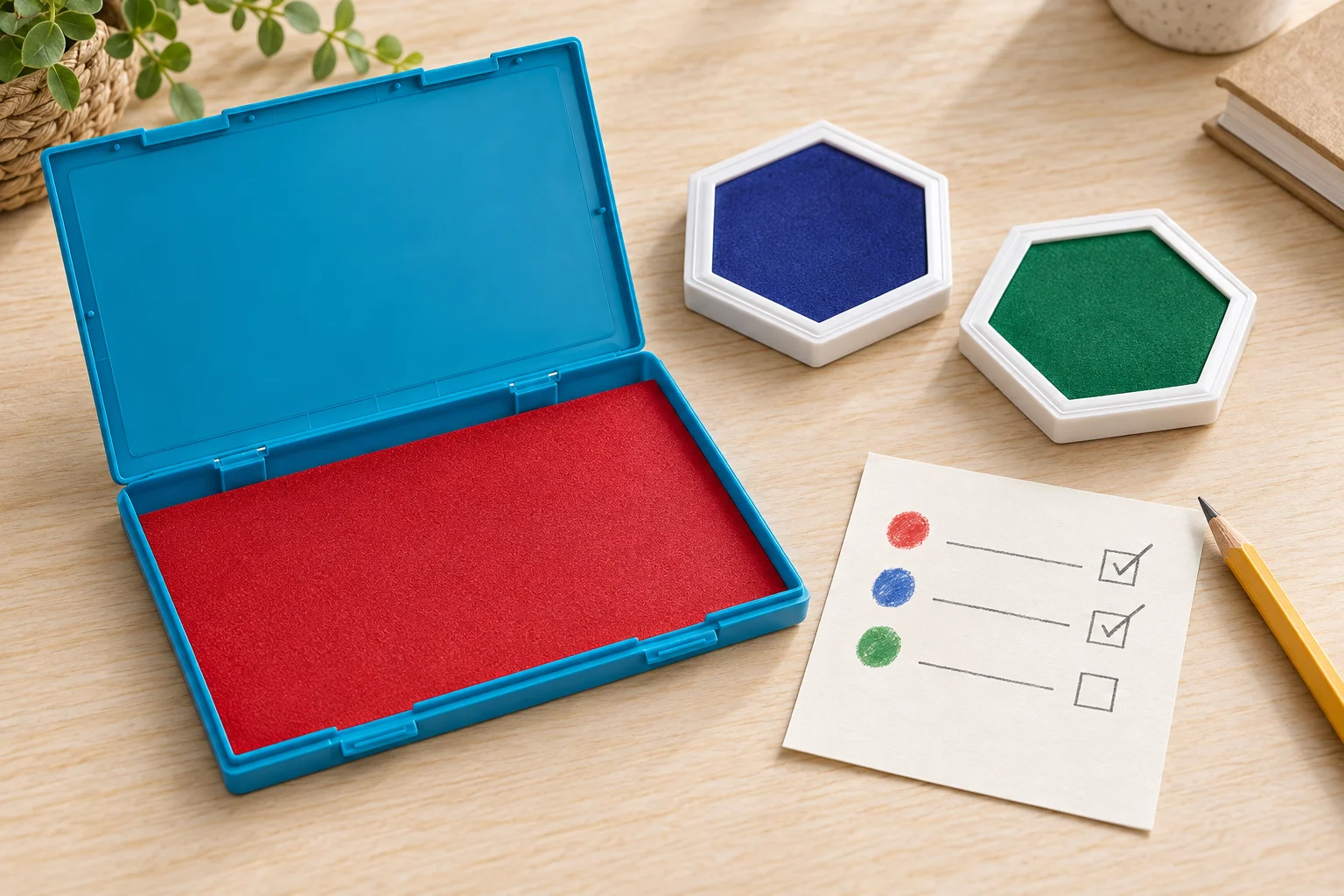
A stamp pad budget should begin with the colors your project actually requires, rather than the number of pads in a package. A mixed set can contain colors you will not use, while a single-color purchase can leave part of the design unsupplied. Write down the required palette, check suitable owned supplies and compare only complete plans. A lower checkout total for an incomplete color plan is not a saving on the intended project. This guide quotes no current retail prices and promises no cheapest product or future value for unused colors.
Fix the required palette before comparing offers
Choose a design you intend to make, or describe the remaining design question before buying supplies. In an invented card project, a maker wants separate red, blue and green impressions. Those three color names define the fictional requirement. They do not establish a particular ink chemistry, final shade or successful impression on the maker's paper. Keep the actual stamp, surface and applicable use requirements as separate suitability checks before treating any pad as usable for the project.
Make one column for each required color. Under each column, record a suitable source you can actually identify, or leave the column open. The record can be a short note rather than a complicated spreadsheet. Its job is to expose a missing color before a package total makes the plan look complete. A large supplied quantity of one color does not fill a different color column. Nor does a photograph of several cases establish which exact variants an order will contain.
Keep optional colors outside the requirement. You may like an additional shade or imagine a later project for it, but that preference should not silently change today's task. If you decide to add the color, update the design and the budget deliberately. Otherwise preserve it as an optional attraction of an offer. This keeps the comparison tied to the project you intended, without pretending that an unused pad has already recovered part of its purchase cost.
Read the named colors in the exact native offers
The Colorations jumbo stamp pads listing states twelve pads and names red, orange, yellow, green, blue, purple, butterscotch, grape, lime, mint, strawberry and watermelon. Its gallery shows twelve hexagonal cases with different colored surfaces. Red, blue and green occur in the stated list, but no impression was tested here. The developmental, washability and broad stamp-fit marketing claims are not adopted as project results. Check the actual ink and material requirements separately.
The Maxmark red ink pad listing identifies the selected model as MXSPXL-RED and says it arrives inked with red water-based ink for paper or cardboard. One gallery image shows the red pad; another shows a black variant, consistent with the description naming alternative colors. That second picture does not make black part of this selected red offer. The older blue wording in the URL is not used to redefine the current native title and description.
Neither example supplies a current budget total in this article. Use the selected product identity when collecting a quote, and check exactly which color and quantity the quote concerns. A page mentioning other available variants does not establish that they can be obtained at the same amount or through the same order choice. Keep any unconfirmed variant separate. The comparison becomes useful when each plan names what will actually be acquired, rather than when every open field has been replaced with an assumption.
Check owned supplies without inventing a credit
Look at the pads you already have before deciding which color columns need a new purchase. Identify the actual items and their current suitability for the intended stamp and paper. An old case with a blue label is not, by itself, a successful blue impression for today's project. Follow the applicable product guidance and use a suitable practice piece where appropriate. If you cannot establish that the item will serve the planned role, keep that role unresolved instead of subtracting it from the requirement.
In our invented project, suppose the maker can establish suitable blue and green supplies already on hand. The open color role is then red. A new red-only acquisition may complete this particular palette without a new mixed set. That is a conditional plan, not a recommendation that the selected retail red pad fits every stamp or card. If either owned supply is unsuitable or unavailable, the red-only new purchase no longer completes the same plan. Update the missing role before comparing totals.
Do not present the original cost of owned supplies as a refund or a discount on the new order. Today's acquisition total concerns what you need to pay now for the chosen plan. You may keep historical spending in a separate project record, but it does not become money returned by a seller. Likewise, do not assign a resale value to unused colors unless an actual separate transaction occurs. The budget should explain the real acquisition you are considering without turning possible later uses into recovered money.
Build a complete plan for each alternative
Write each candidate as a whole route to the required palette. One route might acquire a suitable mixed set. Another might acquire only the missing color while relying on verified supplies already owned. A third might require separate purchases for every required color. These routes can be compared only if each actually covers the same intended roles and passes the relevant suitability checks. An offer that leaves one role open remains incomplete, even when its visible order total is lower.
In the fictional three-color project, a red-only order with no existing blue or green supply is not a complete alternative to a plan covering all three colors. The missing colors are not optional merely because they are absent from the selected basket. Either find applicable sources and totals for them, revise the intended design deliberately or keep the comparison pending. Do not call the incomplete basket cheaper for the original task. It describes less of that task.
When a plan needs several new purchases, add their applicable acquisition totals rather than dividing one convenient package amount by every color you hoped to obtain. Keep separately shown delivery charges, taxes or other order costs with the purchase they concern. Use the same comparison boundary for each complete route. A product-only figure and a delivered-order figure answer different questions. Neither should be quietly substituted for the other because it produces a more attractive result.
Give extra colors a real place in the decision
A mixed set may offer more color choices than the project needs. You can value that flexibility personally, but state it as a preference. Do not spread the purchase across hypothetical future projects and call the resulting share today's required spending. The amount needed to obtain the selected set remains the amount needed at checkout. A calculated allocation across many possible uses does not reduce that acquisition. Keep the current project and later possibilities visible as different reasons for considering the offer.
If you already have a defined next project, describe it separately before combining its requirement with this one. Some colors may serve both projects, while others may belong to only one. A combined palette can be a deliberate planning decision. It should not appear after the comparison solely to justify supplies you had already decided to buy. Record the two designs and the shared roles plainly, without predicting how long an ink supply will last or how many impressions it will produce.
A single-color offer can also provide more physical supply than you need. Extra quantity of the correct color is still extra quantity; it is not automatically a reason to choose it. Check the actual offered unit and package level. If you cannot obtain only the amount your plan requires, keep the full acquisition total in the comparison. The right color and the right purchasing quantity are separate questions. This guide assigns no universal yield, storage life or future saving to the remainder.
Keep color coverage separate from ink readiness
A list can match all the color names and still leave a material question unanswered. Establish what the exact pad contains and which applicable instructions govern the intended stamp and surface. Palette coverage is one condition of a complete plan, not a replacement for those checks. A named red is also not a guarantee of a particular shade on your paper. If exact appearance matters, obtain an appropriate sample or applicable evidence before treating the color name as the finished result.
Do not borrow one product's ink description for another. A selected pad described with water-based ink does not establish the chemistry of every pad in an unrelated set. A picture of a dark surface does not identify every property of its ink. Keep each product's evidence with its identity, and ask the source question that remains open. The local ink-state question and the budget question have different jobs: first establish a usable candidate, then compare the acquisition required by a complete palette plan.
Keep the creative design outside the price comparison too. The paper-mask stamping tutorial owns the foreground-first sequence for overlapping images and a practice-piece decision about the resulting layers. Use it when that is the layout you want to explore. Buying more ink colors does not settle which image should appear in front. Choose the design requirements that actually matter to you, then return to the palette record rather than allowing a package assortment to dictate a more complicated picture.
Compare the new acquisition on one boundary
Collect the current applicable total for each complete candidate. Name the exact product variants and any required separate purchase. If a seller answer or an order charge is still missing, mark the amount provisional. You can compare the parts that are established without pretending the whole acquisition is settled. Do not substitute a remembered price for the missing field. This guide provides no current offer-price ranking, and its two native examples have not been reduced to a cost per successful impression.
Read the complete alternatives beside the same requirement. One may use verified owned blue and green supplies plus a new red acquisition. Another may obtain a new mixed set. If the complete current totals are available, you can decide whether any difference is worth the additional colors, convenience or other preference you actually value. State that preference directly. A lower acquisition for one person with existing supplies does not establish a universal saving for someone who lacks them.
The greeting card budget guide keeps stationery acquisition separate from the finished mailing and its applicable delivery expense. Use that boundary when the stamped project is a card you intend to send. The stamp-pad comparison here concerns the ink-color acquisition, not the whole delivered greeting. Add it to the wider project record without counting the same order charge twice. A palette decision does not establish postage or authorize a particular finished mailing format.
Keep the final order tied to the plan
Before ordering, compare the selected basket with the palette record. Check the exact color, package level and separately supplied items. If a variant has changed, revisit the affected color column and its suitability information before accepting the new total. Keep the earlier record as the basis of the earlier estimate rather than presenting it as though it had always described the final order. A changed quantity or a different color is a changed plan, even when the product names look similar.
If you consider purchasing through republeq.com using crypto such as USDT, inspect the current exact product page and current checkout before deciding how to pay. A product mentioned in this guide does not establish the methods available for your order today. Confirm the listed seller, the precise variant and package quantity, the delivery destination and the displayed total. If a crypto option appears, read its current instructions and verify the token and network it specifies. Similar names do not make assets or networks interchangeable. Review any displayed fees, timing information and order conditions yourself. Do not infer a transfer destination from an old order, a product description or a message concerning a different purchase. If an amount, destination, network or instruction is unclear, stop and obtain clarification from the responsible service before sending anything. This article does not promise acceptance, transfer success, a refund route or a particular delivery result. Keep information relevant to the actual order through the arrangements appropriate to the purchase. A payment route cannot establish which colors are supplied or whether a pad suits your stamp and paper. Resolve those product questions separately. If the current checkout does not offer the method you intended to use, do not construct an alternative transfer route from earlier information. Use only the current verified process for the exact order. You can leave the purchase pending while an essential color, suitability or order-total question remains open, without turning an incomplete palette plan into a complete acquisition or an assumed saving. Retain the exact selected color variant with any clarification response.