Troubleshooting & Repairs
Spirit level readings disagree: check the position before the tool
Investigate disagreeing spirit level readings with a defined checking position, named vials and actual product limits before treating a comparison as a fault.
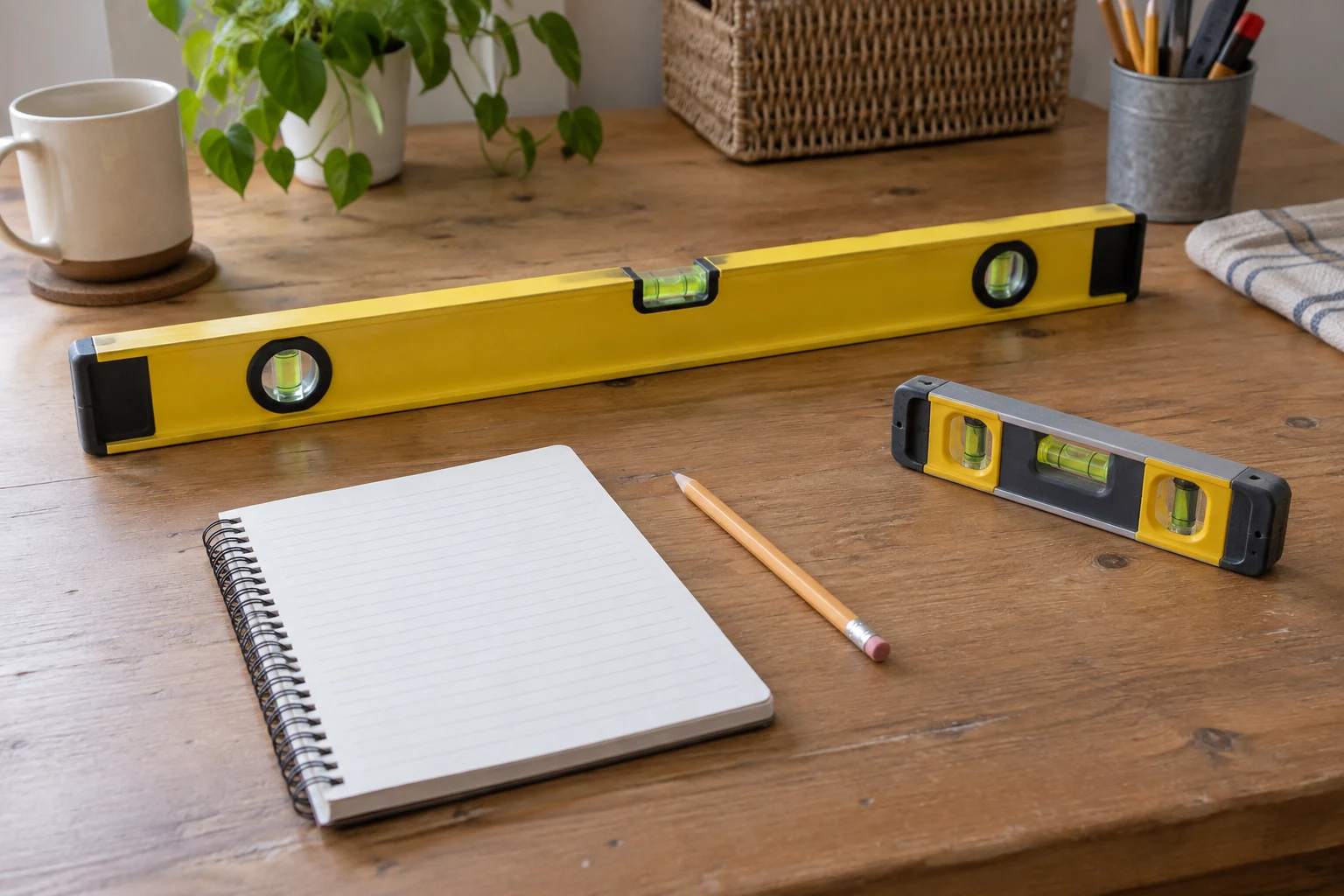
When spirit level readings disagree, identify what changed between the observations before replacing the tool. A different position on the surface, a different vial or a different instrument gives you a different comparison. Begin with the particular disagreement you saw. Keep an unfinished measurement separate from a conclusion about the room or the equipment.
This guide explains a conventional reversal check described by level manufacturers and the questions surrounding it. It reports no test of the two retail offers below. Obtain the instructions and accuracy specification for your actual unit before deciding how to check or accept it. There is no vial adjustment, dismantling, bending or installation procedure here.
Name the disagreement you are trying to resolve
Describe the original observation in a complete sentence. Perhaps one level gave different indications when moved along a tabletop. Perhaps two tools appeared to disagree in one place. Or perhaps you turned one tool and saw an unexpected result. Those accounts need different follow-up information. Describe that event when contacting support so the enquiry identifies the disagreement.
Also identify what you were trying to establish. Checking an instrument's indication is a different task from deciding whether a surface is suitable for a planned use. An instrument check supplies no shelf fixing, furniture stability or building assessment. If a decision requires a particular standard or qualified assessment, retain that requirement instead of substituting an informal bubble observation for it.
Checking a spirit level by reversal uses one location
Johnson Level's Q&A describes checking a spirit level by reversal for the horizontal vial. Put the level on a flat surface and mark an end position and the side position beside the vial. Observe the bubble, turn the instrument 180 degrees end to end and align it with those marks. Compare the two indications according to the manufacturer's checking guidance.
The reference marks matter because the comparison concerns the same location. If you return the instrument elsewhere, you have changed more than its orientation. Consult the actual unit's instructions for its measuring surface and permitted positions. Johnson's general explanation does not identify either selected retailer brand as a Johnson model or establish instructions for an undocumented feature on your tool.
Keep the original contact position identifiable
A useful observation needs a position someone else can understand. "On the table" may leave several possible places. Describe the particular area and the direction in which the tool stood. Use a suitable, permitted reference method for the surface involved; do not mark a finished object without permission. If you cannot preserve the position, leave the comparison unresolved.
Keep the instrument identity with the observation as well. If two levels are available, give each a separate entry. Changing tools halfway through a pair of observations would answer a different question from reversing one tool. You can investigate both questions, but the notes should show when the instrument changed. A photograph can help identify the arrangement without becoming an accuracy certificate.
A moved footprint leaves a different question
Imagine a fictional reader checking a small worktable. They observe a bubble near one end of the table, then turn the level and put it near the opposite end. The indications differ. That account establishes two observations in two positions. It has not isolated what would happen when the same instrument returns to the original position in the prescribed orientation.
The next useful step is to resolve the position question through the applicable checking instructions. There is no basis here for naming the table or the level as the cause. Nor should the reader keep shifting the tool until a preferred indication appears. Selecting a convenient result would leave the original disagreement unexplained and make the sequence harder to review.
The object providing the reference position belongs in the sequence too. If someone moves or rearranges the table between observations, note that change even when the tool returns to its earlier marks. A record should describe what actually remained the same. Leave an interrupted comparison unfinished instead of joining observations from different arrangements into one claimed result.
Horizontal and vertical vials need separate checks
For horizontal and vertical vials, Johnson gives separate checking arrangements. Its vertical check uses a flat vertical surface, reference marks and a side-to-side reversal. Follow the appropriate manufacturer's guidance for the vial under investigation. A completed horizontal observation should remain labelled horizontal; it does not supply the missing vertical observation.
If your level has several vials, identify the one you actually read. A note saying “three vials” describes an inventory, while a note about a particular indication describes an observation. Obtain the actual instrument information to establish the purpose of each vial. Do not assign a function from its position in a photograph or turn an unlabelled angled vial into a numerical angle specification.
Inspect the condition before interpreting a reversal
STABILA's checking FAQ says its described check cannot be completed on a spirit level with a bent profile. It also notes that small bubble deviations may fall within a specified measuring tolerance. An apparent discrepancy therefore needs the applicable specification and the condition of the actual instrument, rather than a promise that every visible difference proves a fault.
For its horizontal check, STABILA expressly says the initial bubble need not be exactly centred. That qualification matters if you were planning to rearrange a table just to obtain a centred starting indication. Read the complete applicable checking method before changing the setup. The initial indication and agreement after reversal are separate observations.
That FAQ directs readers to the retailer or STABILA when a difference is noticed. Its support route and warranty wording concern its own products. For a different brand, obtain that unit's applicable support information. This article does not advise straightening a body, moving a vial or treating an informal check as a repair. Keep a visibly damaged or undocumented tool's measurement status unresolved.
Read the two offered tools without adding specifications
The Eat-In EA1678940 box level is described as a 24-inch aluminium level with three vials. The non-magnetic tool is listed as Orange, with Multicolor as the catalogue colour. SKU sku-1199555163 and UPC 769593037724 identify that offer; they do not establish an accuracy tolerance.
The HomewardBound HO1795605 torpedo level is described as Clear, ten inches long, magnetic and die-cast. The source also identifies item 25100, SKU sku-673008983 and UPC 769593715608. It supplies no numerical accuracy limit, detailed vial inventory or adjustment instructions. Preserve the actual HomewardBound identity when requesting information about it.
These are catalogue examples, not replacements selected by a comparison test. Neither account documents a result from the reversal check discussed here. A buyer whose work requires a stated tolerance still needs evidence for the exact product. A familiar-looking body or a recognisable item number cannot supply another manufacturer's specification for an offer carrying a different actual brand.
Length and magnetism do not settle the disagreement
The 24-inch and ten-inch figures describe the stated tool lengths. They do not give allowed measurement errors. Likewise, magnetic and non-magnetic describe different stated features, without proving that either instrument supplied the correct indication in your earlier comparison. Choose an equipment requirement from the actual work, then obtain the specifications needed to assess it.
If you compare two tools, describe their positions individually. A short tool and a longer one cannot simply be assumed to have identical footprints because their centres appear near one another. Identify what each contacted before interpreting disagreement. This is a question about the comparison you arranged, without a claim that one length necessarily measures a particular surface better.
Distinguish an observation from an acceptance decision
"The bubble appeared in the same position" reports what someone saw in a particular check. “The instrument meets the required accuracy” needs the relevant requirement and evidence for accepting it. Keep those statements separate in an enquiry. If the permitted difference is unknown, ask for that information instead of inventing a pass or fail threshold from the width of a printed line.
Do not add decimal places to a visual observation to make it look measured. You can describe the visible relation to the vial marks without claiming an angular value you did not establish. If a task calls for a documented result, explain that need when seeking suitable equipment or verification. An informal household note does not become a calibration record through more precise-looking wording.
If you cannot distinguish the bubble's relation to the marks, describe the observation as unreadable. Recording a centred indication would add information you did not obtain. Seek the actual unit's reading guidance before continuing. An unclear photograph also leaves that reading question open. Do not substitute a more convenient photograph from another tool or checking position.
Two examples show why the sequence matters
Consider a second fictional reader who keeps one instrument and one identified location throughout an applicable reversal check. They record an unexpected difference and retain the two orientations in their notes. That account is more specific than the earlier moved-footprint example. It gives a supplier a defined checking sequence to discuss, while leaving the cause and the applicable acceptance limit open.
Now imagine that the same reader replaces the instrument with another tool before taking the second observation. The resulting record concerns agreement between two instruments. It no longer describes one instrument's response to reversal. The reader can keep that separate comparison, but should not label it a completed version of the first check. These examples report no actual readings or faults for either retail offer.
Use related measuring guidance for the question it answers
The caliper zero-check explanation distinguishes a reference indication from comparisons across other lengths and measuring faces. Its actual Westward and Moore & Wright offers have limited specifications. Here, a horizontal-vial observation likewise needs its own label; it supplies no vertical-vial result. Caliper operation and reference standards do not provide a spirit-level checking procedure.
The tape-measure numbers guide separates the Keson and Crescent offers' measuring lengths, blade width and order quantities from accuracy evidence. That distinction helps interpret the two level lengths here. The tape article's NIST laboratory explanation supplies no tolerance or calibration result for an Eat-In or HomewardBound level.
Ask for the information that changes the next step
Send support the actual product identity and the checking question you could not resolve. Include which vial was involved, the location you retained and whether the instrument or position changed. If the tool's condition prevented an appropriate check, say so. Ask for the matching instructions and acceptance specification before requesting an adjustment or assuming that replacement is the only possible outcome.
Then decide what the available evidence allows. You may need to correct the comparison arrangement, obtain missing product information or use appropriate support for an unresolved instrument. Keep the unfinished work separate from a completed diagnosis. Return to the original spirit level readings with a named tool, a defined position and the particular question still requiring an answer.