Furniture & Home Organization
small patio side table silhouette: open wire or solid checkerboard?
Compare patio table silhouettes against your chair and walking path.
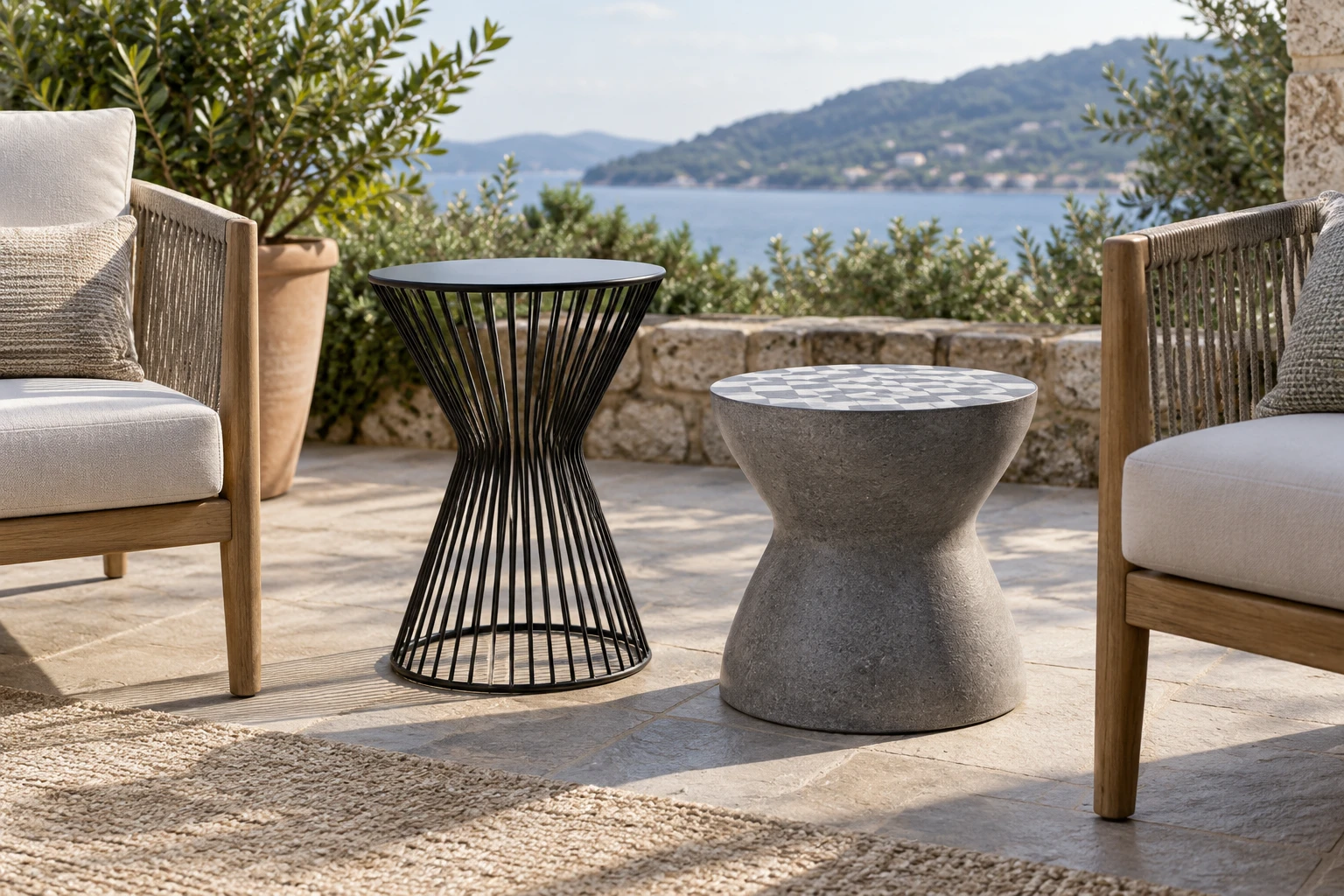
Compare the Outsunny black wire side table with the Hompus gray checkerboard table. Check their silhouettes from your patio chair, then test the intended position with a floor mockup.
Choose a small patio side table silhouette by comparing its outline with the furniture around it. The listings supply specifications and styling views, not site, load or weather tests. Start with the view you want from the seat, then check the actual space and intended objects.
Read the two shapes from the chair
The listing named Outsunny shows a plain dark round top and an open steel-rod hourglass base. It states a 15.75-inch diameter and 20.75-inch height. Space remains visible between the rods. Compare that outline with the view behind your proposed position: a planter, railing or pale wall may change which lines you notice. Judge the whole corner from the seat, then from the doorway. The question is how much of the background you want to remain visible through the table. Its product-name label says Outsunny, while the structured brand field says HXCWALHXC; the captured page does not establish their relationship.
Hompus shows a continuous gray body, narrowed waist and checkerboard top. Its description identifies magnesium oxide, a mushroom shape and an annual-ring-like base, with a 14.17-inch diameter and 16.92-inch height. Decide whether the top or the body would attract your attention from the chair. Keep the usual objects in the picture when making that choice. A large tray can conceal a pattern you liked in the listing, while a clear surface leaves the tabletop available as a visual detail.
Those stated dimensions make the Outsunny about 3.83 inches taller and 1.58 inches wider in diameter. Those differences matter more than the words “small table.” A higher top may meet a chair arm differently, and the wider outline can move closer to a walking path. Measure your own chair arm and the clear floor before treating either listing dimension as a fit answer.
Place the outline on the floor first
Cut two paper circles to the listed diameters, or mark them with removable tape where the table would stand. Keep the marks clear of the chair legs, door swing and route through the patio. Sit down and reach toward each circle with the object you expect to put on the table. Then stand up and walk the route normally. The exercise tests the actual corner without pretending that a product photo proves clearance.
Next, check the view from the doorway or the other end of the patio. Place a plain cardboard shape inside one marked circle and leave the other open for a first comparison. This rough mockup is a way to ask how much visual weight you want in that position. It cannot reproduce either product. Photograph the corner before moving the marks so that you can compare the two arrangements from the same viewpoint.
Give the tabletop its own trial. Put the objects you normally use within each paper circle and photograph the arrangement from your chair. If the corner already has patterned cushions or busy paving, include those in the frame. Then try a roughly drawn checkerboard on the paper. You are choosing how much pattern you want to see among your existing things, while leaving the actual product appearance to the captured gallery and eventual delivery check.
Use the listing claims as questions to check
The Outsunny description states a 22-pound capacity and says the upper and lower pieces can be disassembled and stacked. These are seller assertions, without an independent load or assembly test. Compare any intended load with the exact current instructions before use. Include the objects together when considering the load, and leave room to put them down comfortably. If an intended object makes the arrangement crowded, change the placement sketch before assuming that the advertised capacity answers the whole question.
Hompus states a 17.64-pound product weight and one-piece construction, with care instructions to wipe with a damp cloth or rinse and dry. Those statements do not establish handling ease or durability. Work through the route between the intended position and storage before making a choice. Note the turn through a doorway and the place where you would set the item down. Check the delivered object against its current instructions before relying on a handling plan drawn from a listing.
Inspect the proposed position after watering plants and during the conditions in which you normally use the patio. Note what needs checking in the current care instructions. Check the current manufacturer care instructions, surface conditions and local storage needs before leaving a table outdoors through a season. Keep your own site observations beside the sketch so that an attractive setting never substitutes for checking the place where you will use the item.
Give each table one job
Write down what will normally sit on the top. A drink and a book ask for an easy reach from the chair; a plant may put more emphasis on weight and water management. If games are part of your plan, measure the actual playing surface and check where pieces would stand before assigning that use. Do not assume that the decorative pattern provides a complete, unobstructed game board.
If drinks are the main use, plan where the cup returns after someone stands up. The separate four-piece coaster routine guide covers a reusable coaster placement and return habit; it does not decide which table shape belongs in this corner. If the corner also needs evening light, the small patio solar lantern guide addresses lantern placement and light, a different decision from choosing a table outline.
Include the intended objects in the last floor check. Look from your seat and from the route through the patio. Decide what you want to notice first: the table, an object on it, or the view behind the corner. If the arrangement feels crowded, move the paper circle and photograph it again. Keep the chair in its ordinary position during this trial. Otherwise, a pleasing layout may depend on furniture being somewhere you would never leave it.
Compare height against the furniture you already own
A side table works beside a chair only if the top sits where a person can use it comfortably. The two seller heights differ by nearly four inches, so place a stack of books or a box at each listed height beside the chair and test the reach while seated. Keep the test object away from the walking path. Try reaching from the seat without twisting toward the table, then stand and repeat the walk past the chair. A top that looks balanced in a listing photograph can feel high or low beside a different chair.
Measure from the floor that will actually support the table, rather than from a rug, deck board or imagined level plane. If the patio slopes, measure and test on the intended spot. Record the height of your chair arms and the gap you want beside the tabletop on the sketch. Use those measurements during the reach trial. If the proposed table location requires reaching over an arm, move the floor circle before settling on a model.
Repeat the photographs from the seat you actually use. Hold the camera near your usual eye position and include the chair arm or table-height marker as a reference. Then look from the doorway without changing the arrangement. These are two different views of the same corner. Keep both when comparing options, especially if one person cares about the view from indoors and another mostly uses the patio chair.
Choose where the pattern belongs
Decide how much of a tabletop you normally leave clear. A tray, planter or game can conceal the area you meant to make visible. Arrange your own objects on the paper circle before choosing a pattern for it. If you want an ornamental surface to remain in view, check whether that agrees with the job you expect the table to do. Leave enough room for the ordinary cup or book rather than designing a scene that only works when nothing is being used.
For a corner with striped cushions, patterned paving and several planters, try the gray form in a photo of the actual space before assuming one more pattern will help. You can cover the top of a paper circle with a roughly drawn checkerboard and leave the other circle plain. The drawing is only a layout test. It helps you assess whether the checkerboard supplies welcome detail or competes with what is already there.
Look at the background as well as the temporary table position. Take one photograph with a dark object behind the marked area and another with that object moved away. You are testing the composition of your corner, not measuring a product property. A railing, wall or nearby plant may draw more attention than the table. Keep the view you prefer, then compare it with the actual gallery rather than assuming that an isolated catalogue photograph predicts the whole scene.
Plan the space around the base
Sketch the chair legs, door opening and feet of nearby planters on the same floor plan as the table circle. Leave a route that remains usable while someone is seated. Mark the widest occupied area rather than the place where a body narrows. Keep feet, bags and the chair's normal movement in the sketch too. A tabletop may look clear from above while the route below it is awkward. Test the arrangement during an ordinary visit before choosing the position.
Put the table where it would be used for one ordinary visit to the patio. Set a cup or book on a stable temporary stand at the proposed top height. Notice whether the object is easier to reach on the chair's left or right and whether someone must step around it. This trial does not measure the products' load performance. It tests the placement decision that neither listing can answer for you.
If the corner doubles as a route to a grill, garden bed or storage box, repeat the walking test while carrying what you normally carry. Keep the marked floor area where it does not force an awkward turn. A few inches of diameter difference may matter at a tight pinch point, but the actual path and chair position decide that. Make the placement work first; then compare the visual effect within that usable space.
Think through handling and storage
Before planning off-season storage, measure the space where you expect to put the table. Record the doorway width, shelf depth and available height separately. A place that looks empty may already be needed for cushions or garden tools. Trace the carrying route from the patio and check where you would need to turn. Use the current product instructions to decide whether any dismantling is permitted. Keep those instructions with the purchase record so that a storage plan does not depend on remembering a sentence from a listing.
Decide who will move the table and how often that person expects to do it. Mark a temporary resting point along the route if the layout calls for one, and keep the route clear before carrying anything. A stated product weight is only one input to this decision. The shape of the object and the space available for your hands need checking on the actual item. If the handling arrangement is uncertain, settle it before making frequent relocation part of the patio plan.
Put the care instructions beside your placement sketch. Check where water could remain after watering plants or clearing a drink, and whether you can reach the surface without moving the chair into the walking path. Keep cleaning supplies outside the table footprint. Before using a cleaner, follow the directions for the exact item and the surface beneath it. Treat a seller's staged setting as an example of appearance. Your own inspection after ordinary use is what can show whether the chosen position makes cleaning convenient.
A simple decision for a small corner
Keep the version of your sketch that works from both the seat and the walking path. Compare it with the captured product views, then confirm the exact current listing and instructions before ordering. Retain the measurements and your photographs so that the delivery check uses the same plan. The small patio side table silhouette should be a deliberate part of the corner you use, with room for the objects and movements you recorded during the trial.