Cleaning & Vacuums
Shared laundry detergent station for sheets and powder
A practical laundry-room setup for storing and handing off detergent sheets and powder in their labeled packages.
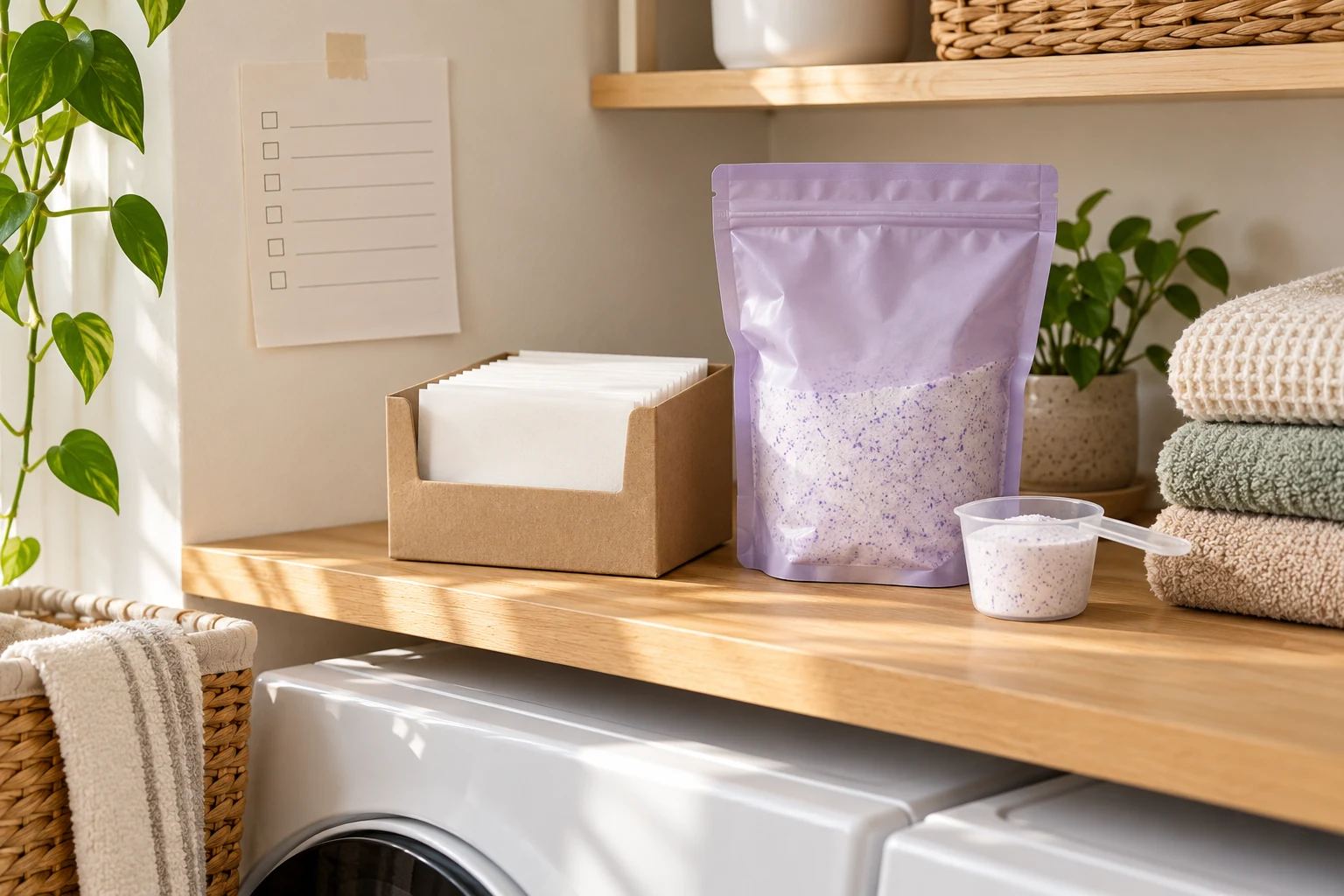
A shared laundry room works better when everyone can identify the detergent, read its directions, and put it back in the same place. A sheet packet and a powder bag ask for different handling. The sheet needs a dry, flat home; the powder needs its package closed and its scoop easy to find without spilling. This guide sets up a small laundry detergent station for both formats. It is an organizing routine for the room, with each product's current label and the washer instructions controlling the actual wash.
Start with the room and the people using it
Clear one shelf or cabinet area near the washer. Leave enough space to lift the detergent without knocking another bottle over or reaching across an open machine. If the shelf is shared, decide which products belong there and which should return to a personal cabinet. A small surface can become confusing when several nearly identical packets and scoops sit together. The first task is making each product recognizable to the next person who does laundry.
Keep the detergent in its original labeled package. The package identifies the product and carries directions, warnings, and contact details that a plain storage jar can lose. Put it where children, pets, and anyone unable to follow the label cannot access it, consistent with the label and household needs. Do not place detergent beside food or in a container that resembles food. If the room has only an open shelf at a reachable height, find a more suitable storage place before building the station around convenience.
Read the washer instructions before assigning a detergent routine. Machines differ in where and when detergent is added, and a seller's broad compatibility line is not a substitute for the appliance instructions. Take a photograph of the relevant panel or keep the manual accessible, then write a short reminder for people who share the machine. If a direction on the product and a direction on the machine appear to disagree, resolve that with the current manufacturer instructions before running a load.
Identify the two example formats
The 50-sheet laundry detergent offer describes perforated sheets in a compact paper box. Its current native description says a half-sheet for a small load, one sheet for a medium load, and two sheets for a large load, with the sheet placed in the machine before clothes. Those are listing directions for this particular offer, not a dosing rule for every sheet product or every washer. Check the package received and the machine instructions before using them. The gallery confirms a box of 50 flat sheets; it does not establish cleaning performance or suitability for a specific person.
The lavender laundry powder offer describes a bag with a scoop-based routine: one scoop for a standard load and two for a large or heavily soiled load. The gallery shows a lavender powder bag, so the physical form is consistent with the native description. The listing also makes broad claims about fabrics, machines, and sensitivity; this guide does not certify those outcomes. The amount and placement for a real load should come from the current package and washer instructions, with any household restrictions considered separately.
Write the two product names and forms on a small station card: sheets in their box, powder in its bag. Put each package in its own place and keep the scoop with the powder. A shared shelf can make it easy to borrow the wrong measure or assume the two products have the same dose. Their physical forms are the useful distinction here. The card is a reminder to read the actual label, not an attempt to replace its directions with an invented universal formula.
Prepare the sheet side of the station
Choose a dry position where the sheet box can stay closed between loads. Leave room to open it without pulling out a stack of sheets or laying them on a damp washer lid. If the manufacturer's package has a flap, use it as designed and avoid transferring sheets into an unmarked container. A flat box can tuck into a shallow space, but do not wedge it so tightly that the label and instructions become difficult to see.
Keep hands dry when handling the sheets and follow the package directions for dividing a perforated piece. If a half-sheet is called for on the current label, separate it cleanly over the box so the unused portion remains protected. The exact product description here gives different portions for small, medium, and large loads. It does not mean every household must adopt those categories unchanged. Use the load size definitions and directions appropriate to the washer and product actually in front of you.
Before starting, look at the drum or dispenser location specified by the current directions. The saved sheet listing says to put its sheet in the machine before clothes. Do not apply that placement instruction to an unrelated detergent sheet or a washer whose manual requires another method. The organizing goal is simply to make the instruction available at the point of use. A small note saying “check sheet label and washer manual” can be more reliable than a fixed dose chart that becomes stale when the box changes.
When the cycle is ready, close the sheet package and return it to its shelf position. That two-second reset matters in a shared room. The next person should not have to guess whether a loose white strip on the washer belongs to the current load, the next load, or an old spill. If someone switches to another brand later, replace the station card and read the new directions rather than treating a familiar shape as proof that the old routine still applies.
Prepare the powder side of the station
Give the powder bag a stable position where it can stand closed and where the scoop has a clean place to rest. Opening a bag above a crowded shelf makes it easier to spill into other supplies. Move the package to a clear surface when measuring, follow its instructions, and close it before returning it. Do not leave a scoop loose on top of the washer where another person may mistake it for a universal measure. It belongs with the powder whose directions describe it.
The saved powder listing uses one scoop for a standard load and two for a large or heavily soiled load. The actual scoop size and fill line must come from the product supplied, not from a spoon found elsewhere in the room. If the bag arrives without the expected measure, contact the seller or consult the product instructions before improvising a quantity. An oversized scoop can turn a simple organizational shortcut into a wrong dose. The station should make the correct product-specific measure easy to locate.
Check the machine instructions for where powder goes and whether the cycle and water conditions suit it. The listing asserts broad washer compatibility, but it does not describe this particular machine or every wash setting. If powder remains in a compartment or on clothes after a load, note the actual condition and consult the current product and appliance guidance before the next wash. Do not solve an uncertain result by automatically adding more detergent.
Wipe any powder from the measuring area according to the package's handling guidance, then close the bag. Keep the shelf dry enough that the package and instructions remain usable. A small tray can define the powder spot if the shelf surface allows it, but a tray is not a substitute for closing the package. Record when the bag is nearly empty so the next person does not begin a load expecting a full scoop that is no longer there.
Give each load one clear handoff
In a shared room, decide who is responsible for adding detergent to a load. One person should select the product and follow its current instructions; another should not add more because the first step was invisible. A simple note on the machine or a spoken handoff can prevent double dosing. This is a household coordination rule, not a claim that either example detergent performs better. Keep the rule brief enough that people will actually use it.
Separate sorted laundry from the dosing station. The shared laundry drying-rack routine addresses a different handoff after washing: who needs the rack and when. Here the handoff occurs before the cycle begins, when the product and amount are chosen. Put the detergent back first, then move on to drying and storage plans. That order keeps a half-used packet or open powder bag from being forgotten during a rush to clear the washer.
If the household alternates between sheets and powder, put a check on a small load log: date, product format, and any result worth investigating. Do not turn the note into an unsupported cleaning score. A pale streak, leftover granules, or a damp packet may reflect several causes, including a machine issue or incorrect use. The note is useful because it identifies what was actually used, so the person checking the instructions later is not relying on memory.
Keep price and performance questions separate
The listing counts and suggested loads can tempt someone to compare packages by dividing one number by another. The laundry detergent cost-planning guide owns that cost-per-wash decision. This tutorial owns the physical station and handoff. A labeled shelf cannot establish that a sheet or powder cleans a particular stain, suits sensitive skin, or lowers a bill. Those questions require different evidence and the actual household's use. Do not let an attractive package count replace the setup work.
Avoid claims that a format is inherently safer, greener, or more effective because it takes less shelf space. The two product pages contain marketing statements about those themes, but the evidence saved here is enough only to identify their form and stated directions. If health, fabric care, septic system, or environmental attributes determine your purchase, seek the current supporting documentation and relevant professional advice. The shared station can still work while those questions remain open: keep each product identified and follow its verified instructions.
Check the shelf once a week. Remove empty packaging, return the scoop to the powder, and make sure the sheet box can still close. Replace the station card when a product changes. Keep an unambiguous place for each format so a guest or another family member can find the label without a tour of the room. A short reset is more useful than a complicated inventory system that nobody updates after an ordinary load.
Before the next load, confirm four things: the clothes are sorted, the chosen product is identified, the current package and washer instructions agree, and one person owns the detergent step. Use the sheet box for a flat, dry packet routine or the powder bag with its own scoop and closed storage. The finished station should make the next correct action visible without pretending that two different detergent forms share one dosing rule.