How-To Guides & Tutorials
Set a metronome beat for one short practice passage
Plan one short music passage, retain its beat reference and use the applicable mechanical or quartz controls before reviewing the attempt.
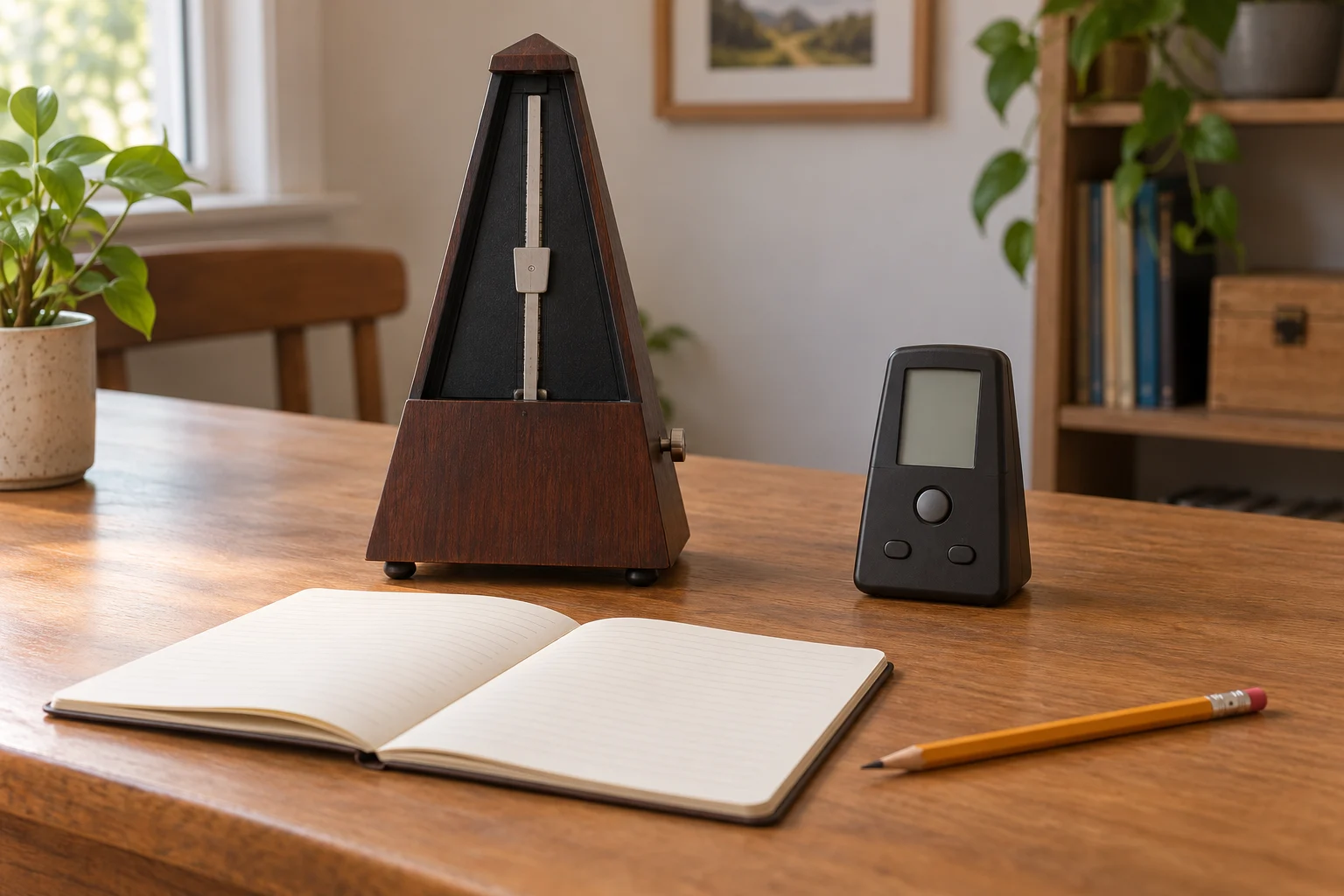
To set a metronome beat for practice, begin with a short passage and the beat you intend the pulse to represent. Then use the instructions for the actual metronome to set that pulse. Connect the musical decision to the device controls, without letting an available setting choose the interpretation of the passage for you.
This guide follows two separate control paths: a Wittner-titled 829161 mechanical offer whose actual catalog brand is Unbranded, and the Seiko SQ50V quartz offer. Identify the unit you actually have before following its path. The instructions for one are not a substitute for the other model's controls.
1. Choose one passage and a clear practice question
Choose a short passage from the music you are working on, using your teacher's or applicable learning material's guidance. Name its beginning and end before starting the metronome. A clear boundary lets you return to the same passage without making every attempt a different task.
Choose one question for the attempt. You might be checking an entry, the placement of a particular rhythm or whether you can keep track of the assigned pulse through a phrase. These are possible practice aims, not a promised training sequence or a diagnosis of why someone finds a passage difficult.
Keep the actual notes, rests and other score directions visible. A steady external pulse does not supply missing fingering, breathing, bowing, sticking or other instrument-specific technique. Use the appropriate instruction for those matters rather than treating a metronome setting as a complete method of playing the instrument.
2. Retain the note unit with the tempo
Read the actual tempo instruction with its note value or other beat reference. A number written on its own can lose part of the musical direction. If the notation is unfamiliar or the teaching material leaves the intended pulse unclear, resolve that question before choosing a setting based only on the number.
The tempo and beat settings explainer separates rate, pattern and sound. Use it to clarify those labels, while keeping the specific musical assignment with the score. It does not choose the appropriate performance tempo or rhythm interpretation for an unidentified passage.
Write the intended pulse reference beside the passage if your practice notes need it. Keep a teacher-assigned practice tempo distinct from a printed performance marking. They can describe different stages of work; neither should silently replace the other when you record what you actually attempted.
3. Identify the equipment and its applicable instructions
Check the actual device identification and the instructions for it. If you are preparing equipment for someone else, leave those references with the unit. A similar housing or a familiar brand name does not establish that another manual describes the same switches, scale or operating sequence.
Use the applicable power, handling and environmental instructions before beginning. This article provides no battery-installation, repair or cleaning procedure. Keep equipment questions separate from the musical exercise so a missing power or control detail does not become a guessed step in the practice plan.
Place the music and device where you can use them according to their instructions. Keep the arrangement compatible with the instrument and the actual space. This guide supplies no personal hearing recommendation, stage-monitoring arrangement or claim that a particular volume will suit every player and room.
4A. Mechanical metronome tempo setting for the 829 series
For mechanical metronome tempo setting, the 829161 mechanical offer retains the catalog brand Unbranded. Wittner's actual model page identifies 829161 within its 829 series; the applicable series instructions are the source for this path.
Those instructions say to wind with the right-side key immediately before use, until resistance is felt. Release the pendulum from its upper holder to the left. Set the sliding weight with its upper edge aligned to the desired scale mark, then give the pendulum a slight tap to begin. Use the complete actual instructions for handling the device.
Before rehanging the pendulum after use, the instructions specify setting the sliding weight to 200 to avoid scratching the scale. Do not leave the unit fully wound for a long period. Keep these conditions with this mechanical path, not with the quartz procedure below.
4B. Quartz metronome practice setup for the SQ50V
For quartz metronome practice setup, the Seiko SQ50V offer identifies the actual quartz model. Its official instructions say to set the dial indicator to the desired tempo speed, then slide the power switch to S1 or S2 to choose the tempo sound. The volume dial adjusts the sound.
The reference-note mark and A4 or B-flat4 switch choices belong to its separate reference-note function. They are not alternative tempo speeds. Use the documented on/off switch for power control, and retain the complete model instructions rather than transferring a mechanical pendulum step to this unit.
5. Listen before beginning the passage
Once the intended pulse is running, listen to it before playing. Check the musical reference you selected against the setting you actually made. If they do not agree, stop and resolve the difference rather than beginning an attempt whose tempo or beat reference is still uncertain.
Identify where your entry belongs within the actual passage and instructions you are following. A piece may begin with a rest or an incomplete opening measure. The sound of a pulse alone does not tell you which note or rest comes first in music that the device has not been given.
If you need a spoken or counted preparation, use the count appropriate to the score and your instruction. This article supplies no universal count-in for every meter, pickup or instrument. Keep the preparation connected to the actual opening rather than copying a count from a different exercise.
6. Play the selected passage and keep the task identifiable
Attempt the passage you selected, following the actual instrument and learning instructions. Keep its boundaries and practice question in mind. Changing the passage halfway through can make it harder to describe which task you actually tried when you later write a note or ask a teacher for help.
If you lose your place, pause the musical attempt and identify where you were. You do not have to continue through unrelated measures to make the attempt look complete. Choose a clear return point from the same material, using the applicable guidance, before beginning another attempt.
Keep observations specific. Record the measure, entry or transition that prompted a question instead of writing only that the passage was bad. A specific observation gives you something to check against the score and bring to the person guiding your practice. It does not by itself establish the cause of the difficulty.
7. Change one part of the plan deliberately
Before another attempt, decide what you are changing and why. You might return to a smaller passage, reread a rhythm instruction or ask about a technical point. Use the actual learning guidance for the choice. Repeatedly turning a control without identifying the question can leave you with several attempts that cannot be compared clearly.
If a different tempo is part of the instruction, retain the same beat reference in the note about that change. A new number paired with a different note unit can represent more than the single change you intended to describe. Keep the setting and musical reference visible together.
Do not assign a universal speed increase, number of repetitions or completion deadline from this guide. The actual passage, player and instructional context remain part of those decisions. A metronome can provide a selected pulse while leaving the appropriate next musical task unresolved.
8. Keep individual practice separate from group synchronization
The shared beat timing guide considers synchronization questions for different actual metronome offers. Its group-system account does not establish that either selected unit here can link wirelessly, share a start command or maintain a particular measured relationship with another device.
If someone joins the session, agree on the actual passage, pulse reference and entry. Follow the applicable group or teaching arrangement rather than assuming that two displays showing the same number provide every part of coordinated playing. This guide supplies no ensemble synchronization or equipment-linking procedure.
9. Use a recording for an identified listening question
Bill Gordon's Summer 2005 Berklee Today article, Confessions of a Serial Rusher, reports Gary Burton's recommendation to listen back to recordings of one's own playing. Burton describes hearing deviations he had missed while performing. The article also presents differing click-placement advice from several educators. These are attributed perspectives, not a single universal pulse-placement rule for every passage.
If your learning plan includes making a recording, identify the actual take with the passage, metronome setting and beat reference. Keep the recording's beginning identifiable so another listener can find the intended entry. Obtain any needed permission before recording other people, and use the recording equipment's applicable instructions. Neither selected metronome is presented here as a recorder or as an automatic assessment system.
Listen for the question you chose before the attempt. You might be reviewing one transition rather than judging the entire performance at once. Retain the actual take when asking for feedback so a teacher can hear what prompted the question. A playback observation can support that conversation without becoming a measured timing score, an equipment-calibration test or a guarantee that a particular exercise will resolve the issue.
10. Leave expressive directions with the music
Keep the score's other directions visible while working with a selected pulse. A passage may contain a change or sign you have not yet learned to interpret. Ask how that direction belongs in the particular exercise before deciding to ignore it, stop at it or carry the same setting through it. This guide does not prescribe one handling rule for every such instruction.
When an exercise deliberately isolates a passage from its wider musical context, keep that limited purpose in the practice note. The equipment setting records the pulse you selected for the exercise. It does not establish that the same approach should be transferred unchanged into a complete performance.
11. End with a useful record
Record the passage reference, the pulse you intended, the setting used and the question you want to revisit. A brief accurate note is more useful than a detailed account built from guesses. Keep a clear distinction between what you observed during the attempt and what you still need someone to explain.
Finish with the actual equipment's instructions for stopping, power and storage. Keep the music and applicable manual identifiable for the next session. An unrecorded control position should not be assumed to survive storage, a battery change or another person's use of the unit.
To set a metronome beat again, return to the passage and its intended pulse before reproducing the device setting. That keeps the control choice connected to the musical task, while leaving interpretation, technique and the next learning decision with the appropriate score and instruction.