Educational & Explainer Articles
Metronome synchronization and shared beat timing
Understand metronome synchronization as relative event timing, using NIST phase concepts and actual Korg GM-1 documentation with the Matrix offer kept distinct.
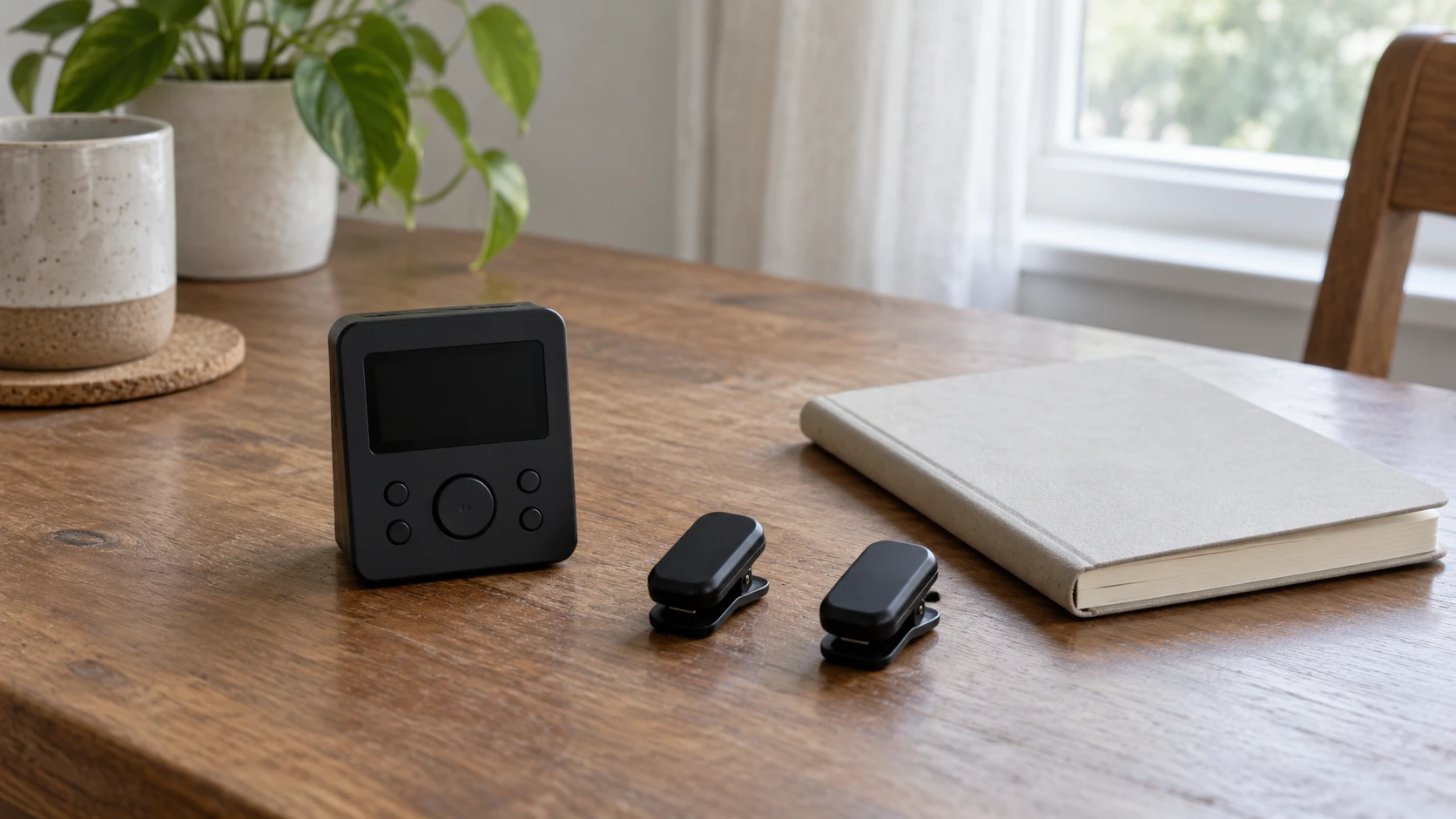
Metronome synchronization concerns when corresponding beats occur across devices. Two units can be set to the same tempo number while their beats begin at different moments. Matching a rate answers how often an event repeats. Aligning the timing answers where those events fall relative to one another.
The Korg GM-1 group-metronome offer provides a documented synchronization example. The separate Unbranded Matrix Quartz listing describes a dial metronome without supplying a synchronization specification. These accounts help separate a stated feature from a feature merely assumed because two products both produce a musical reference.
The same tempo with different beat timing
For the same tempo with different beat timing, imagine two ideal sequences of regularly spaced pulses. The first has events at zero, one, two and three seconds. The second has events at half a second, one and a half, two and a half and three and a half seconds. Each sequence repeats once per second. The corresponding events do not occur together.
The timing example is constructed; neither selected product was recorded or tested for it. Both sequences have the same ideal rate, while the second is displaced by half a second relative to the first. Counting the same number of events over an appropriate equal interval would not remove that displacement.
Suppose instead that the second ideal sequence is aligned so its corresponding events occur at zero, one, two and three seconds too. The repetition rate has stayed the same. The relative placement of the events has changed. Keep those two properties identifiable when deciding what a word such as synchronized is meant to describe.
A displayed setting is different from an observation of those event times. Reading the same number on two devices establishes that the displayed numbers agree. Establishing how their actual outputs relate requires evidence about the outputs and the conditions under which they are compared.
Use phase to describe a relative timing position
The National Institute of Standards and Technology explains phase as a position within a waveform cycle. It also describes phase in terms of the relative displacement of corresponding features on waveforms with the same frequency. That is useful background for understanding how repeating signals can have matching rates and different relative timing.
For a continuous waveform, a corresponding feature might be a peak or a particular zero crossing. In the simple pulse example above, we named the successive pulse events instead. Identify which feature is being compared before claiming that the signals align. A comparison of one feature should retain that definition throughout.
NIST notes that time-and-frequency measurements often state phase differences in units of time. This lets a description identify a timing displacement directly. The half-second difference in the invented example describes where one corresponding event occurs relative to the other. It is not a half-second error measured from a retail metronome.
The period is the time taken for one complete cycle to recur. NIST gives the reciprocal relationship between period and frequency. Period concerns recurrence within a signal; relative displacement concerns the relationship between signals. A period statement for each device therefore leaves the relative starting position as a separate question.
Metronome source and replica timing
For metronome source and replica timing, Korg's current GM-1 owner's manual says the count timing of two or more GM-1 units can be synchronized. It calls the unit providing the base tempo the source and the units following that tempo replicas. The manual says the replicas' tempo, beat and rhythm are overwritten by those of the source during synchronization.
That statement describes a model-specific relationship. It supplies more than a general instruction to put the same tempo number on any two metronomes. The manual also explicitly says that the GM-1 cannot synchronize with SyncMetronome. Keep the actual supported family and that exclusion visible when considering a group arrangement.
Use the complete applicable GM-1 instructions for actual operation. No button, ear-attachment or battery procedure is supplied here, and no GM-1 method transfers to the Matrix offer.
The disclosed synchronization communication method is infrared. That statement supplies no Bluetooth link, ongoing remote-control arrangement or compatibility with another product merely using the word sync.
Read the two selected offers without merging their features
The Korg GM-1 Group Metronome two-pack identifies two units in its title. Its native description includes infrared synchronization, beat and rhythm choices, adjustable sound settings and a memory-backup claim. Those features remain attached to this offered GM-1 package, rather than becoming specifications for the other product discussed here.
The selected Unbranded Matrix Quartz metronome listing names SKU 18158559072 and UPC 769284136026. Its description gives a dial, an A440 reference pitch, a range of forty to 208 BPM, an LED display and a personal earphone. The native brand field is Unbranded. Preserve that field when identifying this actual offer.
The Matrix description supplies no shared-clock, source-and-replica or synchronization statement. Leave that capability unresolved if it is required. A missing statement is not a complete technical assessment proving that every unlisted function is absent. Obtain the applicable instructions or an item-specific answer before planning around a connection.
The selected catalogue image bears MR-500 wording. That image is a useful identity observation alongside the SKU and UPC, without certifying the model of a future delivered unit. The earlier metronome guide used a separate Matrix MR800 offer and Korg KDM-3. Neither older model is being substituted into the GM-1 instructions here.
Equal rates preserve an offset only in the ideal model
In the constructed pulse example, both rates are exactly equal. The second sequence remains half a second behind the first for every corresponding event described by that model. A constant displacement can therefore persist even when the rates agree. That is why matching the rate alone does not select a shared starting moment.
NIST's phase-comparison explanation describes the distinction between signals with exactly equal frequencies and signals with different frequencies. With equal frequencies, their phase relationship stays constant. With a frequency difference, that relationship changes over time. Those are properties of the signals being compared, rather than a performance result assigned to either retail device.
If actual outputs gradually separate after an initially aligned event, the observation raises a different question from a fixed offset at the beginning. Describe the event timing you established and the interval over which you observed it. This article gives no allowable drift, calibrated tolerance or guaranteed duration of agreement for either offer.
One coincident event does not establish how the subsequent events will relate. Likewise, a snapshot of two matching displays does not measure the interval between their outputs. Keep the scope of the evidence clear: which events, which equipment and which observation period does it concern?
A constant lead is different from a faster rate
In ordinary conversation, ahead can mean several things. A signal can have its corresponding events earlier than another signal while both retain exactly equal repetition rates. In that ideal case, it has a fixed timing lead. Describing it as running faster would add a rate difference that the example does not contain.
NIST uses leading and lagging phase to describe this relative position for signals at the same frequency. The reference matters to the description. If the chosen reference changes, say which signal is now being compared with it. An observation that one event occurs earlier is easier to assess when both the reference and the corresponding feature are named.
That terminology also helps keep a fixed displacement separate from a changing one. If the difference remains constant throughout an ideal observation, the events retain that relationship. If it grows or shrinks, the relationship itself is changing. Establish the observation before choosing the explanation; the word early alone leaves both possibilities open.
A musical report may additionally refer to a person entering before an intended cue. That is a statement about an intended performance and what someone heard. It is not automatically a measurement of two electronic outputs. Keep the intended cue and the equipment evidence identifiable if the conversation concerns both.
Timing alignment does not establish an internal circuit design
A metrology explanation can describe a relationship without identifying how a particular consumer device implements it. The NIST glossary discusses several measurement and control concepts. This article adopts its phase, period and comparison explanations, without claiming that a particular circuit is inside the GM-1 or the selected Matrix unit.
The phrase group metronome also does not identify a laboratory time standard. Korg's documented synchronization feature concerns its equipment's count timing and settings. NIST's laboratory descriptions do not supply a calibration certificate for that product or show that it has been compared with a national reference.
Keep a manufacturer's accuracy claim separate from a synchronization claim as well. Accuracy asks how an output relates to the appropriate reference under stated conditions. A synchronization account asks how signals relate to one another. Two signals can agree with each other while leaving their relationship to an external reference unmeasured.
For a requirement depending on a quantified tolerance, obtain evidence that names the actual model, reference and conditions. A short retail phrase about precision cannot provide those details by itself. This guide contains no comparative timing trial or measurement of either product's error.
A comparison also needs an identified observation point. NIST describes path delay as the delay between a transmitter and a receiver. That is another reason to retain the actual comparison arrangement with a timing claim. A result observed at one point should not silently become a guarantee about every possible signal path. This article provides no delay correction or range specification for either metronome.
Keep rate, event definition and musical participation distinct
The metronome tempo-and-beat-settings guide explains rate, grouping, subdivisions and sound choice using the KDM-3 and a separate Matrix MR800 listing. Those distinctions help identify the event being compared. The present synchronization question then asks when corresponding events on different signals occur relative to each other.
A comparison needs a common event definition. If one person reports group boundaries and another reports every subdivision, their observations concern different positions in the pattern. Establish which events are meant before attributing an apparent disagreement to synchronization. That does not require copying a setting from the older devices into the GM-1.
The harmonica call-and-response session gives people separate turns with a short musical idea. Its change of leader is a social arrangement. It does not assign a metronome source or synchronize electronic signals, and its instrument-specific playing method supplies no instruction for either device here.
Someone can participate in a shared music activity without every sound being intended to coincide. Identify the musical arrangement before making a product requirement out of synchronization. An explanation of signal timing cannot decide whether the people involved want simultaneous beats, an answer after a pause or an activity without a metronome.
Keep a group-metronome order with the actual equipment question
If a metronome purchase through republeq involves a preference for crypto such as USDT, confirm the required equipment arrangement before choosing how to pay. The Korg offer names a GM-1 two-pack with its own synchronization account. The Unbranded Matrix Quartz offer identifies a different item and gives no corresponding source-and-replica statement. A preferred payment method cannot establish an undocumented link between them. Read the payment options presented in the selected order's checkout. The retrieved records name cryptocurrency as a payment category, while the actual token, network and transaction conditions still need confirmation for that order. Resolve an absent or unclear option before authorizing payment. This paragraph provides no transfer address, network selection or wallet setup. Check current delivery and return information as well, especially if the equipment is intended for a planned gathering. No arrival date, refund, playing improvement or duration of timing agreement is promised here. If a supplier confirms a model or supported arrangement, retain the answer with the exact item reference. A reply about GM-1 replicas should not become a confirmation about a separate Matrix device, another Korg model or an unidentified application. Save the order confirmation with the package contents you selected so later questions concern the same purchase. Approval of payment cannot demonstrate alignment of the actual outputs. That equipment question remains dependent on appropriate documentation and, where required, suitable measurement evidence. You can leave the order undecided while those details are obtained. Choosing USDT, another offered method or no purchase leaves the synchronization requirement with the actual devices and the musical task you intend.
Read metronome synchronization as a statement about corresponding event timing. Keep it separate from a matching tempo display, retain the actual source-and-replica scope and obtain the applicable evidence for a required combination. Equal rates alone leave the relative timing position unanswered.