Lifestyle & Inspiration
A harmonica call-and-response session with a familiar opening
Make a short harmonica call-and-response session around a supported familiar opening, with a clear phrase, an answer and room to switch who leads.
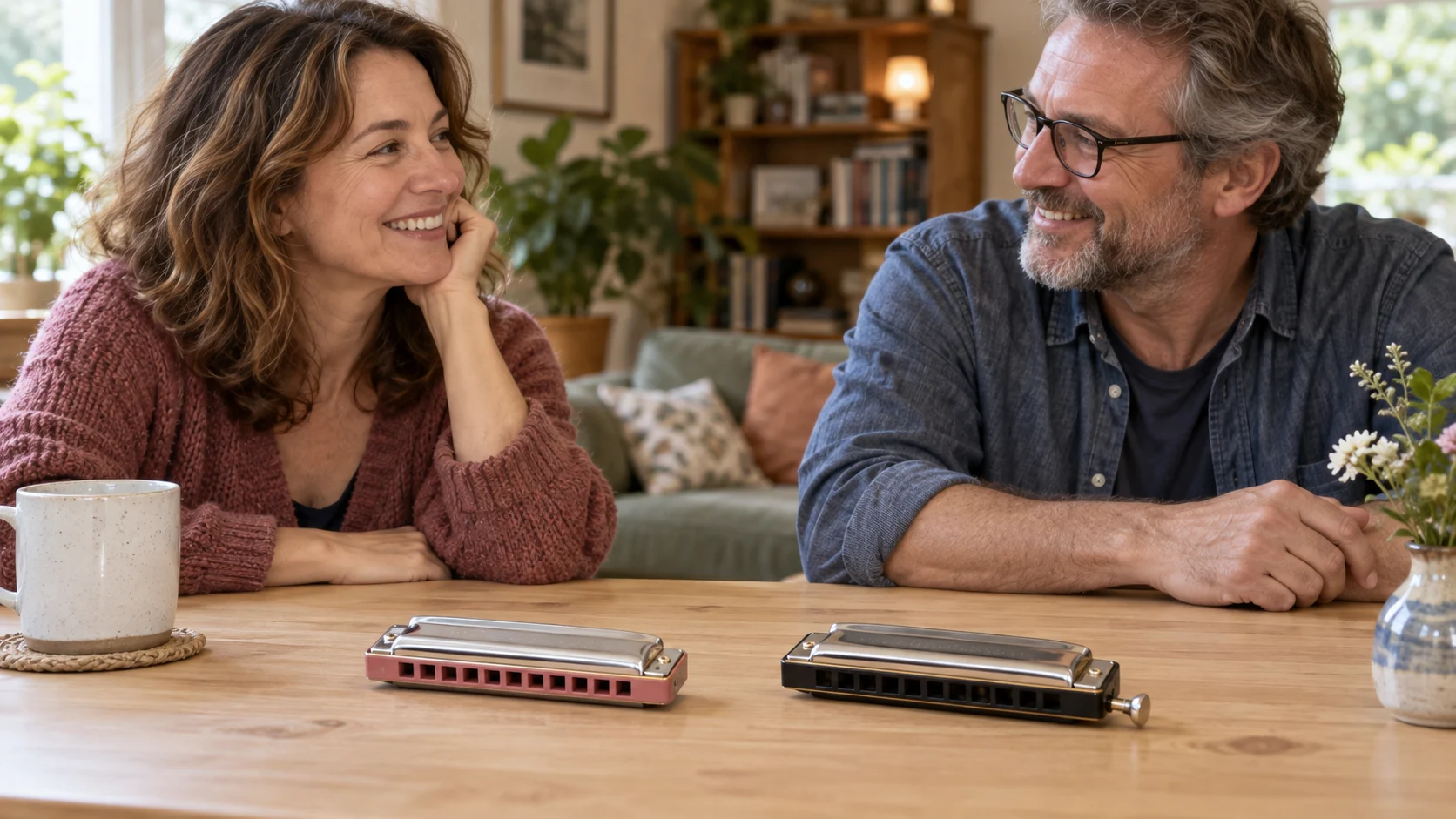
A harmonica call-and-response session gives two people a small piece of music to make together. One person plays a short phrase, leaves space, and hears a musical answer from the other. You can begin with a familiar opening rather than trying to learn an entire song during the visit.
The idea below uses the opening four notes of When the Saints Go Marching In from Liam Ward's published beginner lesson. Its playing method belongs to a confirmed ten-hole C diatonic harmonica. Establish that actual instrument and its applicable instructions before using the notes. A friend can answer with the same phrase on their own suitable instrument or clap its rhythm without needing another purchase.
Invite someone into a small musical exchange
Tell your friend what you want to try: a short phrase passed between you, with time to hear the answer. There is no audience to impress and no agreement to finish a complete song. Someone who prefers to listen can join through the rhythmic answer or simply enjoy hearing the exchange.
Choose a moment when the two of you actually want to make music. A person who is expecting an ordinary conversation may prefer to leave the idea for another visit. Make the invitation specific enough for them to choose. Say that you will work with one short opening and can stop whenever the shared interest moves elsewhere.
Begin with the chosen opening. If one person already plays, ask them to stay with the chosen phrase while the other gets to know it. A more experienced player can enjoy taking a clear, attentive turn without filling every pause with a longer demonstration.
Match the lesson to the actual harmonica
The Hohner Limited Edition Special 20 Pink offer names a diatonic harmonica with C key and a plastic comb. Its title also uses the literal wording 20 Brass Reed Plates. The description discusses the pink comb and screw-assembled construction, but supplies no hole count that resolves the lesson's requirement.
Keep that retail wording intact when confirming the instrument. Do not silently rewrite it as twenty reeds or use it to infer ten holes. Ward's lesson names a ten-hole C diatonic and gives the Special 20 as an example. That does not independently establish every detail of the particular retail unit you will receive.
The description's statements about tone, bendability, airtightness, beginner suitability and moisture-resistant construction are product claims. They supply no observed result for either person at this session. The screw-assembly statement also supplies no disassembly or adjustment procedure here. Begin with an appropriate, confirmed instrument and its instructions rather than treating the gathering as an instrument-repair task.
Keep the chromatic alternative in its own learning context
The Hohner 7542BX-C Discovery 48 offer identifies a chromatic harmonica. Its description names a resilient ABS body, screw-together assembly and a slide package that can be converted for left-hand use. Those are its own disclosures, without a conversion procedure or a complete playing method in this article.
The number forty-eight in its name is not explained as a particular quantity in the short account. Do not use that model wording to fill in a hole count or transfer the diatonic lesson's note layout. Someone choosing the Discovery needs the applicable chromatic instruction for the music they intend to make.
A friend who already plays a different instrument can still join the social idea using a phrase established through that instrument's own instruction. Keep that as a separately prepared musical contribution. The specific hole numbers below remain attached to the confirmed diatonic arrangement, rather than becoming a common control sequence for both offers.
Sharing a short harmonica phrase
For sharing a short harmonica phrase, Liam Ward's seven-step beginner plan specifies a ten-hole C diatonic. Hold it with the numbers above, hole one to the left and ten to the right. Breathe gently without forcing air. His lip-pursing method narrows relaxed lips to isolate a hole; begin with hole-four blow. In his tab notation, a positive number means blow and a minus sign means draw. The opening phrase used here is 4, 5, -5, 6: blow four, blow five, draw five, blow six. Follow the complete lesson if a single note remains unclear.
HOHNER's harmonica FAQ recommends gentle early playing and moderate volume, and says to keep a reasonable distance from another person's ears. Read the complete applicable instrument instructions before playing. This session provides no bending, slide adjustment, cleaning or repair method.
Work through the lesson before exchanging the phrase if it is still unfamiliar. You do not need to make the visit a deadline for getting every note clear. If the technique is still unfamiliar, stay with the supported instruction or leave the live exchange for another occasion.
Let the first call have a clear ending
Once a player can make the selected phrase, ask them to play it and leave an audible space afterward. The space invites an answer. Keep the opening in its chosen order so the friend knows which musical idea is being offered, instead of immediately turning it into a longer improvisation.
The answering person can play that same short phrase on their own confirmed suitable harmonica. They can instead clap the pattern they heard, leaving the pitched part with the player. Agree which answer you intend before beginning so a rhythmic response is welcome rather than mistaken for a failed attempt at the melody.
Listen to the whole response before starting again. The exchange gives each person a turn to make something audible. Wait for the answering person to finish, even when the phrase is familiar.
If the answer differs, describe the part you actually heard. Perhaps it began later than expected or its final sound lasted longer. Ask whether the person intended that difference. You can choose to keep an agreed change for the next exchange without claiming it is part of Ward's published song instruction.
Taking turns with a musical answer
For taking turns with a musical answer, switch who begins once both people want a change. The person who answered can now offer the same chosen phrase; the other listens before responding. Keeping the musical material familiar lets the change concern who leads the exchange.
A listener who clapped the first answer can choose the rhythm of the next call by clapping it first. If the harmonica player wants to answer using the already established phrase, agree to that arrangement. The listener has then contributed a timing idea without being asked to learn the instrument during the visit.
Name an agreed variation when you introduce it. You are arranging a short social exchange around a learned opening. An original pause or rhythmic choice belongs to your session. It should not be presented as a new published verse, an official exercise or the only correct way to perform the tune.
Ask which version each person enjoyed hearing or making. Someone may like the simple copied answer, while the other prefers choosing a rhythm. Those preferences can guide another turn without becoming evidence that one version is educationally better or produces a particular improvement.
A fictional exchange gives the pause a purpose
Imagine Jo and Sam trying the activity after agreeing on the opening. Jo already has the appropriate instrument and has established the phrase through its lesson. Sam wants to answer by clapping. Jo makes the first call, then waits. Sam claps an answer with a longer gap before the final clap. This is an invented scene illustrating a choice, with no report of an actual playing trial.
Jo asks whether Sam wanted to keep that pause. Sam says yes. They agree that Jo will leave a longer pause before the final note as part of their own arrangement. Before another turn, they name what they are trying to echo: the rhythm they just agreed on. The musical conversation now has a shared intention without declaring either person's earlier attempt wrong.
Later, Sam prefers to hear the familiar opening again without changing it. Jo can return to the learned phrase, while Sam listens or answers with its rhythm. The two choices belong to different turns. Neither requires an account of mastery, a recorded comparison or a claim that the group has completed the song. The visit can move between a familiar musical idea and an agreed variation as the people there choose.
Hear the answer before explaining it
The actual active music listening guide follows a recognizable phrase through a recording and keeps an uncertain resemblance visible. Its Yintiny CD-player and Pyle receiver contexts concern playback. The useful relationship here is listening for the particular musical feature before describing it; those devices are not prerequisites for the live exchange.
In this session, the other person is making a fresh answer. A resemblance in rhythm does not establish that every pitch matched, and an unfamiliar sound does not tell you what they meant to play. Ask about the intended answer when needed. Keep what you heard separate from a claim about the player's intention.
You do not need to record or transcribe the session to enjoy it. The next turn can respond to the sound just made. If the group wants a more formal lesson or a complete song later, that can become a separate plan with its own appropriate instruction.
Leave room for ordinary conversation
Between exchanges, ask what brought the tune to mind. Someone might remember hearing it at a gathering or have wanted to try its opening for a while. Let a personal memory remain that person's account rather than adding an unverified history of the song.
The actual album-side listening evening guide lets guests explain a musical choice and makes quieter participation welcome. Its Victrola Harmony and Audio-Technica AT-LP70XBT equipment discussion belongs to record playback. The shared invitation is useful here without making a turntable or prepared record selection part of the harmonica session.
A friend can prefer talking about music to playing it. Keep that contribution welcome. Put the instruments aside when both people would rather talk. There is no need for a final demonstration.
Choose the next exchange together
After a few turns, decide whether to repeat the opening, return to the applicable lesson or stop for now. There is no required number of rounds and no promise that a tune will become easy within one visit. The next choice can follow what the two people actually want to do.
If another melody interests you, establish its notes and applicable instrument instruction before treating it as the next task. Do not carry the hole numbers from this opening into a different song or a different harmonica layout. A suggestion can remain a reason to meet again while that preparation is still unfinished.
A harmonica call-and-response session can be one short phrase and an attentive answer. Keep the actual instrument, supported lesson and people making the music together. Let the final sound leave room for the friend who wants another turn, another conversation or another visit.
Conceptual harmonica call-and-response session with whole generic instruments; no exact retail harmonica, mouth-position diagram or verified playing result is depicted.