Gift Wrap & Party Supplies
Repair a self-excusing narrator without changing the event
An original narrator calls a gift-bag choice unavoidable while describing an alternative. Compare complete self-excusing and candid versions of the same event.
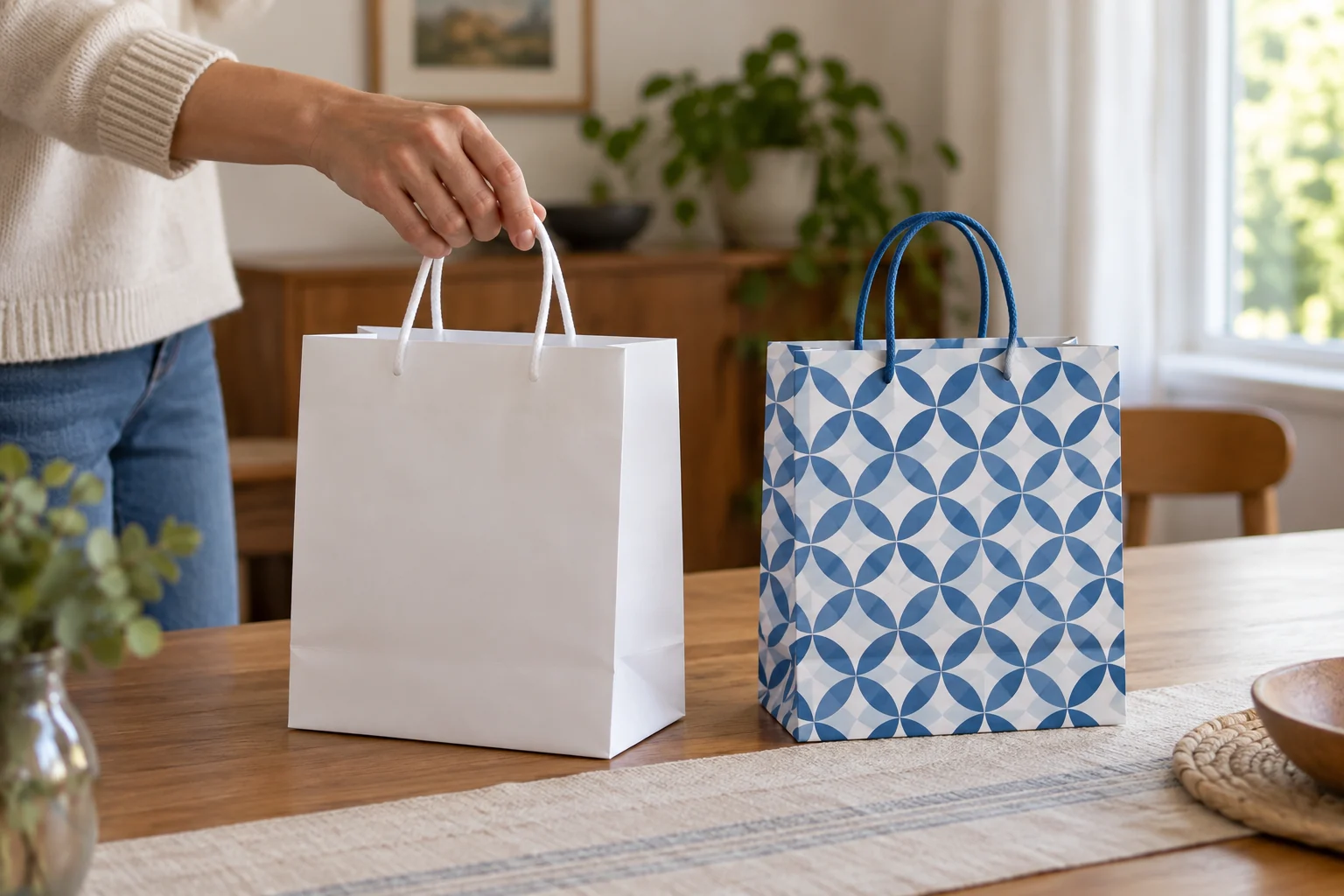
A self-excusing narrator can describe a voluntary choice while insisting that circumstances made it inevitable. In this original exercise, Rin takes a plain gift bag even though another bag is available. The drafting problem is how to keep that excuse intentional. Compare the actual wording before deciding whether to retain Rin's evasive account or replace it with a candid one.
Rin, Len and Ola are invented adults. Their drawing, bags, conversation and gathering belong entirely to this fiction. Neither imagined bag is an actual retail product. The scene gives no advice about real people, diagnosis of anyone's motives or test of how an audience will respond.
Give the narrator a choice the scene will preserve
For this version, two imagined bags stand on a table: one plain white and one green with a printed star. Both are available for Rin's purpose. Rin prefers the white one because its plain surface seems right for the drawing being given to Ola. Len offers the green bag, and Rin takes the white one anyway. Ola later receives the drawing. Keep those physical events unchanged while revising the narration.
The choice is already visible in those declared conditions. There is no missing bag to locate, no secret movement and no later revelation that another bag existed. The question concerns Rin's account of choosing. As the writer of this particular scene, you can make that account evasive without asking the reader to solve a concealed factual puzzle.
Read the original first-person account
I arrived with Ola's drawing under my arm and found Len at the long table. He had finished tying a small label to the green bag. The white one stood beside his elbow. I put the drawing down between them and smoothed the corner I had bent on the way. Ola had drawn the old bakery from memory, then given the sketch to me because she said I remembered its windows. I had added a small drawing of the upstairs room and brought the sheet back for her.
Len turned the green bag around so that its star faced me. He said I could use it. I told him the white one would be easier. He moved his elbow and left both bags where they were. There was no disagreement to settle, which made my explanation sound larger than the moment required. I repeated that the white one would be easier and reached past the green handles.
I had no choice, really. The drawing belonged in something plain. A star would have made the bakery look like part of a celebration it had never attended. I could already see the white bag beside Ola's chair, its blank side keeping the windows company. The green one remained perfectly available, but availability was not the point. I had brought the drawing all that way.
Len asked whether I wanted the label he had tied on. I said the drawing needed no label. Ola would recognize it. He untied the string and set the little card beside his cup. I watched his fingers make a loose circle with the string, then looked back at the white bag. There was still time to say I simply liked it better. Instead I asked whether he had any tissue paper.
He pointed to the end of the table. I took what I needed and returned to the place I had made for myself between the two bags. Len had begun putting the loose labels into a shallow box. I lowered the drawing into the white bag. Its upper corner remained above the rim, where Ola would see the window I had added. The green star faced Len's empty chair.
Ola came in while I was gathering the handles. She saw the upstairs window before I had covered the drawing completely. She asked whether I had put the little crack in the corner pane. I said I had forgotten it. She found a pencil and added the crack while the sheet lay on the table again. Len held the empty white bag open beside her, waiting until she finished.
When the drawing went back into the bag, Ola took it by the handles. She thanked me for remembering the room. Len asked if he should put the green bag away. I said yes, unless somebody else needed it. Then I added that I would have used it if there had been any other way. Len looked at the star and said there had been that one. I told him he knew what I meant.
Later, I described the gift as though the white bag had been part of the drawing from the beginning. The bakery required it, I said. I could have described my hand reaching past the green handles. I could have said that I wanted the blank side. Instead I kept arranging the sentence so that the bag seemed to have chosen me.
Locate the excuse beside the narrated action
The sentence to examine is “I had no choice, really.” Rin has already described Len offering the green bag and leaving both available. The next paragraph even concedes that availability. For this authored scene, the denial therefore sits beside Rin's own account of an alternative. Keep both passages visible during the revision.
Rin's preference is also stated: the white surface seems right beside the imagined bakery drawing. That preference can remain part of either version. You do not need to invent a broken handle, an unsuitable size or a new instruction from Ola to make the decision unavoidable. Each would change the event you began with. Here, the writer wants the choice to remain voluntary.
A rougher draft might simply say, “There was no other bag on the table.” That would contradict the scene's declared arrangement without preserving the particular excuse Rin has developed. It would also remove the distinction between an available object and an object Rin likes. For the current version, leave that sentence out. The green bag remains on the table.
Make the evasive account deliberate
Try this complete replacement for the excuse paragraph: “I told myself I had no choice. There was the green bag, certainly, but I had already decided that a star would make the bakery look wrong. The white side seemed to leave the windows alone. I reached for it before Len finished offering the other one, then explained why the drawing required what I wanted.”
The opening now identifies the claim as something Rin tells themself. The paragraph still describes the offered alternative and the reaching hand. Its final words bring the requirement back beside the preference. These are choices made for this passage, not a formula for identifying an unreliable person outside a story.
Read the replacement with Len's later reply. His “there had been that one” points back to the green bag already present in the narration. You do not have to give him a speech explaining Rin's character. The short reply belongs to the particular conversation. Nor does Ola have to notice or settle it. Her contribution to this version remains the pencil mark in the bakery window.
Write the candid alternative in full
A separate version could read: “I wanted the white bag. Len had offered the green one, and it would have served the purpose I had brought it for. I preferred the blank side beside the drawing, so I reached past the green handles and took it. When Len moved his elbow, I thanked him. The choice was mine, even if the bakery gave me a pleasing way to explain it.”
This alternative preserves the available bags, Rin's preference and the selected white bag. It changes how Rin accepts the choice in the account. Compare that paragraph with the evasive replacement as written. Do not give the candid version an additional success, a warmer reception or an apology from Len to make it look preferable. Those events are absent from the exercise.
Choose the voice without repairing the person
For this story, retain the deliberately self-excusing paragraph. The intention is to let Rin show the choice while trying to place its necessity elsewhere. The candid alternative remains a different possible voice for the same selection. Choosing the evasive one does not require approving Rin's account or giving the fictional person a lesson by the final line.
The surrounding scene can stay largely as it is. Ola adds the forgotten crack to the window. Len waits with the bag open. Rin later describes the white bag as necessary. Those actions leave the drawing exchange complete while the narrator's explanation remains available for doubt. No universal reaction is claimed for somebody reading it.
If you adopt the candid version instead, reconsider Rin's later account too. A paragraph that openly owns the preference followed by an unchanged claim that the bag chose its carrier would produce another version with a new tension. You can write that version deliberately. For the selected account here, keep the self-excusing replacement and the existing ending together.
Keep the actual gift-bag offers outside the fiction
The Christmas gift-bag offer describes a 24-pack and 24 tissue sheets. Its sole composite image shows patterned complete bags with handles, decorative tags and tissue. The printed Christmas phrases are decoration, not a maker identification. The source's strength and convenience language supplies no independent handling or load test here.
The white gift-bag offer describes 50 bags with tags and gives its own dimensions. Its image shows a complete white cord-handle bag with folded bags behind it, without a visible maker label. Neither offer establishes the properties, fit or behavior of Rin's imagined bags. The fictional drawing and the available choice are authored conditions.
Leave the neighboring narration decisions separate
The keychain scene guide chooses when to disclose an object's location. Here, the green bag is available from the outset. Moving its disclosure to a surprise ending would replace the current comparison of the narrator's excuse.
The collective narrator guide identifies who belongs to a narrating “we.” Rin is the same single speaker throughout this scene. The question is what that speaker says about an openly described personal choice, rather than who shares a memory.
Retain one selected account
Put the evasive replacement back between Len's offer and the label exchange. Keep the drawing's return to the table, Ola's pencil mark and Len's short reply. The physical gift exchange remains complete. Rin's closing explanation can then stand beside a choice the narration has continued to show.
The last sentence may remain: “Instead I kept arranging the sentence so that the bag seemed to have chosen me.” It belongs to this narrator's account of this invented afternoon. The candid version has its own place among the alternatives, with the same white bag selected for a reason Rin is willing to name.
If you consider an optional purchase
If you choose to order an item on republeq.com, read the offer and checkout terms before committing to the purchase. A preference for USDT or another cryptocurrency does not establish that the transaction offers it. Check the exact item, variant, package contents and amount shown for the order. Confirm any delivery charge, applicable tax and payment charge using the information presented by the responsible services. Review the delivery estimate and the cancellation, return and refund conditions, including how a refund would be handled for the payment method you select. If cryptocurrency is offered, follow the transaction's instructions for the asset and network it requires. This article supplies no receiving address, wallet setup, exchange-rate forecast or transfer procedure. Never disclose a wallet's private keys or recovery phrases in a product enquiry. Leave an essential product or payment question open until the responsible service answers it for the actual order. An answer about another item or an earlier transaction may not apply. Keep the order details and resulting confirmation so that any later question concerns the same purchase. If an order or payment status remains uncertain, reconcile that status through the authorized channel before considering another payment. Do not treat an unclear status as evidence that nothing happened. A completed transaction does not verify that this story describes an actual person, that an imagined bag has the properties of a retail item or that a purchase will improve the prose. This discussion promises no saving, financial return, settlement time, transfer protection or refund outcome. You can leave the purchase undecided while finishing the project checks that determine what you need.