Garden Care & Watering
Seed library borrowing: choose a packet for your season
Check a seed collection’s eligibility, seasonal distribution and packet records, keeping its saved-seed return expectations attached to that institution.
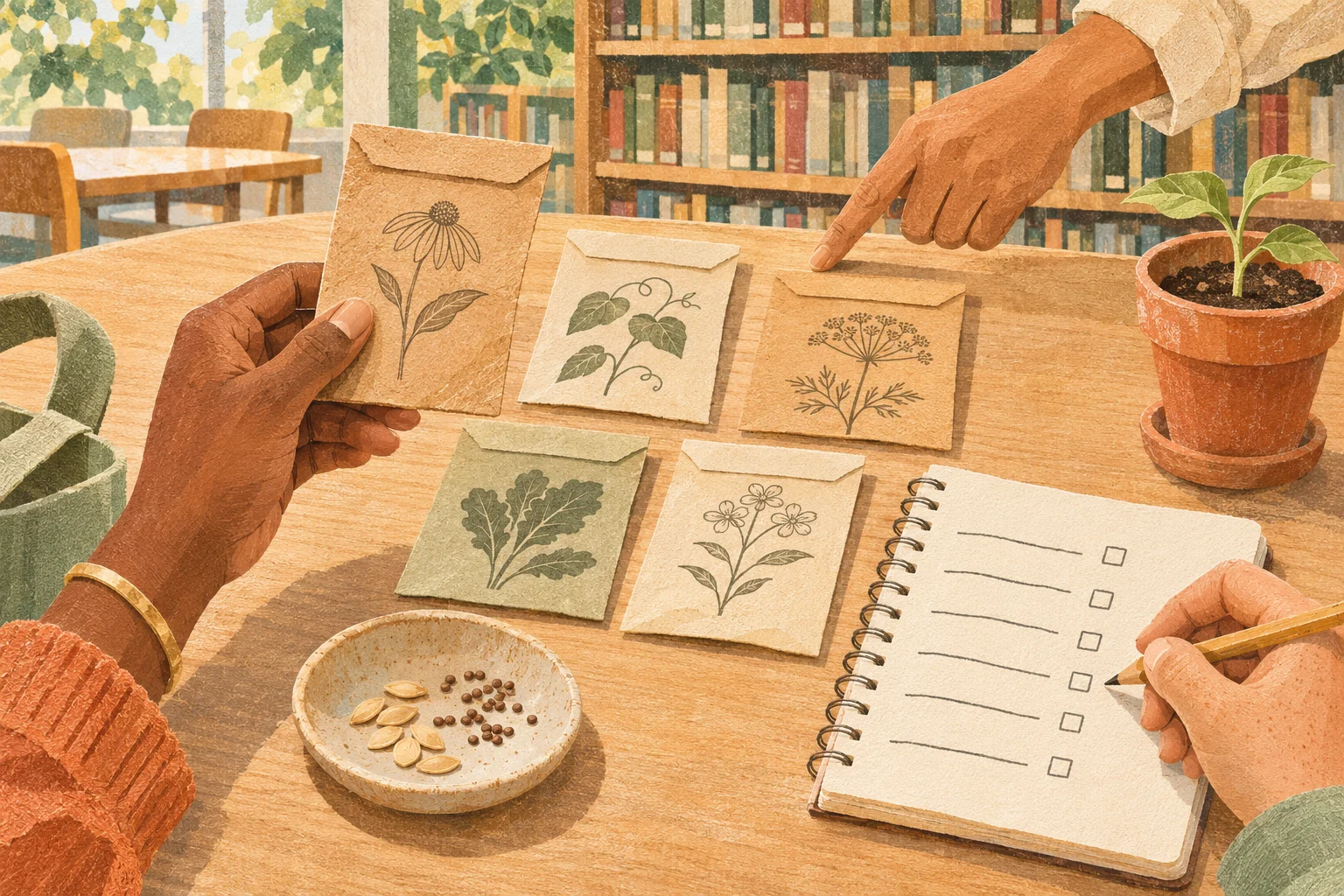
Seed library borrowing can make a growing season a community activity. Start with the collection you intend to use, its current access information and what you actually plan to plant.
Choose a packet you intend to grow
Hope’s Seed Library at Greenfield Community College welcomes students, staff and members of the public. Its instructions allow one packet per variety per household, while asking readers to take only what they plan to grow. Choose from the drawers for your growing plan, rather than collecting packets simply because they are available.
The library asks borrowers to complete a gardener form, either on paper or electronically. That record supports the library’s understanding of how the collection is used. Its published 2026 inventory note says stocks are low and recommends checking before a visit when you want particular seeds. A named variety on a list is not a reservation.
GCC encourages returning clean saved seeds, labeled with variety and collection date, but does not require a return. Its optional pledge is an intention to make an effort, with support from organizers.
Read borrowing rules with your eligibility in view
McGill’s Macdonald Campus Seed Library defines its eligible community through library borrowing access. Faculty, staff, students, alumni and authorized borrowers can use the collection. Check that connection before planning your visit. Public information about a university seed collection does not itself establish that every reader can borrow from it.
The stated borrowing rules begin with a membership form, with in-person registration also available at the Macdonald Campus Library. Once registered, users can borrow there or use the online borrowing form. The guide allows up to twenty-five packets. Keep that limit with this institution’s process rather than carrying another collection’s smaller allowance into it.
McGill strongly encourages returning seeds while making clear that a return is not required for using its seed library. When seeds are ready to return, the guide asks users to complete the return form and bring them to the library. This is a documented participation route, not a promise that any packet you choose will grow successfully or produce suitable saved seed.
Check who can use the local collection
Round Rock Public Library describes its collection as open-pollinated and heirloom seeds. Its participation instructions require borrowers to live in Round Rock and be at least eighteen. No library card is required. Begin with those actual conditions, especially if you arrived at the page through a general search for a seed library.
The process starts at the first-floor service desk, where readers ask to visit the seed collection. The stated allowance is three packets per household. Keep the household limit attached to the selection you intend to make, without converting a public collection description into a reserved supply of your preferred variety.
Round Rock explains that its selection depends on donations and seasonality, so available seeds change. It encourages saved-seed contributions but does not require borrowers to return seed, particularly people new to gardening. Its gardening books offer another route for learning. If you later want to contribute, read the collection’s donation guidance and its form for each seed type before preparing that separate handoff.
Keep the cabinet record and seed return distinct
Canton Public Library’s seed cabinet is arranged by seed-saving difficulty, then common name and variety. That arrangement gives you useful information before choosing a packet. A label’s place in the cabinet can prompt a question about the learning involved, without becoming a complete set of growing or seed-saving instructions.
The library asks users to record what they borrow in the Member Seed Record binder by the cabinet. First-time borrowers complete a Membership Record form and turn it in at the desk. Its selection limit is five envelopes or fewer because quantities are limited.
Canton does not require returning leftover seeds or seed from the next generation of plants. If you can make a seed return, it asks for a sealed paper envelope carrying your name, the plant name, variety and harvest year, with the information also recorded under Returning/Donating. Keep that later contribution separate from the initial borrowing record. You can learn through the collection without inventing a completed return or promising seed you have not grown.
Notice a seasonal closure before planning the visit
Michigan State University’s Thomas Volkening Seed Library guide currently states that distribution has closed for the spring 2026 season. Keep that notice at the center of any plan based on this particular page. Its general description of a public seed collection does not override the distribution notice or establish that packets are available today.
The guide locates the collection on the second floor of the Main Library’s west wing, along the west side of MakeCentral. Location information can help you identify the service, while the current access notice determines what the page actually supports about distribution. Reading the guide from home can still introduce its gardening information and events without requiring a successful seed pickup.
MSU describes this as a distribution library and says it does not accept seeds returned after the growing season. Retain that distinction even if you previously used a collection that encourages returns. Its participation in a wider seed-library network does not make another member’s intake or return policy apply here. Follow the institution’s own current account when considering a later visit.
Keep the growing season and packet uncertainty visible
Louisville Public Library’s seed collection is free and open to people with a library card. It is located on the second floor near the Acme Lab, and its instructions allow up to two packets. Start with the stated access conditions and the modest selection you intend to use.
Louisville says its seed library is open year-round but stops restocking in mid to late summer as the growing season winds down. Those statements answer different questions: access to the collection and replenishment of its supply. Neither establishes that a specific variety will still be waiting when you arrive.
The library explains that seeds come from company donations, returned seeds and community donations, with germination potentially lower than expected. Keep that uncertainty with your choice. A packet is an opportunity to try growing, not a certified outcome. Its donation guidance accepts unopened commercial packets and homegrown seeds labeled with the plant name. Read the actual contribution route before bringing anything back; a collection’s invitation to share does not settle every detail of a future donation.
Consider the envelope’s closure separately from the seeds
The Quality Park QUA50662 envelope account shows an open yellow-brown envelope with a visible gum strip on its flap. The original presents front and back views. Those views do not authenticate the stated box quantity, maker, paper weight or seed-storage performance.
The LUX 69BS-28W-50 envelope account describes button-and-string closure. Its original image shows a white envelope with mounted eyelet and button hardware; a winding string is not visible. No operated closure, supplied string, repeated-use result or maker equivalence is established here.
The gum strip and mounted hardware are different closure arrangements, beyond their different colors and sizes. Keep that observation separate from whether either envelope suits your intended contents. You can retain library-issued packets and use materials you already have. A purchase does not establish seed viability, moisture protection, archival suitability or acceptance under a library’s contribution instructions. Check the particular record or packet role before considering either optional offer, keeping any unresolved quantity or physical-fit question with the item. An unmarked envelope can hold a note without proving its maker; its visible flap also leaves the actual closing result untested.
Use related collection guides for their own decisions
The postcard collection-route guide follows institutional descriptions, finding aids and online image availability. That is a browsing decision about existing holdings. A useful collection description can help you find a service without establishing its current seed inventory, your borrowing eligibility or a completed pickup.
The library zine donation guide concerns contributing a publication, including collection fit, donor consent, catalog access and delivery conditions. Those questions belong to that material and destination. They do not supply a seed library’s borrowing allowance or explain whether it accepts saved seeds.
Return to the intended seed collection’s own instructions for your next step. A first visit might involve choosing a packet, completing a membership record or finding distribution closed. Keep the actual outcome in your notes. A later growing project and a possible saved-seed contribution can remain future work, with their unanswered questions intact. Enjoying the connection to other gardeners does not require treating a tentative plan as a completed borrow or successful harvest. Keep the collection name with the information you save, so a later visit begins with the right policy rather than a remembered general rule.
If a later paper purchase uses crypto
A seed-library visit does not require a stationery order. If you later consider buying a paper item on republeq.com and want to use crypto, inspect the payment options presented for that particular order. If USDT appears as an available choice, establish the requested asset and network from the current checkout instructions before authorizing anything. Keep the exact product selection and any unresolved supply question with the order details, so a payment choice does not silently become a decision about a different item. Read the displayed amount, any stated charges and the relevant delivery terms before proceeding. Retain the order reference and the instructions you used, including any information the responsible service provides about cancellation, returns and refunds. A catalog photograph does not establish those transaction conditions, and this guide does not confirm a current checkout option, a delivery outcome or a refund method. If a required detail is unclear, leave the order pending while seeking an answer through the stated support route. Check that any reply addresses the same order and product rather than applying a general statement to a different transaction. If an instruction changes, preserve the earlier version alongside the confirmed replacement. After an authorized payment, retain the resulting transaction and order records together. If the status is uncertain, reconcile that uncertainty before considering another transfer; an unresolved acknowledgement does not establish that no payment occurred. This paragraph supplies no receiving address, wallet recommendation or assurance of recovery. Decide whether to proceed from the actual conditions you can verify, keeping an unanswered product or payment question visible. You can return to your other preparation while the purchase is undecided, with the order information saved independently. The name on a packet does not identify a payment network or authorize a transaction. A different payment method would not change which item you selected, and an order confirmation would not establish that a delivered item meets an untested physical requirement. Keep those decisions attached to the evidence and work that belong to each of them.