Home Decor & Table Settings
Postcard archive evening: follow the collection route
Choose an at-home postcard browsing route from real collection descriptions, while keeping online images and physical archive access separate.
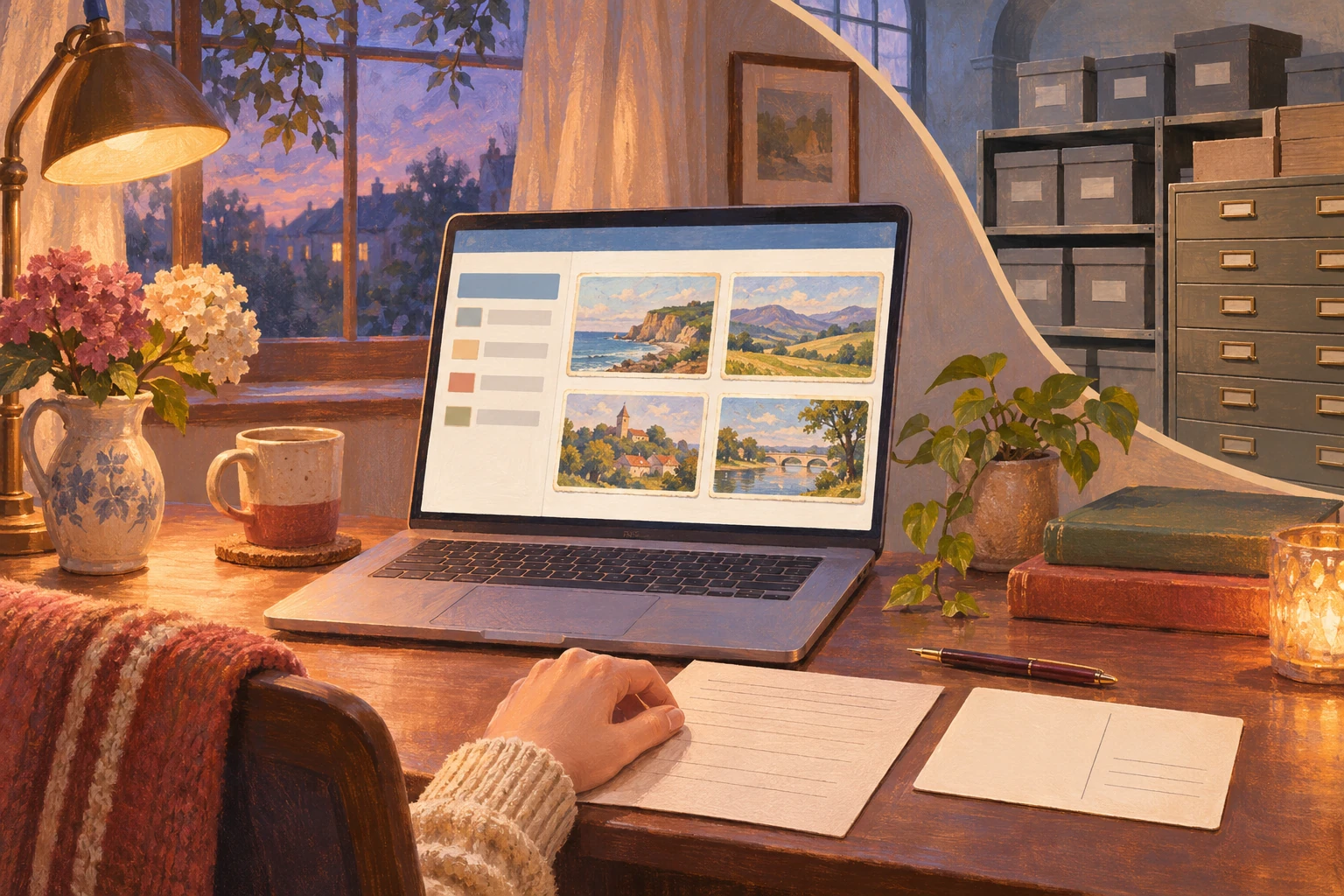
A Postcard archive evening can begin with a collection description and an available browsing route. Choose something you can explore from home while keeping physical holdings and their access requirements in view.
Begin with NYPL's geographic and subject routes
The New York Public Library's Picture Collection offers a useful place to consider the difference between geographic and subject arrangements. Its circulating postcards are organized by country or territory, while its reference postcard collection follows the Picture Collection's subject index. Those arrangements give you different starting points for an evening's enquiry. A place name and a visual subject need not lead through the same part of a collection.
NYPL describes photographic views alongside artistic renderings, with donations from travelers and hobbyists contributing to the holdings. Let that breadth guide your choice of route without treating a collection description as a promise that every item has an online image. The reference collection also has a physical research setting. Keep that access context attached to the material you find, so an enjoyable browse does not become a plan that depends on seeing unavailable originals tonight.
Find online postcard collections through the actual catalogue
The Library of Congress postcard guide suggests searching both “post card” and “postcard.” Its advice also points to postcard format links and to descriptions of grouped images, called LOTs. These are different ways into the catalogue. If a broad word search leaves you wandering, the described format routes or a relevant group can give the evening a more manageable starting point.
The guide explains that an item can lead to its group description and possibly to additional images. Keep “possibly” in that expectation. A catalogue relationship identifies a route worth investigating; it does not guarantee a complete online sequence. Larger groups can also have container lists associated with reading-room research.
Use online postcard collections with the access information that actually accompanies them. The Library notes that some groups require advance arrangements and directs readers to any Access Advisory. A page that helps identify physical material can still be useful during an at-home evening, while the visit or request it requires remains a separate future decision.
Let the Tichnor description define a vacation-view route
Boston Public Library describes the Tichnor Brothers collection as office proofs of American postcards, concentrating on vacation places. That focus can help you choose a browsing direction when a holiday town or a remembered destination is what interests you. It also sets a boundary: this collection description does not promise an equally detailed record of every street, neighborhood or kind of local activity.
The account identifies color postcards with a linen texture and places the material broadly in the period it describes. Those collection-level details give context for selecting a route. They are not a method for dating a card you own or identifying an unfamiliar printing process.
The library points readers to Digital Commonwealth for digitized images. Follow that stated route if it suits the evening you have in mind. Keep the collection's office-proof character visible in your notes, rather than silently treating every described item as a card that someone addressed and mailed. An available image and a personal postal history are different things to establish.
Read postcard finding aids as descriptions of holdings
The University of Chicago postcard finding aid organizes its campus material by the building or area depicted. Its inventory includes named buildings, campus views and surrounding areas. A campus-related question can therefore begin with that arrangement, even when you have not chosen a particular image to view.
Postcard finding aids can make an evening useful by showing how a collection is described. Read the inventory as a description of holdings and retain the stated research context. A list of buildings is not itself a gallery of digitized postcards, and the finding aid does not establish that every listed item can be viewed immediately from your laptop.
The guide also carries a content warning about historical attitudes and stereotypes, explaining that presenting material for research does not endorse its content. Keep that context with your browsing choice. If a description raises a question you cannot settle from the available information, you can leave it unresolved without turning the evening into a claim about the collection's complete history.
Use Chicago's subject range to choose an entry point
Chicago Public Library's collection account describes postcards covering a broad range of city views. Buildings, businesses, parks, streets and transportation sit alongside other subjects. That range gives you a way to choose an entry point according to what you are curious about, rather than expecting a single postcard collection to have one uniform visual theme.
The page places the material within the library's Special Collections and links to a finding aid. Keep that distinction visible when planning an evening at home. A short collection account can help you decide whether its subject coverage is relevant, while the finding aid may supply a more detailed description of what is held. Neither step alone establishes that the images you want are digitized.
You can use the stated scope to narrow the evening to a subject that interests you. Transportation and parks can offer separate starting points without requiring a survey of everything. This is a choice about where to browse next, not a conclusion about how a particular Chicago scene changed over time.
Keep Washington's online availability limits attached
The University of Washington's Pacific Northwest visual-materials guide describes postcard holdings arranged largely by topic or locality. It identifies a Northwest and Western Canada collection and describes a range of regional subjects. That information can help you choose whether this is a promising route for the place or kind of material you want to explore.
The same guide explains the role of finding aids in describing collections, their context, contents and restrictions. It also cautions that not all photograph holdings are digitized and online. Keep that broader availability limit attached to your search. A substantial physical collection and a useful online evening can coexist without the entire collection being available through a screen.
Choose the route that the actual description supports, and retain the collection name when you note what you want to revisit. Where an entry describes physical holdings rather than presenting the image you hoped to see, leave that difference intact. The evening can end with a relevant collection identified, without pretending that a description supplied an unseen postcard or settled access to the original.
Consider boxes only for your own paper records
The basic photo-storage box offer and the Tulip three-box set provide context for a separate optional decision about personal paper records. The basic offer's whole gallery shows black lidded boxes with mounted front card holders. Its bulk description does not authenticate the supplied count, so neither a single box nor the pictured count is promised here. The Tulip title identifies three boxes, and its whole gallery shows removable-lid floral boxes without that mounted front hardware.
These are containers for a possible personal-paper arrangement, not an account of how an institution houses its holdings. You might consider a container for your own browsing notes or reproductions you are permitted to make. No purchase is required to explore a collection online. Neither offer establishes archival suitability, material certification, a preservation outcome or permission to reproduce a postcard. The small printed Tulip mark remains uncertain; no maker or model equivalence is authenticated. Keep the physical item decision separate from the collection route that made the evening interesting. The visible hardware difference does not establish a different maker or an authenticated product platform. Review the actual order information if you investigate either offer.
Use the related guides within their separate scopes
The guide to looking at a postcard collection develops an activity involving actual cards and observations. That can be a different evening from choosing an institutional browsing route. It does not establish that a catalogue entry has a digital image, arrange access to physical holdings or supply a history for something you have not seen.
The guide to open-access art print costs separates image availability, use terms and later physical-project decisions. Its discussion does not clear a postcard image for reproduction or carry one institution's policy across to another collection. Use it for that distinction if a future project involves an actual file and a proposed physical print.
For tonight's browsing, keep the question modest enough to match what the chosen route provides. A collection description, an available image and a later enquiry about physical material can remain different outcomes. You do not need to turn an interesting institutional page into a completed collection, a new print project or a purchase before the evening has been worthwhile.
If a later personal-paper purchase uses crypto
If you later consider a crypto-paid purchase on republeq.com, connect the payment decision to a particular item and the actual order details. Browsing an institutional collection does not establish a retailer's payment options, and this article does not confirm that a current checkout accepts USDT or another asset. Check the asset and network actually offered for the specific order before preparing a transfer. Keep your chosen item and its unresolved supplied-count or fit questions with the purchase notes, so a convenient payment method does not turn uncertainty about the goods into an assumed answer. Read the displayed order total and delivery information before proceeding. If an important detail remains unclear, pause that transaction and resolve it through the relevant published support route. Do not send a test payment simply to find out whether an address works. Private keys, recovery words and wallet credentials should stay out of browsing notes, order enquiries and collection correspondence. A retail purchase also does not arrange archive access or grant rights to an image that you found during the evening. Treat any later request for physical material or reproduction permission as its own matter, with the institution's applicable information. If you actually complete a purchase, retain the transaction reference and order confirmation together. Distinguish those records from a pending cart, an unsubmitted enquiry or a payment screen you only opened to inspect. If you decide that your existing personal-paper arrangement is sufficient, no purchase needs to follow from the browsing activity. This discussion supplies no current stock position, price, supported network, transfer fee, refund entitlement or material-protection promise. Those details remain tied to the actual provider information and the particular transaction you choose to consider. Keep a note of an unresolved payment question if you return to it later, so that a tentative plan does not become a remembered completed order. You can also record why an item was deferred, retaining the unanswered question alongside the intended item, so another browsing session does not quietly replace a pending decision with an assumed purchase.