Lifestyle & Inspiration
Postcard collection ideas: look beyond the main view
Choose two views, notice printed details and keep uncertainty visible. Read the actual Carson CP-90 and JD-3MU offers alongside a gentle collection activity.
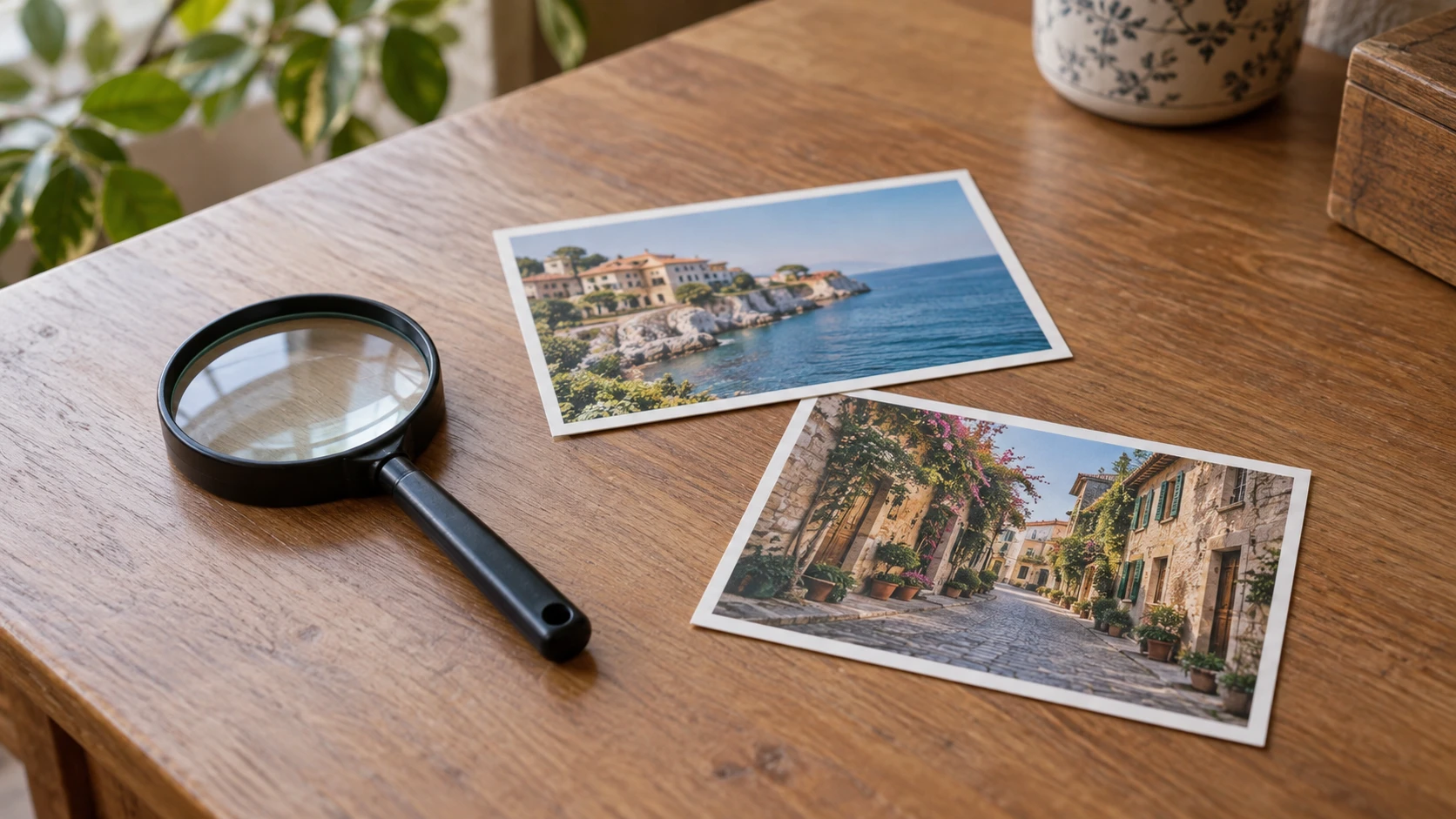
Postcard collection ideas can start with two views of a place rather than a search for the oldest or most valuable card. Put together images that give you something to compare: a familiar building, a stretch of waterfront or a street you have visited. The afternoon's purpose is looking at the cards and describing what you actually notice.
You do not need to identify a printing process, establish a market value or finish a complete collection catalogue. A viewing aid can help you investigate a detail, but an enlarged appearance does not authenticate the card or explain its history. The two Carson offers below describe different equipment arrangements, without a viewing trial performed for this article.
Choose a pair that gives you a question
Begin with cards you can handle appropriately in their current condition. Two images of the same place make one possible pair. You might compare what each photographer included, how a caption names the location or where the picture directs your attention. Choose a question that the actual cards give you, rather than making them fit a predetermined historical story.
If the collection has only one card of a place, another useful partner could be a second view from the same trip or a card with a related subject. Name the connection plainly. Two images of different railway stations can be compared as photographs without claiming they document the same station or the same period.
Leave a card outside this activity if examining it would require unfolding, detaching, cleaning or repairing something you are unsure how to handle. This is a viewing and note-making project, not a treatment procedure. You can work with another suitable item and retain the condition question for an appropriate source of care advice.
A postcard collection theme can follow the pictures
For a postcard collection theme, let the visible material suggest a small grouping. One envelope of holiday cards might contain several views of a river, while another group may share a publisher's name. Choose a theme for this group rather than the whole collection. Keep the afternoon's group small enough to examine without turning the table into a sorting backlog.
Try looking first at the entire picture. What occupies the foreground, and what has been left near an edge? A building can appear prominent in one view and become part of the background in another. Describe that difference before deciding why it happened. The card alone may not establish the photographer's intention.
Then choose a detail you want to investigate more closely. It could be a printed credit line, lettering on a sign or a small figure in the scene. Keep what you can read separate from what you think it might say. Leave an uncertain letter unresolved in the note.
Read the Carson CP-90 as a supported viewing arrangement
The Carson MagniFlex Pro CP-90 offer names a two-times main lens and a four-times spot lens. Its flexible head is intended for hands-free viewing, and its sixteen LEDs provide illumination. The description identifies a magnetic base and a table clamp, with an AC/DC adapter included.
Battery operation requires four AA batteries according to that account. Keep the stated power alternatives and included parts attached to this particular offer. They do not establish how to assemble the support on your table or promise that a specific postcard detail will become readable. Follow the actual equipment instructions for its permitted arrangement and use.
A supported format may be worth investigating if you want to keep your hands available for the collection task. Consider whether that support format suits the task you intend. This article gives no measured working distance, usable field width or comparison of viewing comfort. The four-times spot label is not a complete description of what any individual will distinguish.
The MagniRama offer is a fifty-piece package
The Carson MagniRama JD-3MU offer describes fifty magnifying glasses with fifty-millimetre glass lenses and three-times magnification. The listed colours are yellow, green and orange. Its stated uses include reading, inspection, classroom activities, parties and gifts.
JD-3MU is a fifty-piece package. Consider whether that quantity serves the purchase you actually intend. If you already have an appropriate viewing aid, you can use it for the collection session. Keep the activity separate from deciding whether a bulk order meets another need.
The two Carson descriptions also supply different kinds of support information. CP-90 names a flexible head, base and clamp, while JD-3MU describes the individual handheld lenses in its pack. Neither description establishes that a larger printed magnification number automatically makes the better arrangement for the detail you want to see.
Postcard observation notes should keep evidence separate
For postcard observation notes, begin with an identifier that lets you find the same card again in your own collection. Put the note on a separate suitable sheet or in an existing record. You can then describe the picture, the wording you read and the question that remains without adding marks to the original card.
A useful note might distinguish three things: the caption printed on the card, a date actually present on it and a place name you recognize from elsewhere. Those details can support an enquiry without proving that the photograph was taken on the date of a written message or that every visible building still has the same name.
If handwriting is difficult to read, preserve the gap. Write the clear portion and identify where your reading is uncertain. Do not make a surname or place fit a family story because that would give the card a more satisfying explanation. Another reader can inspect the same wording independently if you want help with the actual reading.
Keep a visual observation separate from a conclusion about manufacture or authenticity. Seeing an apparent line pattern is an observation. Naming the printing process or declaring that the card belongs to a particular edition requires its own evidence. This article supplies neither a diagnostic method nor a price guide for the collection.
Give the paper a suitable place while you look
The Library of Congress guidance for works on paper recommends clean hands and a clean work area, with food and drink kept away. It also advises against using paper clips, rubber bands, self-adhesive tape or glue to organize paper items. Use that general care guidance without turning this project into a repair or mounting exercise.
Its storage account calls for limited light exposure and no direct or intense light. Keep that point in view when considering illuminated equipment. A retail lighting feature does not establish a preservation exposure limit for your particular card. Follow applicable collection-care and equipment guidance, and keep treatment questions outside the afternoon's viewing activity.
You can keep the temporary group identifiable through separate notes rather than fastening its members together. When you finish looking, return each item to its appropriate existing arrangement. The activity gives no new permission to remove an item from a sleeve, album or support whose handling requirements remain unresolved.
Find a detail together
Each person can choose one clearly visible feature and invite the other to find it on the named card. It might be a window shape, a boat or a particular tree. Choose something you can both identify, rather than an unreadable speck. Looking through a magnifier can remain optional. Let each person set their own pace and decide when to move on.
You can also compare where your attention went when the whole picture was first shown. One person may have noticed the foreground while another looked at a distant building. Ask what drew their attention, without deciding that one response is correct. If the game stops being enjoyable, return to looking at whichever card interests you.
Share the observation without supplying a history you do not know
If someone joins you, choose a detail each of you can look at independently. Compare what you noticed before merging it into one account. One person may have read a credit line while the other noticed a change in the image's framing. Both observations can remain attached to the same card without becoming a single agreed historical interpretation.
A remembered association can also belong in the note when it is labelled as memory. A visitor may recognize a building from a childhood journey. Retain that recollection as their account rather than silently replacing a printed caption with it. If you later investigate the identification, you will still know which information came from the card and which came from the conversation.
The magnifying-glass explanation distinguishes a larger apparent image from physically enlarging the print. Its Fuliko and handheld-lorgnette discussion does not establish either Carson model's viewing result. Use the explanation for that distinction while keeping your collection notes attached to what you actually observed.
The postcard-writing afternoon guide develops a new personal message for a particular recipient. That is a different activity from examining a collected card. If a detail makes you want to write to someone, you can begin a separate draft without changing the original card or making a conversation depend on completing its history.
Keep a viewing-aid purchase separate from the collection result
If you decide that new viewing equipment belongs in the project, identify the exact Carson offer before considering cryptocurrency payment. CP-90's stated support and power arrangement belongs to that model, while JD-3MU is the fifty-piece package. A convenient payment option will not change those contents or establish which arrangement suits the card you intend to examine. At republeq.com, confirm the methods offered for the specific order and whether USDT is among them. Read the transaction's network and receiving details from that checkout instead of carrying over information from another purchase. Keep the selected model and its supplied inventory with the order confirmation so any later enquiry addresses the right goods. The captured merchant policy treats a cryptocurrency purchase as non-refundable and provides a conditional exchange route instead. Review the applicable current terms before payment, including the condition of the item, required packaging and supporting material, request window and availability requirement. If the ability to return purchase money is important to your decision, resolve that difference before authorizing the transaction rather than assuming that an exchange is a refund. Retain the payment identifier alongside the order record and any answer about the equipment. These documents can help establish what you ordered and paid; they do not authenticate a postcard, identify a printing process or prove that a detail will be readable through a particular lens. If the merchant's payment record remains uncertain after a transfer, reconcile that record through its process before sending another payment. On receipt, compare the supplied equipment with the confirmed order and use the applicable reporting process for a discrepancy. The collection session can remain a looking and note-making activity while an equipment or order question is being resolved.