Holiday Decorations
seasonal wreath display: spring doorway or indoor autumn wall
Choose a spring floral front-door scene or an indoor autumn scarecrow display without treating the two wreaths as interchangeable outdoors.
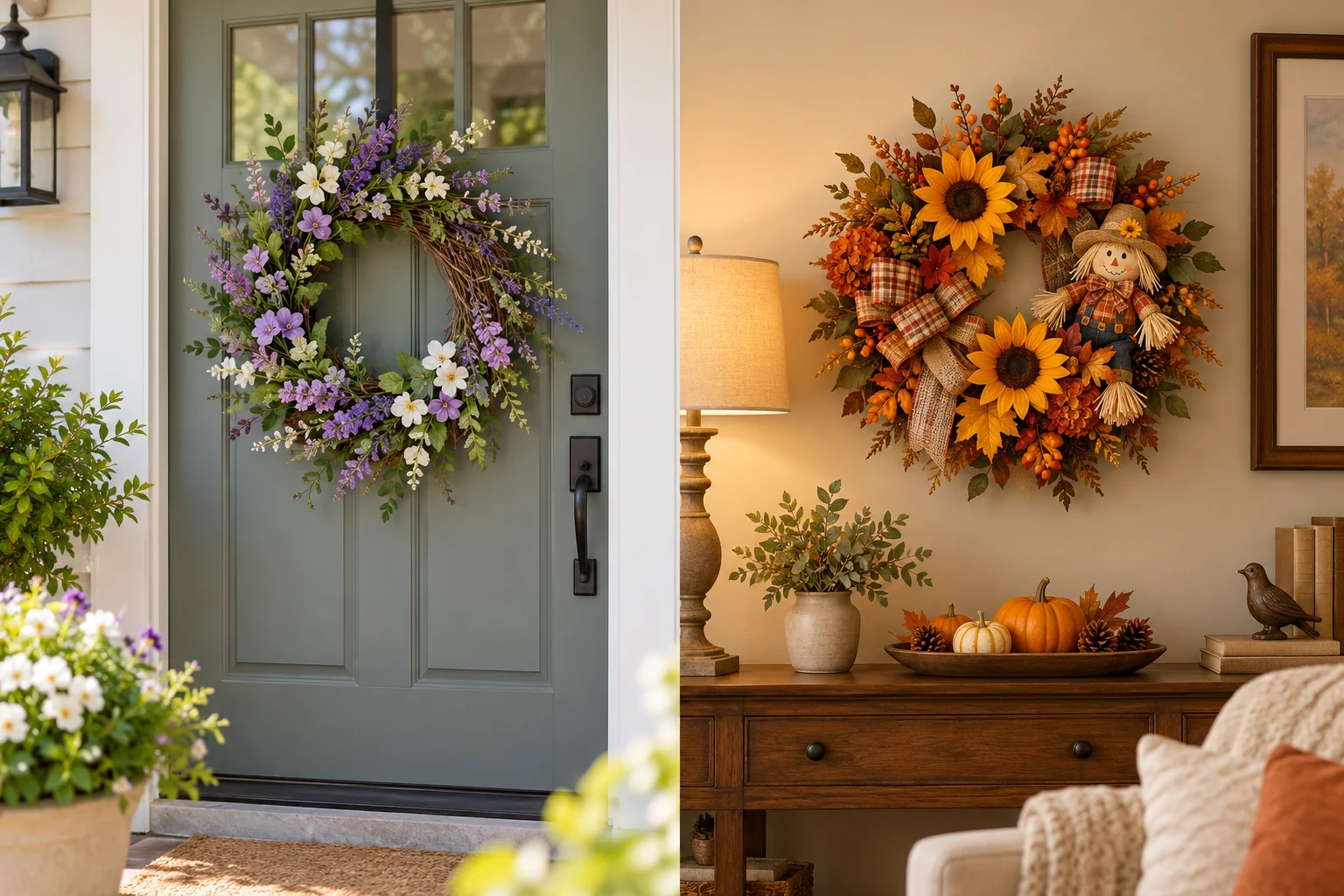
A seasonal wreath can change the first impression of an entry without changing the furniture around it. The useful choice begins with location. A wreath for a front door has a different setting from one planned for an indoor wall, even when both are about the same size. Decide where the piece will live, then compare its colors, shape, and the product's stated placement guidance with that space.
The Maykoosh 30.5-inch floral wreath is described as a spring piece for a front door, entryway, or interior space. Its image shows a loose twig circle with pale green foliage and lavender-colored flowers. That gives an outdoor-facing entry a light, open look, but the listing excerpt does not establish a weather-resistance rating. Check the maker's placement and care instructions for your particular door exposure before treating any front-door styling photograph as a durability promise.
The Nearly Natural 30-inch autumn scarecrow wreath has a different role. Its listing recommends indoor use only and says the wreath can be reshaped after removal from the box. The gallery shows a scarecrow face, orange sunflower forms, plaid ribbon, and straw-like accents. Plan this one for an indoor wall or the room-facing side of a suitable interior door. Its autumn appearance does not override the indoor-use instruction.
Choose the wall or door before the season
Stand where a visitor or household member will first see the display. A front door may be viewed from the path, the porch, and the threshold. An indoor wall may be viewed from a hallway or from a seat across the room. A wreath should look deliberate from the main approach, not just from the spot where you hang it. Note the available clear area, the door swing, and nearby handles or lights before deciding on a large round piece.
The two examples are both around 30 inches across, according to their listings. That similarity does not make them interchangeable in use. The Maykoosh description offers front-door and interior settings. Nearly Natural explicitly says indoor use only. For a door that opens directly to weather, confirm the current placement instructions for the Maykoosh item. If they do not answer the question for your exposure, move the idea to a sheltered or interior location instead of inferring a rating from the word “front door.”
Try a paper circle or a temporary outline at the stated diameter to understand how the wreath will sit. The visible decoration may extend unevenly past a neat circle, especially where twigs, leaves, or ribbons project outward. Leave room for the door to open and for a person to use the handle without brushing the piece. A size figure gives you a starting measurement; it does not tell you how every branch will lie after unpacking.
For an indoor wall, look at the objects directly below and beside the proposed position. The scarecrow gallery includes a styled wall and a table display, but those props are scene context rather than part of the wreath order. You can use the photograph to judge how much visual weight the wreath carries above furniture. Measure your own wall and furniture instead of copying the photograph's spacing. A deep shelf or a narrow passage may change where a projecting wreath can sit comfortably.
Use the color already in the room
The spring image has a sparse twig outline and small lavender and pale green notes. Those details can work with a quiet entry where the door color remains visible through the center. Put a sample of the door's paint or nearby trim beside the product image and ask whether the flowers will be the only bright accent or one of several. If the door already carries a busy pattern, the open twig shape may matter more than the exact flower color.
The autumn piece is denser. Its gallery uses a central face, orange flowers, plaid bands, and hanging straw-like parts. A wall with several other bold objects may compete with those details. Give the wreath one clear viewing area, then decide whether nearby textiles or a small tabletop object should repeat a single color. You do not need to match every plaid shade. The point is to let the scarecrow remain readable from the room's normal viewing distance.
A seasonal display can also use contrast deliberately. Lavender against a dark door can draw attention to the spring ring. Orange and plaid against a plain indoor wall can make the autumn figure easy to recognize. Test the idea with a photograph of the actual wall or door, viewed on the same screen as the product image. Screen color is only an approximation, so keep the purchase decision grounded in the current listing and the room you can inspect.
The storefront places the Maykoosh spring-titled item under a Fall Decor breadcrumb. Treat that as a catalog label, not a change to the product's pictured flowers or the season named in its title. If the seasonal identity matters to you, use the exact product page, current images, and seller response rather than relying on a category search result. The Nearly Natural page is explicit about its autumn subject and its indoor-use recommendation. Preserve those two different source statements when comparing the pieces.
Plan the wreath as one element of a scene
A spring front entry can be simple: the wreath, the door color, and a clear approach. Decide whether another item near the threshold helps the flowers or pulls attention away. Keep the view from the path in mind. Small accents that look balanced at arm's length can disappear when seen from several steps away, while a large patterned mat can compete with the open twig circle. Take a quick view from the actual approach before adding more decoration.
For the autumn indoor display, the gallery suggests a more layered scene, but the additional objects in that photograph are not included with the wreath. If you already have a console or shelf nearby, use one or two existing objects to echo the orange or tan palette. Leave enough empty wall around the scarecrow shape for its face and ribbon to read. A display can feel seasonal without filling every surface with matching pumpkins, leaves, and signs.
Check the view at different times of day. A wreath on a dark door may depend on daylight to show its finer flower colors; an indoor wall may receive warmer evening light. You can evaluate this in your own space without making a claim about either product's lighting performance. These two wreath listings are about physical decorative pieces. If you want a lit wreath and need to choose how its lights operate, the pre-lit wreath control guide owns that remote-versus-timer decision.
A nearby mirror can change the sense of space, but it is a separate visual decision. If you are choosing an entryway mirror shape, the entryway mirror guide compares an arch with a scalloped edge. Here, the wreath's placement, seasonal palette, and indoor or doorway setting remain the focus. Avoid deciding the mirror and the wreath from the same cropped product photo; look at the actual wall with both intended outlines in place.
Photograph the empty location before ordering. Mark the center point and sketch the approximate outer edge, including any long twigs or hanging accents visible in the gallery. This is a visual planning step, not an installation specification. Check the item instructions for how it should be supported and what hardware is appropriate for the surface. If the wall or door construction is uncertain, ask the maker or a qualified installer instead of guessing from a styled scene.
Check the delivered shape and care guidance
An artificial wreath may arrive compressed. The Nearly Natural page specifically says its autumn piece may need reshaping after it leaves the box. Use that listing's instructions when you open it, and allow time to separate and fluff the elements gently. Do not assume the finished outline in a studio photograph is the exact shape you will see immediately on unpacking. Inspect the actual piece for loose or damaged parts before putting it near a frequently used door or walkway.
For the Maykoosh floral wreath, the gallery shows a broad, irregular spray of twigs. Check how the branches sit on the delivered item and whether the visible flowers match the currently offered listing. A flexible-looking twig in a photograph does not establish how far a real branch can be bent without damage. Follow the maker's care instructions and avoid forcing the wreath into a smaller circle just to fit a tight door panel.
Keep a short product note with the order: exact product name, stated diameter, intended location, and any placement guidance you confirmed. The name matters because a search result may group visually similar wreaths under one seasonal category. The location matters because the Nearly Natural example has an indoor-only limit, while the Maykoosh page describes more than one possible setting without giving a weather rating in the excerpt. Recheck the current instructions before installation if the delivered item differs from the listing you read.
Use the actual product packaging to confirm what is included. The autumn gallery has a table, lantern-like objects, leaves, and a script sign around the wreath. Those are staging objects unless the current item description explicitly says otherwise. The spring gallery uses a plain backdrop that isolates the wreath. Neither treatment is an inventory list. Save the product page or order description so you can distinguish the wreath from any accessory you may need for your own wall or door.
Let the display change with the room
When the season changes, take down the wreath and look at the space without it. The spring flowers may have suited an open front entry; the autumn scarecrow might need a calmer indoor wall. You do not have to replace one wreath in exactly the same spot as the other. A different viewing distance, background color, and door exposure can give each piece a better setting. Store each item as its maker directs and check its condition before using it again.
The useful final choice is specific: a spring floral wreath for a front-door or interior scene, subject to the current placement instructions for the actual exposure, or an autumn scarecrow wreath for an indoor wall or interior door. Keep the Maykoosh catalog breadcrumb from turning spring flowers into a fall item, and keep the Nearly Natural indoor-only direction from being lost in an appealing doorway photograph. Measure the place, check the source guidance, then arrange the surrounding colors around the wreath you actually have.