Crypto Commerce
Seahorse 920 camera hard case vs KRYTJACZ L cases for a photo kit
Compare Seahorse 920 camera hard case by the gear they hold, dividers, carrying method, weather claims and the dimensions to confirm before a shoot.
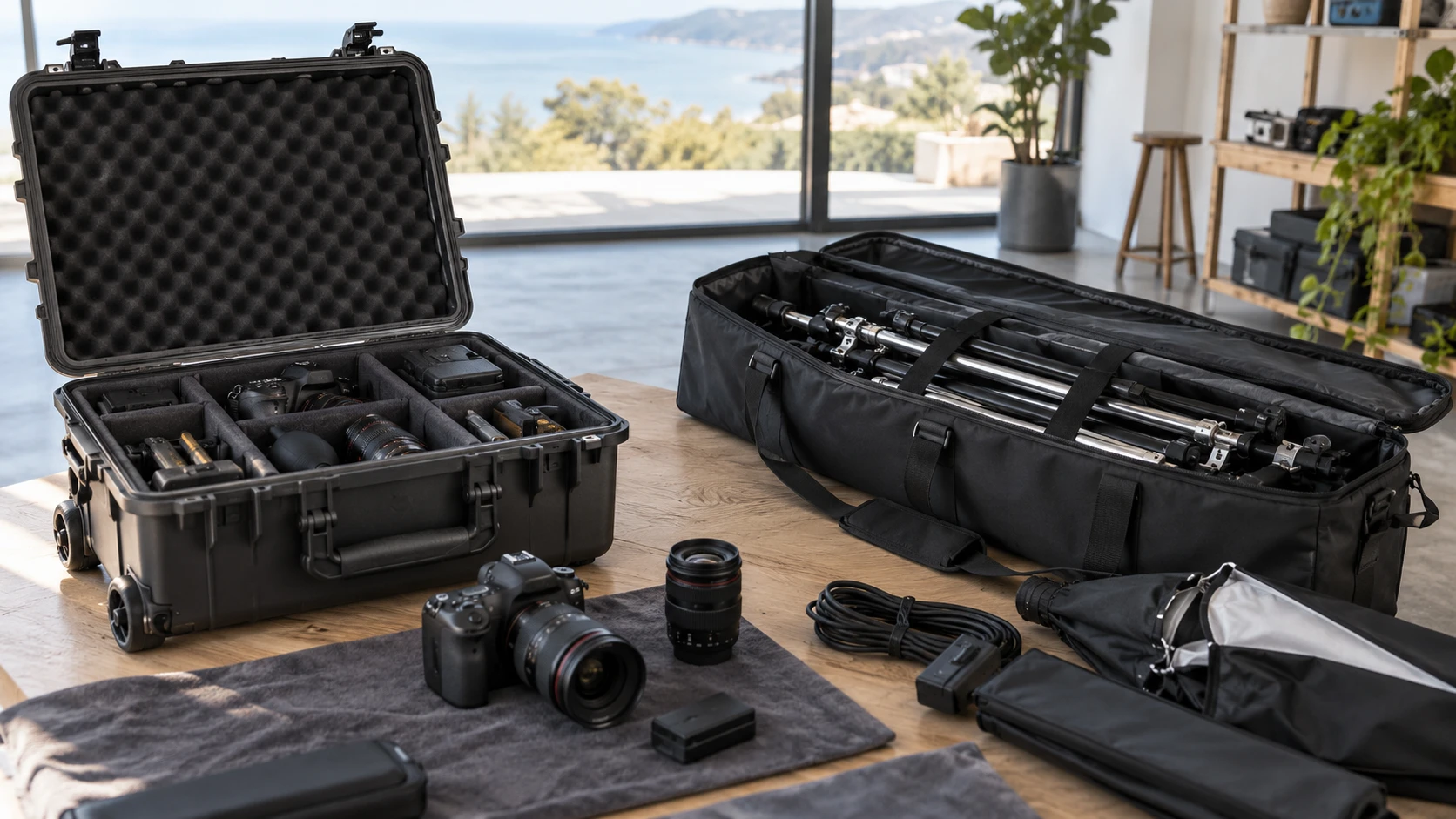
The Seahorse 920 camera hard case and the KRYTJACZ carrying case protect different parts of a working kit. Seahorse describes a high-density polypropylene shell, padded dividers, wheels, and an extendable handle for camera bodies, lenses, and smaller accessories. KRYTJACZ describes a hard-board and canvas case with sponge dividers, double-opening zippers, a shoulder-carry option, and straps intended for lamp stands, tripods, and softboxes. The question is what must travel together. A case sized for lenses may be awkward for a stand, while a long lighting bag may leave a camera body less securely separated.
This article concerns the named Seahorse 920 case and KRYTJACZ L lighting case. Confirm the selected size, interior, and included dividers in the final cart. A product page may display a starting price for a different option.
Inventory the actual equipment first — KRYTJACZ L lighting gear case
Spread the equipment for one typical shoot on a table. List camera bodies, attached and spare lenses, batteries, chargers, memory cards, microphones, light heads, stands, modifiers, cables, and small tools. Then separate the items that must arrive together from those that can travel in another bag. This exposes the biggest decision quickly: Seahorse's description focuses on protected spaces for camera gear, while KRYTJACZ mentions straps and length for lighting support equipment.
Measure the longest stand when folded, the widest softbox package, and the camera with its largest lens attached. The reviewed listings do not give complete interior dimensions for either case. Exterior dimensions alone can also mislead because a shell, wheel well, divider, or zipper seam takes up space. Ask for usable internal length, width, and depth for the selected variant. Make a simple scale sketch of where the pieces would go before assuming that a case listed for cameras or lights fits your particular kit.
Consider how often you repack. A wedding photographer may change lens and battery arrangements between events. A small studio may keep the same light stands together every week. Adjustable dividers can help both, provided they hold the gear securely and do not allow hard items to collide. If the configuration changes often, check how easily dividers can be moved and whether spare pieces are available. If it rarely changes, test a fixed layout with the most fragile equipment surrounded by padding.
Compare the protection the pages actually claim — KRYTJACZ L lighting gear case
Seahorse says the 920 has an impact-resistant, crushproof, and dustproof polypropylene shell. Its listing claims IP67 protection, an O-ring seal, and pressure-equalization latches when closed and latched. Those are specific protection leads, but the page does not provide the test report, duration, or instructions for inspecting the seal. Confirm the exact certification and closing procedure in the manufacturer's documentation. A gasket can protect only when it is clean, seated correctly, and undamaged. The case should be checked after a sandy or wet trip before sensitive equipment is stored in it.
The Seahorse title also uses "TSA Approved" and "Mil Spec" language. The reviewed product description does not name a particular military standard or explain what part of the case a travel approval covers. Ask for the exact standard and travel details before treating those phrases as a guarantee that a particular airline or inspection agency will handle the case in a particular way. Airline size and weight rules apply to the packed bag at the time of travel.
KRYTJACZ describes a hard-board shell, thick canvas, a hard lining, and collision-resistant protection. Its sponge dividers can be arranged in several ways. The reviewed listing does not give an IP rating or a water-ingress test. That is an information gap; it does not prove that the case has no resistance to a splash. If lights will be unloaded in rain, verify the fabric, zipper, and seam protection for the exact case and use additional covers where the gear requires them. Do not substitute the Seahorse IP67 claim for a rating KRYTJACZ has not supplied.
Protection depends on packing as well as shell material. A lens can be damaged inside a strong case if it moves freely or bears the weight of a stand. Put heavier items low in the case and avoid hard metal parts resting against camera bodies. Test the divider arrangement with the bag closed and gently moved. If a compartment compresses a lens mount or cable connector, change the layout. Neither the product can specify the safe arrangement for equipment it has not seen.
Carrying method shapes the route to a shoot — KRYTJACZ L lighting gear case
Seahorse lists soft rubber wheels and an extendable handle. That setup can make a packed camera kit easier to move through an airport or along a smooth venue corridor. Wheels are less helpful on stairs, gravel, or mud. Check the case's empty weight, packed weight, handle height, and how it is lifted when rolling stops. The reviewed page does not supply every one of those figures. A wheeled case still needs a plan for loading it into a vehicle and lifting it over a curb.
KRYTJACZ says the L case can be carried by hand or over a shoulder. Its strap system holds lamp stands, tripods, softboxes, and similar equipment in place during transport. That may suit a kit moved between a car and a nearby room, especially when long stands will not fit a compact hard case. A shoulder strap can become tiring when a light kit is heavy. Confirm the empty weight, padded handle and strap design, and loaded balance before making it the only bag for a long walk.
Draw the full route: storage shelf to vehicle, parking place to entrance, entrance to setup area. Count stairs and narrow doors. A rolling case may excel on most of that route and fail at a final flight of steps. A shoulder bag can move through tight spaces but becomes awkward when several stands shift to one end. This is a reason to pack the exact kit and rehearse the route rather than choose from a studio photograph.
Dividers and access during the workday — camera battery planning away from charging
Seahorse's padded dividers are described as keeping cameras, lenses, and accessories organized and cushioned. Check how the lid organizer, if included with the selected offer, holds small items. A zipper pocket or elastic strap can stop a memory card from disappearing beneath a larger piece of equipment. Confirm that loose batteries or tools cannot fall onto a lens when the case is opened. If the 920 will hold multiple bodies, plan each body's place with lens caps and cables attached as they normally travel.
KRYTJACZ lists detachable sponge dividers and double-opening zippers. That could make a long case easier to access without removing every stand. Test whether the zipper opening is wide enough for the largest softbox or lighting head and whether dividers remain in place when the case is carried vertically. The short listing does not show a full load diagram. If a modifier must be folded in a specific way, follow that equipment maker's instructions and check the resulting package against the case dimensions.
Access matters once the shoot begins. A case that is easy to pack at home may become a pile of removed items on a crowded location floor. Give frequently used batteries, cards, and cables a consistent position. The published guide on camera battery planning away from charging is relevant to the case inventory: decide how many charged batteries the trip needs, keep them easy to identify, and plan where used batteries will go. The guide does not establish which pockets either case includes. The actual case layout must make the battery plan workable.
Labeling can save time when several people use the kit. The labels should identify the contents without exposing valuable equipment unnecessarily in public. After a shoot, check that every compartment has been refilled before closing the case. A camera case can also help account for small items when packing and unpacking. The listing photos may help identify pockets, but the selected variant and included dividers should be confirmed directly.
Fit the case to travel rules and storage space — KRYTJACZ L lighting gear case
If the case will fly, measure its outside dimensions including wheels and handle. Compare the packed weight with the current carrier's baggage rules and any rules for the batteries or equipment being carried. The "TSA Approved" wording on Seahorse's title cannot replace those checks. If KRYTJACZ will be packed inside another suitcase, include its full size and the added weight of the lighting kit. The Republeq's catalog pages do not certify that either loaded case fits a specific airline's cabin or checked-bag allowance.
At home or in a studio, find a place where the case can be opened fully without moving furniture. Seahorse's rigid lid needs clearance; KRYTJACZ's double-opening zippers need space along the bag. Keep cases away from conditions that the equipment inside cannot tolerate. A sealed case may help keep out dust and water, but storing damp gear inside it can create a separate problem. Dry and inspect equipment before closing it for an extended period, using the camera and case makers' care instructions.
The saved listings do not give a complete warranty, replacement-divider, or spare-part comparison. Ask whether wheels, handle, gasket, dividers, shoulder strap, and zipper pulls can be serviced if damaged. Read the selected offer's return policy so an interior-fit problem can be resolved before the case is used on a job.
Which case has the right job? — KRYTJACZ L lighting gear case
Seahorse 920 is the stronger candidate to investigate when camera bodies, lenses, and small electronics need a rigid wheeled case with a stated IP67 enclosure claim. Verify the precise interior dimensions, actual included divider and organizer package, empty weight, seal care, and travel-standard wording. Its wheels should suit the route the packed case will take.
The KRYTJACZ L lighting gear case deserves consideration when the kit is dominated by folded stands, tripods, and softboxes that need a long, reorganizable carrier. Confirm the L variant's internal dimensions, strap construction, loaded weight, and weather protection. Its collision-resistant description is not a substitute for an IP rating or a fit test with fragile camera bodies.
Lay the actual kit beside the two cases' dimensioned interiors. Then trace the carrying route and choose the protection appropriate to the conditions along it. A camera body and a lighting stand may need separate bags; the listings do not require one case to solve every transport problem.