Tools & DIY
Screwdriver tip won't seat: stop and check the contact
A stopped household assembly example separates an uncertain tip match from a damaged tool, without forcing the screw, modifying a tip or promising a repair.
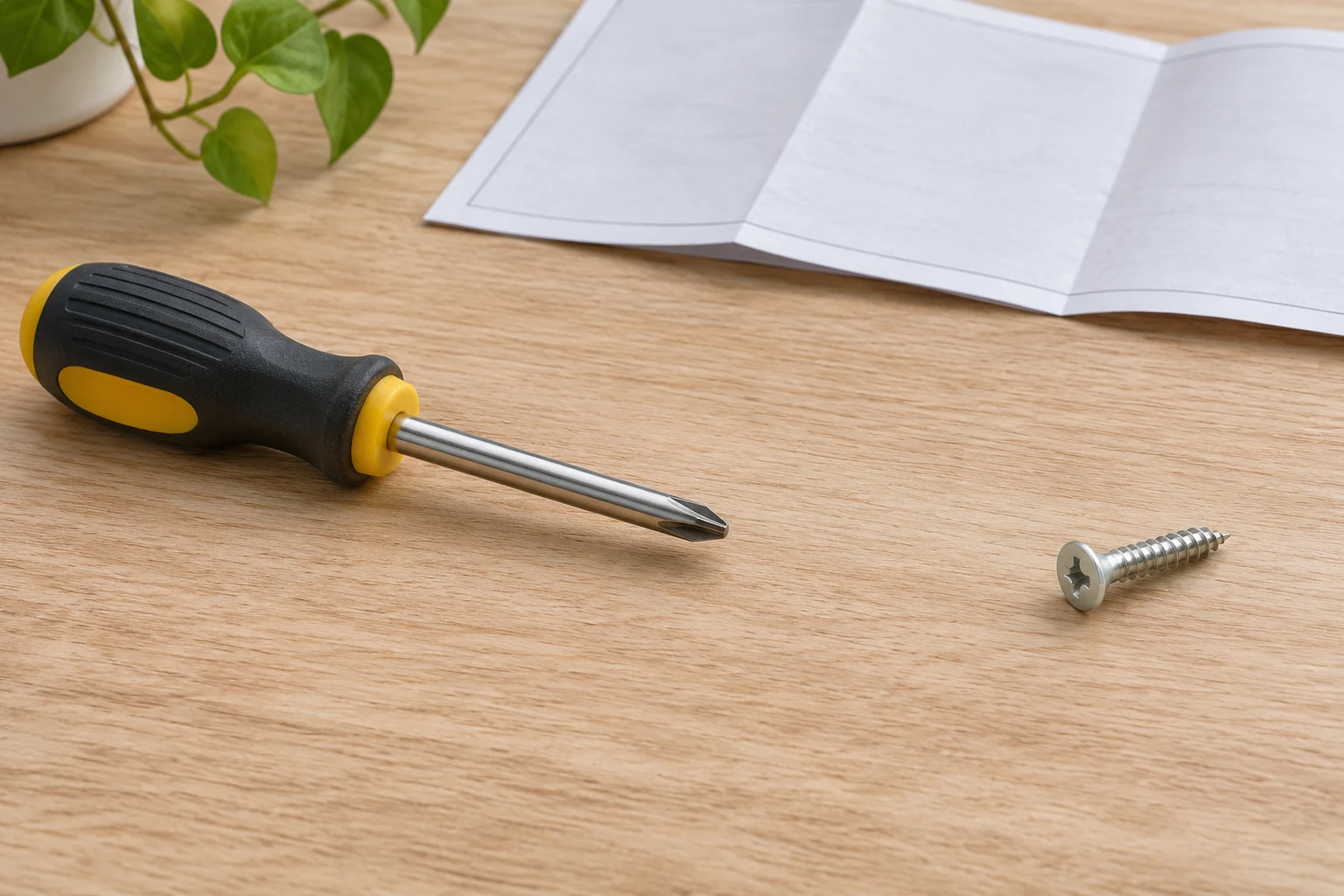
Screwdriver tip won't seat is a reason to pause an ordinary household assembly job. Leave the unsuccessful attempt stopped while you establish what screw is present and whether the driver is damaged. A familiar cross shape does not settle the required tip. This guide follows a fictional assembly pause, without teaching screw removal or approving another attempt on an unidentified fastener.
The Jiuji-titled interchangeable screwdriver set lists six shafts, a handle and a bag. Its native brand field says SAVUK. Those names remain separate, and the seven-piece title does not establish the overall counting unit. The account identifies a manual-driver offer; it does not verify a tip for your screw or authenticate electrical-use markings.
Describe what happened before changing the tool
Imagine Robin and Lee assembling a small household item from its supplied parts. Robin stops because the tip does not sit properly in one screw. The instruction booklet is elsewhere in the room. Lee suggests looking through a spare tool drawer. Before that search, they leave the assembly paused and preserve the distinction between what Robin observed and what neither person has established.
Robin can report the contact problem without calling the screw stripped or the driver useless. In this example, no inspection has established damage to the recess. Naming the symptom keeps the conversation open: the tip did not seat, the required screw specification is still unknown, and the attempt stopped. A diagnosis would need more information than that sentence contains.
They keep the packaging reference and the relevant assembly step together when seeking help. This is an account of the fictional pause, not a dismantling instruction. If the object is unstable, holds a load or presents another hazard, its applicable instructions and an appropriate qualified person must govern the response. A general article cannot assess the object from a screw-head description.
Resolve the wrong screwdriver type question
CCOHS advises matching a screwdriver to the screw head in both size and type. Its screwdriver fact sheet specifically warns that a Phillips driver may slip from a head intended for the slightly flatter-tipped Pozidriv type. That distinction explains why an unidentified cross-shaped recess should remain unidentified until its actual requirement is established.
For wrong screwdriver type, the next useful information is the requirement for the actual supplied screw. Robin retrieves the assembly information and looks for its fastener identification. If that information does not answer the question, the responsible supplier can address the exact item and step. Neither Robin nor Lee assigns a tip merely because one nearby tool resembles the recess.
In their message, they describe the stopped attempt and ask which screwdriver type and size the supplied fastener requires. They attach the relevant item reference, where available. They do not claim that a photograph alone proves the answer. The recipient can ask for additional identification or explain what the applicable assembly information says, without inheriting an invented diagnosis.
A response that says only to use a cross-head screwdriver leaves their original uncertainty partly unanswered. They can ask the responder to identify the required type and size explicitly. This follow-up concerns the fastener at the stopped assembly step. It does not ask whether an arbitrary bit can connect to a holder, or whether two socket sets share a drive interface.
Keep a damaged driver tip out of use
CCOHS says not to use defective screwdrivers, including ones with rounded or damaged tips or edges, split or broken handles, or bent shafts. A damaged driver tip therefore needs its own response even after a screw specification is found. Knowing the required type does not make a defective tool suitable for the next attempt.
In the fictional drawer search, Lee notices a worn spare driver and takes it out of consideration. The pair still have not identified the supplied screw. Removing that spare resolves one choice in their own story, while the screw question remains open. Their next step is to obtain the missing information, without trying the worn tool to see whether it behaves differently.
Suppose instead that the spare looks intact to them, but its identification is unclear. That observation still supplies no positive match. They leave it unused while asking the question. This branch differs from the visibly defective-tool branch: one tool has a stated reason for exclusion, while the other lacks the information needed for selection. Neither branch ends with a fastening result.
If the recess itself appears damaged or the screw cannot be identified, this guide offers no extraction procedure. Keep the task stopped and ask the responsible supplier or a qualified person about the actual condition. Filing a tip, hammering a screw or improvising extra turning force would introduce a different task that this seating check has not assessed.
Keep a kit description out of the diagnosis
The T-Rex ratcheting screwdriver kit describes a manual driver and a CustomBox. Its photograph also shows accessories, including twist drill bits; the declared box is unpictured. The eighty-three-piece claim remains unverified. Neither the collection of parts nor the ratcheting label establishes the tip required for the stopped household task.
Robin can investigate a suitable tool after the screw requirement is known. At that point, the question can concern the identified tip and the actual offered tool, with the relevant instructions available. Until then, a longer product title or a larger advertised assortment leaves the original missing information unchanged. There is no supported reason in this example to buy either selected offer.
For an existing driver, retain whatever identification is genuinely available on the tool and its documentation. Describe a missing marking as missing. If asking about a purchase, identify the precise offer being discussed and ask what will actually be supplied. A pictured collection should not be converted into a promised delivery count, authenticated model or application-specific approval.
The red and yellow tool photograph associated with the first account includes electrical-looking markings. This article has not authenticated them or assessed electrical work. Its household example concerns an ordinary stopped assembly task away from electrical equipment. Anyone dealing with an electrical application needs the appropriate actual requirements and qualified help; the picture supplies no permission to proceed.
Leave the handle mechanism and socket connection with their own questions
The published ratcheting screwdriver explanation concerns directional coupling, return movement and direction selection. Those features answer a different question from a tip failing to sit in a screw recess. Changing a selector does not identify the head type or establish that an uncertain tip is the required one.
The hex-bit socket compatibility guide distinguishes the socket connection from its fastener-facing end. Its two-interface enquiry belongs to accessory matching. Here, the immediate response is to keep a failed seating attempt stopped while distinguishing an unknown screw requirement from a defective driver. No socket assembly or adapter is proposed.
Robin and Lee can explain which question they have actually reached. They have not reported a problem with a ratchet, requested a different square drive or established a tightening requirement. Those subjects do not need to enter their message just because the drawer contains other tools. Keeping the account narrow helps the person replying understand why the assembly has paused.
For the fictional support exchange, Robin also keeps a short account of what has not been done. The pair have not substituted a different screw, modified a tip or repeated the unsuccessful attempt with another person pressing harder. That history helps a responder understand the current state. It does not establish what would have happened under a different action. If the responder needs a closer assessment of the actual object, the pair can arrange appropriate help instead of converting a written exchange into an inspection that never occurred.
Read the answer against the stopped task
Imagine the supplier replies with a reference to the correct assembly step but omits the screwdriver specification. Robin keeps that reference and asks about the remaining point. The exchange has improved the item identification, yet it has not answered the seating question. An incomplete reply can be useful without becoming authorization to continue with the same uncertain tool.
In another possible ending to the fictional exchange, the supplier identifies the required type and size and points to the applicable instructions. Robin can now compare that information with the actual tool and its condition. This story stops at the information check. It does not claim that the screw was turned, that the supplied parts were undamaged or that the assembly passed an inspection.
A friend taking over the task should hear that history before touching the tool. Robin can explain that the attempt stopped, say which requirement was confirmed, and identify any unresolved condition. Passing on the answer together with the original symptom avoids making the next person infer what has already been checked. The defective spare remains excluded from the story.
When a screwdriver tip will not sit correctly, keep the unsuccessful attempt stopped until the required type and size and the condition of the actual tool are understood. Follow the applicable instructions for the object and tool before any further work. If the screw condition or the proposed action remains uncertain, take that specific question to someone qualified to assess it.
Review an order before paying
If identifying the required tool leads to a purchase on republeq.com, first confirm the exact offer, selected configuration and current order details. This article has not established that any cryptocurrency option is available for that purchase. A product enquiry and a payment decision need separate attention, especially while the supplied tool identity or contents remain unclear. If USDT appears as an available option at checkout, confirm the requested asset and network with the responsible service before authorizing a transfer. Check the amount, destination and order reference against that exact transaction. Read any stated fee or conversion term. Do not copy instructions from another order or infer that a familiar token name identifies the correct network. Review the delivery information and applicable cancellation, return and refund conditions for the selected offer. Ask how a refund would be handled for the chosen payment method if the terms do not explain it. Retain the current instructions with the order confirmation and any support response that clarifies a material detail. A saved product image cannot replace those transaction records. If an instruction changes or a payment status is uncertain, ask the responsible service to reconcile it against the existing order before considering another transfer. An unclear status does not show that nothing happened. This guide provides no wallet address, transfer guarantee or recovery procedure. If support answers a question, retain the exact question, dated response and order reference together. That record should make clear what was confirmed and what still needs an answer before you proceed. Proceed only when the particular order and payment instructions are clear, and keep the confirmed records for any later enquiry.
Conceptual editorial illustration of a paused screwdriver fit check, without an operating demonstration, certified tool model or proven fit.