Tools & DIY
Understand scissors functions and supplied items
An original household explainer separates a multifunction description from a packing list, without certifying tool performance or accessory supply.
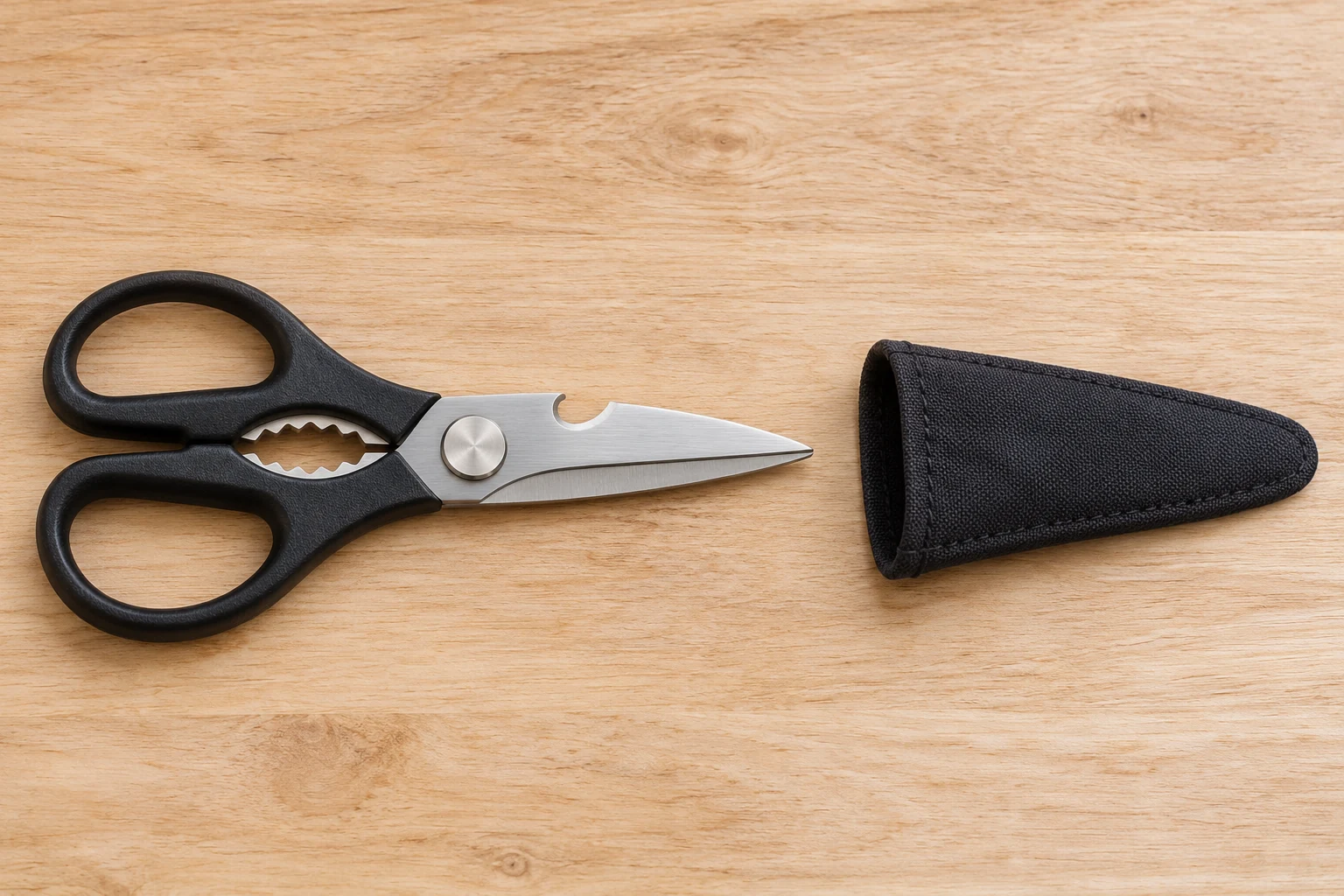
Read scissors functions separately from the list of objects an order is said to supply. A description may attribute several jobs to one complete tool. That does not, by itself, name a separate object for each job. This explainer uses original household examples to distinguish an integral feature, a complete pair and a separately proposed cover. It reports no operating trial or verified delivery.
Ask whether the words describe a job or an object
For this explanation, use function for the job being described and supplied item for a distinct object named in the proposed contents. These are working terms for reading an offer, not a promise about every seller’s vocabulary. When a phrase is unclear, retain the exact phrase and ask what it refers to. A familiar word can appear in either a feature description or an actual contents line.
Consider an invented description of a complete household scissors pair with a notch incorporated into a blade. The description gives the notch a separate proposed job. In that example, the notch remains on the same tool. A drawing of the tool does not suddenly become a picture of a loose opener beside it. The object and the function have different subjects in the explanation.
Now consider an invented contents line naming the scissors and a separate cover. The cover is another proposed object, rather than an extra function of the cutting tool. That line would still need to identify what a real selected order supplies. It would not, merely through its wording, demonstrate that the cover fits, protects the tool or is suitable for a particular storage arrangement.
Keep an integral feature with the whole tool
An integral feature, as the term is used here, belongs to the complete object being described. In the original example, the blade notch and textured area between the handles are drawn as parts of one scissors pair. They are not laid out as separate loose implements. Naming several proposed uses for those areas leaves the whole object identifiable.
Look for the connection between a detail and the complete view. A small inset can point to a location on the tool while leaving its broader context outside that inset. Read it beside the whole object. If the connection is unclear, ask which feature the illustration identifies. Do not complete a missing physical relationship by assuming that every small picture depicts another item in the package.
A function label also leaves an operating question open. This article does not show how to use a notch, gripping area or blade, and supplies no food, craft, bottle-opening or maintenance procedure. Keep any actual task within the applicable instructions for the particular tool. Understanding which object the words concern is useful without being permission to try every pictured application.
Give separately stated contents their own question
Read the supplied items line for objects that are actually named. If it mentions a cover, keep that mention attached to the exact offer and selected option. If an image leaves the cover unpictured, preserve that limitation. A written statement and an image can provide different information without either one becoming an independently inspected shipment.
Ask whether a picture shows an included object, an alternative option or part of the setting. This is especially useful when a cover lies beside a complete tool but the written contents remain unclear. Its presence in a styled view cannot answer every order question. Conversely, an absent cover in one photograph is not, by itself, proof that a stated cover will never be supplied.
Keep supply and compatibility as separate conclusions. You may receive an answer naming the proposed contents while still needing the actual item’s relevant use information. Or you may have an accessory reference without confirmation that it comes in the order. Neither answer should silently fill the other gap. There is no need to buy a second object merely to make the wording of a first enquiry feel complete.
Do not turn a feature heading into a packing list
Imagine a fictional shopping note with the heading “What it does” above several proposed tool jobs. Below that sits another heading, “What is included,” naming a complete scissors pair. Keep those headings separate when summarising the offer. Copying every job into the second list would change the meaning of the note, even if the words themselves came from the same imaginary page.
The reverse mistake is possible too. A contents line naming a separate cover should not disappear into a vague phrase such as “additional features.” Someone deciding what to order might care whether that object is included. Retain the explicit object reference and the uncertainty that remains. The useful distinction concerns what the statements identify, rather than making the description sound shorter at any cost.
A pack designation has another subject again. Keep the stated pack wording with the actual listing instead of using a function label to infer delivered quantity. This is an order-contents question, not a counting exercise. A photograph of several colour examples or several packets should retain its own description; it is not an independently checked delivery to a particular household.
A fictional household list exposes the difference
Imagine Nell and Omar discussing a generic tool for their home. They and the offer in this example are invented. Nell’s first note lists scissors, a loose opener and a cover. Omar asks which part of the imaginary offer actually names the loose opener. Nell finds that she has copied a feature description into her list of objects.
They return to the drawing. It shows a notch within a blade on the complete pair, not a second loose tool. Nell changes her note to describe one complete tool with the stated integral feature. She does not claim that she has tested that feature or decided it suits a task. The correction concerns her reading of the proposed objects.
The cover remains a different question. In this invented case, it is named in the proposed contents but not pictured. Omar suggests recording it as confirmed because the tool drawing looks complete. Nell keeps the cover statement and the missing view together instead. A complete drawing of the scissors does not independently show a different object that lies outside the drawing.
They draft a specific question about the selected offer’s contents. The question asks whether the proposed cover comes with that exact selection. It does not ask whether a similarly named cover from another range would fit. Those would be separate references and a separate compatibility question. Their immediate concern is what the present order is being described as supplying.
Suppose the fictional reply explains the blade notch but says nothing about the cover. Nell can keep the feature explanation without recording the supply question as answered. Omar’s revised summary says that the integral feature has been identified while the cover’s supply remains unconfirmed. It does not report a successful order, a received parcel or a working accessory.
Compare a changed proposal as a changed proposal
Omar then finds an imaginary alternative offer that explicitly lists a scissors pair and a separate loose opener. That is a different proposed inventory from the first drawing. They can prefer either offer or leave both undecided. The second list should not be merged with the first until the distinction disappears. No actual retail bundle or operating result is represented by this example.
Nell also considers an option without a cover. If she chooses to investigate it, the earlier cover question remains part of the earlier proposal. Omar does not transfer a reassuring answer from one option to another merely because both show scissors. The change needs its own clear contents description. A familiar-looking handle can help recognise a picture while leaving the actual selection different.
The example ends before either person buys anything. Their useful result is a clearer distinction between a feature on a complete object, a separate object named in the proposed contents and an unanswered supply question. That distinction can change a household shopping list without requiring a cutting trial, an accessory fitting attempt or an invented delivery inspection.
There is a household reason Nell cares about the distinction. In her imaginary plan, she wants to leave a loose opener in a different drawer while keeping the scissors with her sewing things. The integral notch in the first proposal would remain with its complete tool. Calling it another function does not provide the separate object her chosen arrangement describes. She can revise that arrangement or investigate a different actual inventory without declaring either tool defective. That arrangement is Nell’s preference, rather than a universal storage recommendation.
Read the actual retail accounts within their limits
The BAZIC 4440 offer names a twenty-four pack and multifunction kitchen shears. Its sole gallery shows four carded complete tools with integral notches and handle teeth. That is not an independently counted delivery.
The Gingher 01-005282 offer states that a nylon sheath is included. Its sole image shows a complete closed pair with Gingher lettering, leaving that sheath unpictured. No supplied cover or fit is independently authenticated here.
Keep those gallery observations separate from operating, material or delivery conclusions. The fictional offer and conceptual cover do not authenticate either retail order.
Use the neighbouring guides for different decisions
The blade-features guide compares documented working ends with their stated tasks. The sheath-enquiry guide identifies an actual tool and proposed accessory for a matching question. This explanation instead separates integral functions from objects named as supplied contents.
If you still need a compatibility or operating answer, retain that question after clarifying the inventory. You may understand the proposed objects without having enough information to use them for the task you intended. A tidy list is not a material approval or a physical test. Let the actual tool and accessory guidance answer those separate matters before making a practical decision.
When another household member takes over the shopping, give them the exact selection and the remaining contents question. Ask them to bring a changed proposal back for consideration. They should not need to infer a separate loose tool from a feature heading or reconstruct an unpictured accessory from a generic illustration. The explanation is useful when the intended objects remain recognisable through that ordinary conversation.
If you consider a republeq order using crypto or USDT, inspect the methods presented for the exact selected goods before authorizing payment. Keep any unresolved contents question with that order. This article supplies no payment destination, network instruction or promised delivery or refund outcome. Reconcile uncertain transaction status before considering another payment. A confirmation would identify the transaction it concerns, without authenticating a multifunction result, delivered pack count or accessory fit.
Conceptual tool-and-cover comparison; no exact retail model, verified packing list, accessory fit or operating result is documented.