Sewing & Crafts
Embroidery scissors sheath enquiry needs the exact pair
Identify the individual scissors and the accessory being proposed before asking for a sheath compatibility answer. Keep assortment labels and model identity distinct.
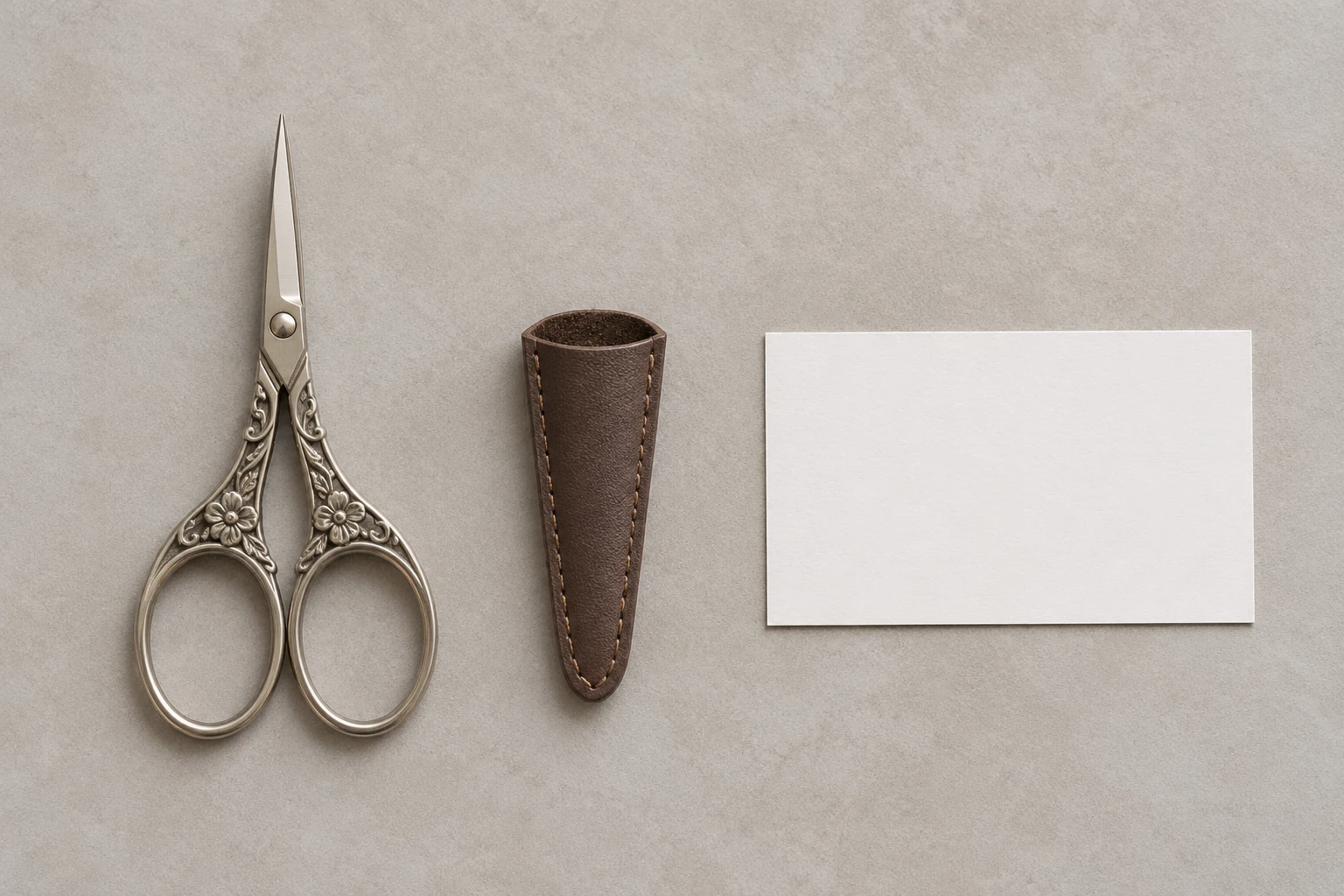
An Embroidery scissors sheath enquiry needs to identify the individual pair that a proposed cover is meant to accompany. A familiar style name or a size adjective can leave that identity unclear, especially when the scissors came from an assortment. Before asking whether a cover matches, establish which scissors your message concerns and which accessory you are considering. Keep both references with the question so a later reply has a pair of actual items to address.
This guide explains that enquiry through two scissors catalog accounts and a fictional correspondence example. It provides no verified sheath pairing, fit trial, cutting result or instructions for making a cover. You may reach a useful identification question before you have an accessory to buy. That question can remain open while the responsible seller or maker clarifies the reference. An ordinary product description can help you begin the enquiry without answering every compatibility question you may eventually ask.
Begin with the individual pair
Look for the identification you already have in the purchase record or packaging for the scissors you mean. Keep the complete reference with your notes. If you know only the name of an assortment, record that limit. A group description may help locate an offer while leaving the individual pair unidentified. You do not need to improve the note with a guessed model name merely to make the enquiry look finished.
A scissors model reference should let another person understand which tool is under discussion. If your record does not supply one, ask how to identify the pair before asking for a definitive accessory match. You can explain that the scissors came from an assortment and that you need help identifying the individual item. Keep your own description separate from any designation the recipient later confirms. A remembered nickname can be useful in conversation while still needing clarification.
Give the proposed matching blade cover its own reference when you have one. A response about a range of accessories may be helpful, yet leave your intended pairing unanswered. If no accessory has been proposed, say that you are seeking information about a suitable option. Those are different starting points for an enquiry. Keeping the request specific makes it easier to see whether a reply identifies an option, confirms an actual pairing or asks you for more information.
Read the selected scissors accounts at their own scope
The JubileeYarn Bamboo Style scissors account describes a fifteen-scissors assortment across five sizes. Its sole image shows five representative pairs with graduated sizes and bamboo-stalk-like ornamental handles. That picture does not independently count a delivery or identify a particular buyer's pair. Keep the complete assortment reference when asking how to identify an individual tool. No sheath compatibility is established by this account.
The BambooMN classic Chinese scissors account describes ten pairs. Its native title says Bronze while its description says copper. Seven gallery images show ornate handles and multiple finish arrangements. The variant information includes different finishes and piece counts. Preserve those fields without choosing a delivered finish from a composite picture. This separate model description supplies no verified cover pairing for either offer.
A source can be useful while leaving a practical question unanswered. Retain the actual words that identify the offer and state which part of your own identification remains uncertain. Avoid carrying an answer from one model enquiry into another simply because the two names share a maker label or a size adjective. You can discuss both references in the same conversation while keeping the proposed pairings individually recognizable. Ask the recipient to clarify any connection that the reply leaves implicit.
A fictional message starts with an ambiguous size name
Imagine Dara drafting a message that says she wants a cover for her large scissors. She has an old note about an invented assortment, but her draft does not identify which individual pair she means. Her friend Sol asks whether large is the name of that pair or just the word she uses for it at home. This scene is fictional. It reports no actual seller correspondence, purchase, physical inspection or accessory fit result.
Dara looks at the draft and sees that she has given the reader no way to answer Sol's question. She changes the opening to explain what her record actually identifies and what she still needs to establish. The cover request stays in the message, but it follows the identification question. She can ask for help without claiming that an assortment name has already settled the identity of every pair associated with it.
In one possible continuation of this invented exchange, a general reply refers to the sender's large cover. Dara keeps that answer with the question it follows and asks which scissors the reply is meant to address. She does not turn the shared adjective into a confirmed pairing. The sender may have answered from a different understanding of her first message. A short clarification can make that difference visible without requiring either person to invent an earlier agreement.
In another fictional branch, Dara decides that the enquiry should concern a different pair she owns. Sol notices that the draft still carries the earlier reference. Dara updates the question and retains the previous message with its original subject. There is no reason to make the old answer apply to the changed request. The accessory discussion now needs an answer about the pair actually named in the new enquiry, including any identification that remains incomplete. Sol also asks whether the accessory reference stayed the same. Dara checks that part separately. If she changes the proposed cover as well, she names that change in the new request. The earlier exchange stays attached to its earlier pairing, so the recipient can see exactly what the revised question asks them to consider.
Keep a photograph beside its stated purpose
If the responsible recipient asks for a photograph, explain which item the view is intended to identify. Keep that request with the photograph you supply through the appropriate channel. A picture can be part of the identification conversation without becoming a test report. Let the recipient say whether it provides the information needed for the actual question. If more information is requested, retain the request so the next step does not depend on someone remembering a separate conversation.
Be clear about your own labels on a saved image. An annotation can show what you are asking about while still being your annotation. A name written beside the tool does not become a confirmed model designation because it appears in the same file. When a reply supplies or corrects a reference, keep the reply alongside the image and explain what was confirmed. This makes the correspondence easier to follow for another person helping with the enquiry.
You can also leave the identification unresolved. A partial view or an incomplete purchase record may be all you have when you begin. State that plainly instead of supplying a confident reference from a similar picture elsewhere. If a particular compatibility answer depends on information you cannot establish, retain that condition with the answer. A useful conversation can end with a request for identification while the proposed accessory remains unselected.
Leave cutting features and care with their own guidance
The guide to scissors blade features and the working task distinguishes model-specific serrated, curved, pinking and other working-end descriptions. That selection question remains separate from a sheath enquiry. A documented cutting feature does not, by itself, identify a compatible accessory for the individual pair you own.
The guide to sticky scissors and model-specific care limits separates cleaning questions from pivot permissions. It retains each maker's own boundaries. An accessory discussion supplies no cleaning-fluid approval, screw setting or sharpening method. Keep any care question attached to the actual tool and the guidance applicable to it.
When several questions arise about the same scissors, you can keep their correspondence together while marking what each answer covers. A reply about identifying the pair may leave the accessory question open. A care answer may concern a different model reference from the one you first supplied. Clarify that connection before carrying the answer forward. The shared subject of scissors does not require every enquiry to finish at the same time.
Read the transaction that is actually proposed
If your enquiry later leads to a purchase on republeq.com and you are considering cryptocurrency, check the payment methods actually presented for that order. This article establishes no checkout availability. If USDT is offered, verify the requested asset, network, amount, destination and order reference against the current instructions. Keep the actual item and accessory references with the purchase request so payment is not arranged for a different pairing than the one you discussed. Read the selected variant, stated contents, delivery details and applicable terms before authorizing a transfer. If an important identification or compatibility question remains open, keep it visible while the responsible service explains what is being proposed. A reply about payment cannot settle which scissors an accessory is meant to accompany. Retain the instructions and the confirmation you actually receive, with their corresponding order reference. A transfer record documents the transaction shown there, while order status requires its own confirmation. If either remains uncertain, reconcile it through the order's established assistance channel before considering another transfer. Do not treat an unanswered message as proof that nothing happened. If a request changes the receiving destination or another essential instruction, verify the change through the channel associated with the order. Keep that clarification with the request that prompted it. This guide supplies no wallet address, exchange-rate forecast, fee estimate, transfer-time promise or recovery procedure. The fictional example demonstrates none of those transaction facts. Decide whether to proceed from the information provided for your actual order, and retain the records needed to check its outcome. Completed payment would still leave any unconfirmed physical pairing to be established.
Finish with the pairing your question actually names
Return to the two references before deciding that the enquiry is complete. You should be able to identify the scissors under discussion, the accessory being proposed and the scope of the answer you received. If one of those remains unknown, say which one. Keep a general range description available as background without rewriting it as an individual compatibility confirmation. Someone else reading the file can then see what the next question needs to address.
An Embroidery scissors sheath enquiry can reach a clear next step without producing a verified fit. Dara's fictional draft became easier to answer when she stopped relying on a household size name to identify the pair. Your own correspondence should retain the information you actually obtain and the limits that accompany it. A precise question gives a later answer a recognizable subject, while the actual accessory decision remains with the evidence for the individual pairing.