Cost & Savings Articles
Save paper on working copies by replacing the changed page
Keep accurate pages in a household project packet and replace the amended sheet, with reusable binder clips as an optional supply.
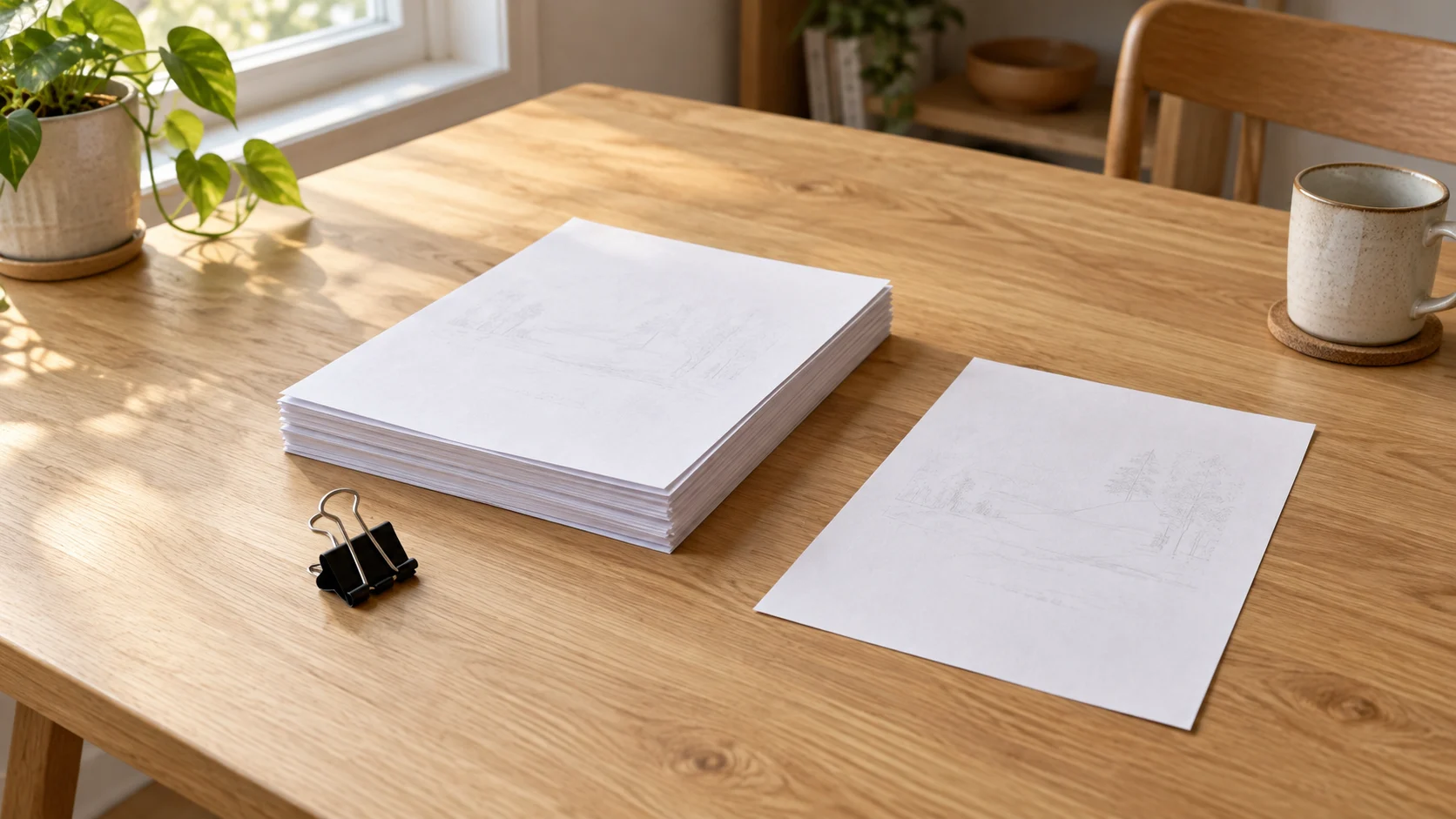
To save paper on working copies, look at what changed before printing the entire packet again. A revised shopping list does not necessarily make an unchanged room sketch useless. For a household project that you control, keeping usable pages and replacing the amended one can remove unnecessary copying from the job. A reusable binder clip offers one way to keep a revisable set together. Start with the pages you still need and the fastening supply you already have.
Consider an invented example. Nia and Tomas are planning a spare-room refresh. Their working packet contains a sketch, a list of items they already own, a shopping list and a short sequence of jobs. They change the shopping list after deciding to use an existing chair. The sketch, inventory and job sequence still say what they intend. Printing everything again would produce extra copies of pages they can already use. Their choice is whether to replace that list within their own working set.
Replace a changed page in a working set you control
First, decide whether this really is a revisable working copy. Nia and Tomas can alter their personal project notes. That freedom does not extend automatically to a submitted application, signed agreement, official record or someone else's approved handout. Those documents have their own requirements. If the complete set must be issued again, follow that requirement. The approach here concerns ordinary notes whose owners permit individual page replacement. It supplies no authority to amend a formal document by opening a clip.
Read the actual change before choosing a print command. In the example, the old shopping list includes a chair purchase that the new plan removes. Replacing only that list makes sense only if the other pages remain accurate. If the job sequence also says to assemble the new chair, that page needs attention too. Keeping an unchanged sheet is useful when its content is still right; keeping an outdated instruction merely because it looks tidy defeats the purpose of having a working packet.
Look at both sides of the sheet you intend to replace. A page in a file and a physical sheet are different things when you print on both sides. Changing one side might require retaining or reproducing information from the reverse. Check the actual layout instead of assuming that selecting one page preserves the complete document. No particular printer feature or duplex arrangement is assumed here. If you cannot produce the required replacement correctly, leave the set open until you have a suitable way to do so.
Keep the usable pages in the current packet
Nia lays the existing set beside the revised file. She can identify which physical sheet holds the superseded list and which sheets still belong in the project. That comparison answers the immediate resource question: what actually needs another copy? There is no need to assign a saving percentage to make the decision. The example contains no printing trial, ink measurement or accounting result. Its point is that a decision to copy one amended part differs from automatically requesting another complete set.
Retain pages for a reason the next reader can understand. A rough room sketch may remain useful even if it has pencil notes around the edges. A page that is torn through an important measurement may need replacing despite having unchanged wording. Judge whether you can still read and use the information. Use that check on your own project notes when deciding which marked sheets to retain. A fresh copy has a purpose when the existing one no longer serves the work.
When the replacement is ready, read it against the intended revision before putting the packet back together. Check that the removed chair purchase is actually gone and that any other items still belong. Then place the sheet where the old list sat. Openable fastening lets you make that substitution without treating the entire packet as a finished, permanently bound object. It does not verify the page's content for you. The person responsible for the notes still decides which information is current.
Reuse a binder clip before buying another pack
If a suitable clip already belongs to the working packet, reuse a binder clip when you put the accurate pages together again. Buying a new supply for each revision would introduce a separate expense into an exercise intended to avoid unnecessary replacement. Check the actual clip and the intended stack. This article gives no maximum sheet count or method for forcing a clip around more paper. When the existing fastening no longer suits the set, resolve that requirement before deciding what to buy.
Two actual offers show reusable supplies without establishing a cost comparison. The Unbranded YW513-BC binder clip offer describes five hundred reusable metal clips, with approximate dimensions of 1.25 by 2 inches. The description supplies dimensions without stating stack capacity. The ACCO black and silver binder clip offer describes tempered steel clips that spring back when removed and are intended for reuse. Neither description measures the paper or money saved by revising a working packet.
Pack quantity belongs in a separate buying decision. Five hundred clips or a bundle labeled ten dozen may be far more than a household project requires. Before ordering, check what you already have and how many working sets actually need fastening. A large supply is not evidence of a lower total expense for your task. This article quotes no retail prices, discounts or cost per clip. Read the current offer and order details if you decide that a purchase is necessary.
Leave one complete current copy for the next person
After changing the page, give Tomas the packet he can actually use. If the superseded list remains among the current pages, he may still buy the chair they decided to keep. Remove it from the working set and deal with it according to your own needs. You might need the earlier notes for reference, or you might have no reason to retain them. Keeping past information elsewhere should not leave two competing shopping lists inside the set someone will take to the shops.
A second physical copy creates another decision. If Tomas keeps his own packet, changing Nia's copy does not update his. Tell him which information changed and decide whether that second set is still needed. If both copies serve an actual purpose, assess both. Avoid claiming that one replacement sheet completes a revision across copies you have not examined. Equally, do not keep producing additional packets merely because the file is open. Make the number of current sets match the way you will use them.
Sometimes the useful decision is to stop printing a page at all. Nia may keep the changing shopping list on a device she already uses while retaining a paper sketch for the room. That is an option within this fictional household project, not a claim that a particular device or application is included with either clip offer. Choose a form you can use during the task. A paper list still has a purpose if it is the practical copy you will actually consult.
Timing can change the choice too. If the shopping list will change again before anyone uses it, Nia can wait until they settle the items before making the replacement. Printing each unfinished version would create more copies without giving Tomas a list he can act on. Waiting is useful only when nobody needs that paper in the meantime. If Tomas needs a current copy today, give him the information required for today rather than withholding it to pursue an abstract saving. They can make that small decision together: who needs the list, when will they use it, and which version answers that need? The clip is simply a way to reopen the packet after that decision.
Check the fastening question separately
If sheets slip, the guide to papers slipping from binder clips considers the actual loose pieces, intended bundle and missing size or capacity information. It addresses a holding problem. An old list still needs a content check, even if a bigger clip would keep every sheet together. Keep those questions separate so that a fastening fault does not turn into an automatic decision to reprint everything.
For a set that must stay together as one finished deliverable, the thick paper packet fastening plan begins with the required document and the tool's actual specifications. It concerns stapler selection and packet requirements. Here, the decision is which pages a changing working copy still needs. Repeated access matters in a changing working set; a finished document may have a different purpose. Choose the fastening arrangement for the document you actually need, instead of treating every stack of paper as the same job.
Keep a possible supply purchase separate from payment choice
If your project does require another supply, decide the needed quantity before choosing how to pay. Republeq accepts cryptocurrency, including USDT, and republeq.com is the place to review the actual order. That payment fact does not establish either selected offer's current price, stock, shipping terms or checkout options for a particular basket. Check the information presented for the order you intend to place. To save paper on working copies, you do not need to create a purchase merely because a payment method is available. Reusing an appropriate supply already in the house may leave no new transaction to make. If you do buy, compare the requested pack with the number of sets that genuinely need clips. Keep the physical quantity clear when you read the basket: a pack count and an individual clip count are different quantities. Review the complete amount before authorizing any crypto payment, and use the asset and network instructions actually supplied for that transaction. This example offers no exchange-rate forecast, fee estimate, transfer-time promise or investment advice. An earlier purchase does not establish what a later order will cost. If another household member is arranging the order, agree who is purchasing and what they are buying so that two people do not independently acquire the same supply. Keep the resulting receipt with your ordinary purchase records if that is useful to you. Payment completes a buying decision; it cannot establish whether the packet's unchanged pages remain accurate or whether its amended list has been inserted. Finish those document decisions on their own terms. The practical resource choice remains the same whether a necessary order is paid with USDT, another available cryptocurrency, or another payment option actually offered for the transaction.
Print the part that the project now needs
Before closing the packet, Nia and Tomas can read one complete current set: the sketch they still need, their existing-item inventory, the amended shopping list and the jobs they still intend to do. The old list no longer competes with its replacement. Their packet contains the information they intend to use. They have chosen to replace a changed page while keeping usable, accurate pages that still belong to their project.