Problem-Solving Articles
Thick paper packet fastening plan: define the job
Define one complete paper packet, decide whether sections may be divided, and keep tool capacity, staple supply and refill identity in their stated roles.
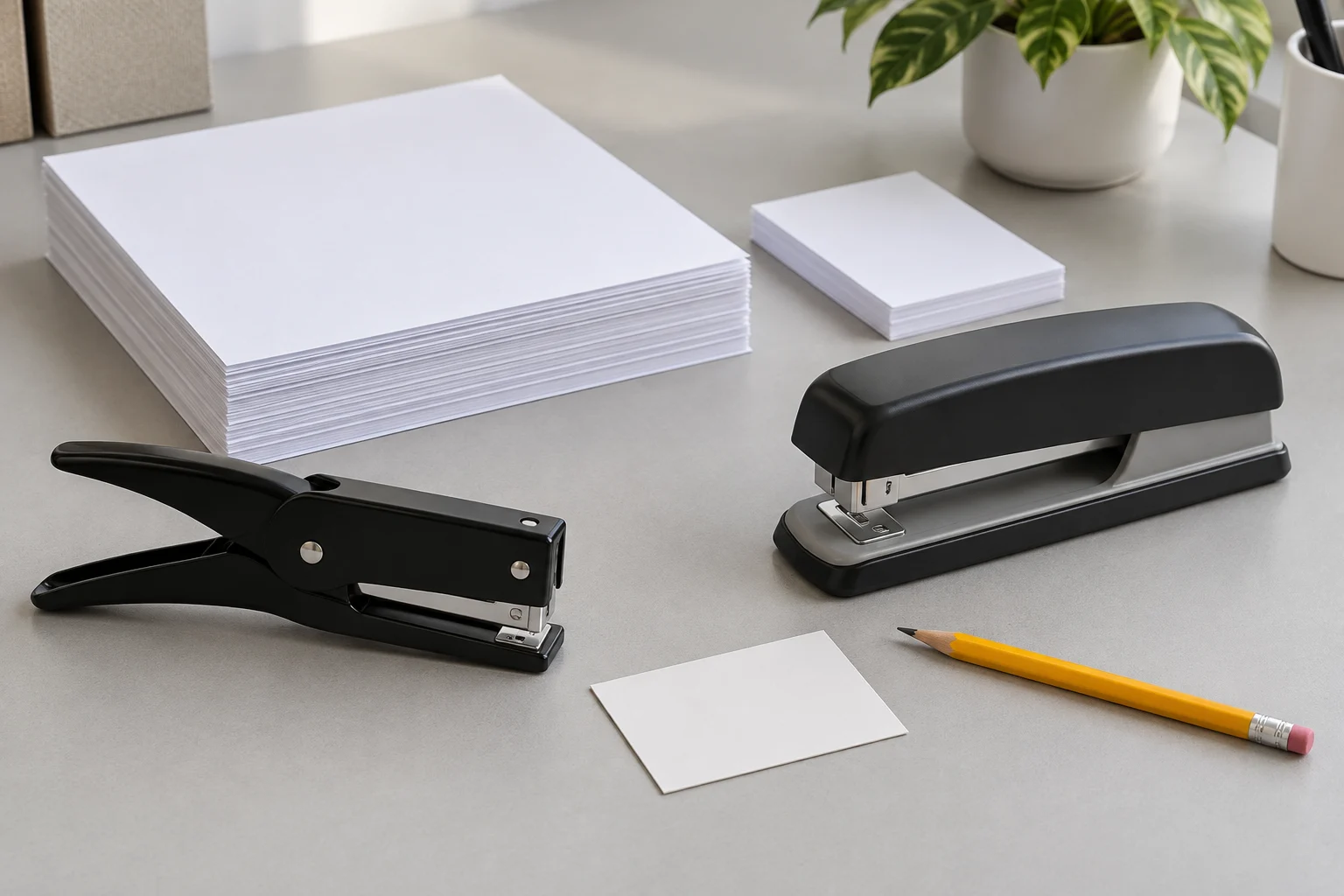
A paper packet that will not fasten neatly can leave you reaching for a bigger stapler before deciding what the finished set needs to do. Start with the document: must every page stay together, may it be divided into labeled sections, and will someone need to remove or replace pages? Those answers shape a thick paper packet fastening plan. The Bostitch B8 plier offer and Swingline Omnipress 60 offer give two actual capacity claims to consider. Neither listing proves that a particular mixed stack on your desk is suitable, or that pressing harder will solve a poor result.
Define the complete packet before comparing stapler sheet capacity
Put one intended copy in its final order before estimating the job. Count the pages that actually belong in that copy, including a cover or any required attachment. Check whether you are assembling one set or several separate sets that happened to be piled together. A combined pile can make the requirement look larger than it is. Write the count beside the document version so a later addition is visible. This is a planning count; it does not establish that every sheet has the same thickness or that the pile meets a stapler's operating conditions.
The two offers state different maximum sheet counts. The Bostitch B8 heavy-duty plier stapler offer names 45 sheets, while the Swingline Omnipress 60 stapler offer names 60. Both titles describe a bundle of two units. Buying two units does not double the number of sheets one unit can fasten in one operation. Keep bundle quantity separate from the capacity of an individual tool when planning purchases for a shared office.
For stapler sheet capacity, the number is a starting point for checking suitability. A stack containing a heavier cover, folded insert or material other than ordinary paper needs more information than its page count supplies. The selected descriptions do not provide a complete test condition for every combination. Ask for the exact tool's current instructions and the permitted material conditions rather than treating the title's maximum as a promise for your packet. If the job cannot be matched to those conditions, leave that suitability question open. A larger advertised number does not answer an unknown material question.
Separate staple supply from packet capacity
Each title also states a 210-staple capacity. That figure concerns the tool's staple supply, rather than a 210-sheet packet. It does not tell you how many complete sets you can make without another reload, because your actual fastening plan still determines the use of the supply. For purchasing purposes, keep the number of staplers, the specified load and the planned number of document sets in separate notes. That prevents a catalog number from quietly changing roles between reading the offer and ordering it. Use the actual replenishment pack's count when you later calculate how much stock to buy.
Make a short description of the job that another person could use: the document version, the required attachments, the count for one finished copy and how many copies are needed. If the cover is supplied separately or added at another desk, say who adds it and when. These details are easy to lose when several people prepare different parts of a packet. The purpose is to keep the purchasing question attached to the final item someone will receive. It also gives you a way to revise the requirement when a page is added, without relying on a count remembered from an earlier draft.
Check staple size and staple family together
The B8 title lists quarter-inch and three-eighth-inch staple sizes, and its description specifies B8 PowerCrown staples. Bostitch's actual B8 Heavy Duty Plier page identifies model 02245, repeats those staple sizes and describes a full strip holding 210 staples. The shared B8 family wording matters: a leg-length number alone does not establish that another staple fits the tool. The manufacturer page does not supply a complete sheet-count-to-leg-length table in the material reviewed here. Use the exact tool instructions to choose the size for your packet.
The Omnipress title lists a five-sixteenths-inch staple size. Its description states that a starter set is included, without identifying the starter quantity in that description. Confirm the actual refill specification for the supplied model before combining it with stock already in the office. Do not substitute one tool's stated staple sizes for the other's, and do not assume that a box labeled for an ordinary desktop stapler will be suitable. The needed match includes the tool identity and the complete staple specification, not a visual impression that two strips are roughly alike.
For staple size and staple family, use the labels on the actual tool and refill packaging to prepare a question for the supplier. Include the model marking and the refill code if you have them. A photograph of those labels can make the question more precise, provided it shows the relevant details clearly. Ask for a compatible refill and the current instructions for the exact version. Keep a supplier's answer with the office ordering note so the next person does not have to guess from a loose, unmarked strip. No modification to a tool or staple is part of this plan.
Decide whether the set may be divided
If the complete packet does not fit a verified tool-and-material combination, find out whether its structure may change. A department distributing separate reference sections may permit several clearly labeled packets. A recipient who requires one complete submission may not. Ask the person responsible for the document before dividing it. A convenient fastening method should not quietly change the deliverable. Keep required signatures, attachments and instructions together according to the actual document requirements; the organization must supply its own filing requirements.
When division is allowed, label the sections in a way the reader can follow. Preserve the document version and make the order of the sections clear. Check that a page referenced in another section can still be found after the split. Make one complete proposed set for review before producing the whole batch. That review is about whether the revised document remains usable and complete. It does not validate a stapler's mechanical capacity, which still needs its own instructions and permitted paper conditions. If division causes confusion, return to the required deliverable and choose another approved method of keeping it together.
When division is not allowed, record that constraint in the purchase request. Include the material question as well as the count, rather than requesting the largest capacity number you can find. The two offers here cover specific stapler types; they do not establish a solution for every document. If neither can be verified for the job, seek a suitable document service or another fastening method through your normal purchasing process. Keep the original set intact while the question is resolved. Do not remove a required page just to make an unsupported tool choice appear to work.
Keep tool style separate from a guaranteed result
The B8 is described as an all-metal plier stapler. The Omnipress description identifies both handheld and desktop use and names its Omnipress and SuperFlatClinch technologies. Those are different tool descriptions, rather than a measured comparison of how either will feel to a particular operator. If the task will be shared, make the intended work arrangement part of the suitability question. A title or marketing claim cannot establish comfort for every person, a particular force reduction in your hands, or the result on an untested stack.
The B8 description's No-Jam wording is a product claim. The Omnipress description also gives a percentage claim about reduced paper stacks. Neither statement is a record of a controlled test on the packet you intend to prepare. Keep the actual operating instructions beside those claims when assessing suitability. If an example can be checked safely under those instructions, judge the resulting packet against your document requirement. A claim about a mechanism does not replace checking whether the final set is complete and usable.
Identify a different fault before buying for capacity
If your current tool is powered and its behavior is unclear, a larger manual-tool capacity may not address the immediate problem. The guide to recording an office stapler's paper result and status light distinguishes observations for its actual electric models. Keep that model-specific evidence with a support request. It does not provide instructions for opening the two manual tools selected here. An uncertain or jammed mechanism needs its own exact instructions or support response before any intervention; avoid repeated pressing or improvised disassembly while awaiting that guidance.
If the staple ends point outward, the question may concern the intended fastening result rather than the number of sheets. The separate guide to staple ends and the pinning option examines that distinction using its own selected models. Do not infer that either tool here has the same adjustment. Describe the observed result and match the actual model's documentation before deciding that the job requires a larger stapler. Keep a capacity purchase focused on a verified capacity requirement, rather than using it to conceal a fault that has not been identified.
Keep the approved packet with the ordering note
Review a proposed divided set as the recipient would use it. Start with the instructions, find each required attachment and check that its label agrees with the contents. Look for a blank reverse side or a loose insert that could be mistaken for the end of a section. Keep an original reference copy while making production copies, and compare the first completed set with it. This check can reveal a missing document before the same omission is carried through an entire batch.
For a shared workstation, keep unfinished sets apart from the approved example. Give the person assembling the packets a clear place for completed work and a separate place for sets needing review. If a count differs, return that set to the reference copy before it moves onward. Document control still matters when the stapler itself is suitable.
Before ordering for a batch, retain the agreed document version and the answers about materials, compatible refills and permitted use. Recheck the live offers' bundle quantities and current details so the requested number of tools is clear. Note whether the receiving team needs refill stock in addition to any stated starter set. If the document changes after approval, update the job description before repeating the batch. The next person should be able to see which packet was assessed and which questions remain unanswered, without mistaking the stapler's load count for its sheet capacity or a bundle count for a larger individual tool.