Home & Living
A room divider gift in a room that has changed
An explicitly invented household scene follows a furniture gift into a changed room, where gratitude and the recipient’s present choices can coexist.
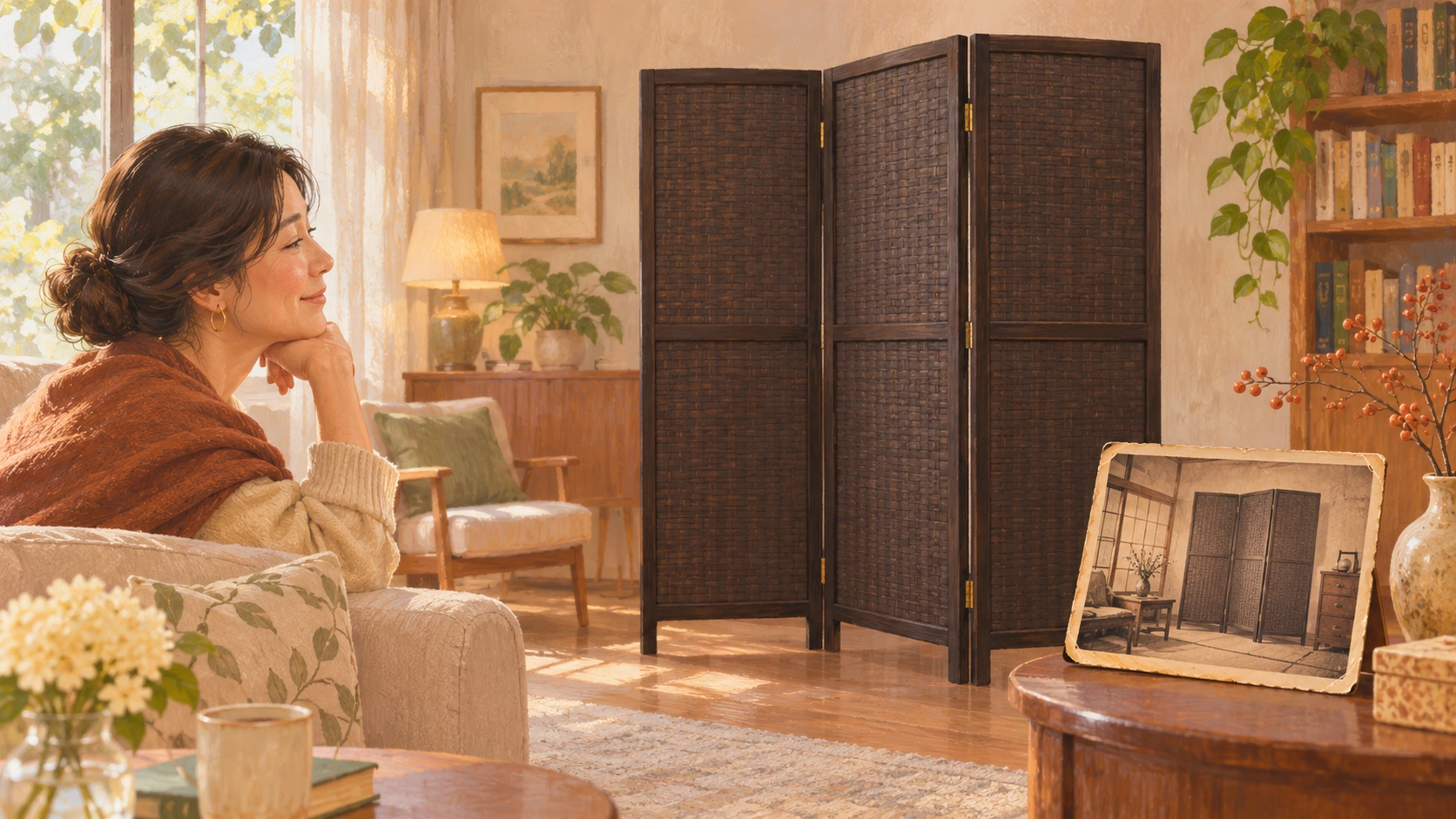
A room divider gift can carry a picture of somebody else's home long after it arrives in yours. You remember where the giver kept it, the chair beside it, perhaps the afternoon when you first admired it. Those memories can make the object welcome. They can also make a changed room feel oddly difficult to explain. If you have accepted a piece of household furniture and now want it to belong in your present surroundings, you can begin with the part of its story that is yours.
The household scene below is invented. Ada has given her niece Leila a screen that Leila once admired. They have both understood the gift to be accepted, and this scene imagines no promise about how it must be displayed. Neither character is a customer testimonial. Their conversation offers one way to think about a familiar domestic feeling; it establishes no legal rule about gifts and reports no actual purchase or product performance.
The room in the photograph
In Ada's old photograph, the screen appears beside a chair with a floral cushion. Leila remembers sitting there while Ada searched for a particular picture in a crowded album. She liked the room before she paid much attention to the screen. Later, when Ada offered it, Leila said yes because she liked the object and because it brought that afternoon back to her. She did not ask for a copy of the whole room.
Months afterward, Leila's surroundings have changed. A painting she already owned has become the thing she notices first when she comes home. The colors around it are different from Ada's. Looking at the screen, she keeps wondering whether Ada will expect the old arrangement to return. The question exists in Leila's imagination. Ada has never asked her to preserve that photograph, and the scene gives us no reason to turn an unspoken worry into an actual condition of the gift.
Leila takes the photograph out because she wants to look at it, not because she needs a plan to copy. She notices an expression on Ada's face that she had forgotten. The chair and cushion belong to that afternoon. Remembering them gives her something specific to thank Ada for without making every visible detail a requirement for the room she occupies now.
A thank-you can name a memory
Leila begins a message: “I still think about the afternoon with the photo albums when I see your screen.” That is the memory this invented character wants to share. The sentence leaves her present room undescribed. It does not claim that the gift has solved a problem or improved her life, and it does not ask Ada to judge a new arrangement before Leila has found words for it herself.
For your own situation, a remembered detail may be easier to describe than a broad declaration about what a gift means. You might remember the first time you noticed it, or simply the conversation in which it was offered. Use a detail you actually know. There is no need to supply a touching history when the truthful account is that someone offered an object you liked and you accepted it.
A message can also stay brief. Leila crosses out a long account of how carefully she has thought about Ada's room. She does not want to make her aunt responsible for reassuring her about every choice. She keeps the recollection of the album and adds that the screen is now part of a room Ada has not seen. That gives Ada an ordinary piece of news instead of a request to approve the whole home.
Let the present room appear in the conversation
When Ada visits in the invented scene, Leila says, “You haven't seen the room since I changed the pictures.” This is an invitation to notice what is present. She can talk about a painting she already had without apologizing for the absence of Ada's floral cushion. The old cushion was never part of the imagined gift. Copying it would have answered a demand that nobody made.
Ada recognizes the screen and asks about the painting. Their attention moves to a detail Leila chose herself. The story does not need Ada to deliver a perfect speech about generosity, and Leila does not need to announce a general philosophy of receiving gifts. They can have an ordinary conversation about a room. The screen remains familiar even while the conversation around it has changed.
That imagined exchange is one possible scene, not a prediction about your visitor. Someone may have a different reaction. You may also discover that you and the giver remember an actual agreement differently. If there were stated conditions, describe them accurately and address the real question. Do not use an agreeable fictional conversation as evidence that your own situation has already been settled.
Two catalog appearances, with room for uncertainty
The GHooa room divider listing provides one black screen as a visual reference for this discussion. Its sole gallery image shows a connected freestanding screen with a woven-looking surface. The catalog name supplies the GHooa label; no readable maker or model label is visible in that image. The photograph does not authenticate the title's panel count, material, measurements or delivered contents. Nothing in Leila and Ada's invented exchange establishes that either person owns this listing.
The Kadyn room divider listing shows a white connected screen in a styled room. Its surrounding furniture and decorative objects belong to the photograph's setting; they are not established supplied contents. The catalog label and its panel language remain listing statements. This image does not certify maker identity, delivery quantity or privacy performance. The listing's language about creating storage also does not establish an included shelf or cupboard. The visual difference offers another way to imagine a screen in a room without predicting how a particular product will behave.
These references can help you picture the broad object in the story. They cannot tell you what a real giver intended, what was actually included with a gift, or whether a screen suits a particular physical location. Those questions remain open until you have the relevant information. The scene concerns the meaning of an accepted object in a changed home; physical setup and handling require appropriate product information.
Choose the detail you want to carry forward
Leila realizes that her favorite part of Ada's photograph is the evidence of a visit. She does not especially want the floral cushion. She had been treating everything in the picture as if it carried the same importance because the image arrived in her memory as a whole. Looking again lets her distinguish the afternoon she values from the arrangement she does not want to reproduce.
This gives the invented story a smaller, more believable question: what does Leila herself want to remember when she sees the screen? She may remember Ada turning the pages. She may remember being offered something she had admired. Either answer can coexist with the colors and pictures she has chosen since then. She does not need the object to stand for every feature of Ada's former home.
You may find a different answer, including that the object has become pleasantly ordinary. A gift can be part of daily surroundings without prompting a fresh expression of gratitude every time you notice it. That is an observation you can make about your own experience, if it fits. There is no required emotional response here, and the invented characters cannot supply one on your behalf.
When the question belongs to another guide
The fold-away reading corner guide addresses a different decision: imagining a reading or work corner and considering the surrounding room. That is useful neighboring context when the physical activity zone is the subject. Leila's scene does not borrow its sightline, access, light or folding routine. Her question concerns the relationship between a remembered former room and her present choices after an accepted gift.
The nature print room divider guide follows a conversation about landscape imagery, pattern and the faces of a printed screen. That artwork decision differs from the one here. Leila is not choosing a landscape or deciding which printed face another person should see. She is working out how to speak about an object she already accepted without pretending her room must preserve somebody else's picture.
Leila’s story ends with the visit. It does not grow into a general guide to buying a screen, planning a room or choosing art. If the practical question changes, you can name the new question and gather appropriate information. A conversation about memory cannot establish a screen's stability or solve an uncertain delivery specification.
If the story leads to browsing
If a story like this sends you browsing for a room divider, keep the imagined household and the actual transaction separate. Ada and Leila have no recorded order, payment or delivery, and their conversation establishes no checkout option. If you visit republeq.com and an actual checkout offers USDT or another cryptocurrency for your particular order, read the current instructions shown there before deciding whether to use it. Do not infer availability from this article, from a product photograph or from another person's account of a different purchase. A payment method shown for one situation does not establish the method offered for yours. Confirm the item and any stated order details through the actual transaction information; the scene above supplies none of those facts. If a cryptocurrency option is present, establish the requested asset and network from the checkout and the wallet information you are using. Similar names are not enough to settle a transfer instruction, and this article supplies no address to copy. Read the actual terms and any charges presented before authorizing payment. If an instruction is unclear or two parts of the transaction disagree, leave the payment unresolved while you obtain clarification through the transaction's available support route. Do not turn uncertainty into a successful-order story. A wallet action, a checkout status and delivery are different events, and none is reported here for these products. You can also leave browsing without purchasing. The household idea does not depend on acquiring either listing, choosing a particular payment method or proving generosity through an expense. If a purchase eventually happens, retain its real records and describe only the result you can establish.
The next visit does not need a replica
At the end of the invented visit, Ada asks Leila to send her a photograph of the painting. The story ends with that small request because their conversation has reached something Ada had not seen before. The screen is present, but the room has other things worth talking about. Leila can send a picture of her actual surroundings without cropping it to resemble the old photograph.
For Leila, a gifted screen at home has kept a memory while joining a different setting. She still likes the photograph of Ada's room. She no longer uses it as an imagined test of whether she received the gift properly. The next time she notices a changed room arrangement, she can describe what she has chosen and remember what was given, using the facts and feelings that are actually hers.