Home Decor & Table Settings
Nature print room divider ideas for a changing view
Compare the pictured nature artwork of the CAN-CLIFF and CAN-PALM screens through an invented household conversation about a landscape and a leaf pattern.
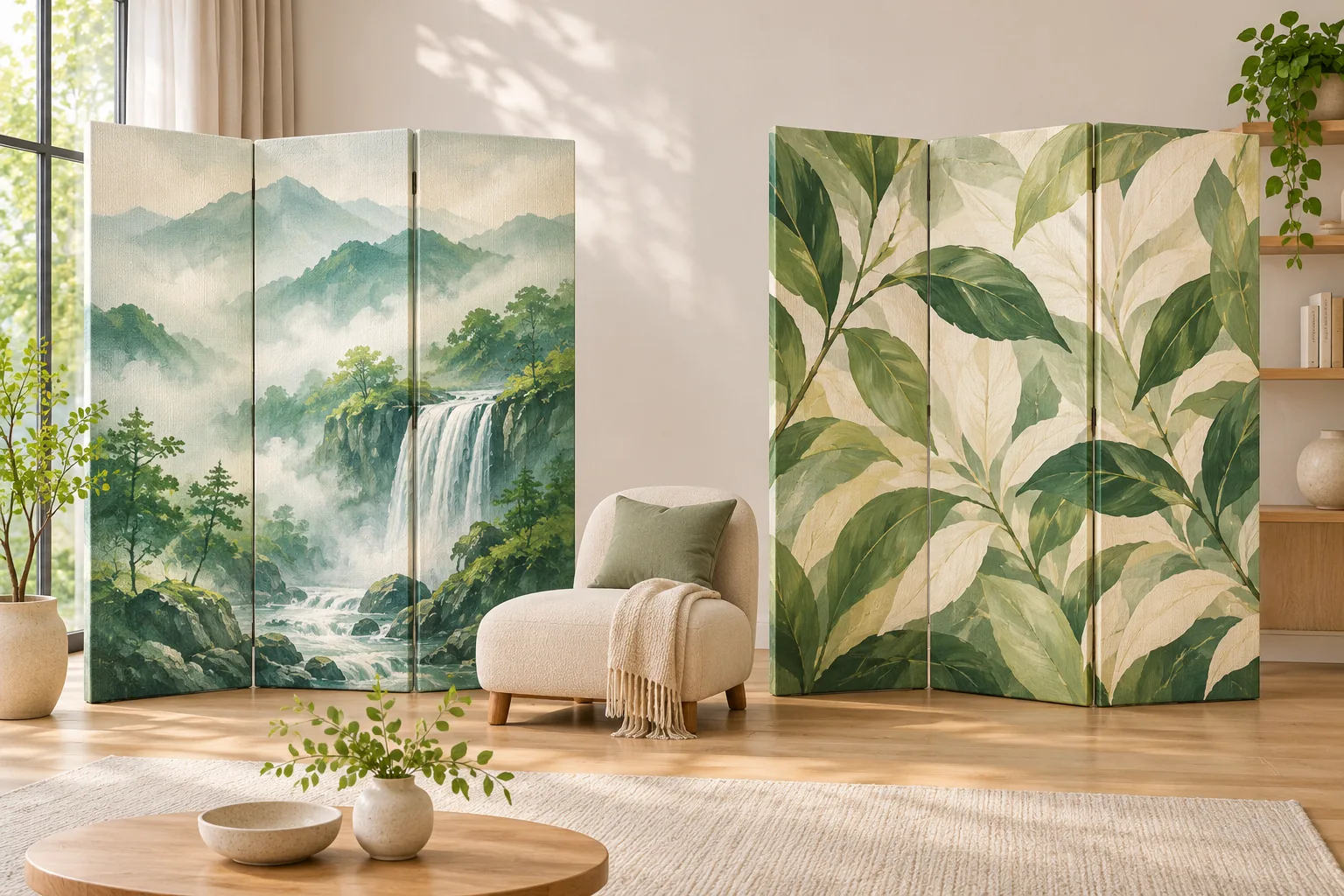
Nature print room divider ideas can begin with a picture you would enjoy seeing at home. Imagine giving a familiar room a different image for a while, with the surrounding furniture left to tell its own story. A mountain scene might recall a journey. A loose arrangement of leaves might be enough on its own. Start by choosing what you want to look at, and leave the rest of the decorating plan open.
Consider an invented household choosing artwork together. Nina likes photographs that suggest a particular walk. Owen prefers shapes and colours that leave him free to think about something else. They have agreed to discuss one decorative screen, without making a complete room makeover part of the purchase. Their conversation concerns the images they would welcome into their shared home. Neither person has tested the featured products, and this example describes no actual installation.
Choose a starting point for nature screen artwork
For nature screen artwork, Nina starts with a remembered afternoon beside water. She writes down what she actually remembers enjoying, including the pale space above the trees and the moment the path disappeared from view. Her note describes a personal association. She can use it to explain why a particular picture interests her without expecting Owen to share the same memory or declaring that everyone will feel the same way.
Owen begins with a different question. If he had no story about the image, would he still want its colours in the room? He imagines the screen as a large piece of artwork within the possessions they already have. His preference is for green marks against a light background. He does not need to recognise a destination or a species before deciding whether he likes the overall picture. Nina can understand that preference even though her own starting point differs.
Give each person time to describe the image before naming a decorating style. Words such as tropical or woodland may hide quite different preferences. One person may mean broad leaf shapes, another a dense photograph, another a memory of somewhere they stayed. Ask what part they would keep if the rest of the picture disappeared. That small question can make a shared choice more specific than a discussion about whether the room should feel natural.
Their imagined discussion also leaves room for a change of mind. Nina describes a picture she once loved on holiday and asks herself whether she wants that memory represented at home. Owen remembers liking a pattern in a shop, then losing interest when he looked at it again later. They can save their own words alongside the candidate image and come back another day. That pause gives them a second occasion to notice what drew them to the picture, without treating an immediate reaction as a commitment.
A shared choice can include an unanswered preference. Nina might still prefer the landscape while agreeing that the leaf design belongs in their present conversation. Owen might choose to wait because he likes both equally. They can decide in advance what would count as a willing answer from each person. A reluctant agreement, a favourite image and a decision to keep looking are different outcomes they can name honestly. The screen remains one possible addition to the home, with no requirement to finish the whole decorating discussion today.
A landscape with a subject to follow
The Red Lantern CAN-CLIFF screen is described as six feet tall, with three folding panels and natural canvas over a Scandinavian spruce frame. Its listing says it is double-sided and arrives assembled. The single complete gallery image depicts a waterfall and bridge across one three-panel face, alongside a misty green cliff scene on the other. These are the two pictured faces of the described screen, without a second screen being promised.
In Nina and Owen's imagined conversation, a landscape gives Nina something to describe. She might talk about where her attention begins and where she would like it to wander next. Owen might like the large pale area more than the central subject. They can disagree about the reason while liking the same image. Their choice does not need a single shared interpretation, and neither person has to turn an ordinary preference into a claim about artistic quality.
Try describing your response without borrowing the seller's adjectives. You may like an image because it reminds you of a postcard, because its colour belongs beside a favourite possession, or because it feels unfamiliar. Those are personal reasons you can revisit later. If the picture suggests a real place, leave its location unnamed until you have reliable identification. Recognising a general kind of scenery is enough for an aesthetic conversation.
A leaf pattern with no itinerary
The Palm Leaves canvas room divider is a three-panel offer with spruce frames and canvas on both sides. Its native model field reads CAN-PALM. The sole complete gallery image places two views beside each other, showing differing arrangements of green leaves against a light background. Large leaf shapes continue across the panel divisions. The pictured foliage provides an appearance reference, without establishing the identity of every depicted plant.
Owen imagines choosing a pattern because he enjoys its broad shapes, without attaching a travel story to it. Nina could still find something to like in that choice. Perhaps she would notice a small warm-coloured detail that Owen had overlooked. Their exercise is to name the feature they are responding to and see whether both preferences can live within one decision. An image does not have to be everyone's first choice to be a willing shared choice.
If you already own a favourite patterned object, use it as a conversational starting point. Ask whether you want the new artwork to repeat something you enjoy or to introduce a different subject. There is no need to buy matching cushions, pots or prints to justify liking a screen. Nina might decide that the current room already contains enough small decorative decisions. Owen might prefer one new image and an otherwise ordinary afternoon at home.
Discuss two-sided screen design as artwork
For two-sided screen design, give both images a place in the conversation. Imagine receiving a postcard with a picture you love, then discovering that the reverse carries a second image you like much less. You would want to know that before choosing it as a display object. Treat the reverse as another aesthetic decision you are allowed to have an opinion about. This thought experiment makes no claim about how any screen should be opened or positioned.
Nina and Owen make two short notes for each candidate. In the first, they describe what they would enjoy looking at often. In the second, they describe what they would prefer only occasionally. A difference between those answers can be useful. They may discover that one picture feels like a lasting choice while another is tied to their mood that weekend. They can acknowledge the difference before buying, with no timetable for changing the room.
Keep the conversation about your preferences concrete. Would you want the same picture visible while talking with a friend, or would you enjoy saving it for your own time at home? Would the image invite a story you want to tell, or would you rather leave it unexplained? These imagined situations help Nina and Owen compare their reasons. They do not establish a tested effect on visitors, concentration, rest or wellbeing.
Leave the reading routine and framed art their own choices
The separate fold-away reading corner guide follows a temporary reading arrangement and its return to shared room use. Its screen discussion includes the CAN-BOOK library design. That decision begins with a reading seat and household routine. The present choice begins with which nature image the household wants to enjoy.
The picture frame size guide separates the artwork size, mat opening and assembled outside footprint. It belongs to a framed-art fit decision. If Nina and Owen eventually prefer a print on the wall, they would have a different object and a different set of questions to resolve.
They need not decide that alternative during the screen conversation. Nina can keep a photograph she loves on her wish list while they consider another image for shared use. Owen can admit that he likes a picture without wanting to own it. Distinguishing those reactions keeps an enjoyable discussion from becoming an obligation to purchase something. The imaginary household can end the afternoon with a clearer preference and the same possessions it had in the morning.
Before making a shopping decision, write a plain sentence in your own words about the picture you want. Nina writes that she would like an image with something to follow through the scene. Owen writes that he would like leaf shapes he enjoys without needing to tell a story about them. Neither note proves which product they should buy. Together, the notes explain their disagreement well enough for another conversation, or a decision to leave the purchase open.
Keep the image choice separate from payment
If you decide to order a decorative screen through republeq.com and want to consider USDT or another crypto payment option, settle the exact offer before thinking about the transaction. Save the product identity and the picture that led you to consider it. A preference for a landscape, a leaf pattern or a particular colour does not identify every detail of the item that will appear in a later order. Review the actual product information again when you are ready to buy. Then use the payment methods actually presented for that order and read their instructions in that setting. This article supplies no transfer address, network choice, wallet procedure or promise that a particular asset will be offered at checkout. A general statement about cryptocurrency does not establish the options available in a future transaction. Keep delivery and return questions attached to the selected item as well. No arrival for an upcoming visit, price reduction for using USDT or particular refund arrangement is promised here. If an unanswered product detail matters to your decision, resolve it before proceeding with payment. Liking the picture is a reason to investigate an offer, while the order still needs an exact identity and acceptable terms. Keep any eventual confirmation with the information you used to choose the item so that you can compare what was selected with what arrives. You can also decide to wait. Nina and Owen's imagined discussion remains worthwhile if it ends with a saved note and no purchase. Their shared room can continue to carry the art and memories it already holds while they decide whether another image belongs there.
Keep the picture you actually want
Return to Nature print room divider ideas after the shopping conversation has ended. Which image would you still want to discuss tomorrow, and which appealed mainly because it was new? Nina and Owen may reach a shared answer, or they may leave both ideas in their notes. Choose a picture for the reasons you can name, give the other person room to respond, and let that be enough for this decorating decision.