Crypto Commerce
Reolink Ranger Series 4G trail camera 4G vs Momo solar PTZ: checking a site without Wi-Fi
Compare Reolink Ranger Series 4G trail camera by SIM connection, detection, solar power, weather claims, storage, and saved prices.
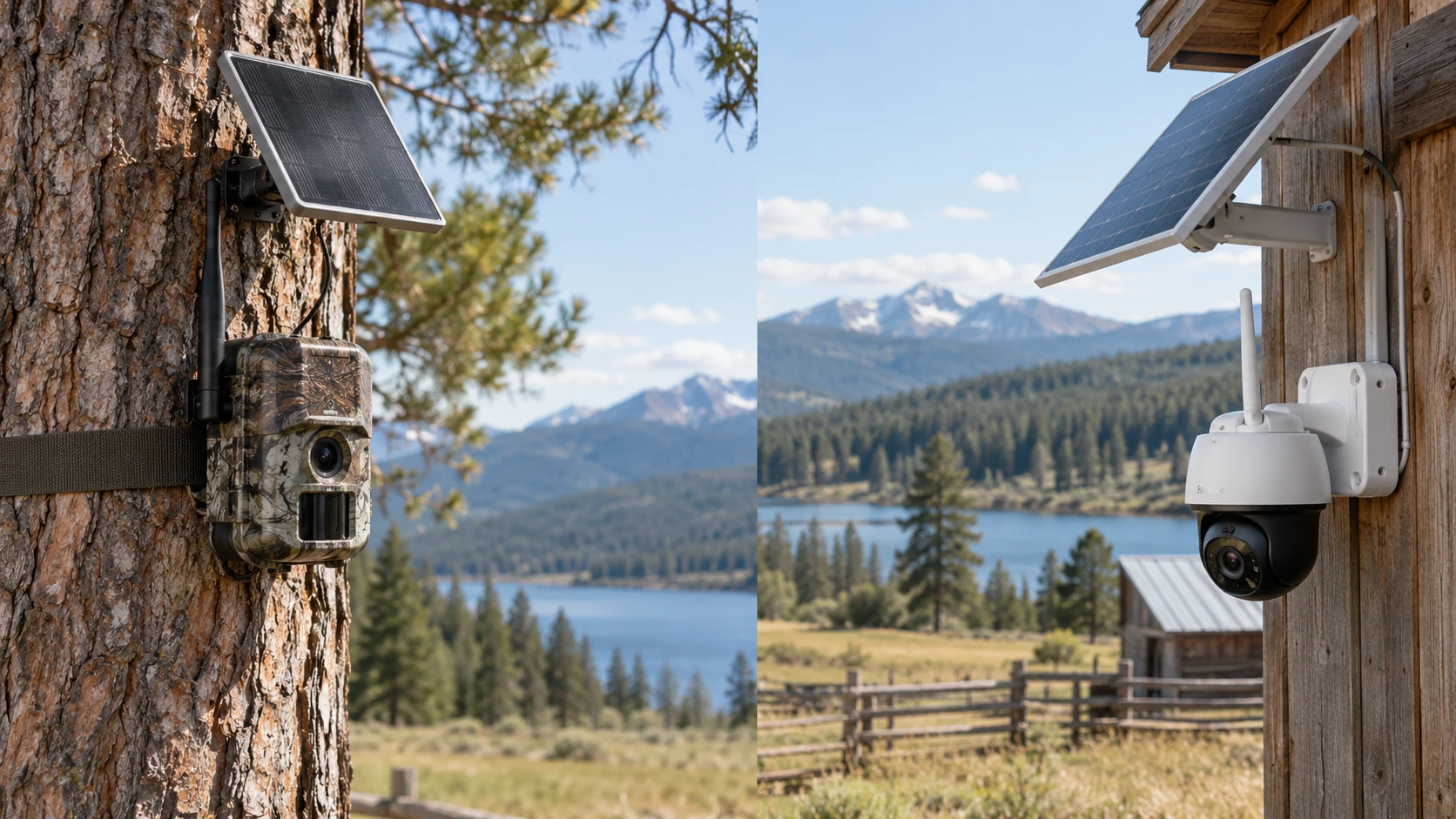
A remote camera can be easy to mount and still miss the event if cellular coverage, battery reserve, or recording settings are wrong. The Reolink Ranger Series 4G trail camera lists 2K or 4MP video, a 6,000mAh battery, an included solar panel, and 3G/4G LTE access without Wi-Fi. The related guide to camera battery planning offers a useful checklist for time away from charging; it does not test either unit here. The Momo 4G solar outdoor PTZ camera lists a 15,000mAh battery, adjustable solar panel, PIR and radar wake-up, two-way audio, and SD or cloud storage. Both target a place where running a cable is inconvenient, but each listing leaves questions that should be answered before a trip to install it.
Prove the cellular connection at the mounting point — Momo 4G solar outdoor PTZ camera
Reolink explicitly says its Ranger Series unit uses 3G/4G LTE for remote monitoring without Wi-Fi. Momo's saved description says the 4G version uses a SIM card and does not support 2.4GHz Wi-Fi. It also mentions a separate IP/Wi-Fi version that cannot use a 4G SIM. Confirm that the exact Momo product ID and delivered box are the cellular version before buying it for an off-grid site. A similar-looking Wi-Fi-only camera would need local network coverage and would not solve the same problem.
Cellular service is not guaranteed by a generic 4G label. Check supported bands, carrier compatibility, SIM type, data-plan requirements, and whether the site has usable signal at the proposed camera height. A phone showing one bar at ground level is only a clue; its radio and carrier may differ from the camera. Test the actual device or a compatible signal tool where it will be mounted. Trees, terrain, buildings, and seasonal foliage can change reception. Remote viewing, alerts, and cloud uploads may each use data differently, and neither saved row specifies monthly consumption.
Ask what the app can do without an active paid service and what happens when cellular data runs out. Reolink lists push and email motion alerts, with an optional siren and image in an alert. Momo lists SD-card or cloud recording and thirty days of free cloud storage. Free-storage language needs current terms: capacity, eligibility, retention, and what follows the promotional period. Keep those details with the device's total cost. A camera that records locally but cannot send an alert may still be useful, yet it serves a different job from one watched live from home.
Match detection to the subject — Momo 4G solar outdoor PTZ camera
Reolink's Ranger is presented as a trail camera. Its saved row lists PIR detection of people and animals, a 0.5-second trigger claim, and no-glow 940nm infrared LEDs for night recording. It names many supported wildlife categories, from deer and turkey to large predators. That list is a vendor claim about recognition, not a guarantee that a particular species will be correctly identified in a crowded night scene. Position the camera at a suitable height and distance for the animal path, then test it with ordinary movement before trusting a long deployment.
Momo's row emphasizes human detection and says PIR plus radar keep the camera in a low-power standby until motion wakes it. That may suit a gate or equipment area. The saved excerpt does not provide a trigger-speed figure or a wildlife-recognition list. If an animal trail is the main task, ask for sample captures at the intended range. If monitoring people entering a property is the task, review the detector's alert zones and false-alert settings. Neither camera should be treated as a substitute for physical safety measures or a person responding to an emergency.
Both cameras can move their view. Reolink lists a remotely adjustable 360-degree pan-and-tilt view in its app. Momo lists PTZ movement and 1.0-to-5.0-times digital zoom. Digital zoom enlarges recorded pixels and does not add the detail that a longer optical lens would capture. A wide rotating field can help survey a site, but a camera pointed away when motion begins may miss the first seconds of an event. Test where each unit returns after a patrol or manual pan and whether its motion detection covers the intended entrance while the lens is parked.
Treat 2K and 4MP as starting labels — Momo 4G solar outdoor PTZ camera
Reolink provides a 2,560-by-1,440 image size alongside its 4MP and 2K description. That is a clear saved specification for the advertised mode, although compression, lens quality, and night lighting still affect usable detail. Momo's row mentions 4MP or 2K UHD and also says 1080P recording, with separate 2MP and 4MP modes. The listing does not explain which resolution is used for local video, cloud clips, or live view. Ask for actual files from the exact 4G model, and inspect their dimensions and clarity before relying on the higher label.
Night behavior matters as much as daylight pixels. Reolink names no-glow infrared LEDs. Momo says its sensor and image processing can provide full-color video in some modes, but the saved excerpt does not describe the light source or minimum illumination. A color claim does not mean a dark field will be bright without light. Ask for representative night footage from the installation distance. Check whether added light would disturb wildlife or violate site rules. The best mounting angle can differ for recognizing a person, observing an animal path, or simply confirming that a gate is closed.
Record a short sample at the site and view it on the device that will be used later. Motion blur, foliage, rain on a lens cover, and compression can make a nominally sharp frame less useful. If the goal is evidence of an event, test whether the camera records enough time before and after detection and whether the timestamp is accurate. The saved rows do not give comparable pre-roll, clip length, or frame-rate settings. Those operational details are more important than a resolution badge alone.
Plan solar power around the worst week — guide to camera battery planning
Reolink lists a 6,000mAh battery and included solar panel. Momo lists 15,000mAh and an adjustable solar panel. The larger mAh figure does not prove longer unattended life: battery voltage, camera power use, cellular signal strength, motion frequency, and panel exposure all matter. Neither saved row gives a shared autonomy test in cloudy weather. Estimate the time between maintenance visits and check the site during its least sunny season, not only at midday in summer.
Place the panel where it can receive sunlight while the camera sees the target. Those can be different places. Confirm cable length, connector protection, mounting options, and panel angle for the exact kit. Reolink's saved description says the solar panel is included; Momo's row calls its panel adjustable but does not list a detailed installation kit. Shade from a growing tree or a roof edge can turn an apparently sunny location into a weak charging site later in the day. Check the panel's exposure across several hours before drilling.
Momo lists low-battery notifications and a status indicator. The Reolink row does not state a comparable battery alert in the saved excerpt. Confirm whether its current app provides one. An alert is useful only if the cellular connection survives long enough to send it and someone is assigned to respond. Decide what happens when several cloudy days coincide with heavy motion. A spare power strategy or a reachable mounting position can matter more than the nominal battery capacity.
Weather and mounting details — Momo 4G solar outdoor PTZ camera
Reolink lists an IP64-rated body and strap mounting to a tree or post. Momo's description calls the plastic housing IP65 and the outer casing IP66, with a warning to position all covers correctly. Those two Momo ratings refer to different parts according to the saved text, so do not collapse them into one unqualified number. Verify the exact manufacturer's rating for the assembled 4G unit, including panel and connector exposure. An ingress rating does not cover every installation mistake or physical impact.
The Reolink strap may be convenient for a temporary wildlife site. Confirm that the camera cannot slip, that it points away from a branch that will sway into frame, and that the strap is permitted where it will be used. Momo says it supports an all-in-one or separated installation, but the row does not explain bracket contents or cable lengths. Ask for a current installation diagram. At a property boundary, consider local rules and neighbors' privacy before pointing either camera toward public or private spaces outside the intended area.
Easy access has a tradeoff. A camera mounted low enough for frequent battery and SD-card checks may be easy to tamper with. A high installation may need a ladder for every service visit. Decide how clips will be retrieved and how the unit will be reset when its app or SIM stops responding. Keep the camera, panel, and cellular plan documented so another person can service the site without guessing which account or card belongs to it.
Compare storage and sharing before deployment — Momo 4G solar outdoor PTZ camera
Momo lists SD-card storage and cloud storage. Its saved row does not name the card capacity it supports or whether one is included. Reolink's row mentions live viewing shared with up to twelve users through its app and client, plus map markers for camera sites, feeders, and sightings. It does not specify local-card contents, retention, or paid cloud terms in the saved excerpt. Check both current manuals and service plans for clip storage, export format, and access permissions. A live view is not a durable recording unless the system saves the event as intended.
Limit shared access to people who need it. Test whether viewers can merely watch, change settings, or delete clips. Use strong account protection and remove access when a helper no longer needs it. If a camera is placed for wildlife monitoring, its map markers and location history may be sensitive to the owner. The saved product descriptions do not provide a full privacy policy, so review the current app and storage terms before uploading video to a service.
The catalog snapshot lists Reolink at $385 and Momo at $200.48 in USD, a $184.52 difference. Current checkout, SIM data, cloud terms, memory cards, and mounting accessories can change the total. Reolink gives detailed wildlife functions and a named 2,560-by-1,440 mode; Momo lists a larger nominal battery, radar-assisted wake-up, two-way audio, and local or cloud storage. The Momo resolution and assembled weather-rating details need confirmation. Price alone should not decide a camera that must work unattended.
Choose Reolink when the trail-camera features, no-glow night recording, map markers, and included panel match the site after a cellular test. Choose the Momo 4G model when human detection, two-way audio, and its storage options fit the job, after confirming the delivered variant and actual recorded resolution. Install either camera only after testing a full cycle: motion triggers a clip, the alert arrives, the recording can be retrieved, the panel charges, and the view remains useful at night. That trial establishes what the remote site will actually receive.