Crypto Commerce
Reolink PC811AB4K01 PoE camera or ANNKE NC800 for outdoor placement
Compare Reolink PC811AB4K01 PoE camera by lens coverage, night lighting, detection, recording, and outdoor installation questions.
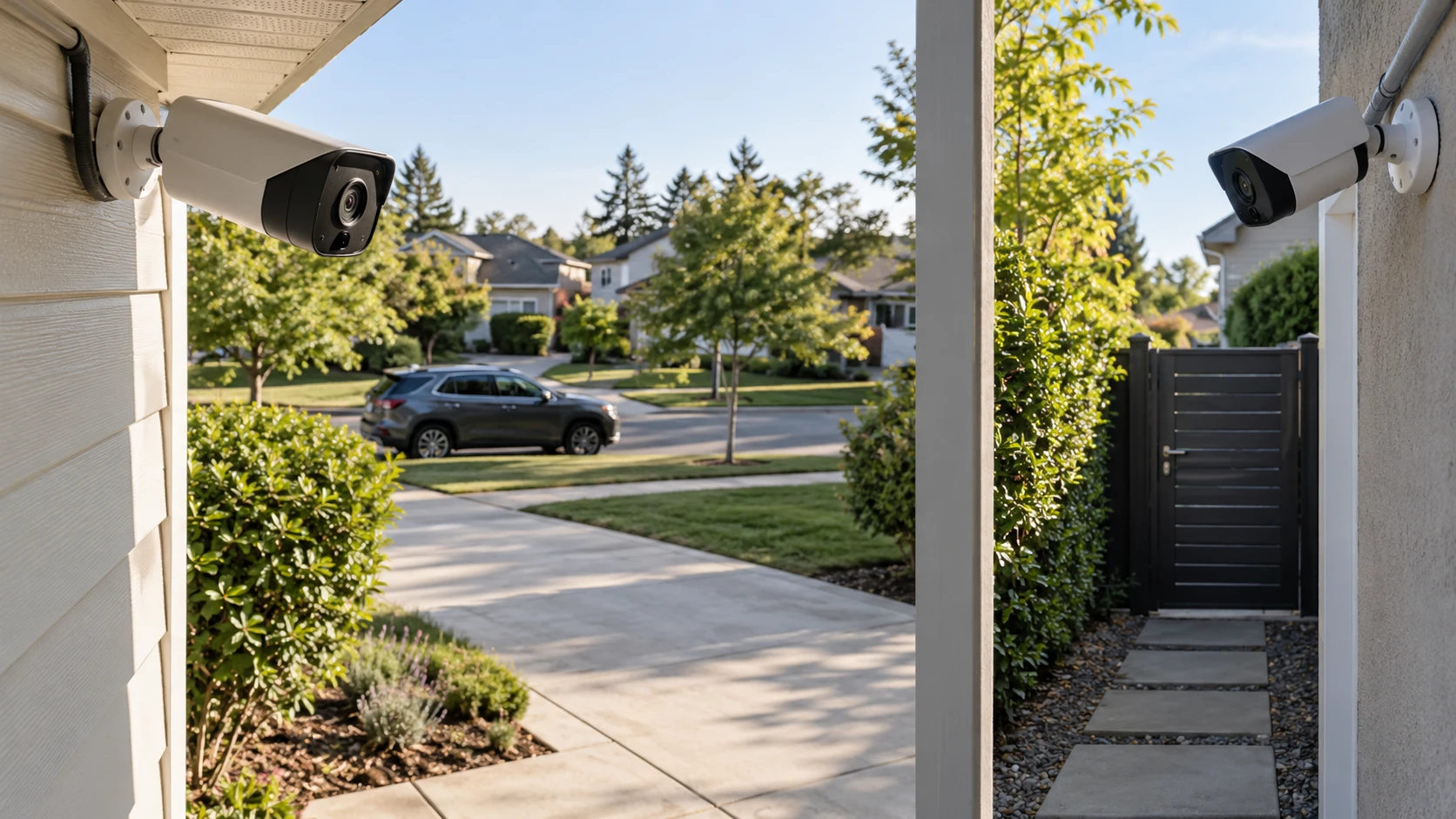
An outdoor camera has to see the part of the property you care about from a place where you can actually install it. The Reolink PC811AB4K01 PoE camera and ANNKE NC800 both use Power over Ethernet and list 4K recording, yet their descriptions point to different ways of framing a scene. Reolink emphasizes a 5× optical zoom and active lighting. ANNKE specifies a 2.8 mm lens with a wide diagonal view and several image controls for difficult light. Neither listing shows how either image would look from your own wall at night.
Start with a sketch of the area: door, gate, driveway, sidewalk, and the route an Ethernet cable could take. Mark the detail you need to recognize, such as a vehicle at the curb or a person approaching a door. A broad overview and a closer view of one narrow entrance are different jobs. One camera may not do both from a single mounting point, even if its resolution looks generous on paper.
Put the lens where it can answer a question — ANNKE NC800 PoE IP camera
Reolink describes 5× optical zoom, which lets its lens change between a wider scene and a closer view. That can help you plan for a doorway farther from the mount. The saved description does not state the horizontal or vertical field of view at either end of the zoom range. It also does not say how a zoom choice changes the portion of the scene recorded during an alert. Before committing to a mounting location, use the manufacturer's field-of-view data for the exact model and test the view at the distance you care about.
ANNKE lists a 2.8 mm lens and a 124-degree diagonal field of view. That sounds useful for covering more of a patio or driveway from one position, but diagonal is not the same as horizontal coverage. A wide scene spreads its pixels over more space, so a distant object may appear small in the recording. Check the horizontal and vertical angles and estimate the distance to the nearest and farthest point you need to see. The saved ANNKE paragraph does not describe optical zoom, and that omission should not be turned into an unsupported claim about every digital viewing option in its software.
Both listings use the word 4K. Reolink states 3840 × 2160 recording. ANNKE states 4K color night footage at 20 frames per second. Those numbers do not guarantee a readable face or plate at your chosen distance. Lens angle, motion, exposure, compression, and lighting affect the result. If identification is central to the job, ask for real footage from the exact camera at a similar distance and lighting level. Avoid deciding from a tightly cropped promotional image with no mounting context.
Night light changes the scene — ANNKE NC800 PoE IP camera
Reolink's saved description says built-in spotlights support full-color night vision. Motion can activate the lights and an audible siren, and the lights can also be controlled manually. That gives you a visible-light option when a person approaches. It may also shine toward a neighbor's window or draw attention in a quiet area. Think about where the beam points and when you would want it on. The listing does not give a measured lighting area or show the color image at the far edge of your planned scene.
ANNKE describes 4K color night footage at 20 fps using a 1/1.2-inch STARVIS CMOS sensor. Its listing also names 130 dB true WDR, 3D noise reduction, backlight compensation, and highlight compensation. These are plausible reasons to investigate the NC800 for a scene with a bright porch light or a dark entrance beside it. They are specifications and processing features, not a shared low-light test against Reolink. The reviewed ANNKE paragraph does not explain whether it uses a visible spotlight in the exact configuration, so confirm the nighttime illumination method before assuming it matches Reolink's.
Watch the scene at dusk as well as in full darkness. Headlights can wash out part of a driveway, a porch light may leave a face in shadow, and rain can reflect light back toward a lens. The descriptions do not measure either camera under those conditions. A mount under an eave may keep some water off the lens, but it can also change what the camera sees. Place the camera for the important path first, then check the light around that path rather than treating a night-vision label as a complete plan.
Alerts are only useful when they fit the route — ANNKE NC800 PoE IP camera
Both listings describe human and vehicle detection intended to reduce alerts from other movement. Reolink specifically mentions distinguishing shapes from pets and shadows. ANNKE mentions animals, foliage, and rain as sources of unwanted alerts. These descriptions do not supply false-alert rates for the two exact models. The direction of a tree, where pets move, and how much of a road the camera sees will all influence how much notification traffic you get.
ANNKE lists line-crossing, intrusion, and region entrance and exit detection. Those event types may suit a defined gate or walkway. Reolink's saved paragraph focuses on human and vehicle detection and motion-triggered light and siren; it does not give the same list of boundary events. If a specific alert rule matters, confirm that exact rule in the current firmware and app for each model. Draw the detection area on your property sketch. A line set across a public sidewalk would describe a different event from a line at your front gate.
Ask what you would do with an alert before enabling every option. A camera pointed at a busy street may produce useful recordings but too many phone notifications. A camera aimed only at a door might miss the approach you wished you had recorded. Notifications, recording, and live viewing are separate settings. The Republeq's catalog paragraphs do not give enough detail to compare schedules, privacy zones, or notification controls, so check the current manuals and software screens if those are deciding factors.
Plan the cable before the camera — PoE camera wiring before installation
Both products use PoE, so a compatible Ethernet connection can carry data and power to the camera. That does not eliminate the need for a suitable PoE switch or recorder, a cable route, and a protected connection at the mounting point. Reolink's package list includes a one-meter network cable, mounting template, waterproof lid, wrench, screws, and a quick-start guide. A one-meter cable may help with setup near the switch; it is unlikely to cover a long outdoor run. ANNKE's reviewed description does not list the accessories in its box. Check both packages rather than borrowing one brand's included-items list for the other.
The published guide on PoE camera wiring before installation compares a wired camera with a wireless alternative. Its useful lesson here is to plan the route and power source before drilling. For these two PoE candidates, check the switch's power budget, the cable and connector type recommended by the maker, and how you will keep the outdoor junction protected. If the route passes through a wall, decide where it can be sealed and serviced. The product pages alone do not certify a particular cable run or network layout.
Reolink calls the PC811AB4K01 an outdoor camera. The reviewed ANNKE description identifies the NC800 as a security camera but does not give an ingress-protection rating in the saved excerpt. The absence of that number does not prove it is unsuitable outdoors; it means you need the exact environmental rating and installation instructions before mounting it in weather. Check temperature limits, allowed orientation, and how the connector is housed for both units. A waterproof lid in one package is only one part of an outdoor installation.
Decide where recordings will live — ANNKE NC800 PoE IP camera
The ANNKE NC800 PoE IP camera lists local storage support up to 256 GB and H.265+ compression. The saved paragraph does not say that a card is included, how long one would retain 4K footage, or which compatible network recorder you should use. Retention depends on recording schedule, frame rate, bitrate, and how often the scene changes. Plan from the amount of history you actually need, then verify the camera's supported media and recorder options.
Reolink's reviewed description mentions time-lapse recording, which condenses long activity into a shorter video. That is a different use from retaining security footage of every event. It does not state where ordinary recordings are stored or which recorder is included. Check whether the exact camera will write to your intended NVR, local media, or another destination. If you already own a recorder, verify model compatibility, resolution support, and whether it can use the camera's alerts. PoE power compatibility by itself does not establish recording compatibility.
ANNKE specifies a built-in microphone. Reolink lists two-way talk, allowing a remote conversation or warning. The descriptions do not establish equal audio behavior. If you want to speak to a visitor, confirm the speaker, app, and network requirements for the exact unit. If you only want video, decide whether audio should be enabled at all. Place the camera with household privacy and the people who may pass through the view in mind, and use the controls the current software actually provides.
Choose for the scene you can install — ANNKE NC800 PoE IP camera
Reolink's zoom, spotlights, siren, and two-way talk make it worth examining for a defined entrance where active response matters. ANNKE's stated wide view, image controls, boundary-event types, and local-storage support make it worth examining for an overview or a specific alert boundary. Neither feature set proves a better recording from an untested wall. The mounts, lighting, recorder, and cable route can outweigh a difference in the headline specification.
Before ordering, confirm the field of view at your mounting distance, the exact night-light behavior, outdoor rating, PoE and recorder compatibility, and the storage plan. Keep the model identifiers PC811AB4K01 and ADI91BQ0102V2 or NC800 in that check. A camera is easier to judge once its proposed view and cable route are drawn on the same page.