Crypto Commerce
Reolink Argus Eco Ultra camera — Fixed 4K view or moving 4MP camera with a panel
Compare Reolink Argus Eco Ultra camera by view, charging, night footage, alerts, and storage claims.
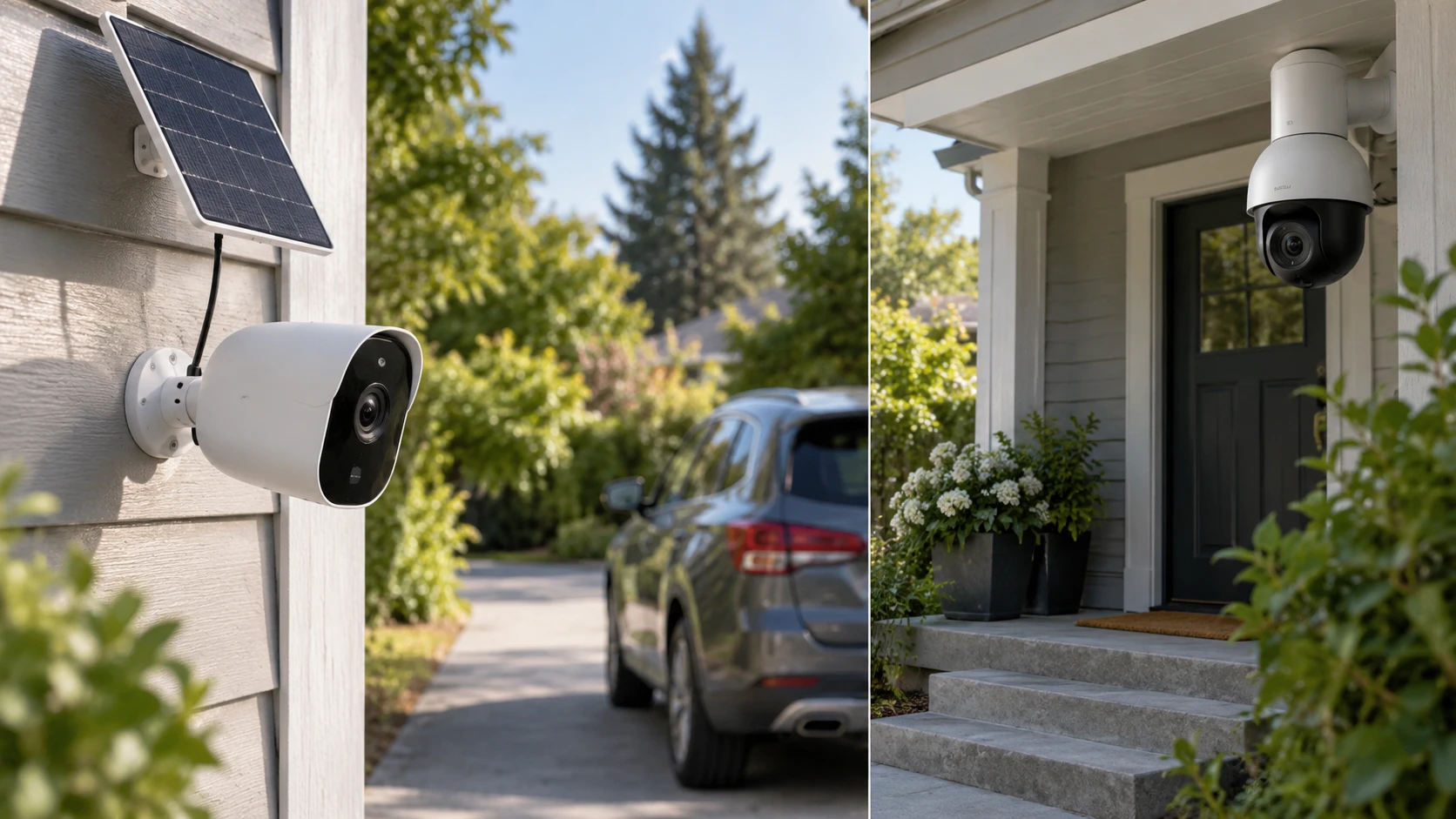
The Reolink Argus Eco Ultra camera is listed as a battery-powered Wi-Fi model with 4K, 8-megapixel video, person, vehicle, and pet detection, and a fixed view. The listing describes optional charging with a Reolink Solar Panel 2 rated at 6 watts. Start with the area that must remain in frame: a driveway entrance, front steps, or a narrow side path. A fixed camera keeps that selected scene in view, but greater resolution cannot show an area hidden by a wall, fence, or parked car.
The published guide to camera battery planning for time away helps turn a camera specification into a maintenance schedule. Record how much motion the site produces, how often someone opens a live view, and when the camera can be reached for charging. A shaded porch and a sunny fence post may produce different results with the same panel. Test the power arrangement on the actual installation before leaving a camera unattended for weeks.
The restored Reolink Argus PT Plus camera is offered as a refurbished pan-and-tilt unit with a 4-megapixel image, a stated 6,500 mAh rechargeable battery, and a solar panel in the package. The saved description says it can pan 355 degrees and tilt 140 degrees. That allows an operator to inspect different directions, though only the current direction is on screen at any instant. The panel is part of this offer. The Eco Ultra row describes a compatible optional panel but does not list one as supplied.
Put each view on a site map — restored Reolink Argus PT Plus camera
Mark the doorway, path, and parking area on a simple plan. From the proposed Eco Ultra position, take a sample frame and check whether the entire route fits without making a person too small to identify at the far edge. Mounting higher may reduce tampering but can change the view of a face under a hat. A lower position can improve detail while exposing the camera to accidental knocks. Review both the recorded clip and live preview at the distance where useful evidence matters.
For Argus PT Plus, choose a home direction that covers the highest-priority route. Its 355-degree pan range does not create simultaneous views around the property. If someone can move from a side gate to a door while the camera is looking elsewhere, decide whether a second fixed view is needed. Try a real walk from each approach and time how long it takes to turn and find the subject through the app. The saved row does not claim automatic subject tracking, so plan around manual pan and tilt unless current documentation and a device test establish more.
The Eco Ultra's higher listed resolution may give more detail inside a correctly framed scene. The PT Plus's movement may help check an area beyond a fixed frame. Neither advantage can be settled by comparing megapixels alone. Capture the same person at the near and far points in both proposed setups, then inspect the exported video at ordinary viewing size. If the viewer must zoom repeatedly to find a face, adjust the mounting position before treating the picture specification as enough.
Test the network and charging position — restored Reolink Argus PT Plus camera
Both listings describe Wi-Fi operation. A battery removes the need for a power cable but does not make a distant camera reachable through weak wireless coverage. Test the exact mounting point with the intended router and network. Open a live view, trigger an alert, and retrieve the clip from the place where the owner will normally watch it. Repeat with the door closed and other household devices active. If the camera disconnects, verify whether it continues saving locally and whether it reconnects without a visit.
The PT Plus title mentions 2.4 and 5 GHz Wi-Fi, while the saved description specifically says 2.4 GHz. Those are different claims within the same offer. Check the exact hardware revision and current instructions before designing a network around dual-band operation. A router that presents one combined network name can also complicate setup, so use the actual device and network during the trial. The Eco Ultra saved excerpt says Wi-Fi without specifying a band. Do not infer its band support from the PT Plus or another Argus model.
Eco Ultra's description calls solar charging optional and specifies a 6-watt Solar Panel 2. It does not give an included-panel inventory or a battery capacity in the saved excerpt. Confirm both when ordering and plan where a panel would face if one is needed. Keep the charging cable protected from weather and avoid routing it where someone could snag it. Measure battery level over several ordinary days. A panel does not necessarily remove future charging visits.
The restored PT Plus bundle states that a panel and 6,500 mAh battery are included, yet sunlight at the mounting point still determines how much help the panel gives. Inspect the panel surface, cable, battery behavior, and charging port on the received refurbished unit. A panel shaded through winter afternoons may perform differently from a summer trial. Check the Republeq's catalog return and warranty terms for this exact offer, and set an early inspection date to catch a weak battery or loose connection while the installation remains easy to reach.
Compare night clips and alerts — camera battery planning for time away
Eco Ultra lists two spotlights for color night footage and infrared LEDs for black-and-white night vision up to 10 meters. A range figure describes visibility under listing conditions, not guaranteed facial detail at that distance. Test a person approaching from the dark side of the frame, then examine the first seconds before a motion-triggered spotlight changes exposure. A porch lamp or reflective wall may wash out detail that looked clear during a short live view. Save and export the full event to judge what the camera actually retained.
PT Plus also claims night vision up to 33 feet, about 10 meters, but the saved row does not describe the same spotlight modes as Eco Ultra. Avoid assuming that their night images will look alike because the stated distances are similar. Test the proposed position after dark, including when the camera is pointed away from the home direction. If an owner must pan to inspect a noise, note how much can be seen before the camera moves and whether the movement itself consumes time needed to record the event.
Eco Ultra's listing names person, vehicle, and pet detection, motion zones, a spotlight, and a siren. PT Plus names PIR motion sensing, person and vehicle detection, and push alerts. Those features help reduce irrelevant notices only after they are configured for the real scene. Have someone walk the usual delivery path while a car passes nearby, then check which alerts arrive and which clips are saved. A branch moving in wind can be as important to the battery plan as to the alert count if it repeatedly wakes the camera.
The Eco Ultra row also describes two-way audio and app controls. PT Plus lists two-way audio for listening and speaking through the camera. Try the conversation feature from an ordinary phone connection, then review whether the recorded video includes the part of the event that prompted the call. If audio or a siren is part of the intended response, check local rules and the current app controls before relying on it. A feature label in a product listing does not establish volume, delay, or usefulness at a distant gate.
Resolve storage claims before buying a card — restored Reolink Argus PT Plus camera
The Eco Ultra listing conflicts with itself on microSD capacity. One section says 512 GB, while a later specification says a maximum of 128 GB. The same excerpt says a card is required but does not clearly identify one in the package. Confirm the supported capacity for the exact hardware and current firmware with Reolink or the Republeq's catalog, then test the chosen card before mounting the camera. Do not buy a larger card solely because the first number appears in a marketing paragraph.
The PT Plus description says events can be stored on microSD or uploaded to Reolink Cloud, and it refers to seven days of cloud playback. It does not give a card capacity or confirm that a card is included in this restored offer. Check current service terms and the exact box contents. For either model, make several representative event recordings and estimate how long they remain available. Verify what happens when the card fills, the network drops, or an upload is delayed. A storage option is useful only if a needed clip can be found and exported later.
Eco Ultra has an IP66 rating in the saved row. The restored PT Plus description calls its construction weatherproof without giving a matching numeric IP rating there. Follow the current instructions for both enclosures, panel connectors, and charging ports. A protected mounting spot may improve durability, but it can also reduce sunlight or block Wi-Fi. Test shelter, network coverage, sunlight, and camera view at the same proposed position.
Choose from an installed trial — restored Reolink Argus PT Plus camera
Try the fixed Eco Ultra view if one mounting point can keep the important entrance visible and its 4K recording gives sufficient detail. Confirm the card-capacity conflict and optional solar parts before ordering. The restored PT Plus may suit a site where a user needs to turn the camera to inspect several directions and the included panel performs well in the chosen light. Inspect the refurbished battery and confirm the Wi-Fi band before relying on it for remote checks.
Whichever layout is chosen, record a normal day of alerts and battery change, then repeat the review after dark. Note which approach was out of frame and how easily the owner found the full clip. Those observations set a more useful charging and monitoring routine than a resolution number or the word "solar" on a listing.