Office Supplies & Stationery
Build a recurring motif through a silent mini-zine
An original silent paper-boat story compares two endings and chooses a final scene that changes the object’s relationship to its fictional character.
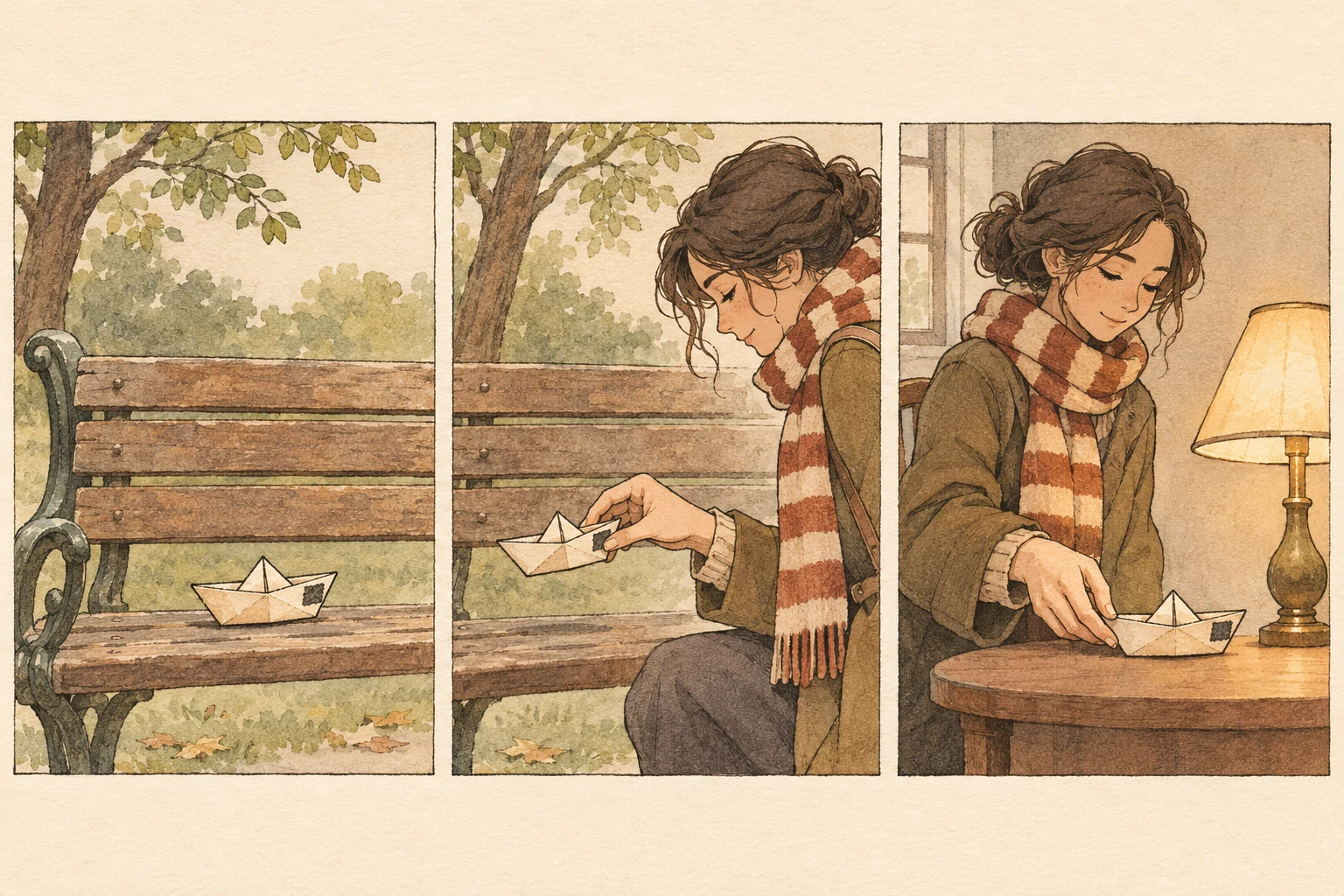
Build a recurring motif by bringing one drawn object back after its relationship to a character has changed. In this original fictional example, a small paper boat begins alone on a bench. A character picks it up. The ending shows that character placing it beside a lamp on a table. The dark patch on the boat remains visible in each scene. Use the example to plan your own silent mini-zine, keeping the final scene connected to what you want the character to do.
These are invented scenes for a drawing exercise. There is no actual found object, location or reader response behind them. The boat is a picture, and the tutorial gives no paper-folding or water activity. You can work with tools you already use. The pen listings discussed later are separate catalog examples, with no claim that a particular instrument made these drawings or would perform in a particular way.
Give your silent mini-zine one visible change
Choose an action small enough to show within a short piece. For this example, the action is keeping something that was unattended. Write that intention in your working notes before deciding what the object should look like. The note belongs beside your planning sketches; it will not become a speech bubble inside the story. It gives you a reason to choose one ending over another when both contain the same boat.
Decide what the first scene needs to establish. I chose an ordinary bench with the boat sitting on its seat. Nobody touches it. The picture leaves its earlier history open: it does not show who made it or why it is there. Adding a discarded letter or a dramatic farewell would invent another story that this short sequence does not develop. The unattended boat is enough to begin the particular action I want to draw.
You can choose another object for your own work, but give it a role within that story. A cup left on a doorstep and a scarf returned to its owner would ask for different scenes. Keep those possible stories outside this example while working through it. Here, I want to follow one boat from being left alone to being deliberately kept. Its appearance needs to support that continuity without explaining the whole occasion.
Draw the opening with the object still unattended
Make a rough opening scene with the bench and the boat visible together. Leave the space beside the boat empty. A distant row of buildings or a heavily decorated garden would add drawing work without showing who touches the object. For this version, the bench gives the boat somewhere to rest and the empty seat gives the opening its pause. Treat those as choices for this invented scene, rather than a rule that a quiet opening must always have an empty background.
Give the boat a small dark patch near one end. Keep that mark with it in the later drawings. The patch is an authored recognition cue, not a label explaining the boat’s meaning. It does not authenticate a real object or establish that every reader will notice the same detail. I prefer it to a written name here because I want the imagined story pages to remain silent. The explanatory prose can discuss choices that the drawings themselves leave unspoken.
Let the middle bring the character into contact
In the next scene, draw a character reaching for the boat. I gave this fictional person a striped scarf so I could bring the same person back in the ending. Show the hand close enough to the boat that the intended pickup belongs to this scene. You can sketch the hand holding it if a reaching gesture leaves your own intention unclear. Choose the version you want to keep before adding unrelated movement around the bench.
Retain the boat’s dark patch. Its position may look different when the object is held, but it should remain part of the boat you established. A newly decorated boat with a different outline could suggest that another object has entered the story. If that is what you want, develop that change deliberately. For this example, I want the middle to concern the first boat, so I keep its recognizable features while changing its relationship to the person.
The character does not need an invented biography to perform this action. The drawings provide no name, job or remembered childhood event. A detailed explanation of why the person values the boat would give the piece a different kind of narration. I leave that explanation open and work on what can be drawn: the object has moved from an empty seat into someone’s hand. That is the change available for the ending to continue.
Compare two endings in the page sequence
Sketch one possible ending with the boat alone on a second bench. The person is gone. Read that ending beside the opening and middle. In my reading of this invented version, the pickup has led to another act of leaving the object behind. It could become a story I wanted to tell, but it does not show the act of keeping that I chose for this exercise. Save the sketch so the alternative remains available for comparison.
Now try the selected ending. Draw the scarf-wearing character placing the boat on a table beside a lamp. Keep the hand involved in the placement, rather than showing only an object that happens to be in another room. That gesture gives my intended ending something specific to show. The boat remains a small object, and the table offers it a place in the character’s surroundings. The lamp is part of the fictional setting, with no instructions about installing or using a real light.
Put each possible last scene after the same opening and middle. Compare the action each ending completes. The second-bench version returns the boat to being alone; the table version lets the character give it a place. I choose the latter because it carries my intended act of keeping. This is an author’s account of a composition choice. I have not shown the drawings to a reader or measured whether someone else would describe either ending in these words.
If your own ending needs a different action, change the scene that carries it. You might decide the character should return the boat to another person, which would require that person to enter the story. That choice would also change what the opening needs to prepare. Keep your selected intention beside the rough sequence while revising. Avoid adding several possible endings to the finished story merely because you drew them during planning.
Keep the returning boat recognizable
Look across the chosen page sequence for the boat’s particular features. Its small dark patch should belong to the same drawn object in the opening, the pickup and the placement. The character’s striped scarf supplies a separate cue linking the person in the middle with the person at the table. Changing the scarf into a hat in the final scene would add a question about the person while I am trying to finish the boat’s action.
Keep only enough setting to show the selected relationships. The bench belongs to the unattended opening; the hand belongs to the pickup; the table and the person’s placement gesture belong to the chosen ending. You can draw those scenes in your own style without copying a retail photograph. If you add a sign, a caption or another character, decide what that addition contributes to this piece. Leave a decorative possibility in the sketch notes when it does not help carry the action you selected.
A recurring motif can remain open to interpretation. I do not attach a universal meaning such as hope or loss to every paper boat. In this example, the change concerns what one fictional person does with one object. The ending gives the author’s chosen action a visible form while leaving the character’s wider reasons unstated. You can keep that quietness if it suits your work, without promising that every reader will arrive at the same account.
Read the rollerball accounts separately
The Speedmaster rollerball account repeats its title as its description. Its sole gallery shows one white-bodied instrument with an exposed writing tip, a detached cap and a pearlescent-looking section. A partial open book is scenery, not described as included paper. The photograph does not authenticate the named materials, delivered contents or writing performance. Its catalog model and UPC remain offer identifiers rather than independently inspected factory labels.
The Visionary rollerball account also repeats its title as its description. Its sole image shows one red-and-yellow-bodied instrument with silver-looking fittings and an exposed writing tip. The body colors do not establish the ink color. Neither a complete delivered inventory nor material composition has been inspected here. Read this sparse account within those limits; it supplies no test showing how the pen would draw the little boat on your chosen surface.
Keep other creative decisions in their own projects
The reusable kite motif guide retains one complete authored drawing across two separately composed card fronts. That project concerns using existing artwork again while changing surrounding words and layout. Recognizable repetition is useful background for this exercise. My paper-boat sequence instead develops an action over story time: the character finds the object, takes it and gives it a place. Reusing the same digital symbol could be a production choice, but it would not decide which ending completes that action.
The family photo story sequence guide selects and orders actual photographs, retaining reliable names, dates and uncertainty in the accompanying context. A sequence of pictures is shared background here, but this invented boat story has no family event to authenticate or photograph collection to preserve. Keep those decisions with real images when making an album. For this exercise, you are responsible for composing the fictional action, including what the final scene asks the returning object to do.
Keep a possible pen order with its own information
You can plan this story with drawing tools already available to you. If you separately consider an order through republeq.com, identify the actual selected pen and ask about any contents or specification you need before deciding to buy. A picture of a pen does not establish the ink color, a suitable line on your paper or the contents that will arrive. Keep a reply with the offer it addresses so that an answer about one model does not become an assumed specification for another. If you want to use crypto such as USDT, inspect the payment choices actually presented for that transaction. This article does not establish that an asset or network will be offered. Check the current amount, any disclosed charges and the receiving information supplied for the intended order. Resolve an unclear essential instruction with the merchant or payment provider before proceeding. Read the applicable delivery, cancellation, return and refund conditions, including any cryptocurrency terms. Keep the selected goods, order reference and relevant answers together. This paragraph supplies no receiving address, wallet recommendation, transfer procedure, exchange rate or payment assurance. After an authorized attempt, retain the acknowledgement and check the status of the order it identifies. If an earlier attempt remains uncertain, establish its actual status before considering another payment. A transaction record does not authenticate a pen’s materials or demonstrate a drawing result. Nor does a completed story require you to place a new order. You can leave the purchase undecided and continue choosing the fictional ending, keeping the story notes separate from the information that belongs to a possible transaction.
Finish with the act you chose
Keep the opening bench, the pickup and the character’s placement of the boat beside the lamp as this example’s selected sequence. Retain the second-bench ending among the working sketches. When you return to the piece, you can see why one ending was chosen and what the other would have changed. The finished plan follows the same recognizable boat while its place in the character’s life changes. I stop after the placement scene because that is where the character gives the boat a place.